The Stanford Mansion: The Library
As impressive as the Reception Room was, the Library may have been the true heart of the Stanford Mansion. This was where Leland Stanford spent much of his time, conducting business, receiving associates, and pursuing his personal interests. Richly decorated in the Louis Quatorze style by Pottier & Stymus, the room combined comfort, scholarship, and grandeur in equal measure. Monumental furnishings, fine artwork, elaborate architectural details, and carefully chosen decorative themes reflected both the wealth of the Stanford family and the intellectual pursuits they valued. More than simply a showplace, the Library was a room that was meant to be lived in and used, offering a rare glimpse into the private world of one of California's most influential families.
The room was also carefully planned to project an image of culture, learning, and refinement. From the celebrated artists and craftsmen whose work appeared within its walls to the symbolic decorative program that honored literature, science, discovery, and innovation, nearly every aspect of the room seems to have been selected with purpose. The result was more than an impressive library. It was a space that reflected the interests, ambitions, and worldview of its owner, revealing how Leland Stanford wished both himself and his home to be understood.
Original floor plans are courtesy of the United States Department of the Interior, National Park Service, Frederick Law Olmsted National Historic Site. Documentation and images from their collections can be accessed here.

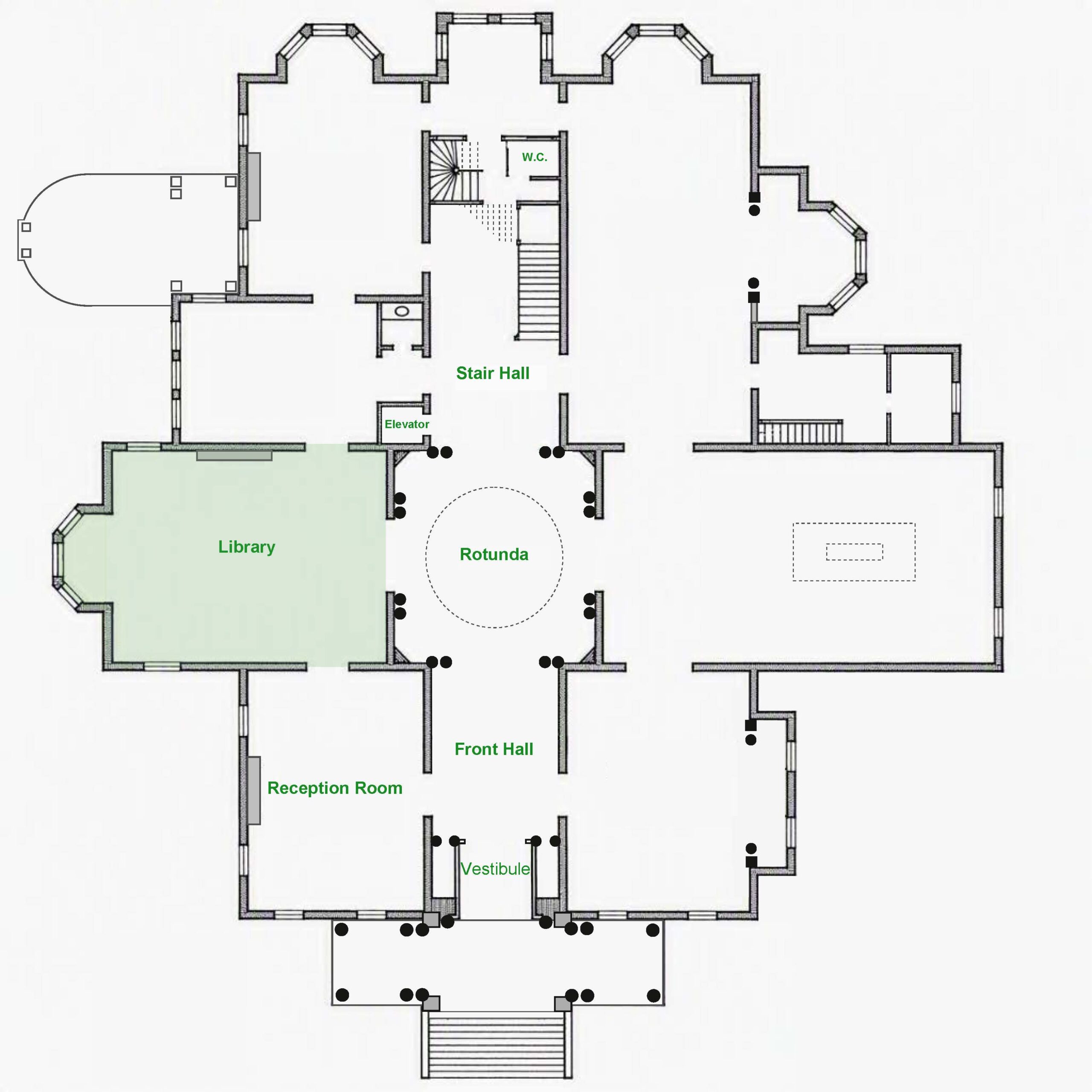
Here is the location of the Library, highlighted in green. The rooms we have already visited during our tour of the mansion remain labeled. As we continue our clockwise journey through the house, the remaining unlabeled rooms will be identified and added to the floor plan.
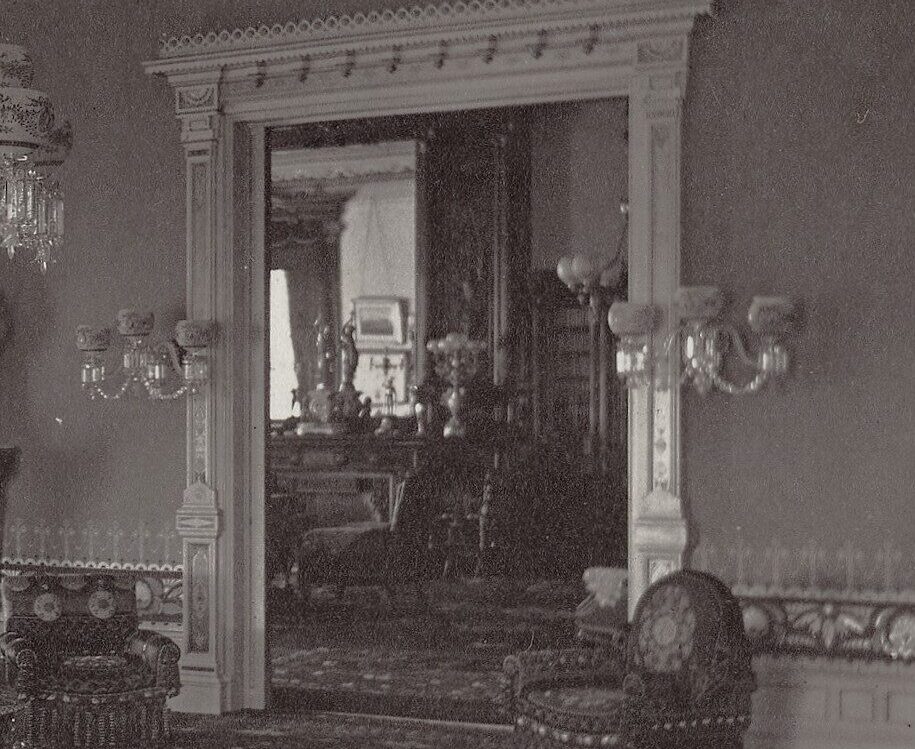
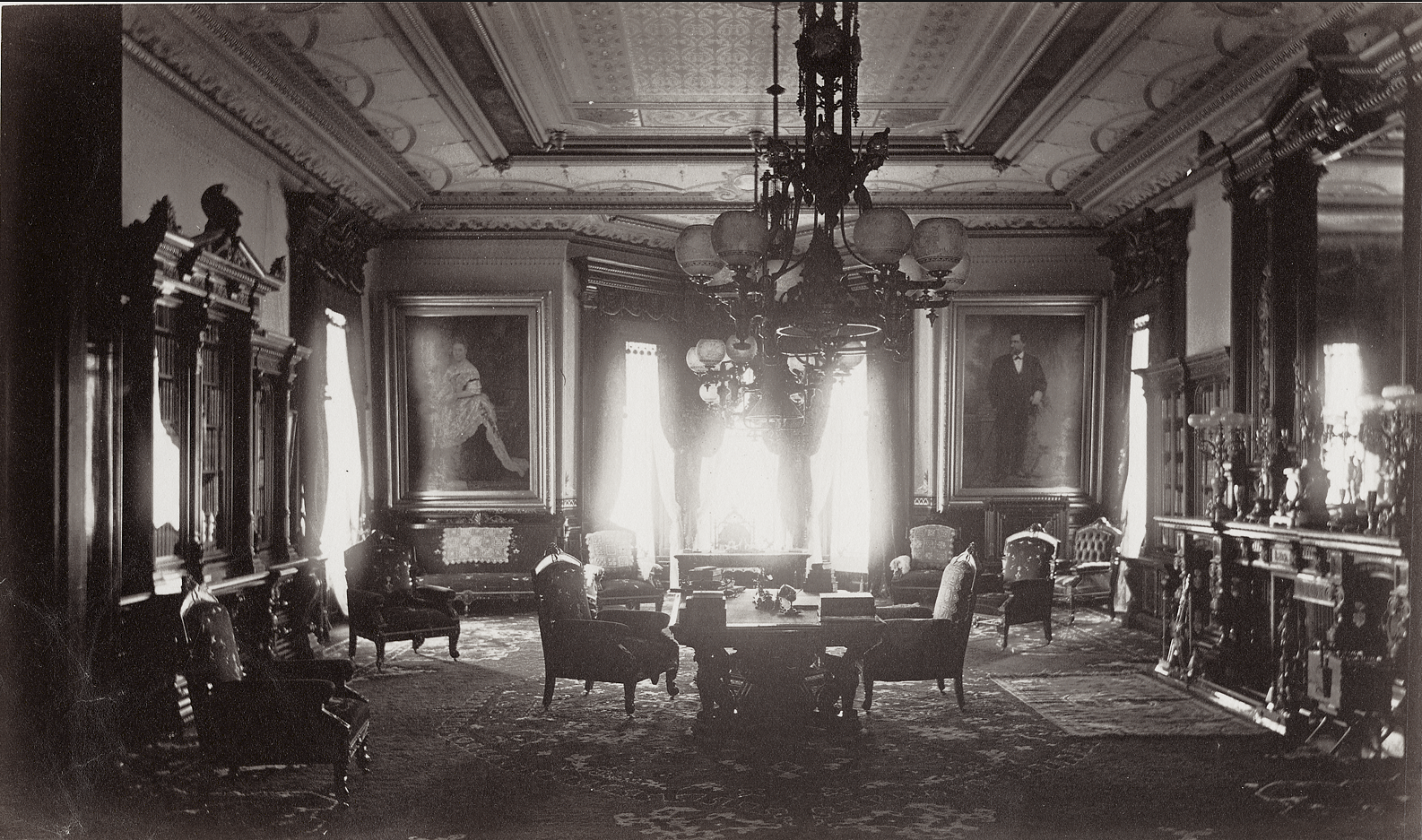
The library directly back of the reception is of magnificent dimensions. It is directly opposite the rotunda and looks out on Powell Street through one large bow and two smaller flat windows. The doors are solid slabs of mahogany.
San Francisco Chronicle, April 2, 1876
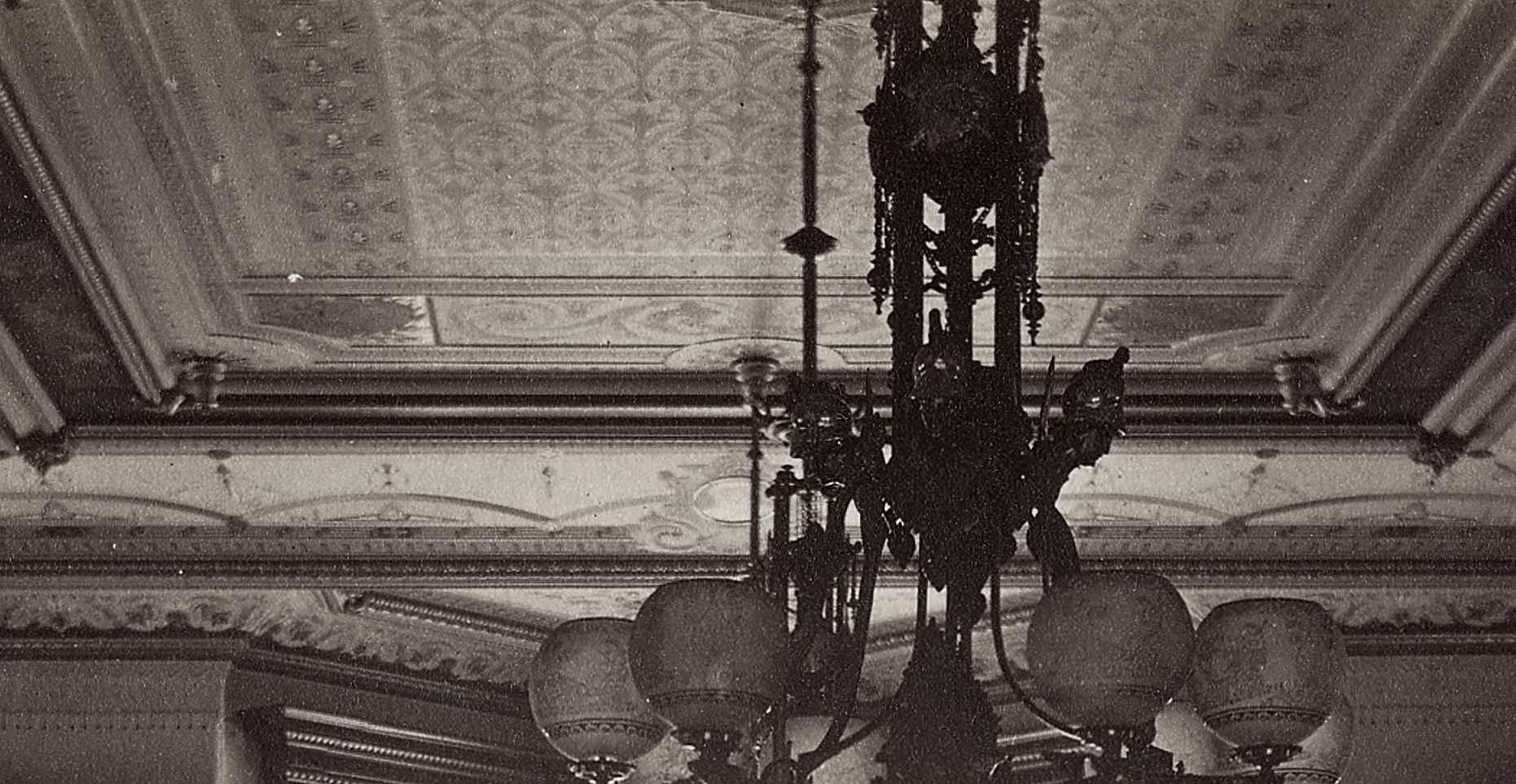
The ceiling is painted on canvas. The portraits of Shakespeare, Humboldt, Agassiz and J. Fenimore Cooper adorn the frieze, while those of Morse, Franklin, Stephenson and Fulton ornament the corners of the central panel.
San Francisco Chronicle; April 2, 1876
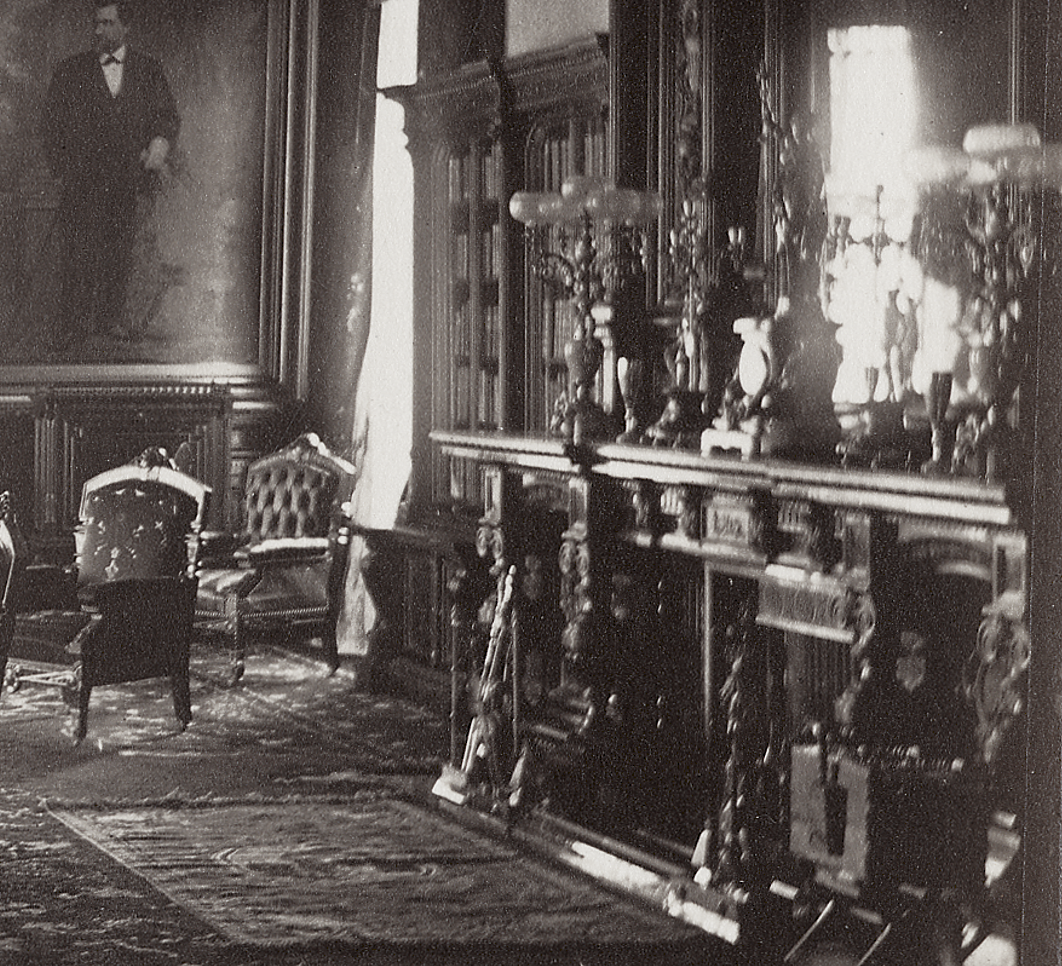
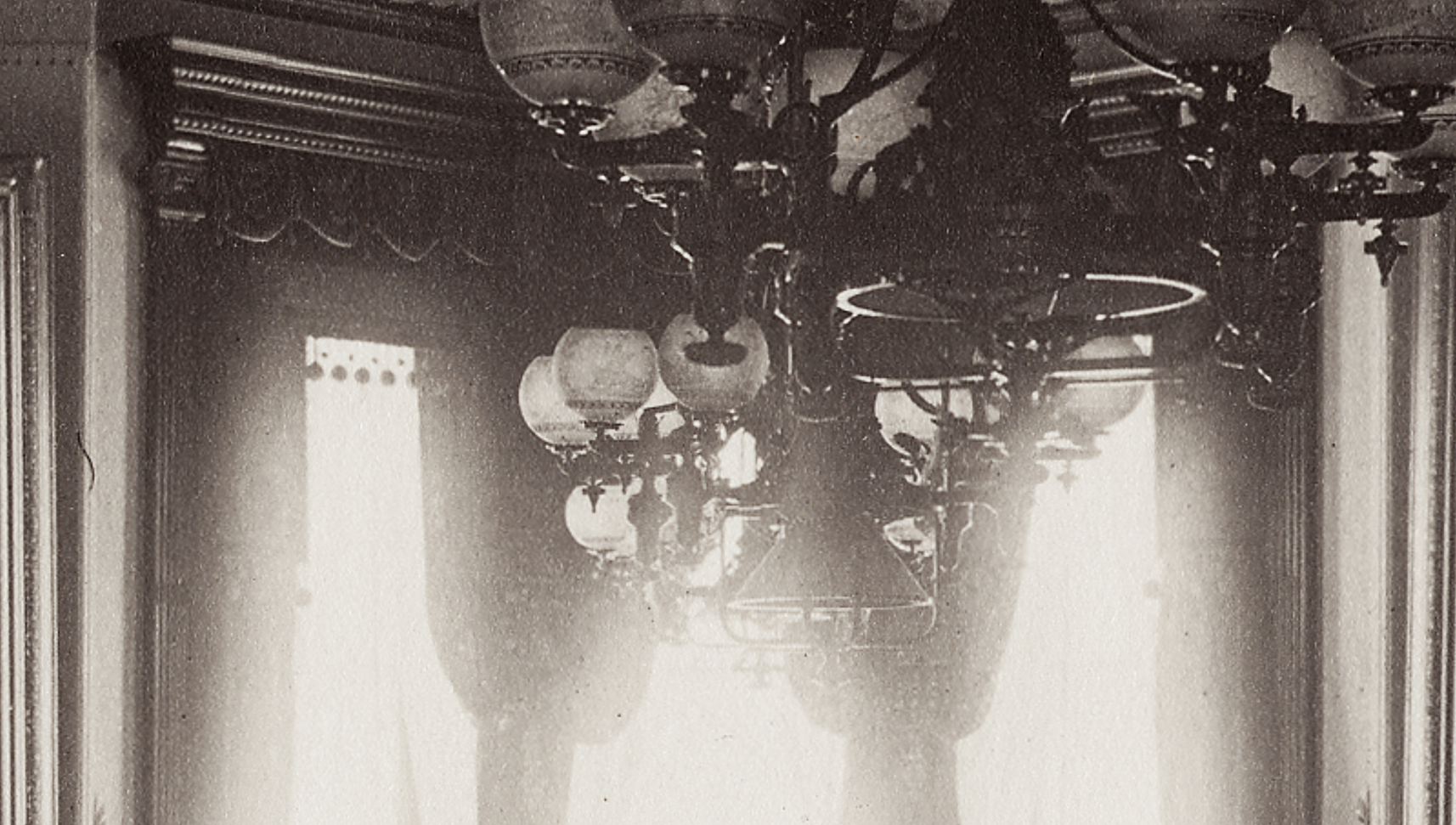
The image is rather dark, but careful observation reveals the elaborate treatment of the window draperies. Across the top is a festooned arrangement of fabric, beneath which hangs a flat-paneled valance. The valance extends down along either side of the window and is finished with decorative ball fringe. Together with the richly carved woodwork, these textiles contributed to the warm, luxurious atmosphere that characterized the Library.
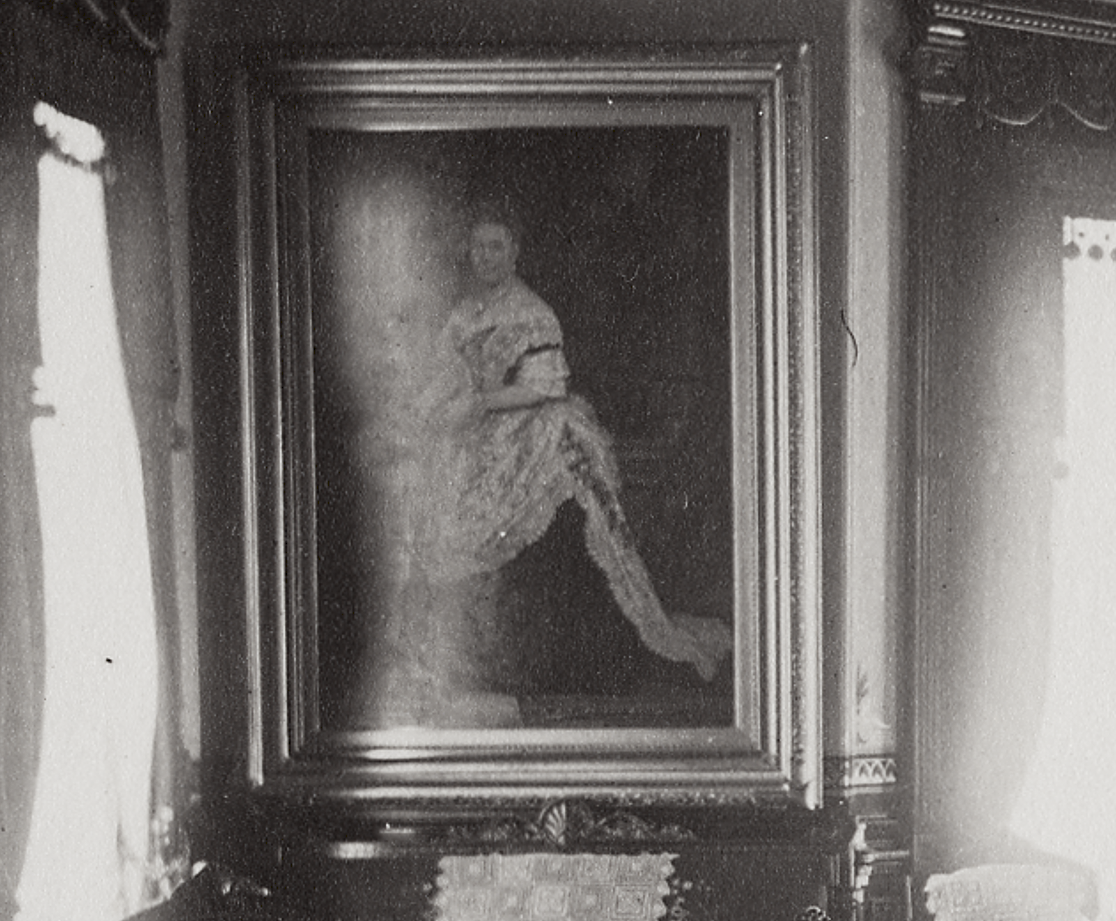
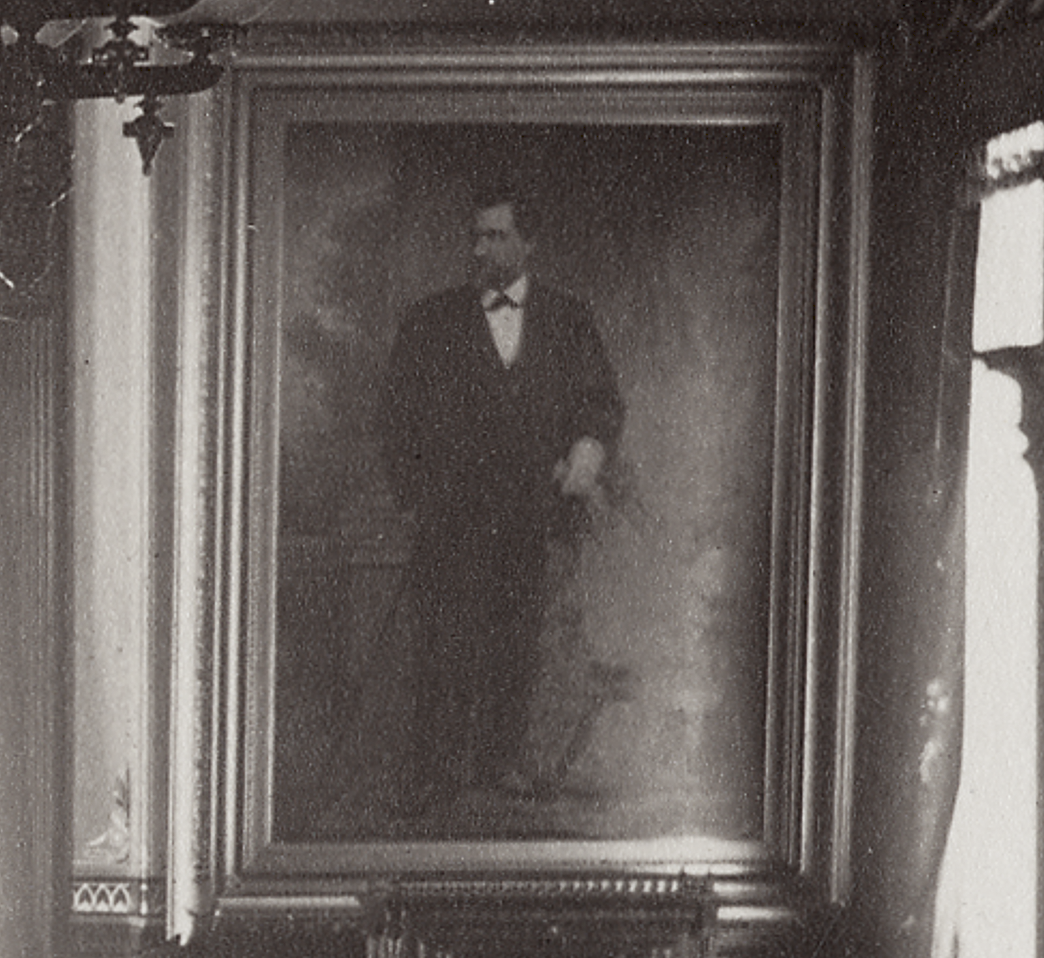
To the left of Mrs. Stanford’s portrait was the Library’s north-facing window. Like its counterpart on the opposite side of the bay, it helped fill the room with natural light and provided views toward the northern portion of the city and the bay beyond.
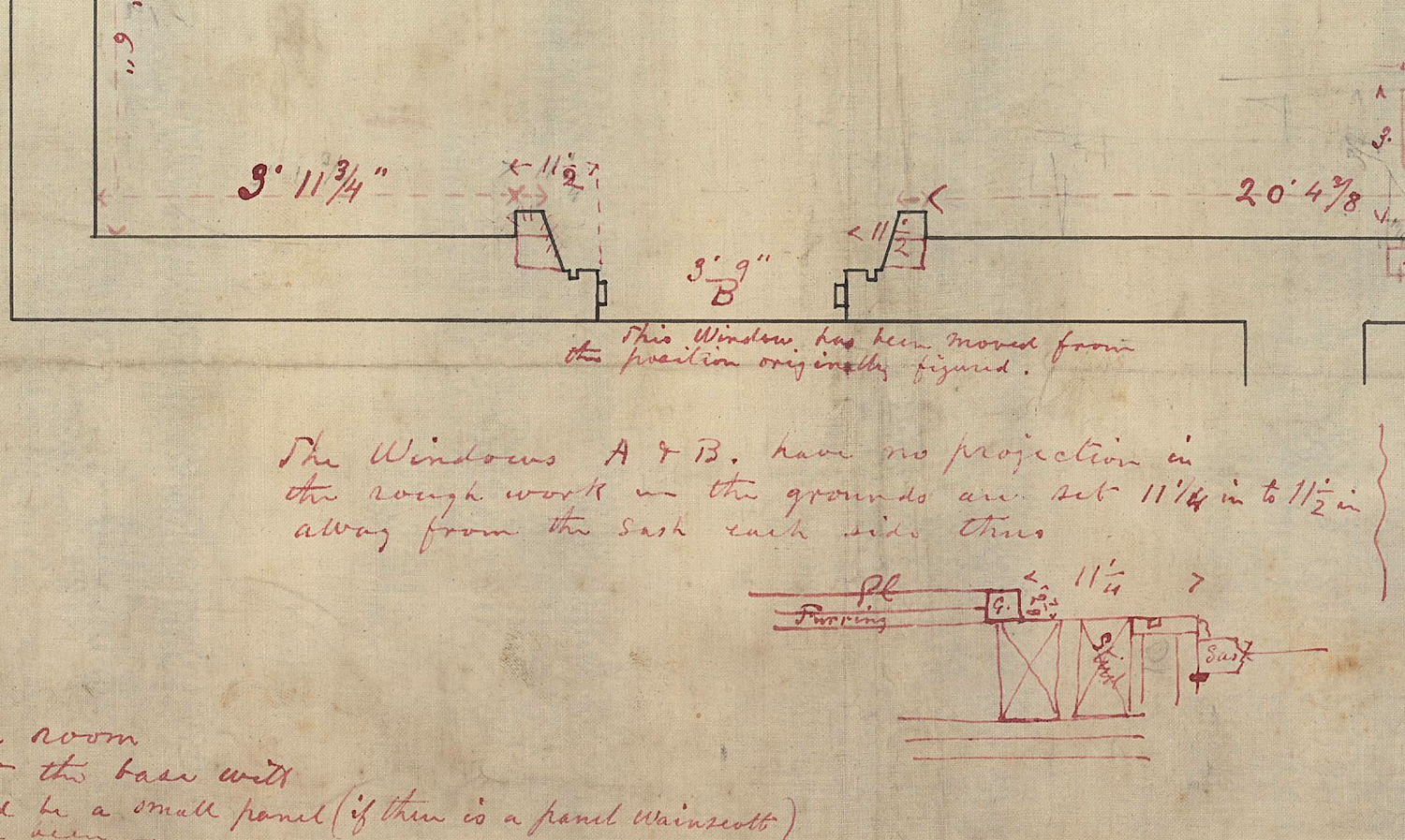
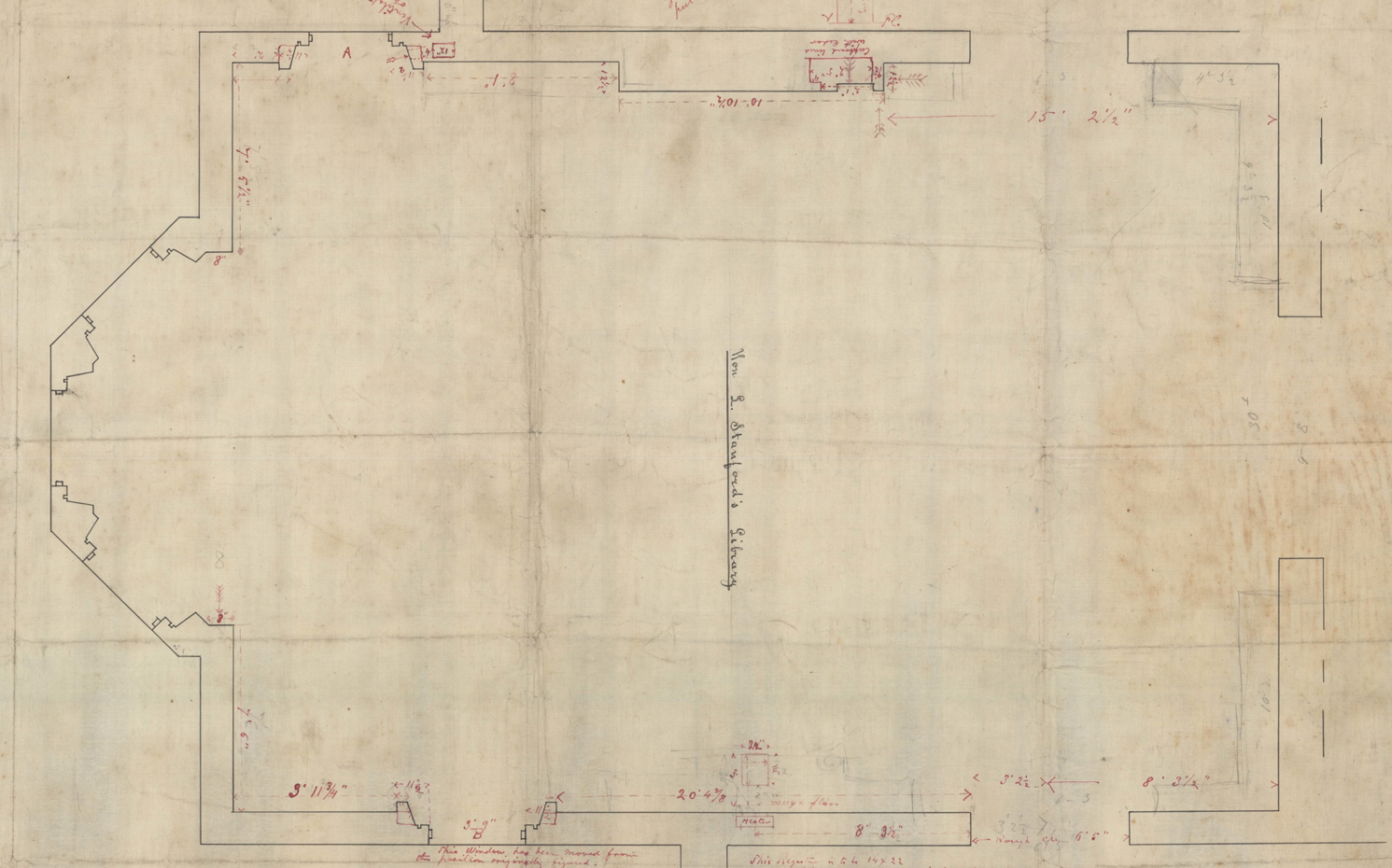
The drawing also offers a closer look at the elaborate treatment planned for the window opening, including its surrounding woodwork and decorative trim. When compared with the finished room, it helps illustrate how faithfully many of the architect’s ideas were ultimately carried out while also documenting changes made along the way.
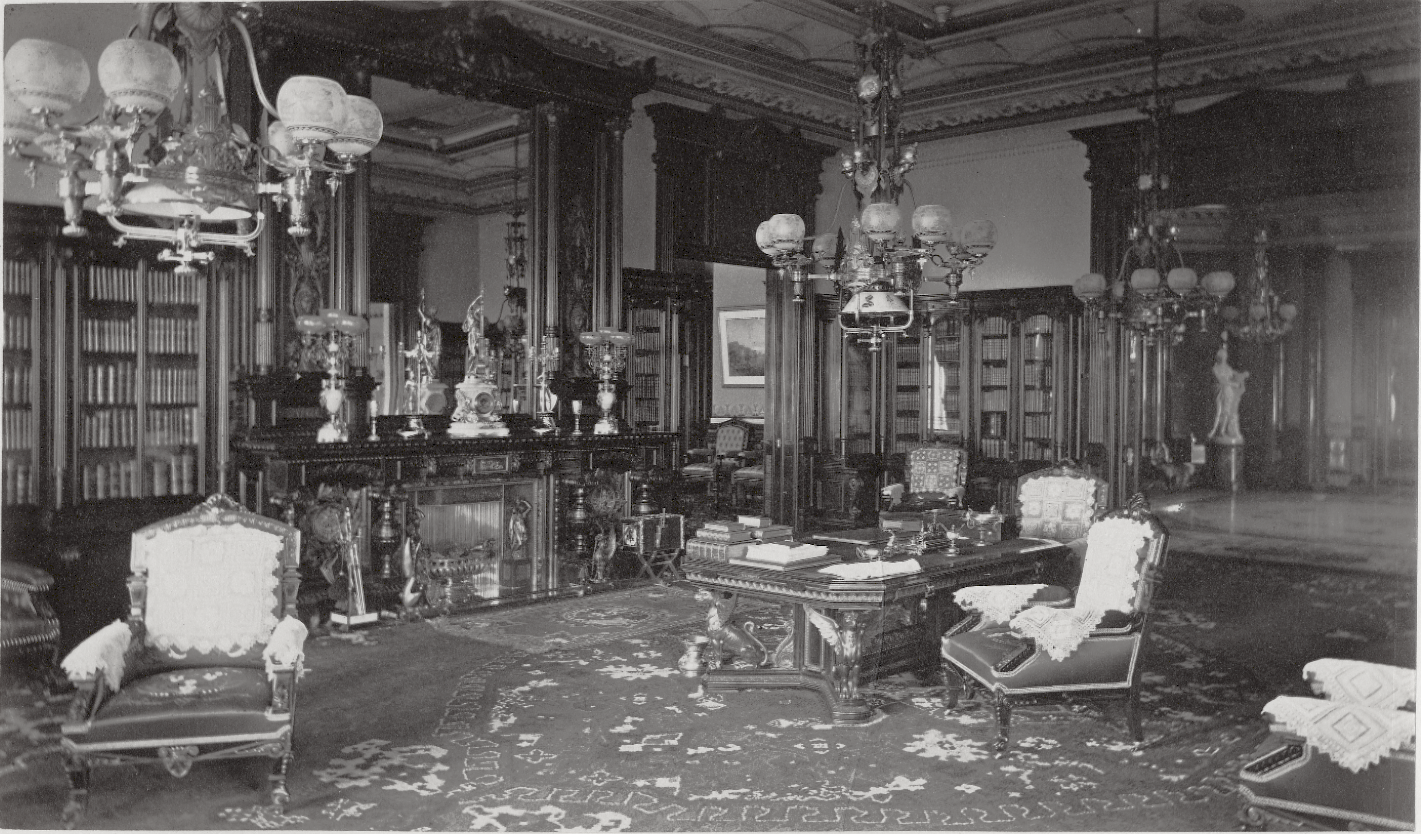
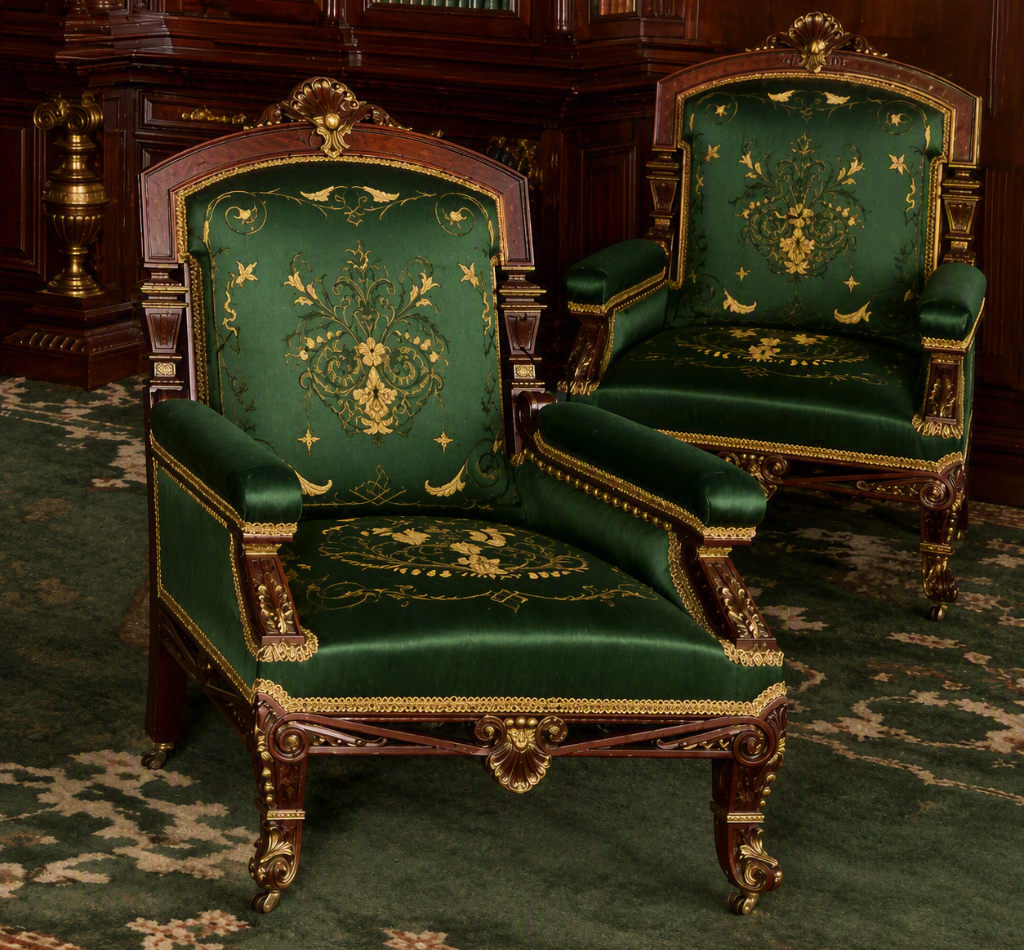
While contemporary descriptions do not provide a detailed account of the room’s color scheme, several newspaper articles state that the upholstery and draperies were green and gold. This is supported by a handwritten pencil notation found on one of the surviving photographs. These rich colors would have complemented the mahogany and rosewood woodwork, creating a warm and dignified setting appropriate for one of the mansion’s most frequently used rooms.

The fireplace itself is equally impressive. The firebox surround appears to have been highly polished and is flanked by two large sculptural figures. In front, the ornate fender is decorated with a pair of winged creatures facing one another, connected by draped chains. Together, these richly detailed elements create a fireplace of extraordinary scale and craftsmanship, perfectly suited to a room decorated in the grand Louis Quatorze style.
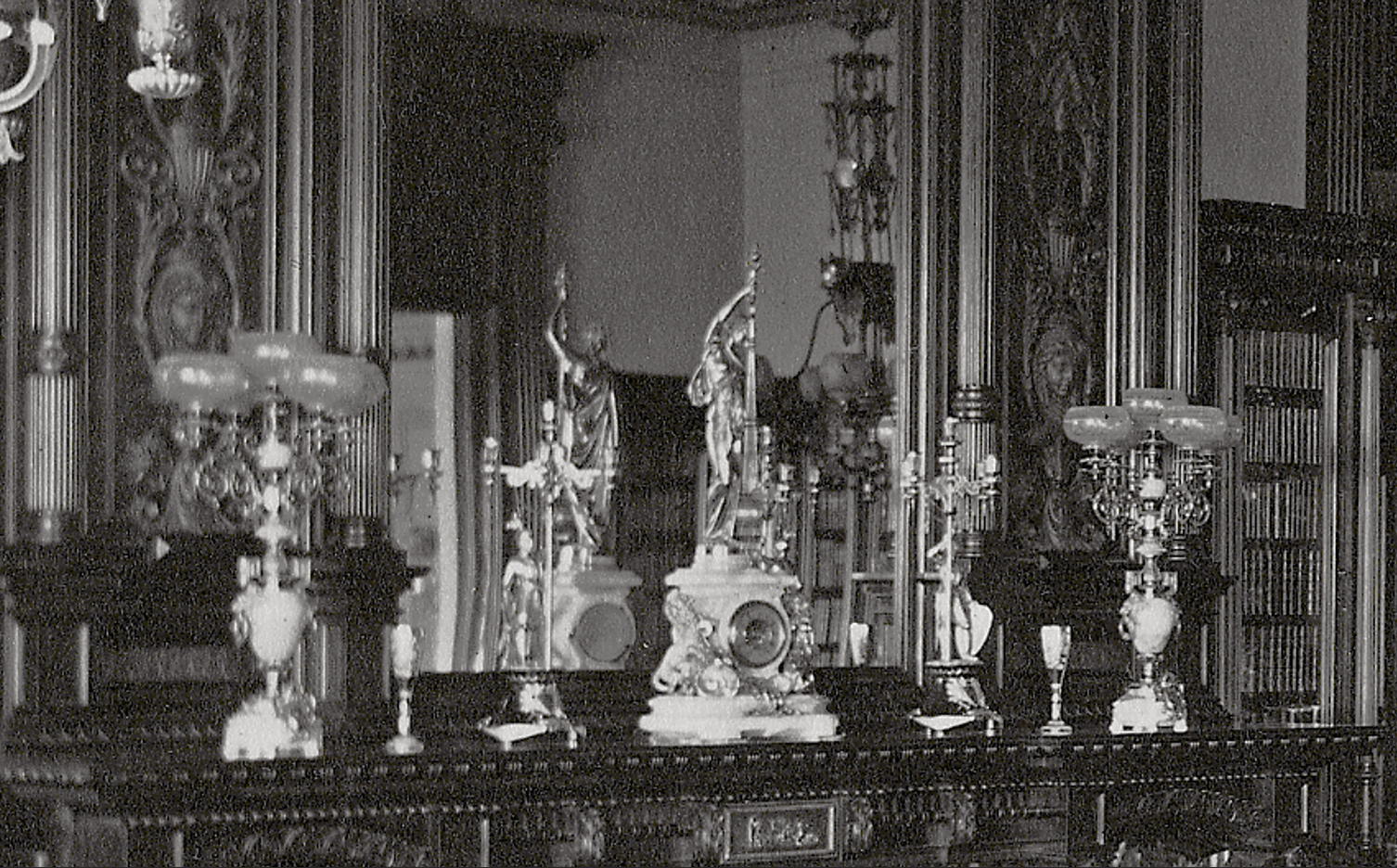
One particularly intriguing feature is found in the panel to the right of the mirror. According to Bugbee’s drawings, this panel concealed a hidden compartment designed to open. The floor plan drawing identifies this feature, revealing that beyond its decorative appearance, the mantel incorporated a practical and somewhat mysterious element. Such details remind us that the mansion’s interiors were not only grandly ornamented but also thoughtfully designed for the needs of its occupants.
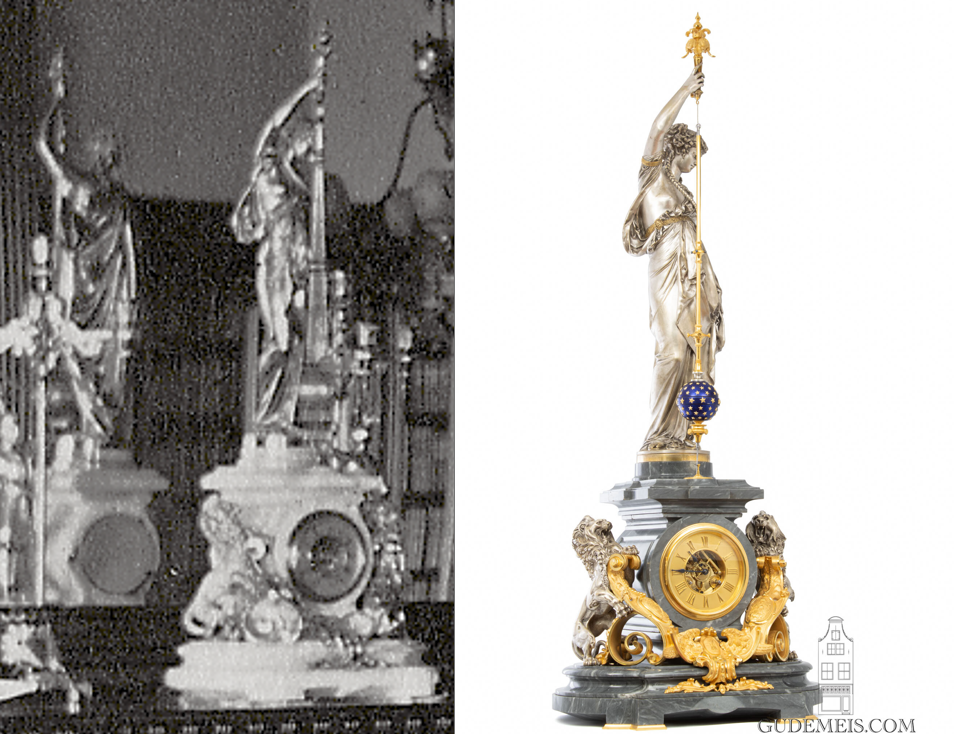
To learn more about this beautiful clock and its history, click here.
To see a video of a similar clock in motion, click here.
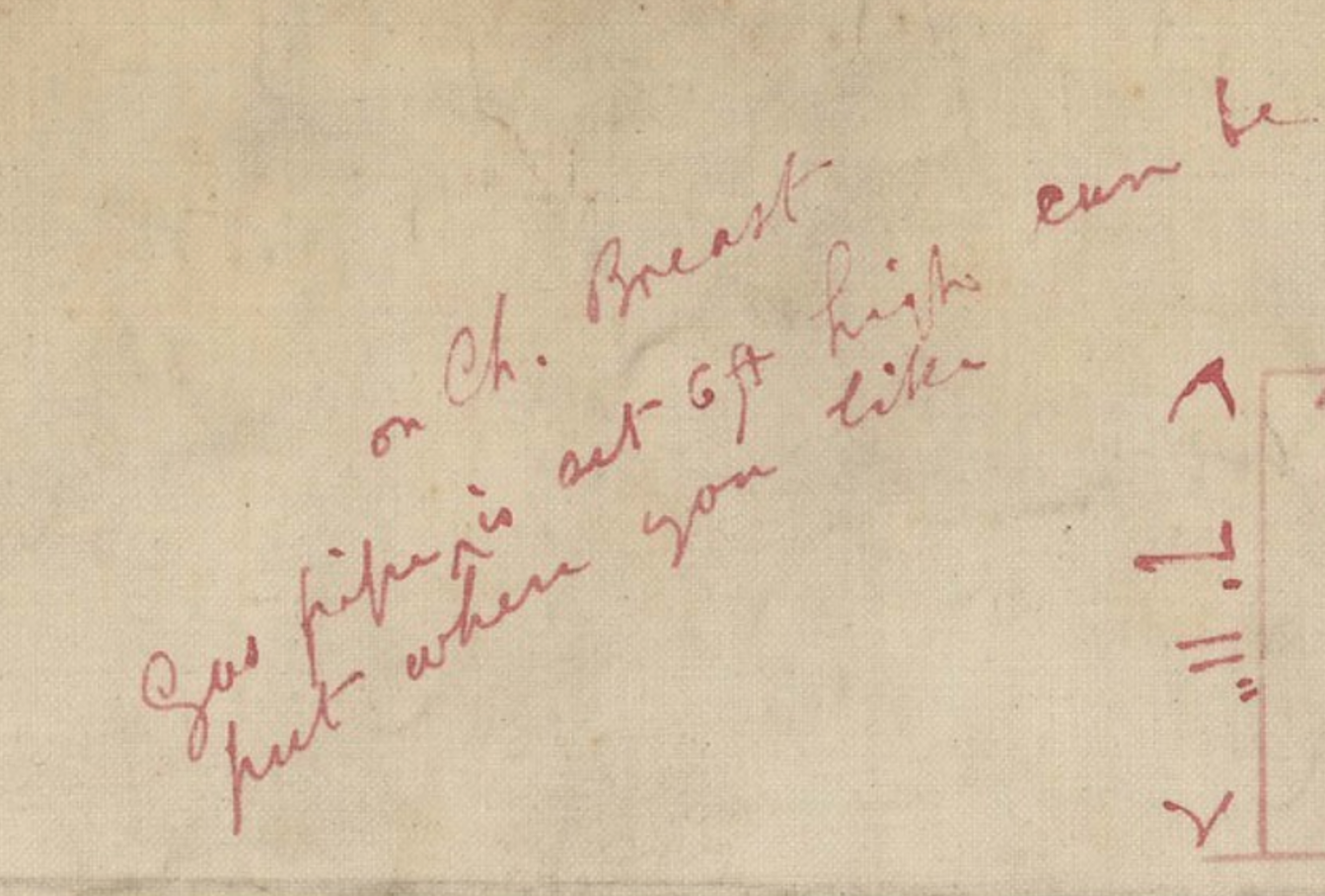
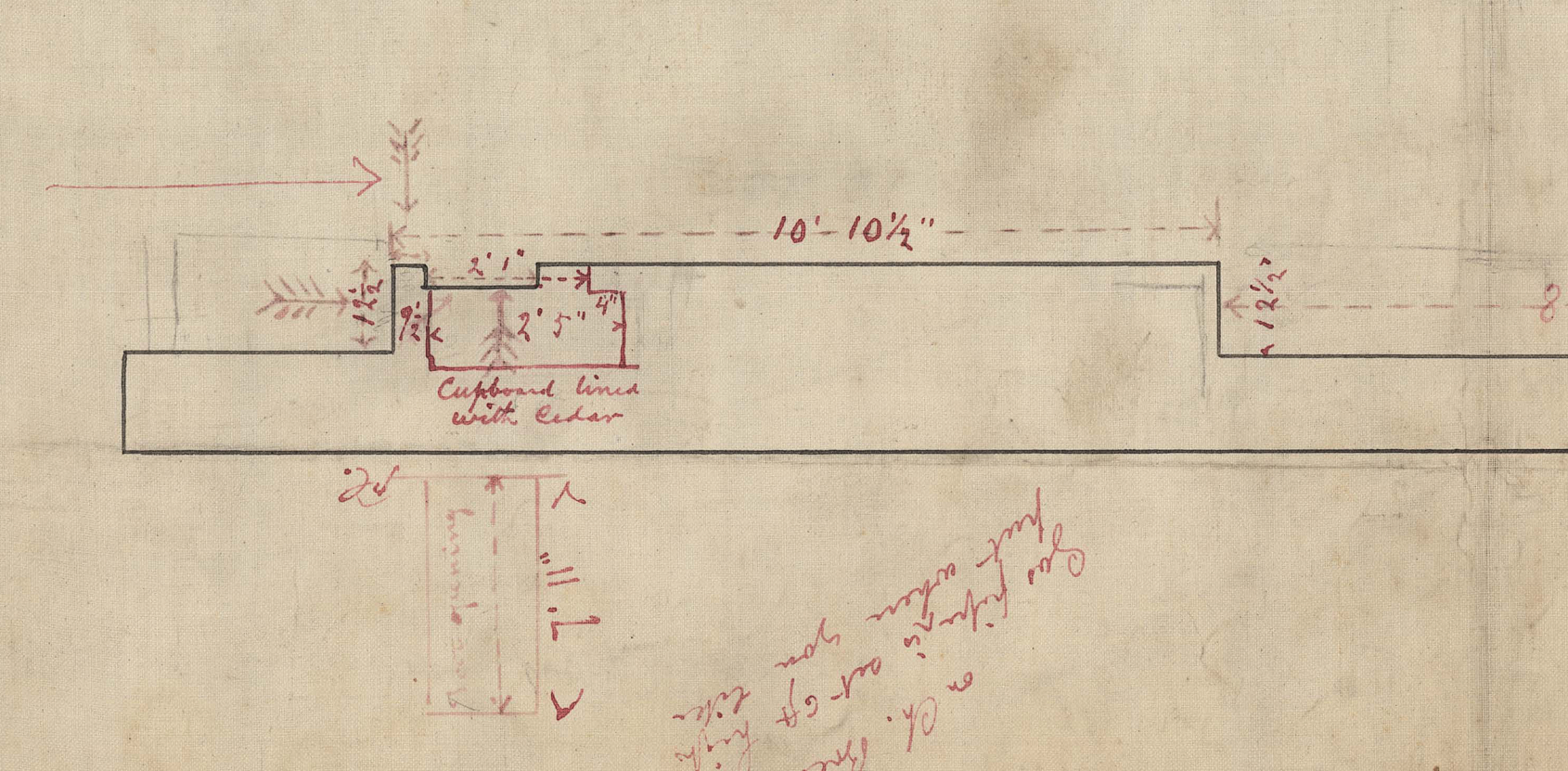


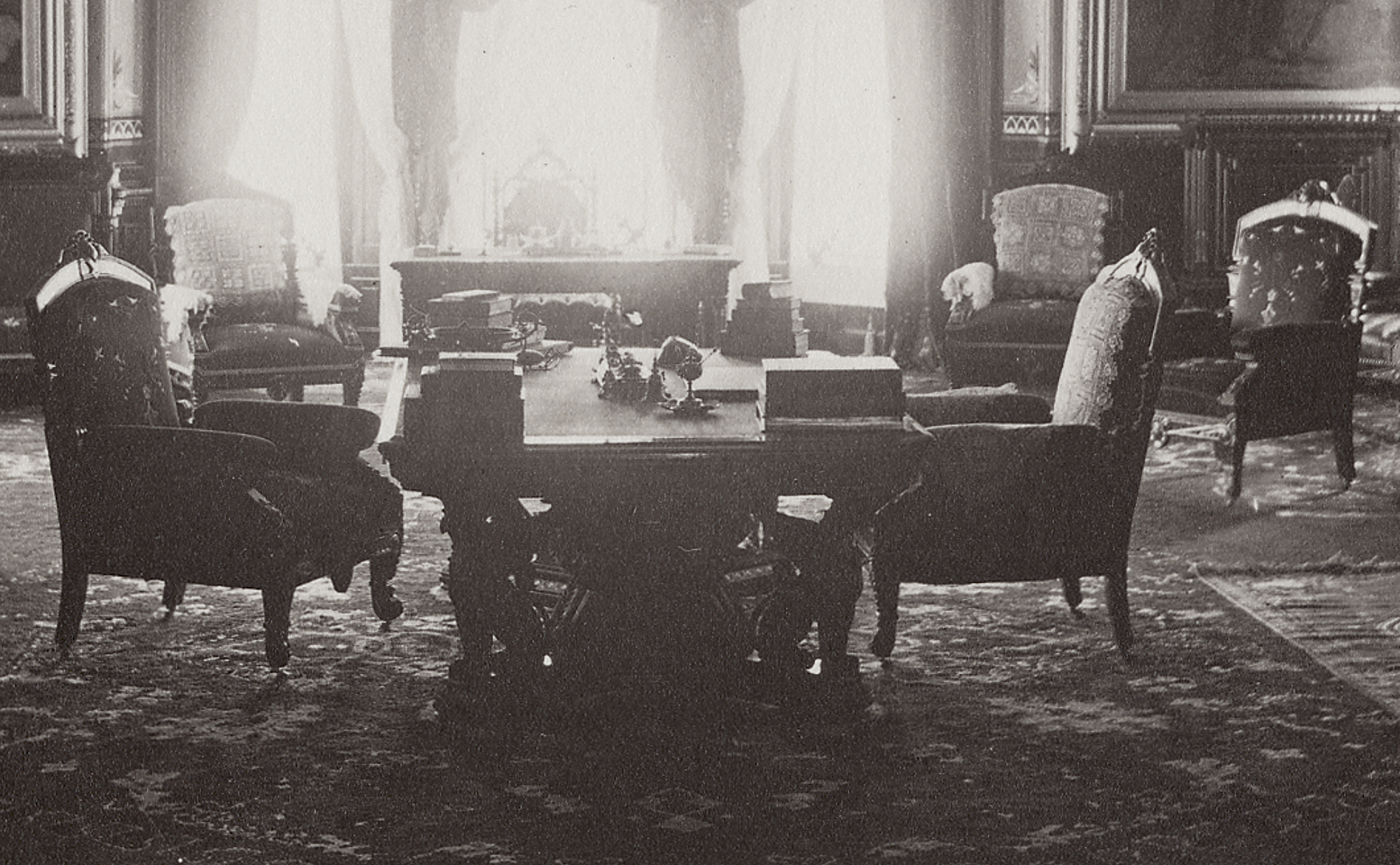
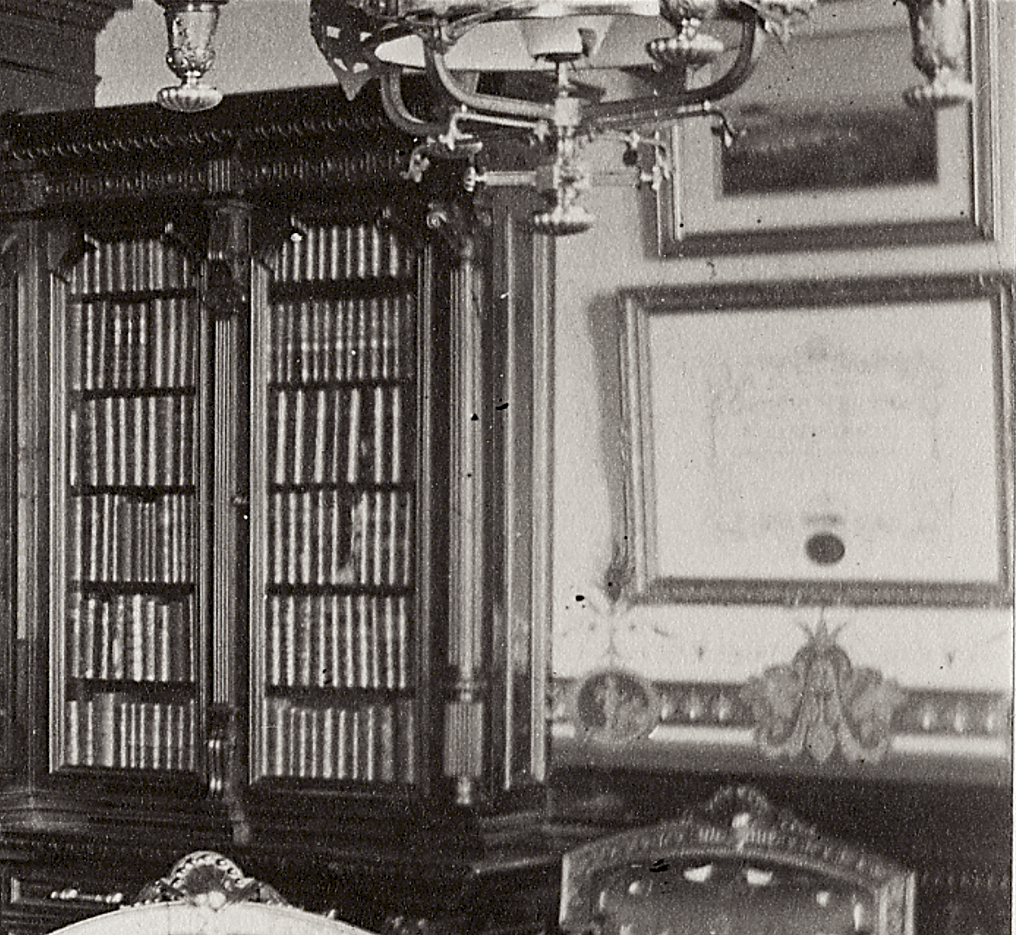
You will notice large doilies draped over some of the chairs. This may be because the Library was a frequently used room and Mrs. Stanford wished to protect the upholstery from everyday wear. Such protective coverings were not uncommon in Victorian-era homes, particularly in rooms that saw regular family use, helping to preserve expensive fabrics from sunlight, dust, and daily use. They also get removed for some of the photos when chairs get repositioned and staged for the photographs.
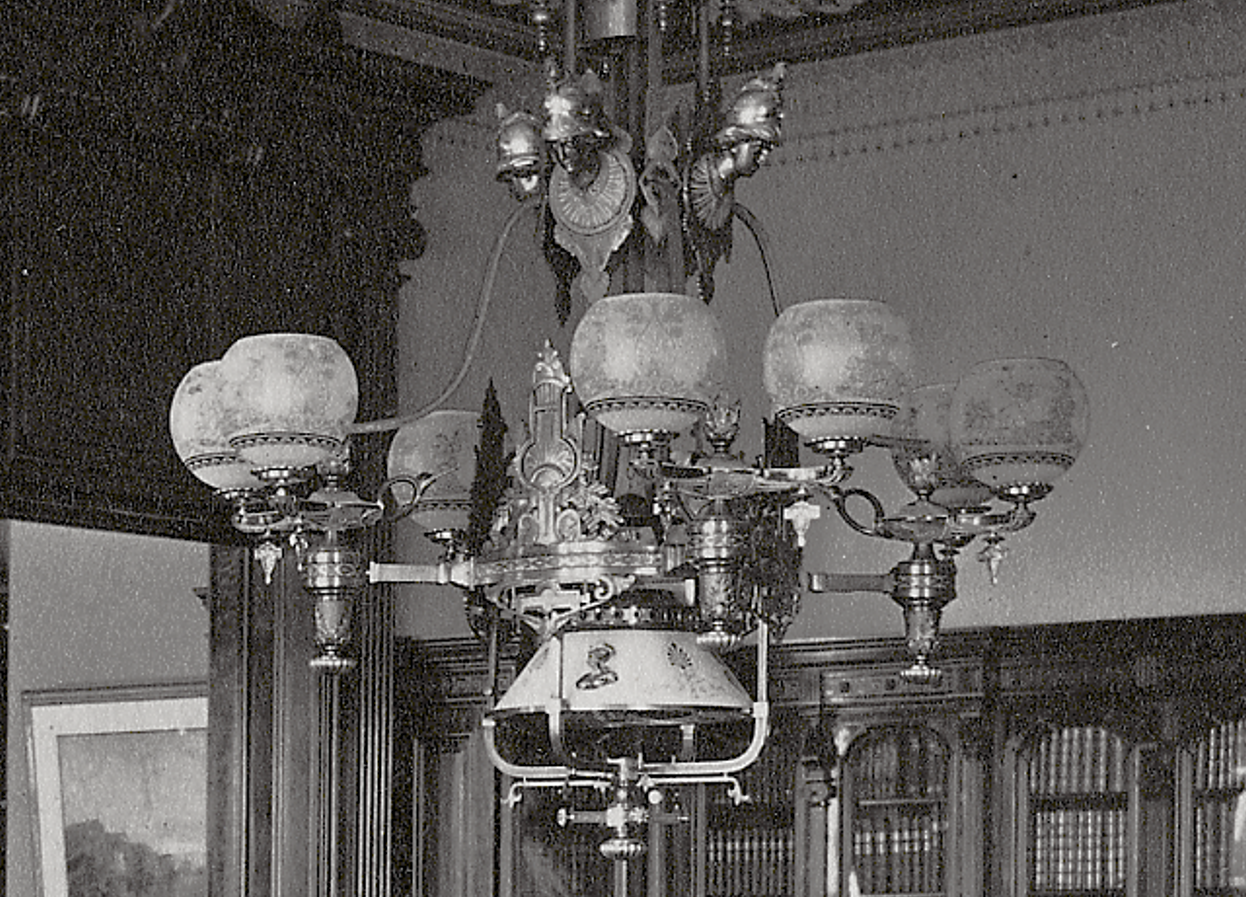
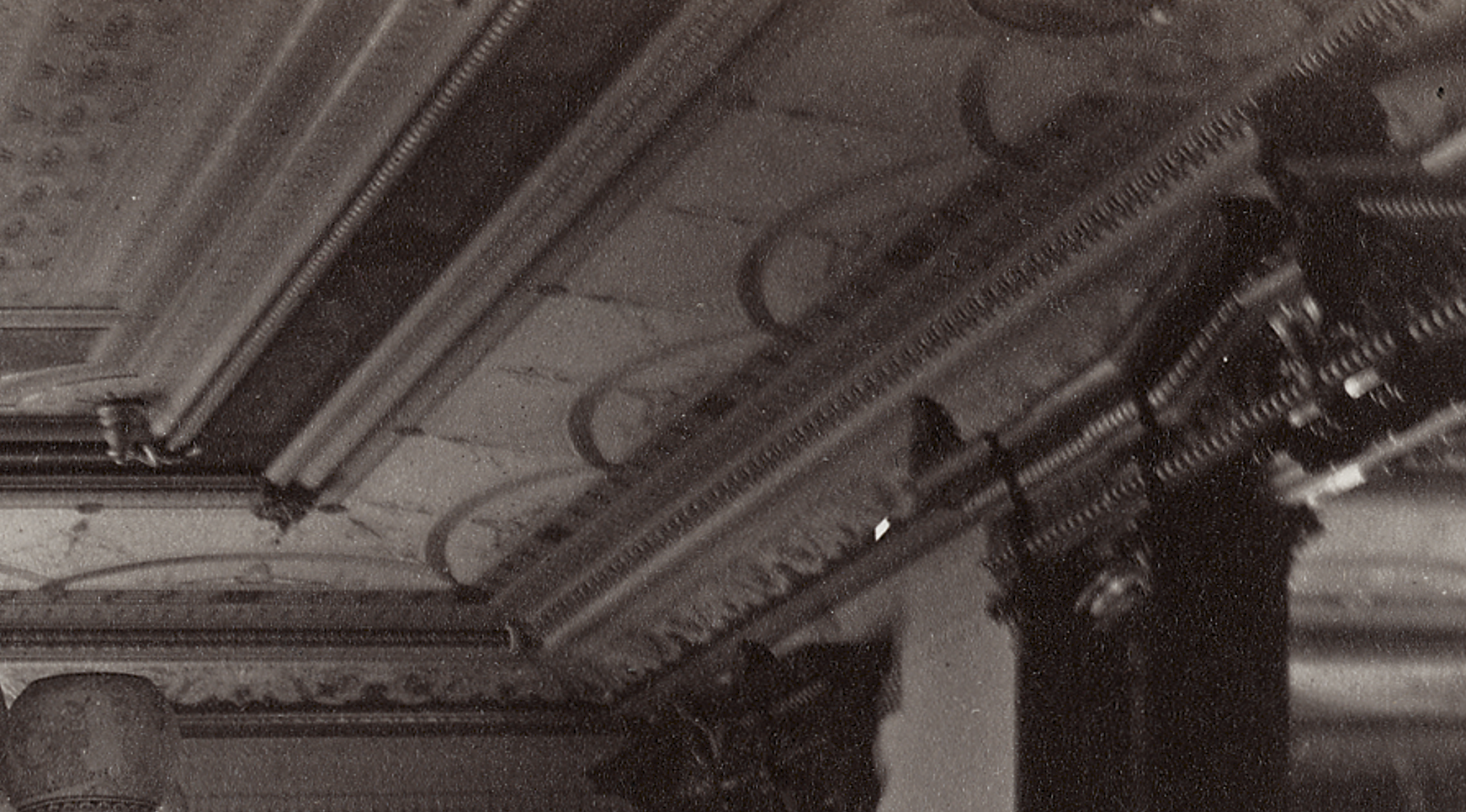
You can make out a very delicate frieze painted on the wall below the cornice the follows the lines of the room but it is difficult to make out fully.
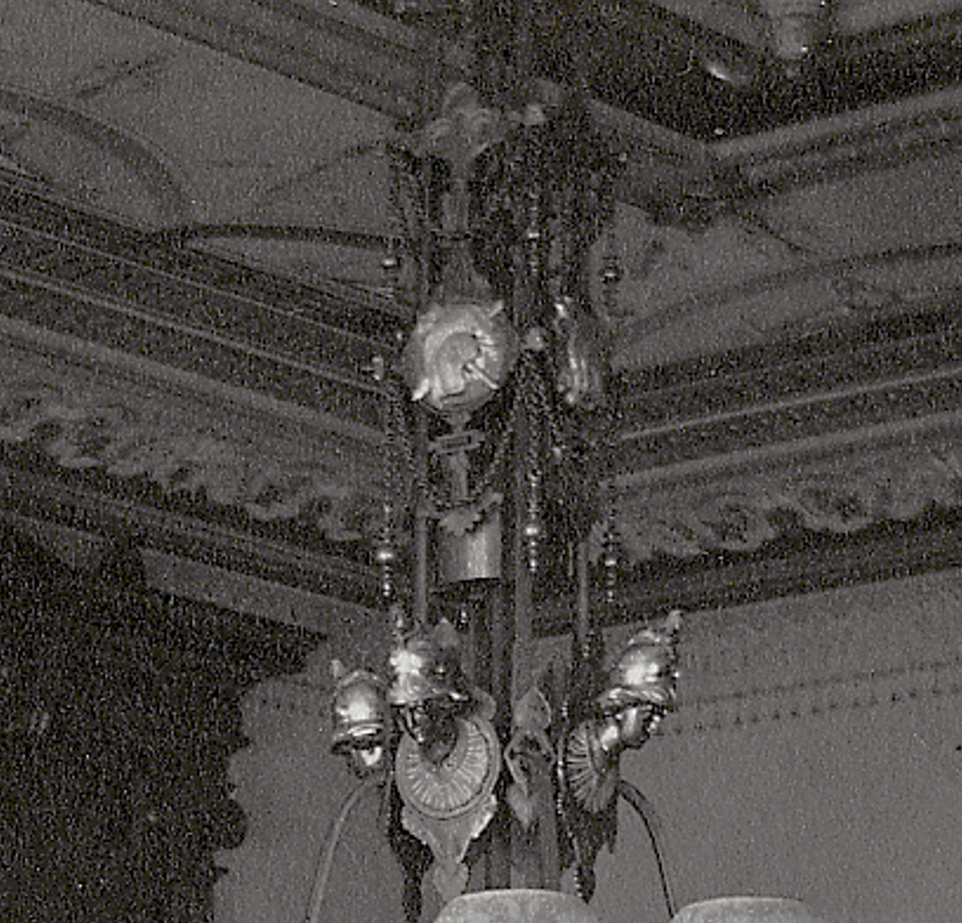
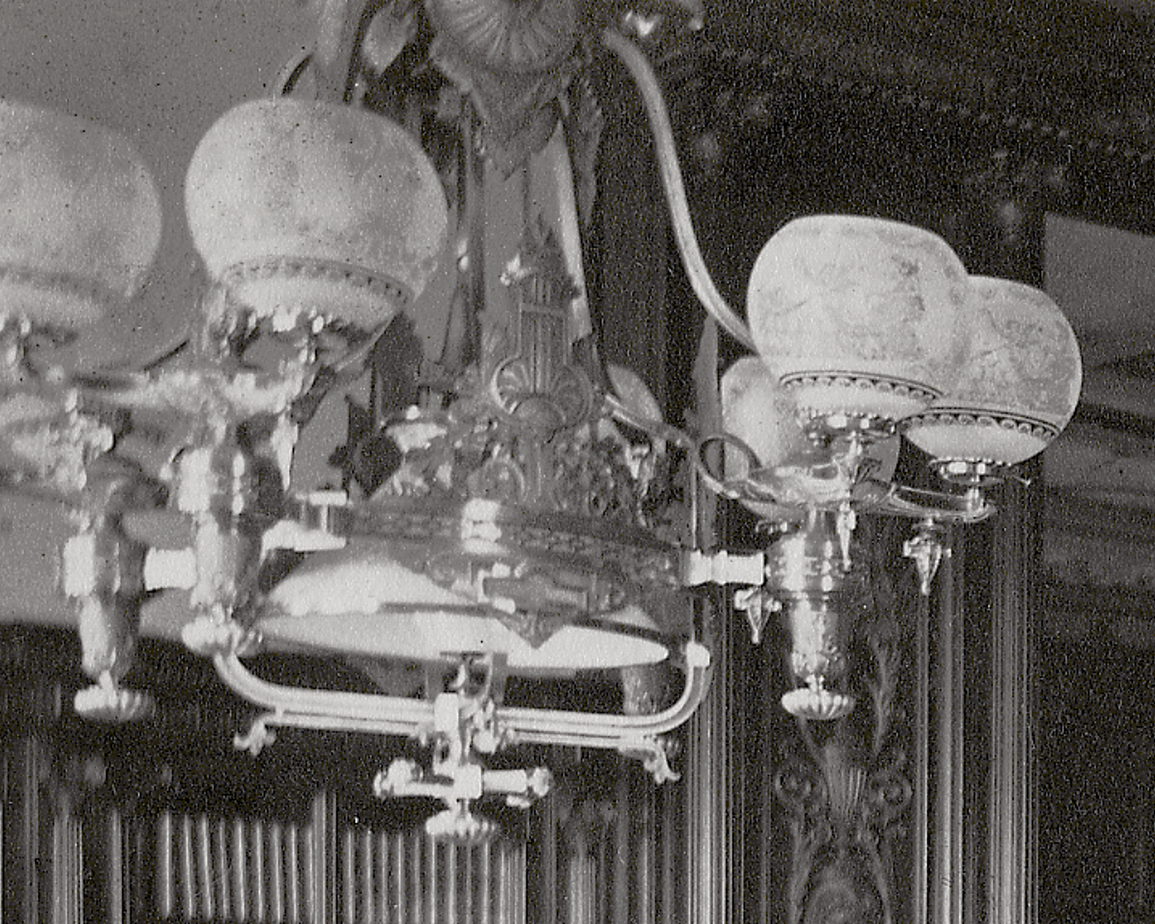
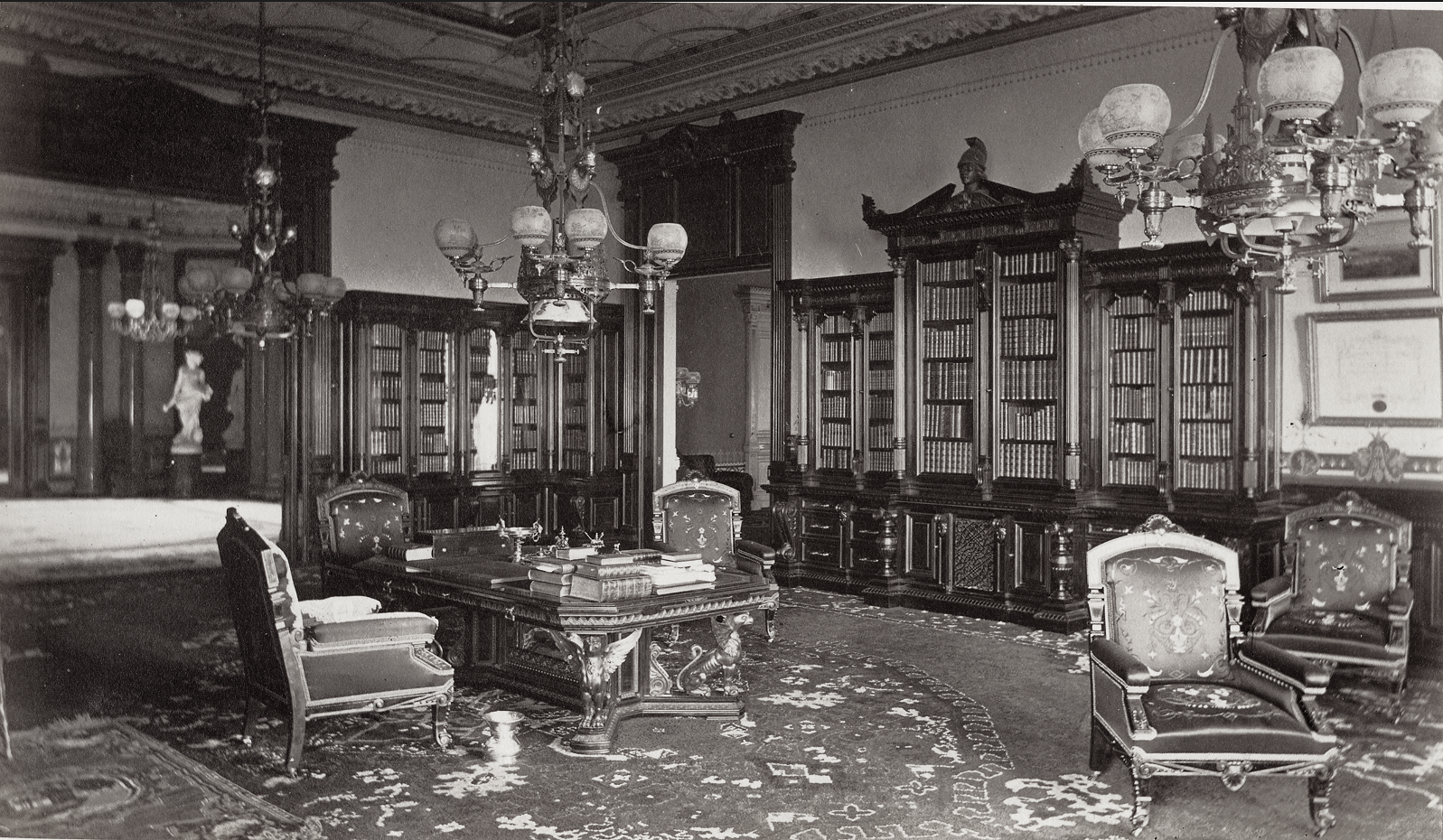
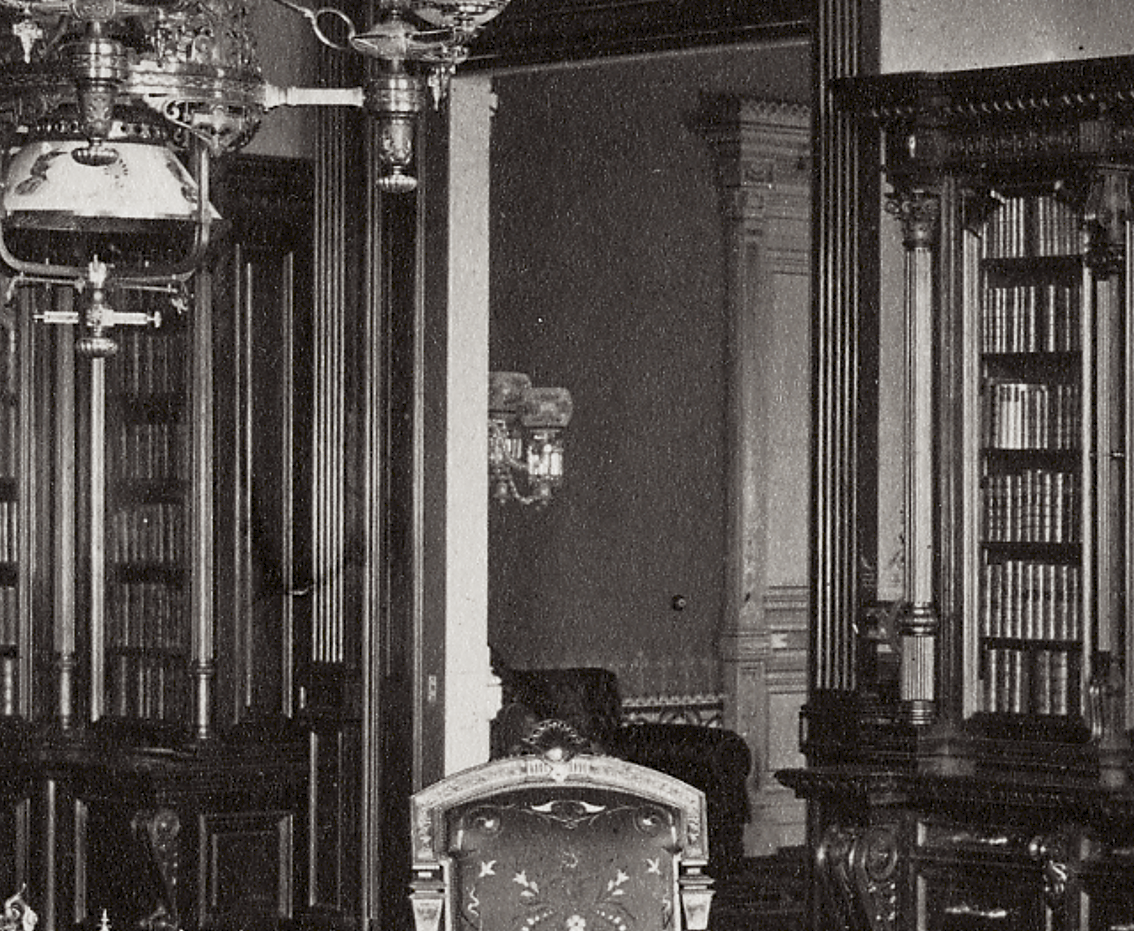
There is a large bookcase on the north side, and two smaller ones at the northwest corner, solidly finished and in keeping with the other appointments.
San Francisco Chronicle; April 2, 1876
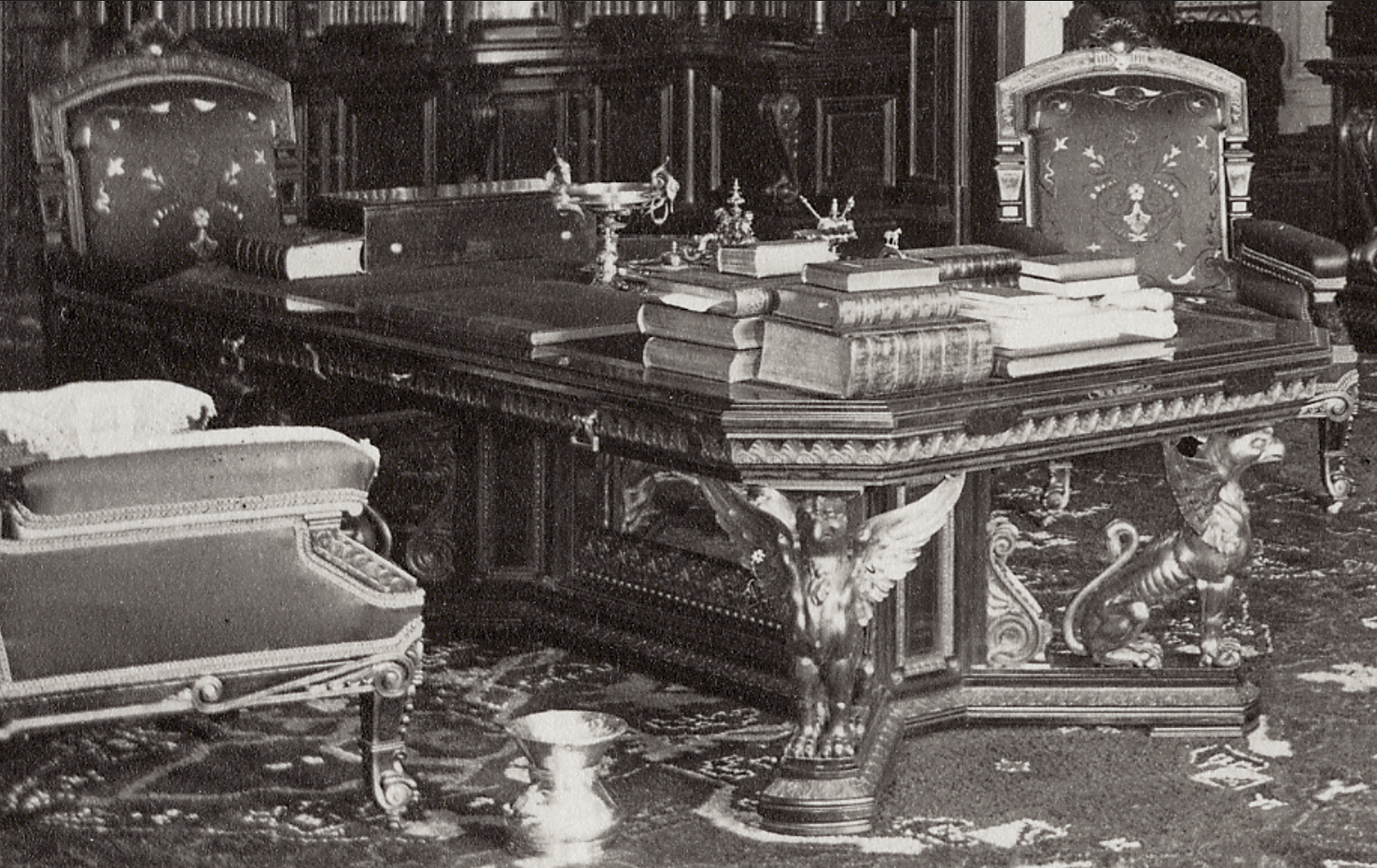
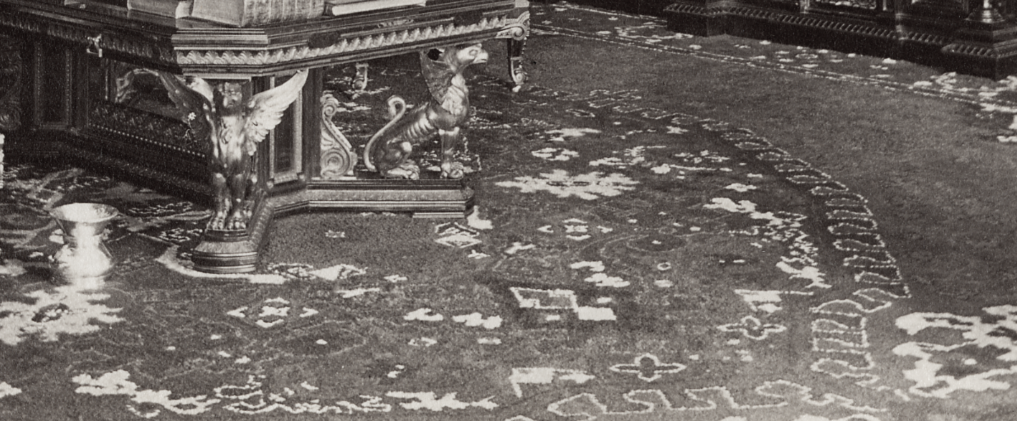
The library is furnished with everything imaginable appropriate to such a place; its Turkish carpet is in one whole piece and appear to have been manufactured to order for that particular apartment.
The Pacific Appeal; June 24, 1876
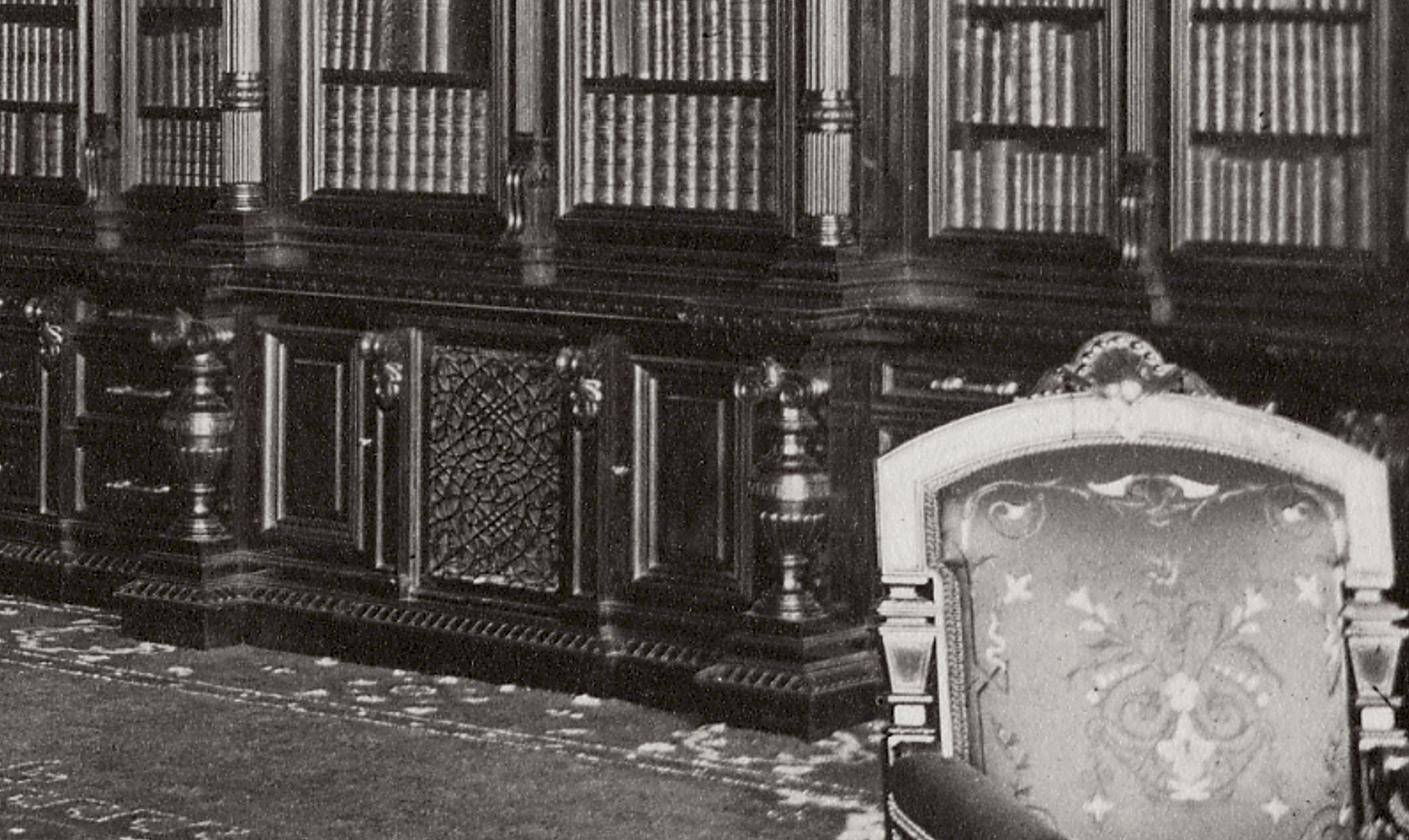
According to a surviving catalog of Governor Stanford’s Library, the room housed approximately 3,000 volumes. The collection included works of British and American literature, history, philosophy, science, books relating to China, and the writings of John Ruskin, reflecting both Stanford’s broad intellectual interests and the Library’s role as one of the most important working rooms in the mansion.

Explore the Stanford Mansion Series:
Exterior & Grounds | Grand Hall | Reception Room | Library | More to come…