Bell Collection: Name that Painting . . .
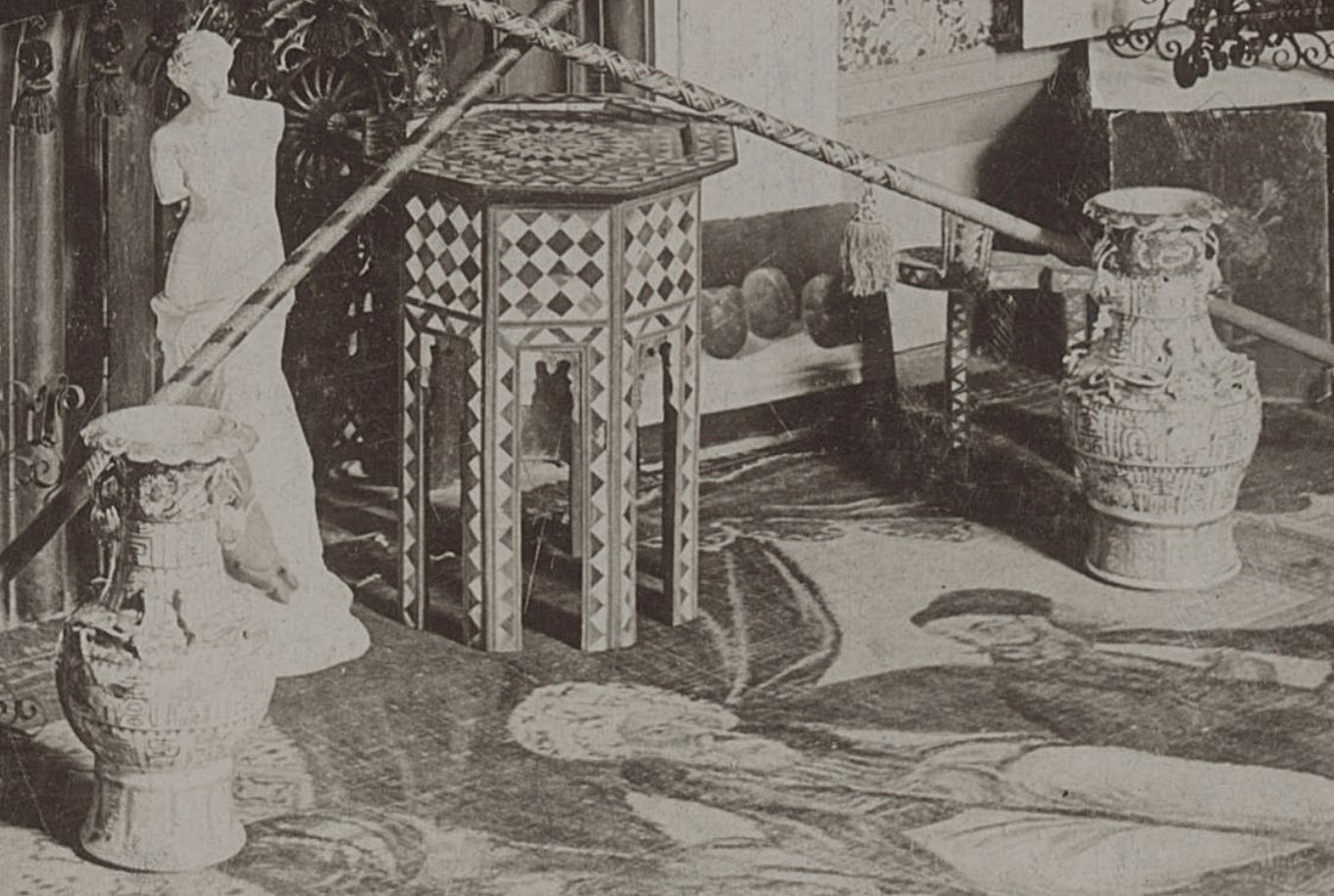
This fascinating photo is listed among the Bell Papers as Bell Home Interior. The room is strikingly different from the other rooms we've explored, in several noticeable ways that you'll discover during this in-depth study. What we see here is a classic example of an 1880s interior decorating style—specifically, that of a gallery or artist’s room—featuring juxtaposed paintings on a papered background, artistic accoutrements clustered on shelves and tables, and layered carpeting. These are among my favorite types of rooms to explore.
As we examine the many intriguing objects in this space, we must remember that while it is listed as part of the Bell Home collection, it remains unclear whether this room was actually part of that home. What do you think?
When reviewing the photo, consider the following:
First. Was this photo taken before the fire? The mantel appears to be of an older style.
Second. Was this photo taken after the fire, and could these be paintings that were cleaned and salvaged from the home?
Third. Was this room located on the second floor of the home? The ceiling appears lower than those seen in first-floor photos and is more consistent with second-floor ceiling heights.
Fourth. Was this photo even taken in this home at all?
Don't forget to click the image to make it larger!

These are among the most rewarding rooms to research, as they are filled with historical detail.
Let’s dive deep into this photo. We’ll start at the top left and move across the upper row first, then snake our way back and forth across the walls of this fascinating room.
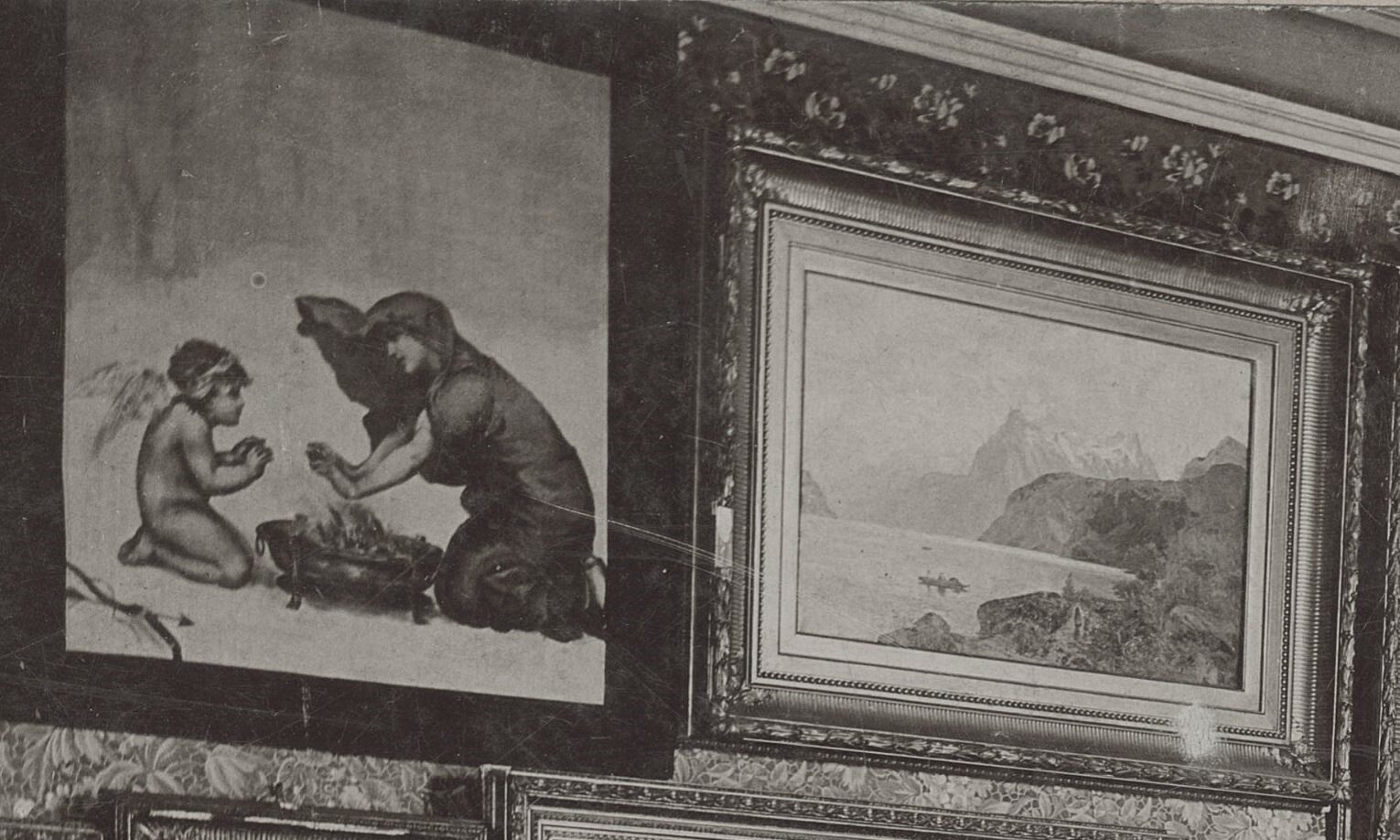
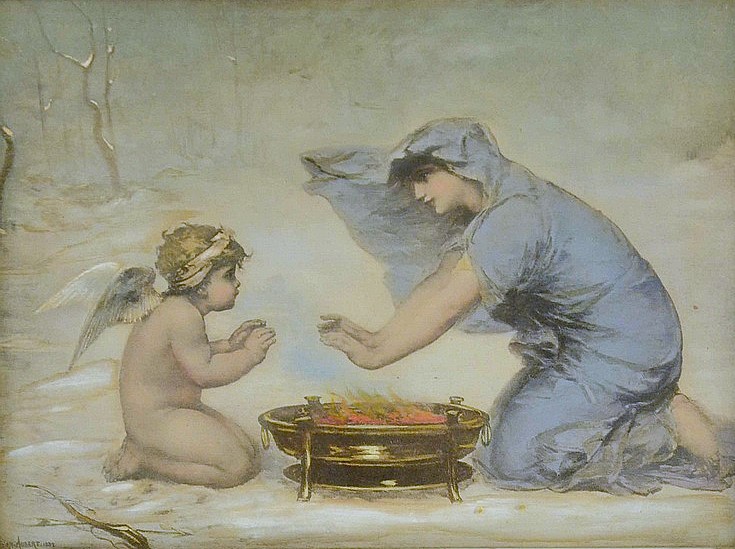

If you look closely, you’ll notice that none of the artwork in this room is hanging from the picture rail—there are no visible hooks or wires. Instead, all of the paintings appear to be mounted directly onto the wall.
Both frames show visible signs of damage, and the picture rail molding itself is in rather poor condition. This brings up a few questions: if this room was part of the original structure, was the photograph taken before the fire? Or could it be that this space wasn’t severely damaged and was simply repaired instead of being completely reconstructed?

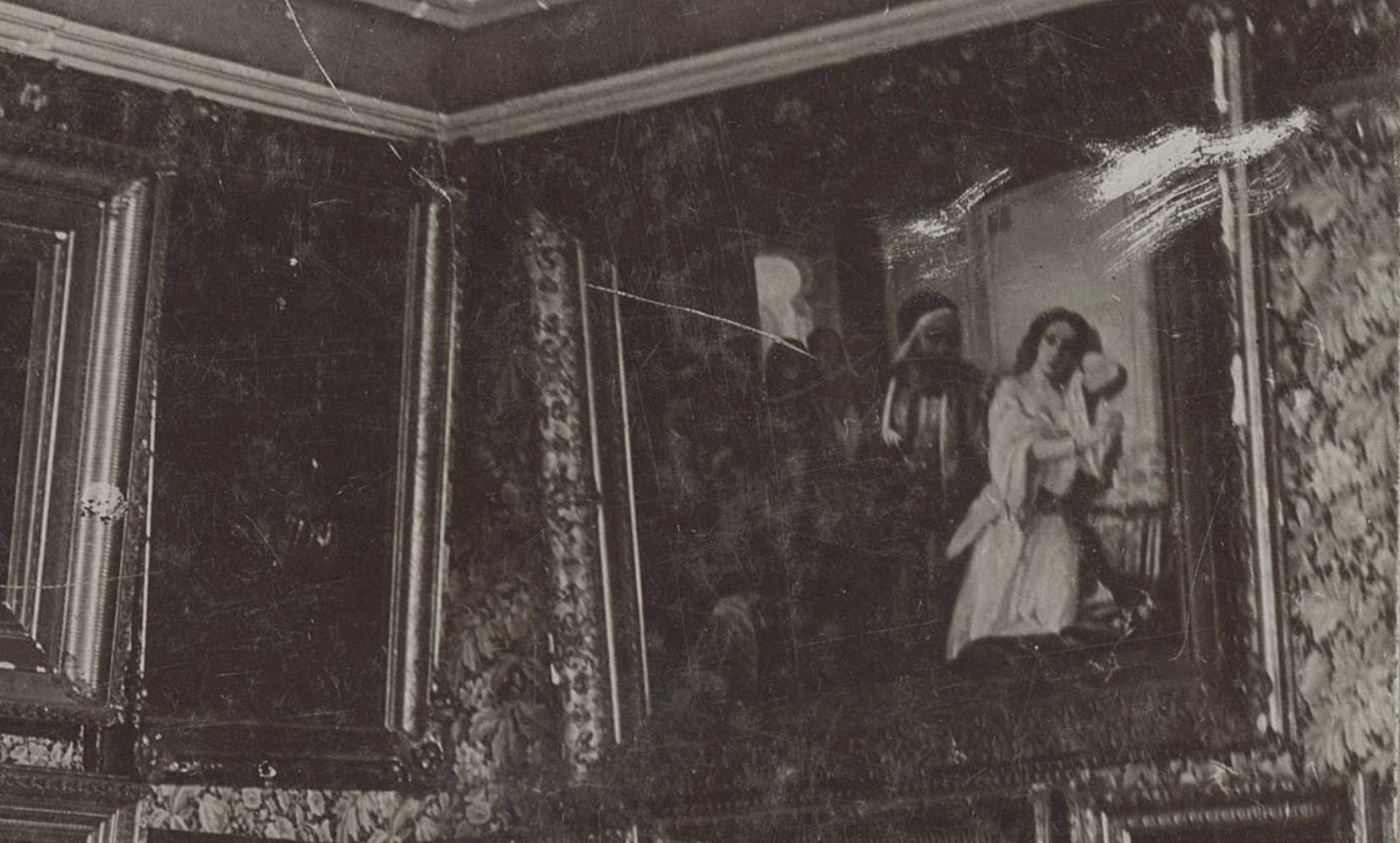
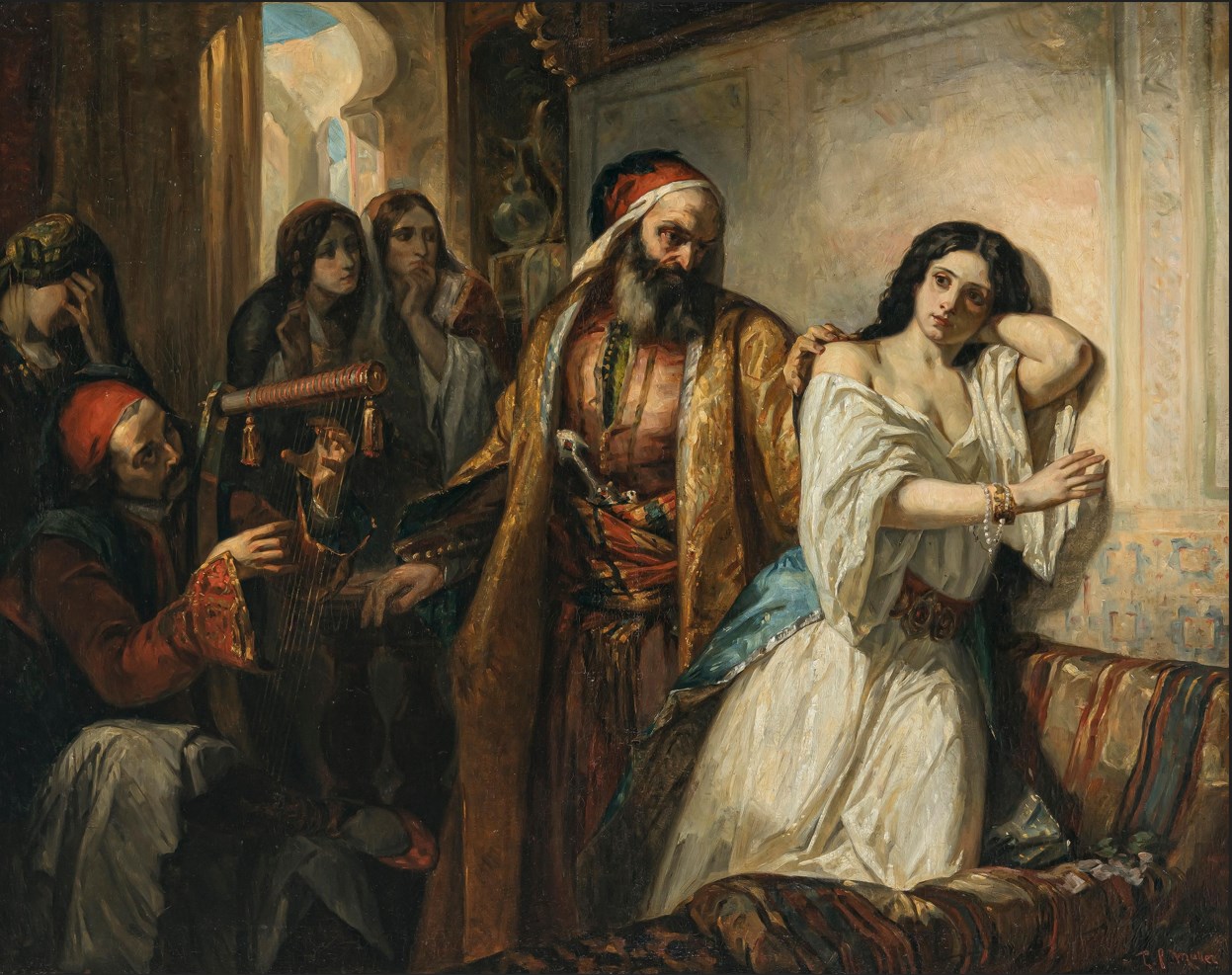
Thanks to Obscurus for identifying this painting as ‘La folie d’Haydée’, 1848, by Charles Louis Lucien Müller!

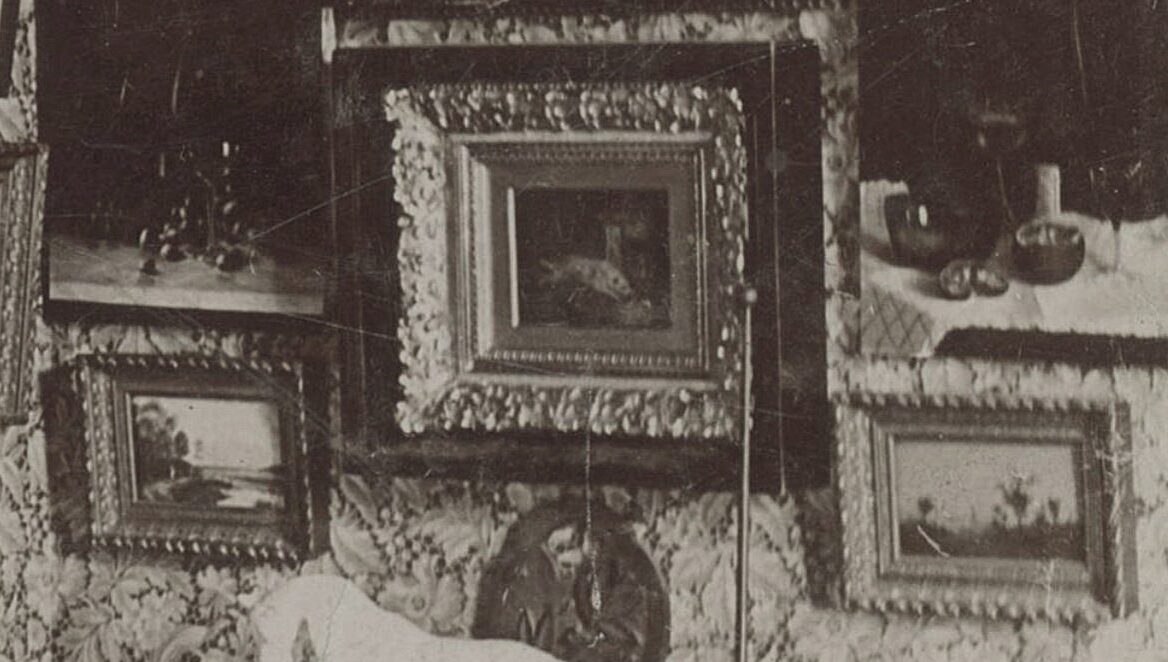
The frameless paintings on the left and right are also interesting to see mixed in among the more ornate gilded frames. Below, the two small paintings depicting scenes might even have been created by a resident of the home—an intimate touch in an already richly layered display.


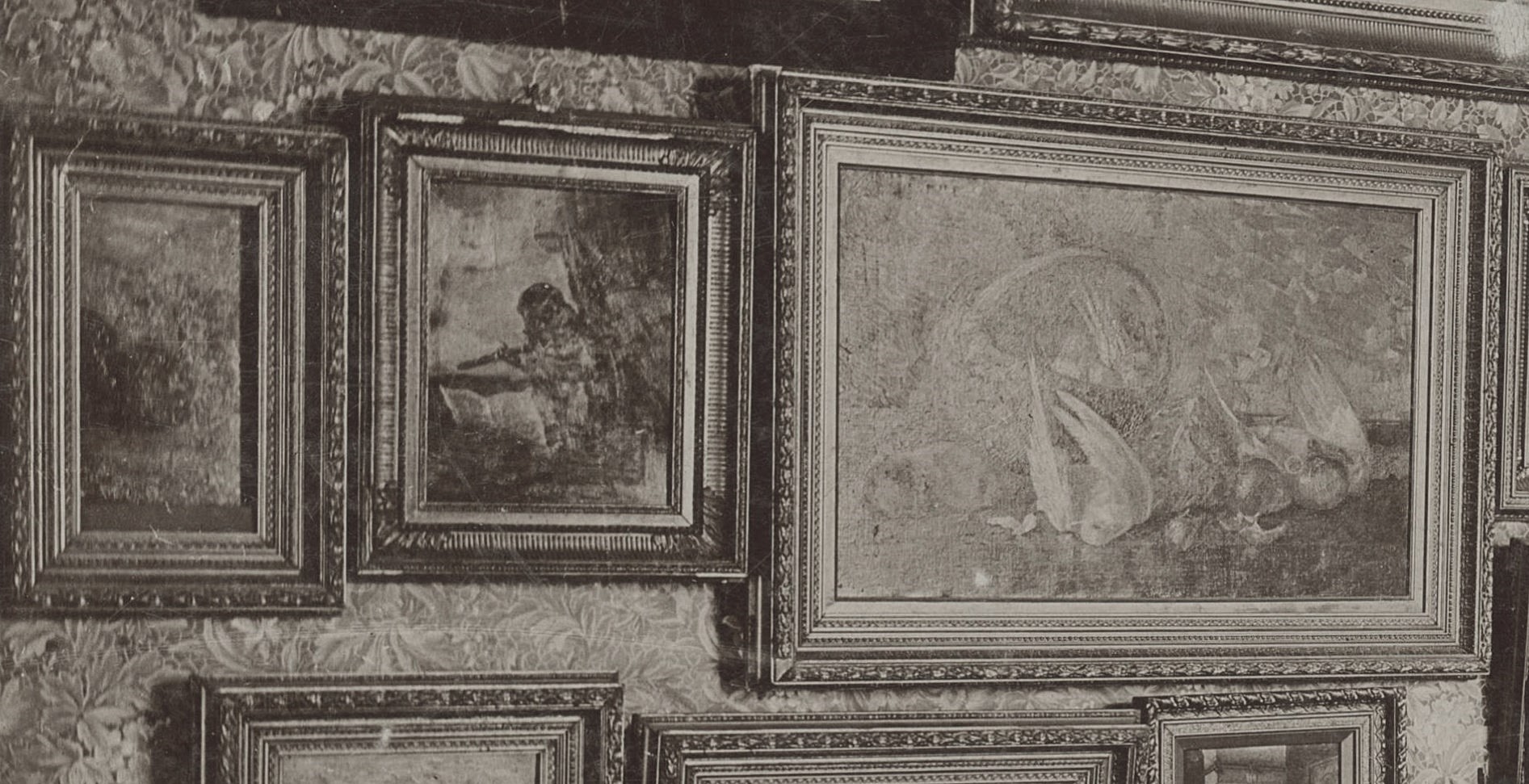


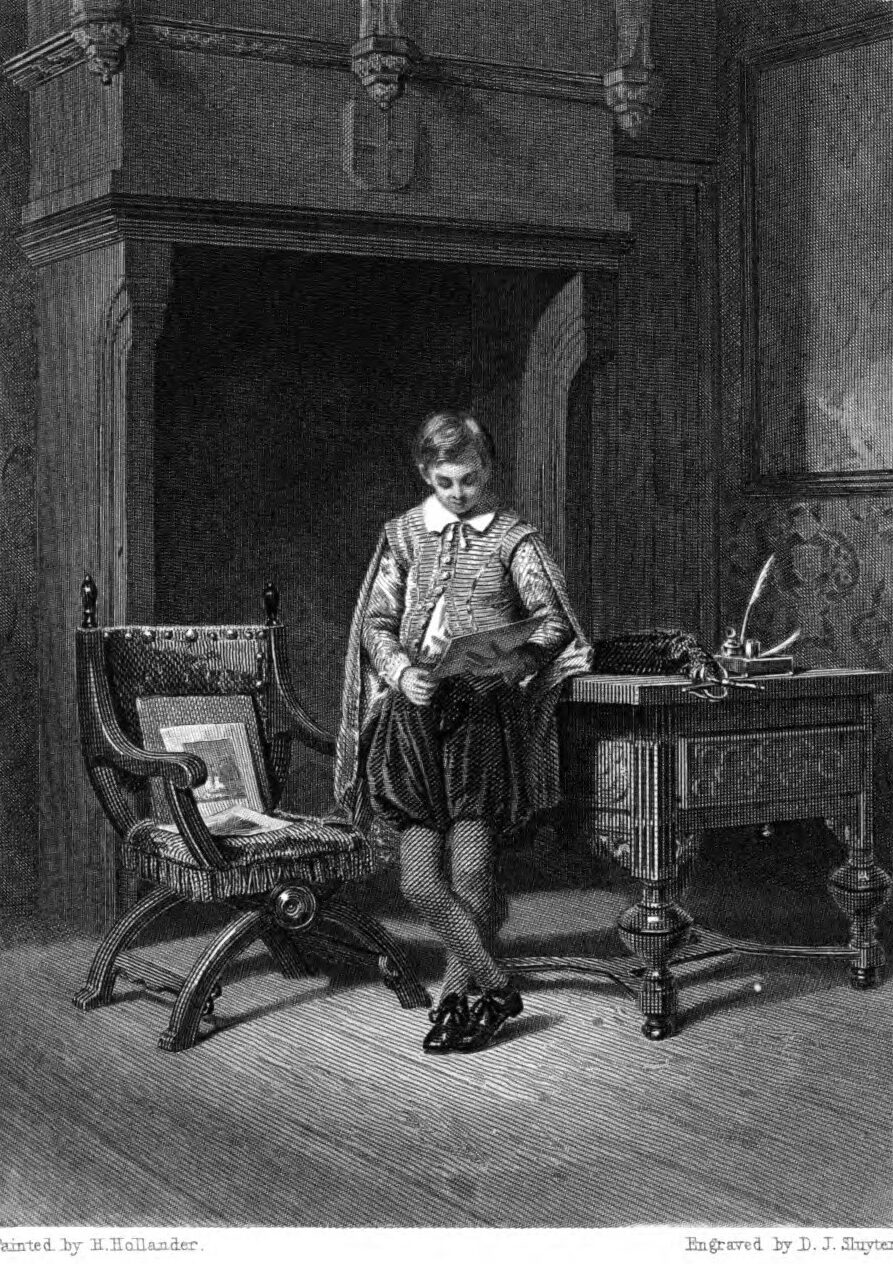
Thanks to Obscurus for identifying this etching which is published in “The Casquet of Literature” Volume 4, ed. Charles Gibbon, 1874. It is attributed as painted by H Hollander, engraved by D J Sluyter.


Note, the baseboard molding is painted in two colors.
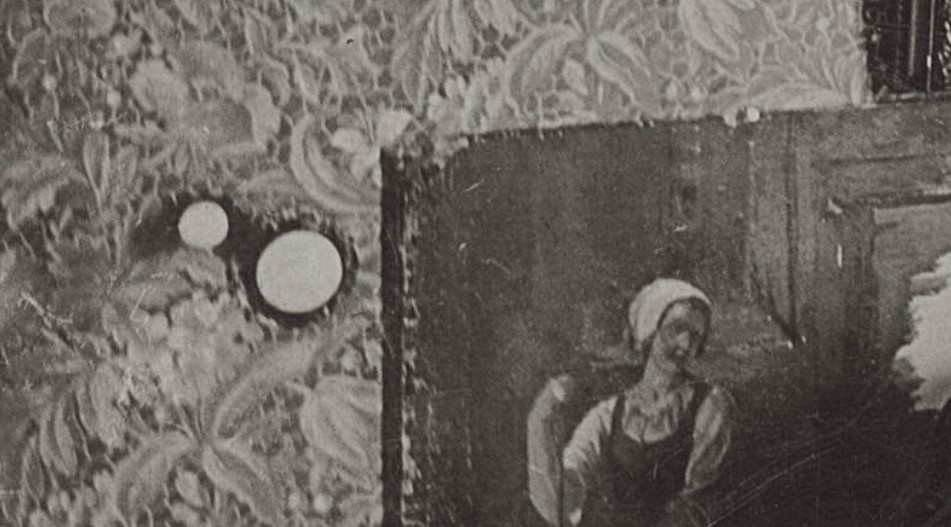


Thanks to Grant for identifying the large pair of pipes crossed in front of the fireplace. They are chibouks, a type of tobacco pipe.
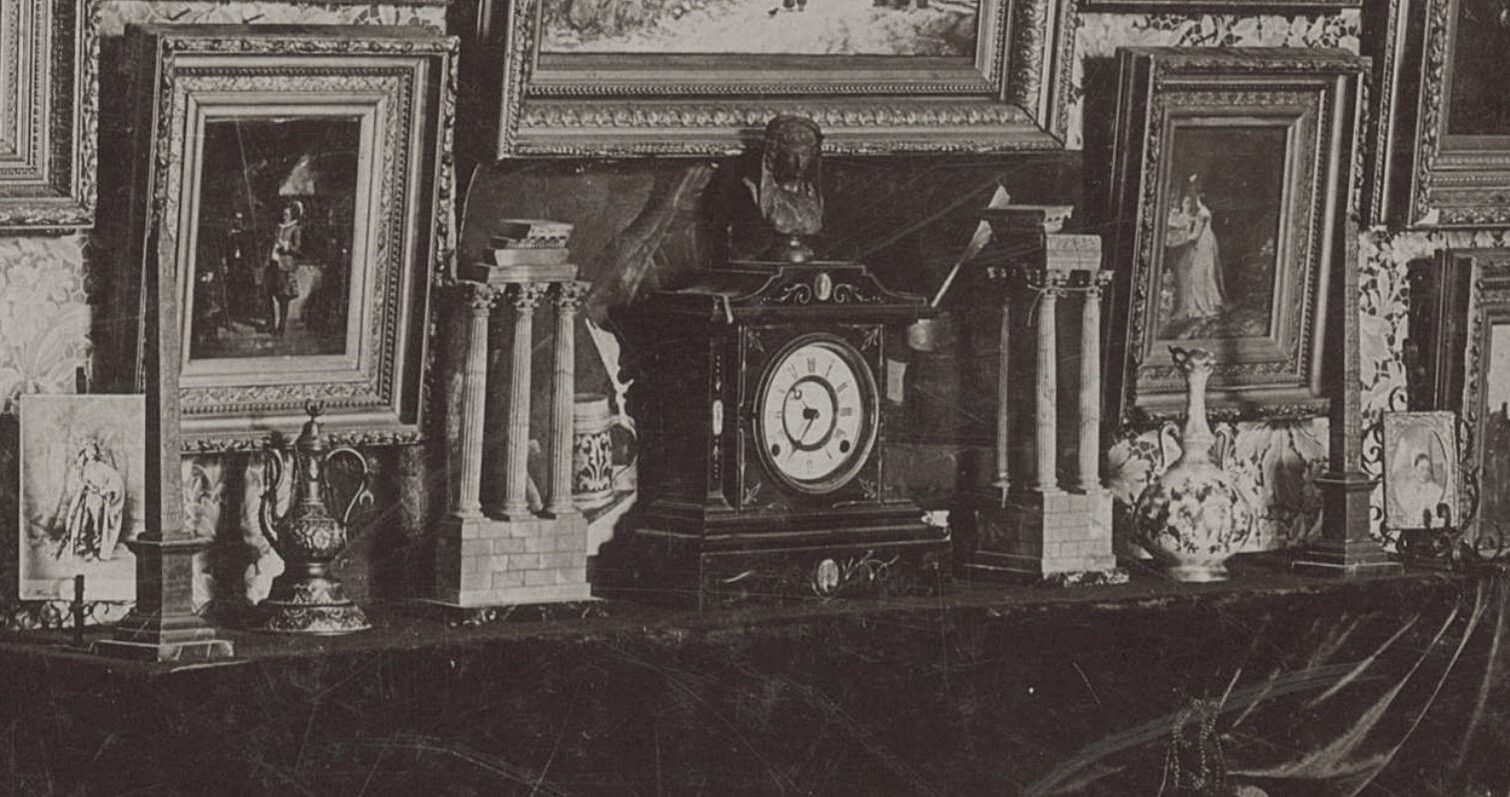
Looking closely at the mantel shelf, we have an array of carefully arranged and symmetrically placed objects. Let’s explore each item from the center outward:
- A mantel clock with a bust topper sits dead center, anchoring the entire arrangement as well as the room around it.
- Flanking the clock on both sides are column fragment replicas believed to represent the Temple of Castor and Pollux from the Roman Forum—perhaps collected as a souvenir from a trip to Italy.
- On the right side, there is a mass-produced decorative vase. To balance the symmetry, the left side features a contrasting piece—a small Turkish teapot.
- Next in the arrangement are two large obelisks accompanied by two cabinet card photographs. The photo on the left shows a person dressed in costume, while the one on the right appears to be a more traditional portrait.
- Both photographs are displayed in metal stands, one on each side of the mantel.
- Above the mantel, on the wall, are two paintings, one on the left and one on the right, completing the visual symmetry.
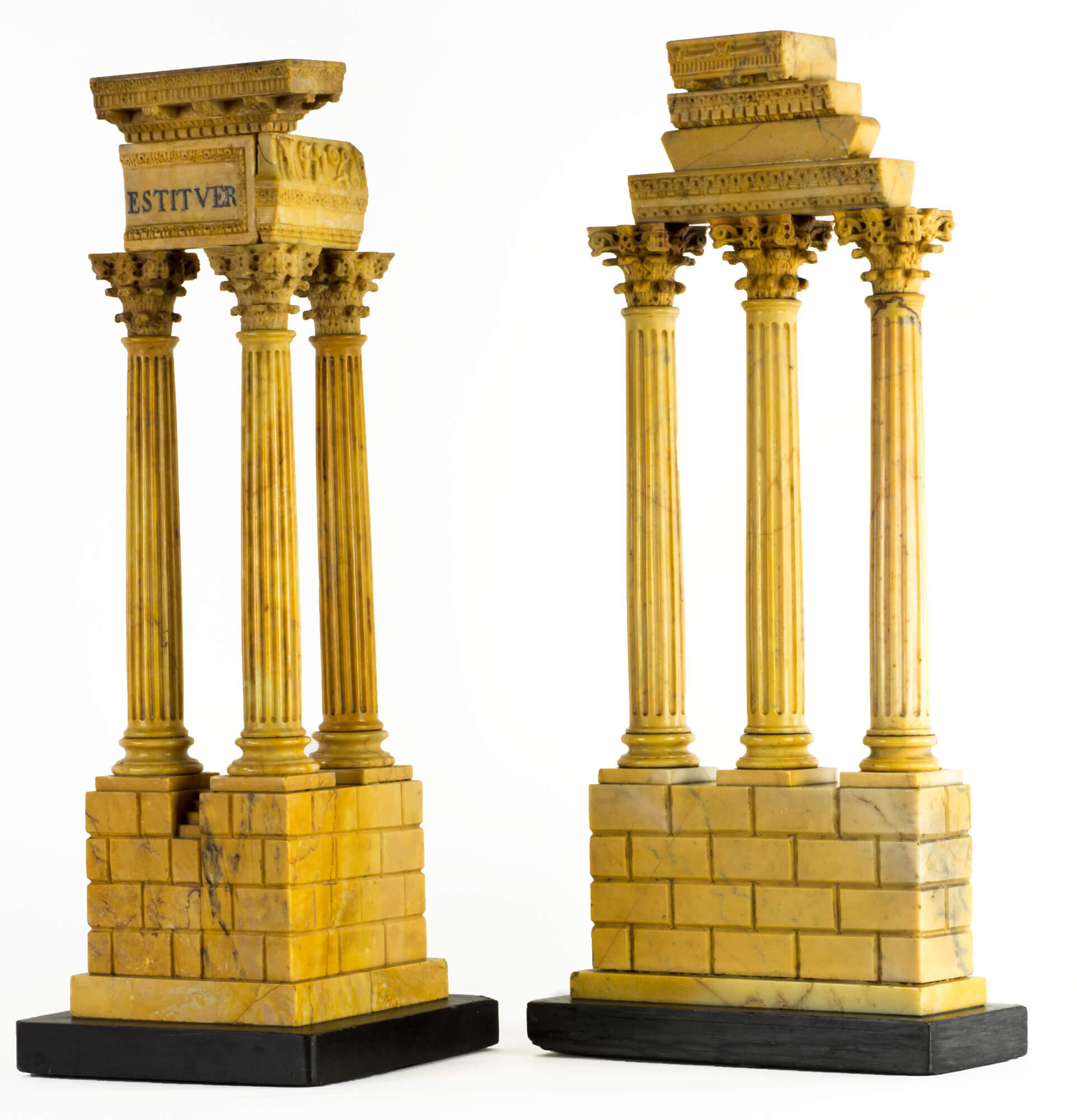
Thanks to Wright for finding this photo of antique souvenirs popular during the 19th century. The link to the website is listed in the comments section below.

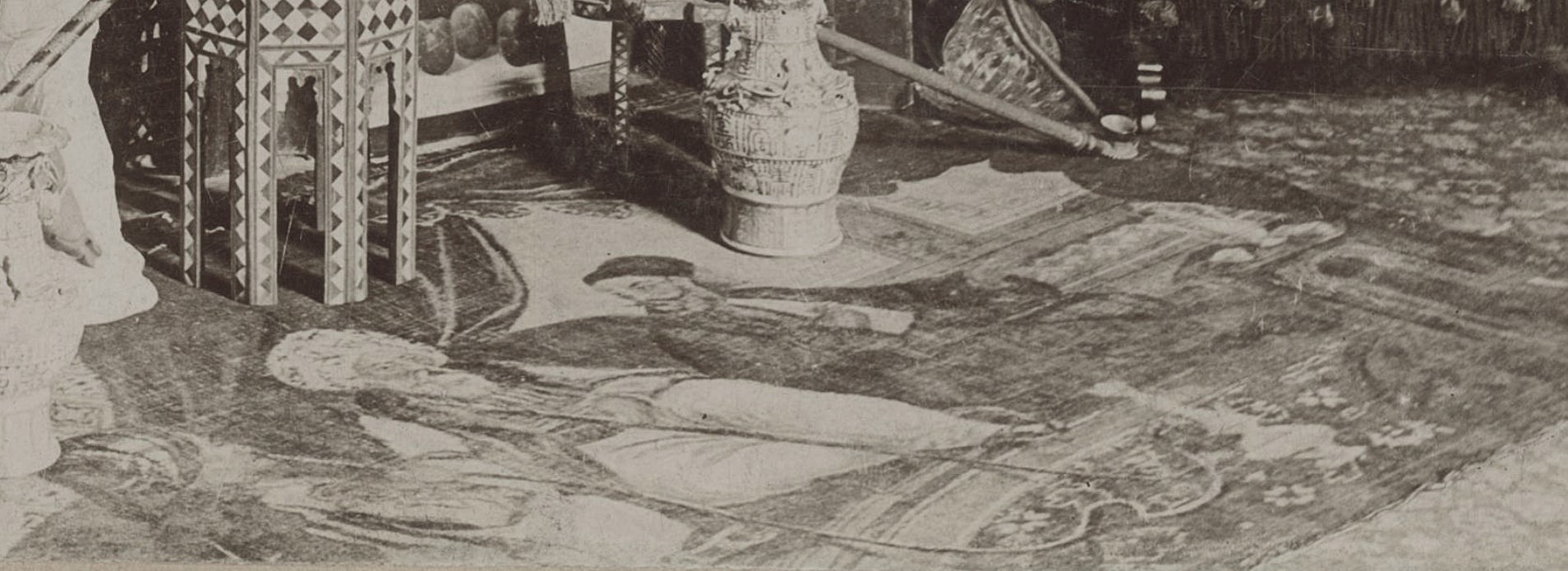


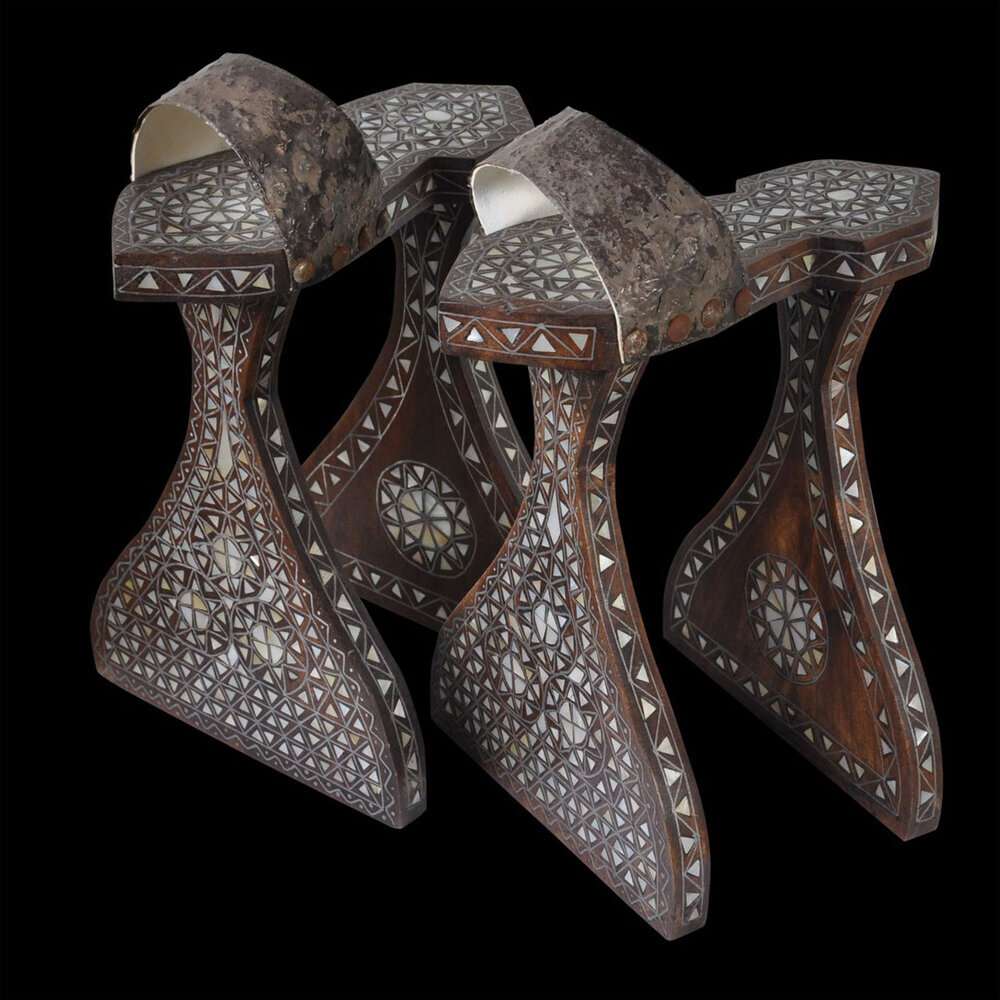
Thanks to Shelley for identifying the Ottoman silted clog or harem shoes!

This concludes the series on The Bell Mansion.
I hope you’ve enjoyed this time travel as much as me. Please post your thoughts below in the comments section if you think you identified an object or painting in the room.
Previous Chapters:
Click the images below to go back.
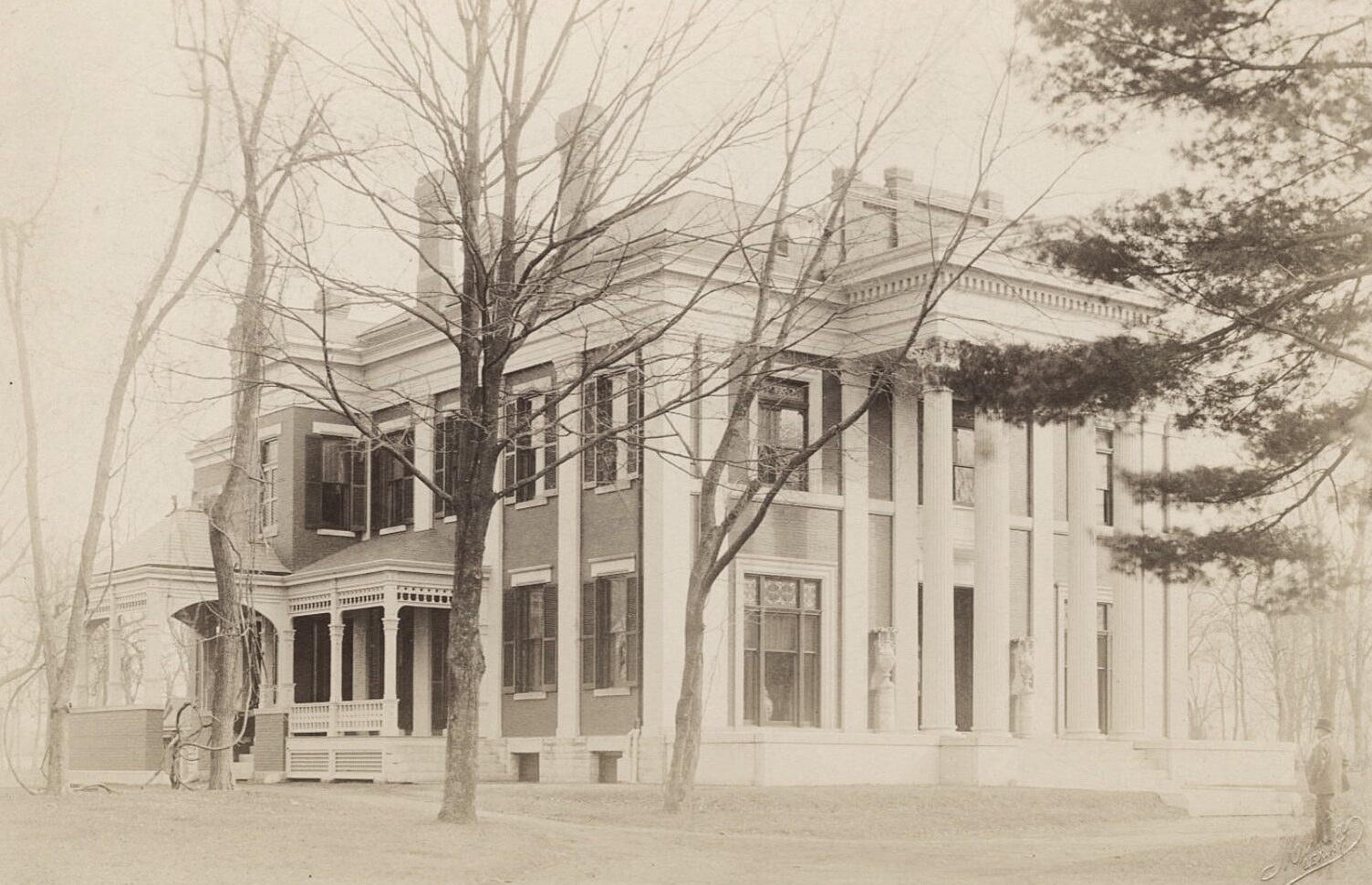
Bell Mansion: The Exterior
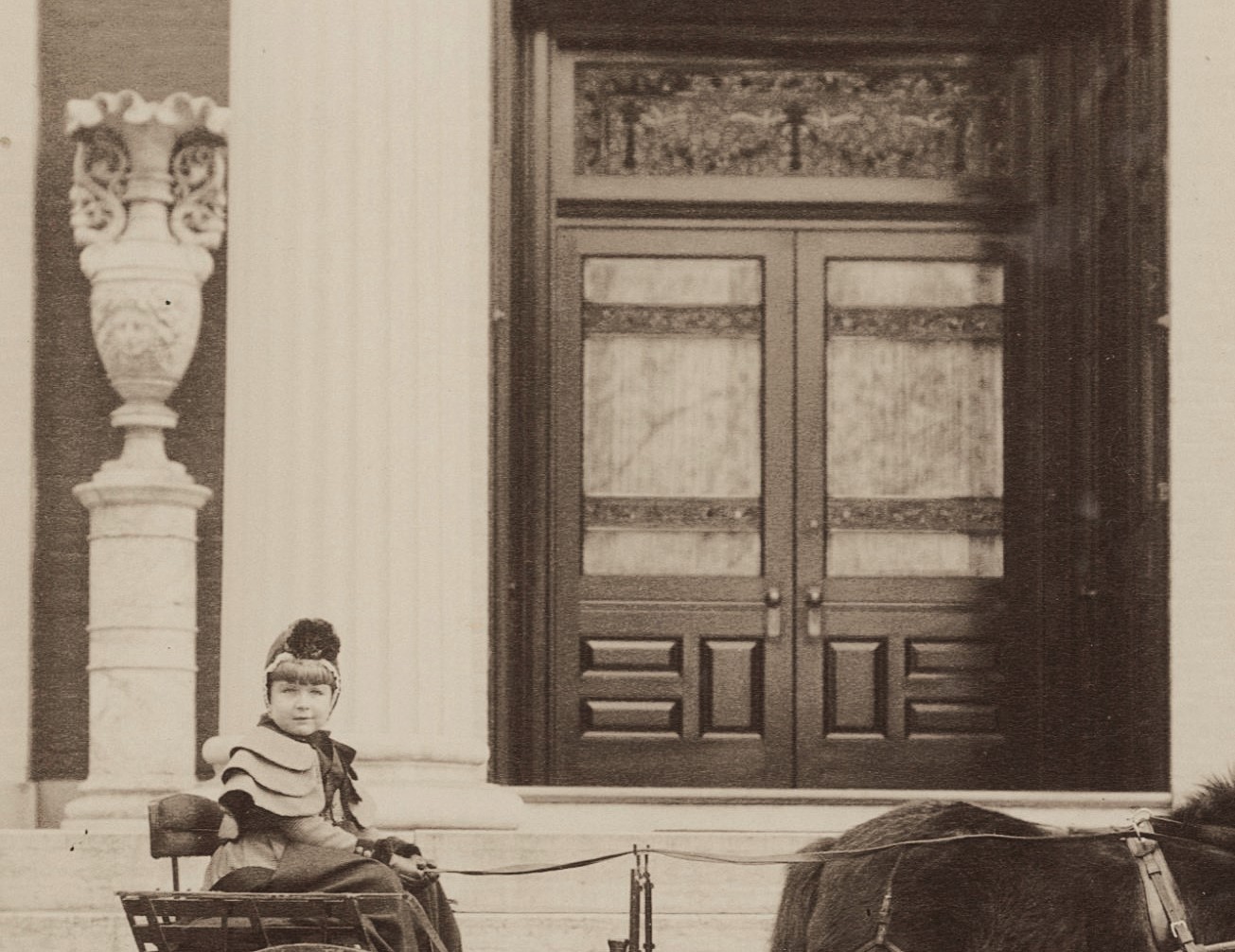
Bell Mansion: Hall & Sitting Room
Bell Mansion: Dining Room & Parlor