The Gilded Armory: Company Rooms F – K
10/18/24
32 Comments
This week, we will continue exploring more of the Company rooms located on the second floor of the building. In 1885, a booklet was compiled, providing descriptions of many of these rooms along with engravings.
A copy of the booklet, preserved by the New York Historical Society, is available here. Direct quotes from the original text are incorporated into the photo study below in italics, exactly as they appeared, without any alterations.
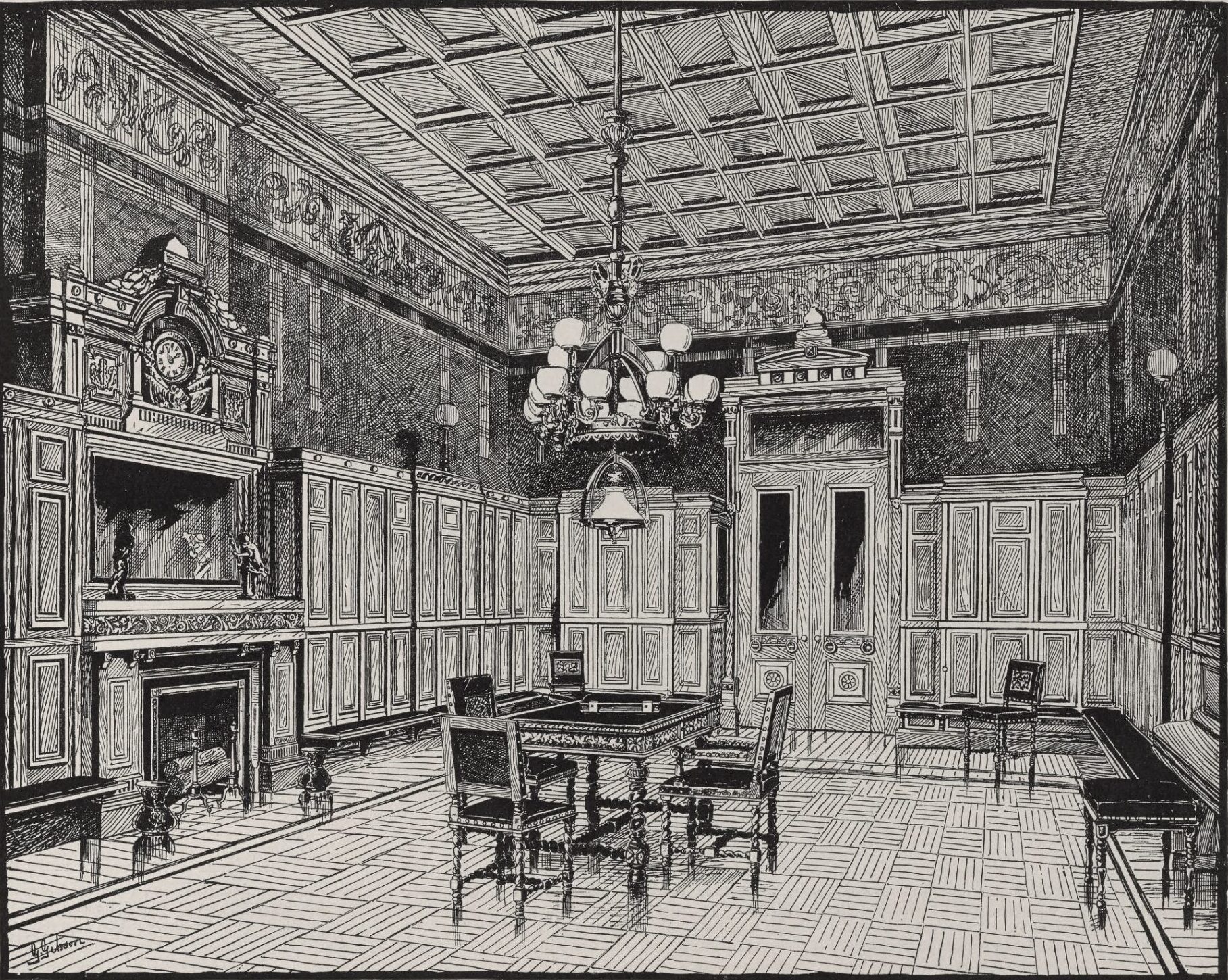
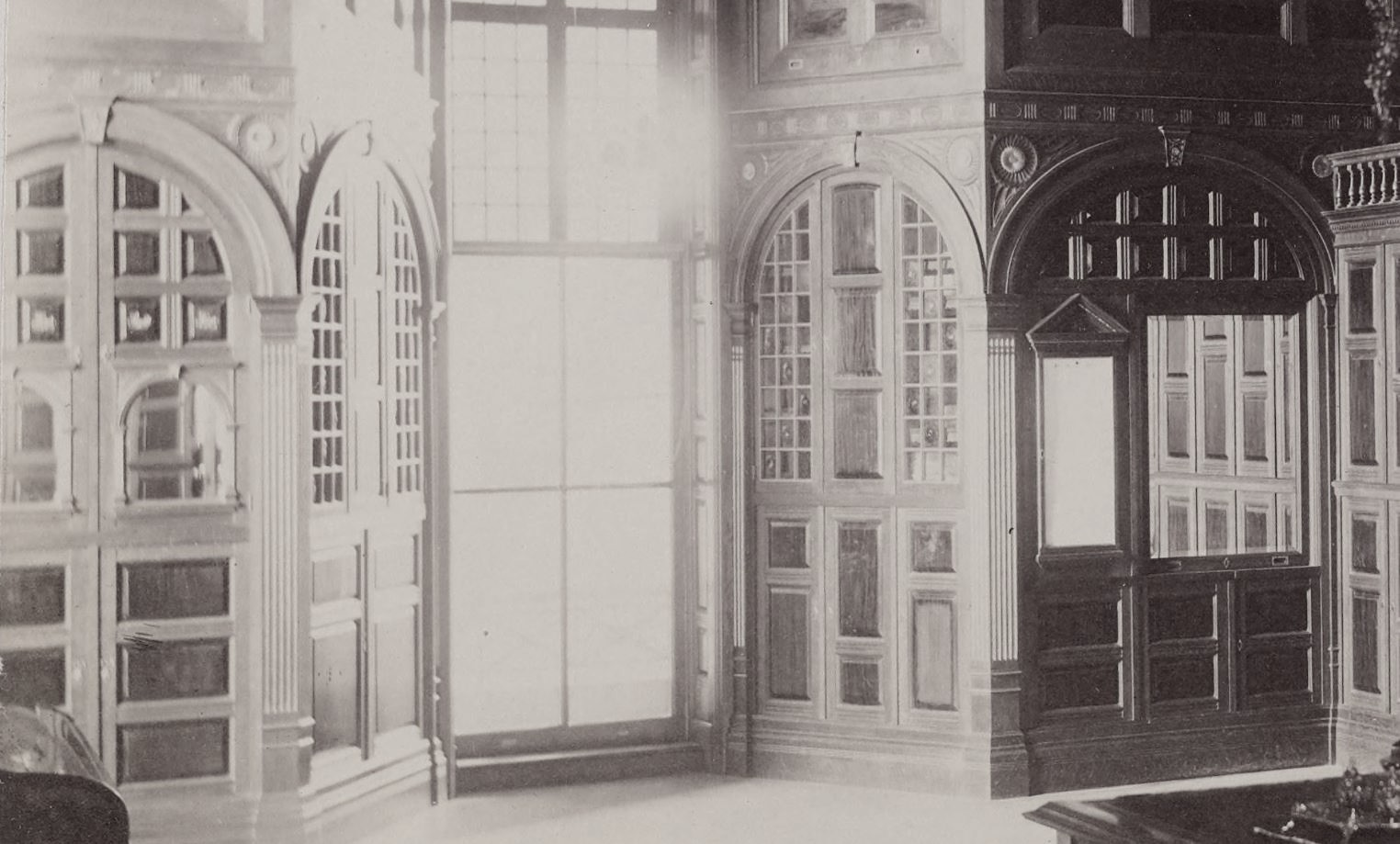
THE wood or cabinet work in this room is oak, the ceiling being richly paneled in the same, the panels small, but no less appropriate and handsome… Like the Fifth Company, this room has an apartment opening from it overlooking Park Avenue, making a second delightful retiring place, and where in summer the breezes that stir in this portion of the city seem to center and make it comfortably cool. Over the window leading to this small room is a memorial tablet, chaste in design, unique and massive ; it bears the names of those former members killed in our Rebellion. Surmounting the other window is an unusually large open-work mahogany screen or transom, in a phase of the Moorish style, a particularly neat idea. Between the windows stands the trophy of the “Team of Five,” held by this Company. Upon the shield is engraved the record of the contest for the season of 1883-84, showing that the points scored by Company F were 614 against the 611 of Company B and the 610 of Company H. On the mantel is a fine bronze Pan, presented by J. H. Abeel, Jr., as a perpetual challenge emblem for ten-men teams, and on the Captain’s table, a magnificent COVELL DUPLEX LAMP shed a light that is hardly rivaled by electricity itself.

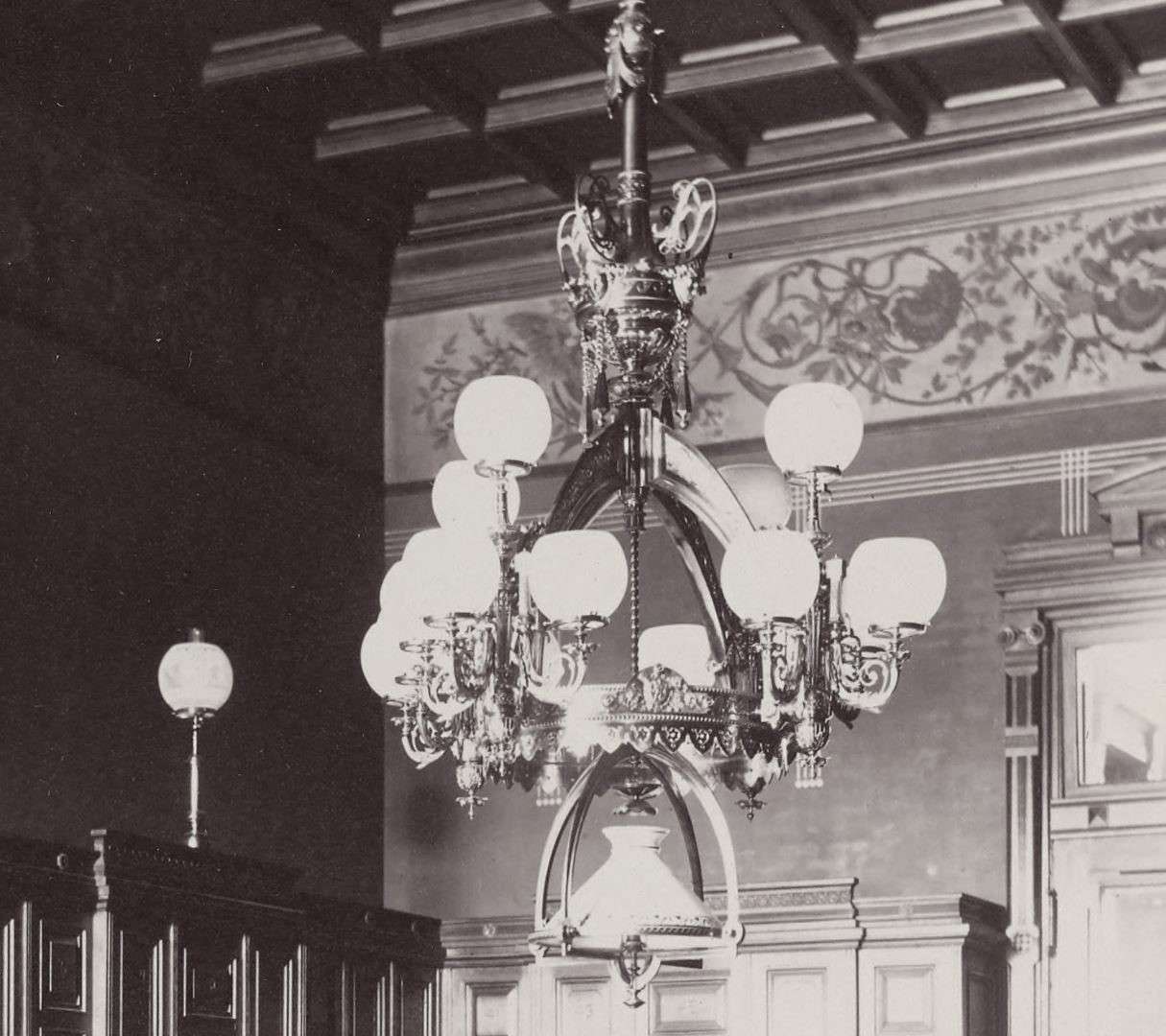
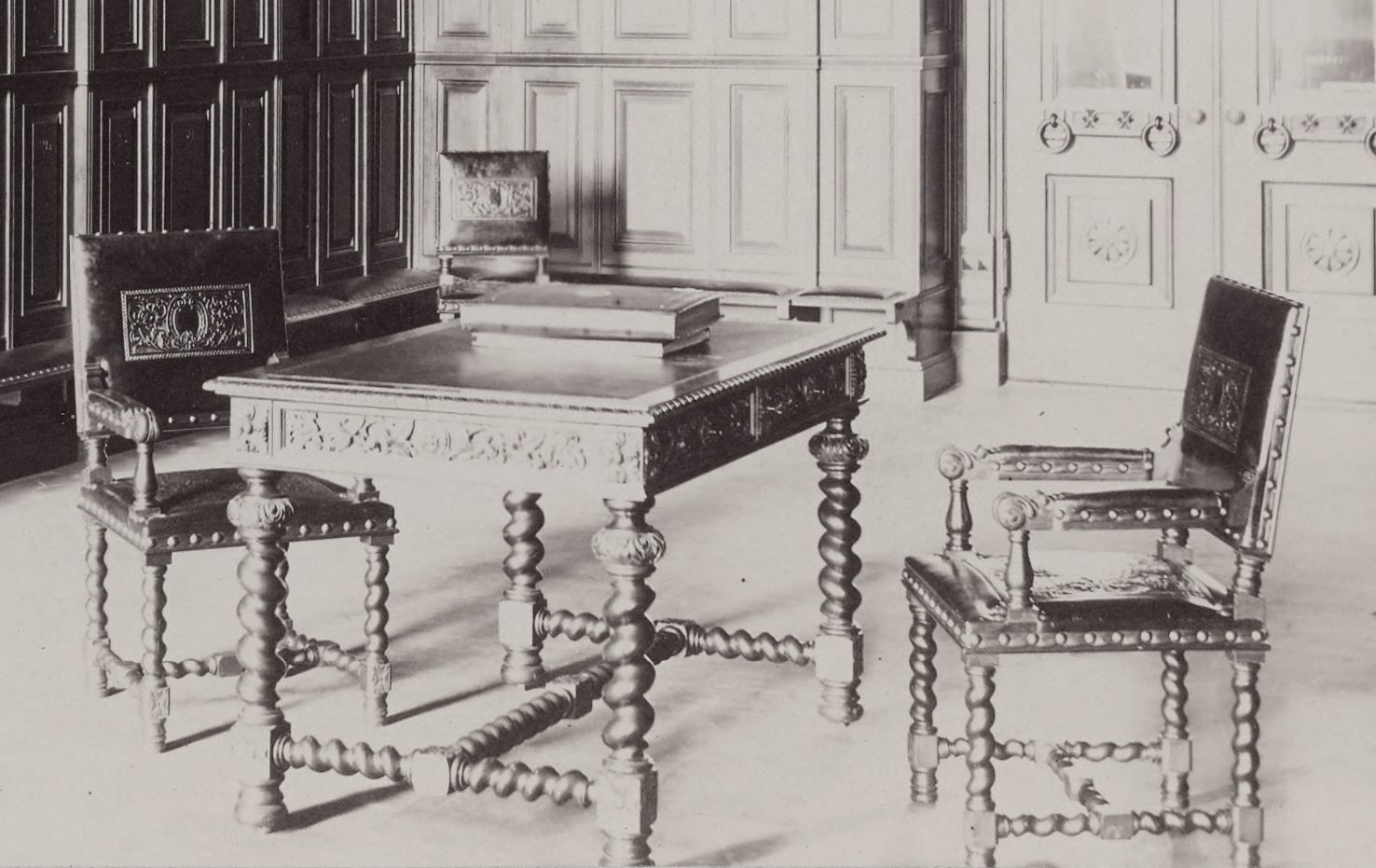
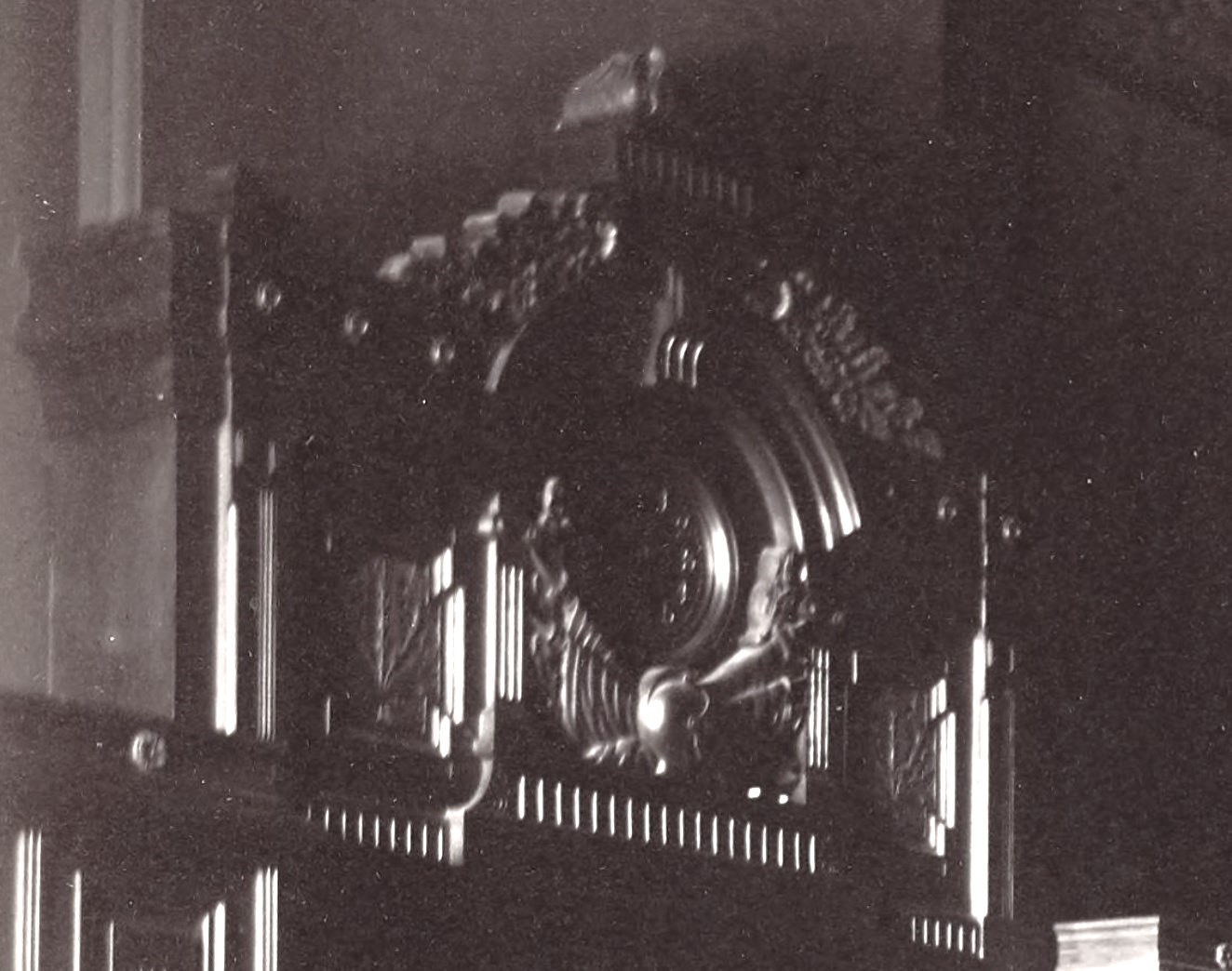

OAK has been selected and very properly for several of the companies’ rooms ; its appearance is rich and it conveys the idea of staunchness and permanency that seem eminently the thing for such a purpose as this. No where has the use of this material been more judicious and more effective than in the present instance, where all the other details of arrangement have been brought in harmony with the requirements of the oak. The wood is finished so as to give it a richness even greater than that which nature bestowed upon it… Over the shelf a large trophy is conspicuous, and the top of the over-mantel shows a panel of leaves, with a center of the Union shield. Two bronzes of spear bearers stand on pedestals before the fire opening. The ceiling has a ground color of a cream shade, paneled in oak, and a delicate floral figure upon it… The doors bear large mirrors, the windows are protected by portieres, plush seats abound, and in every way this room is one of the most inviting of its entire number. The elaborate head piece on the wardrobe is particularly noticeable.
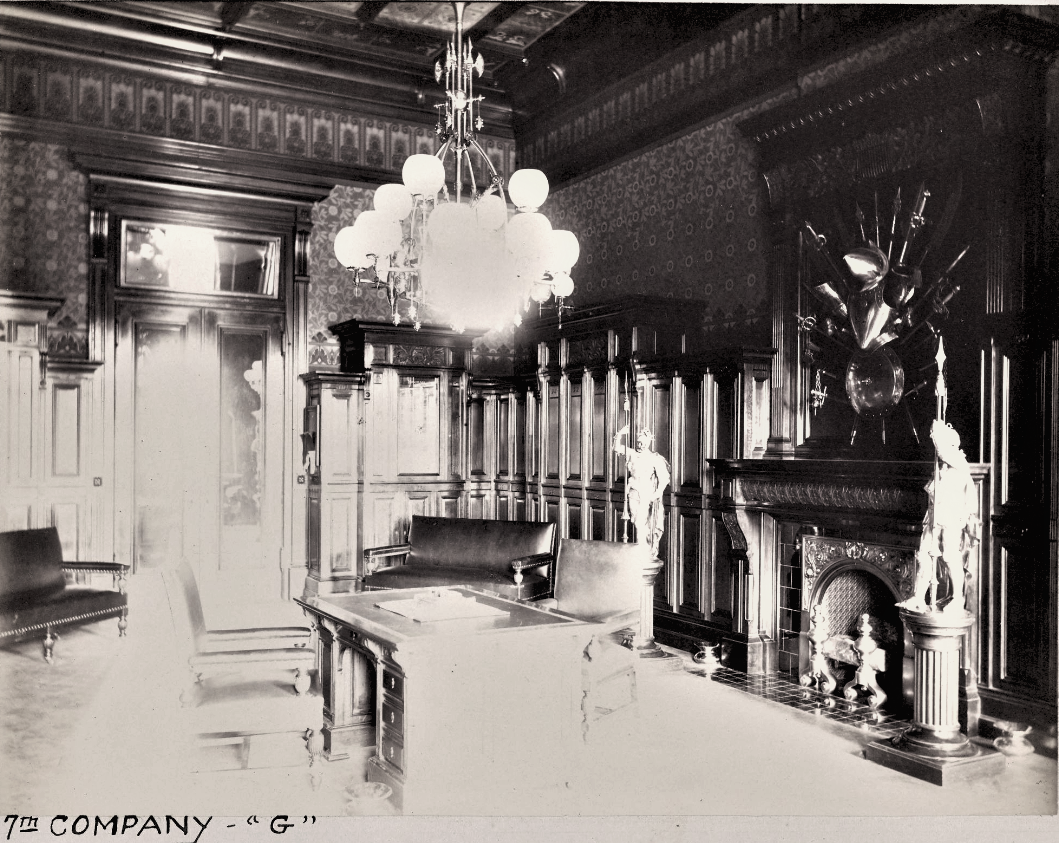

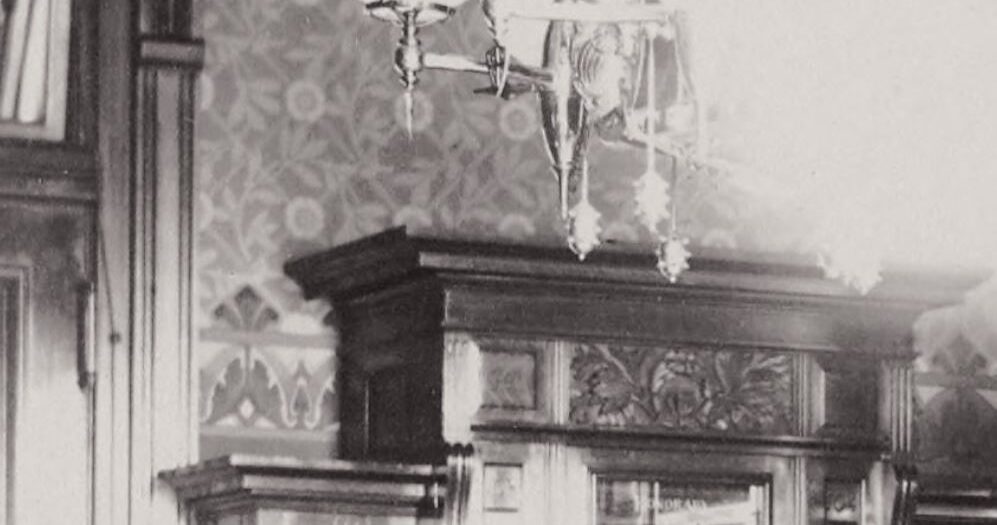

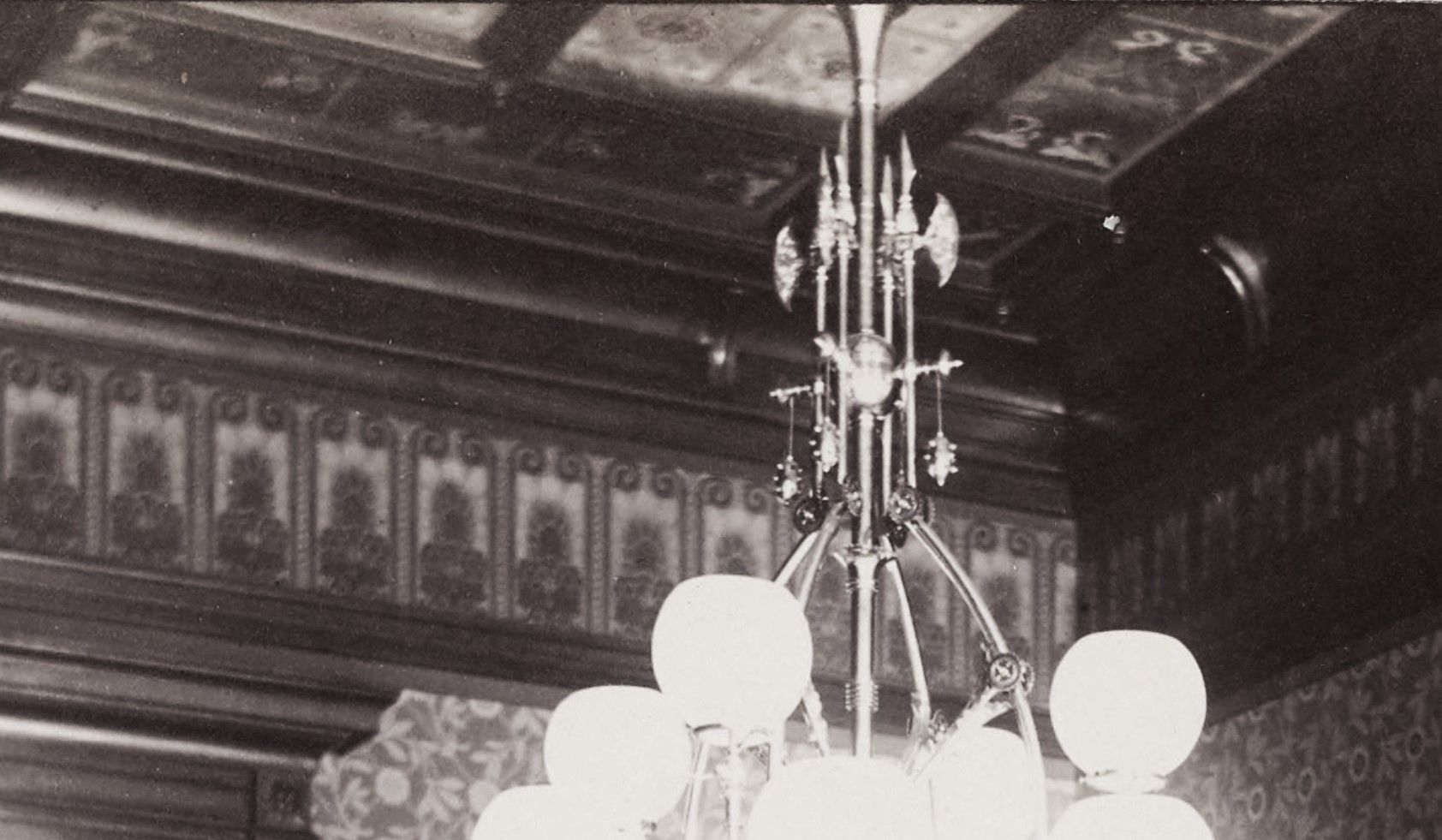
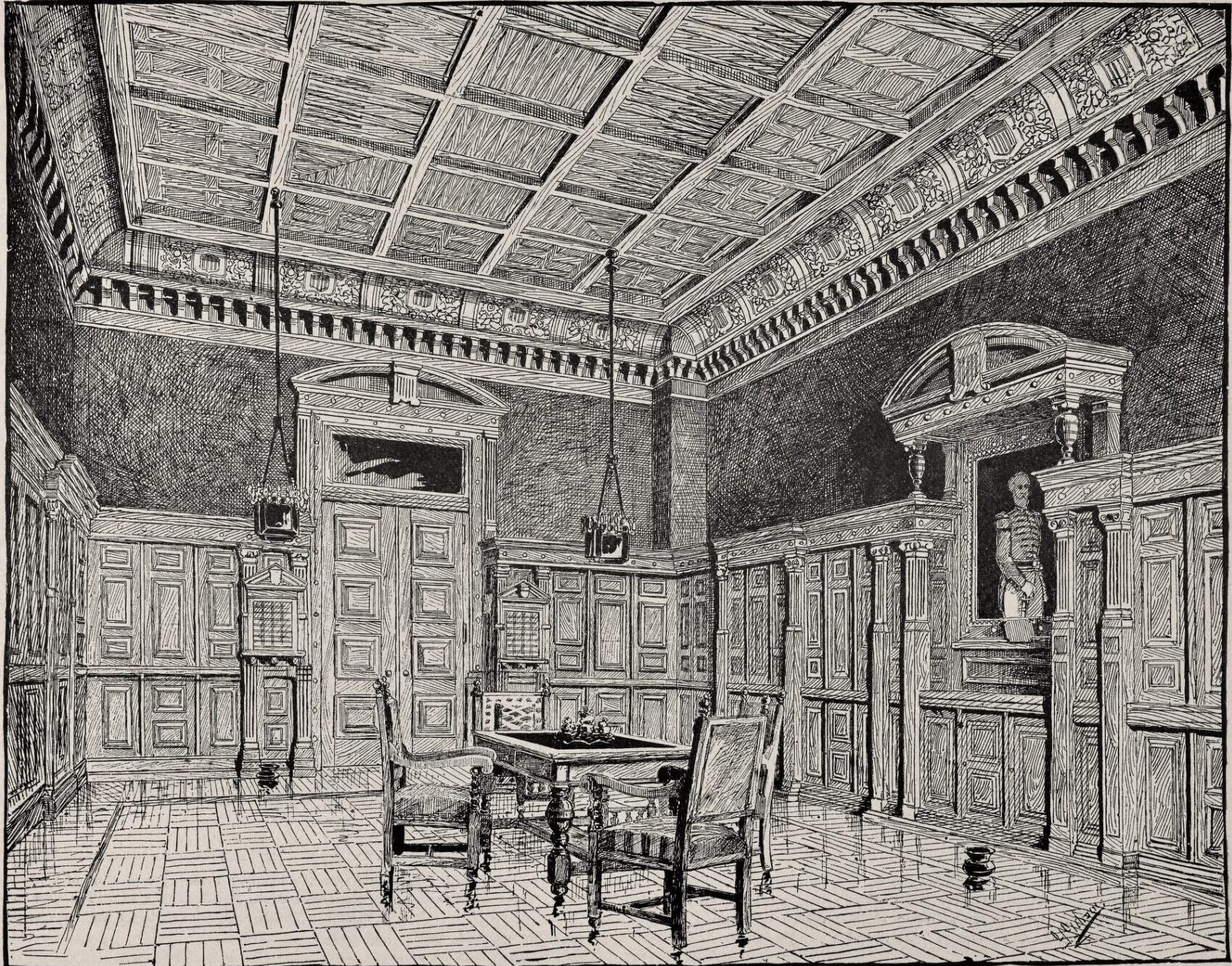
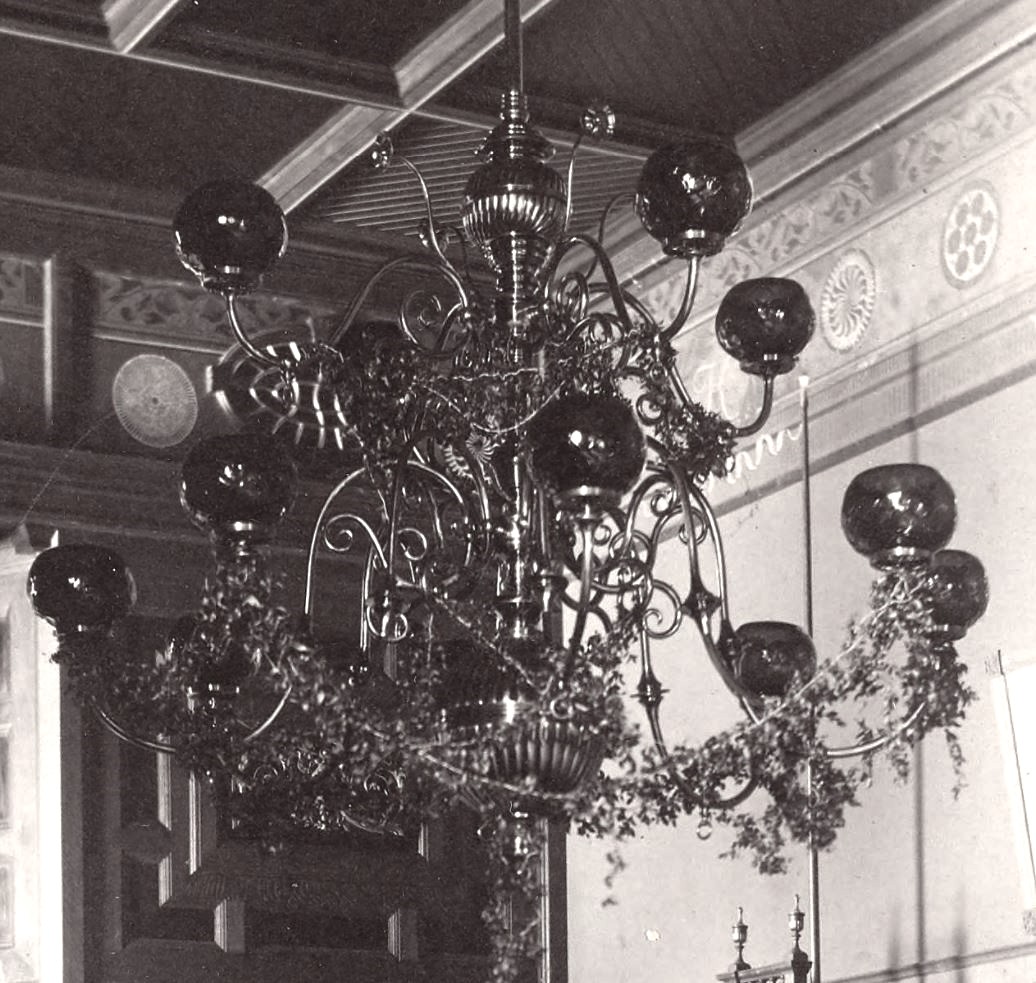
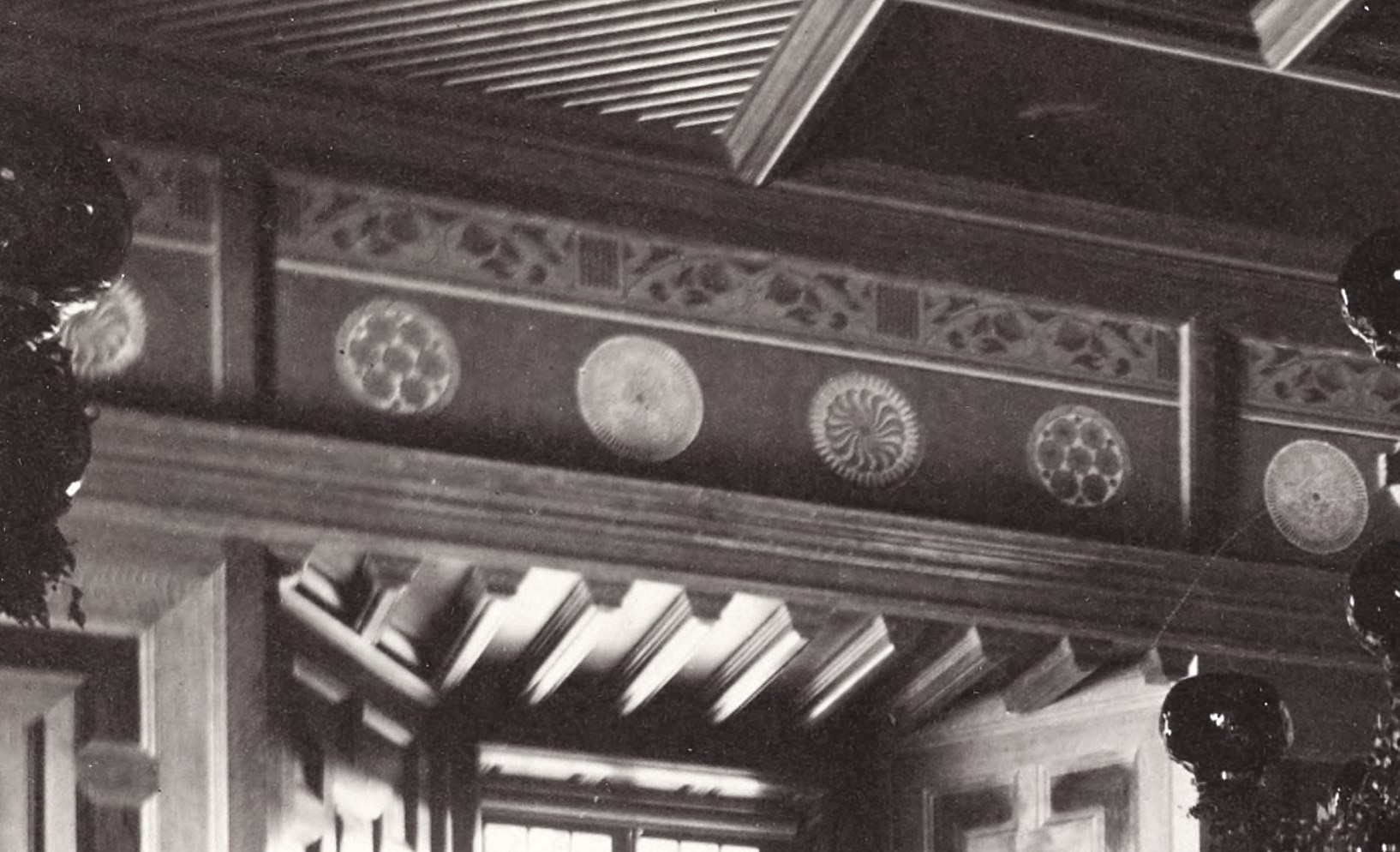
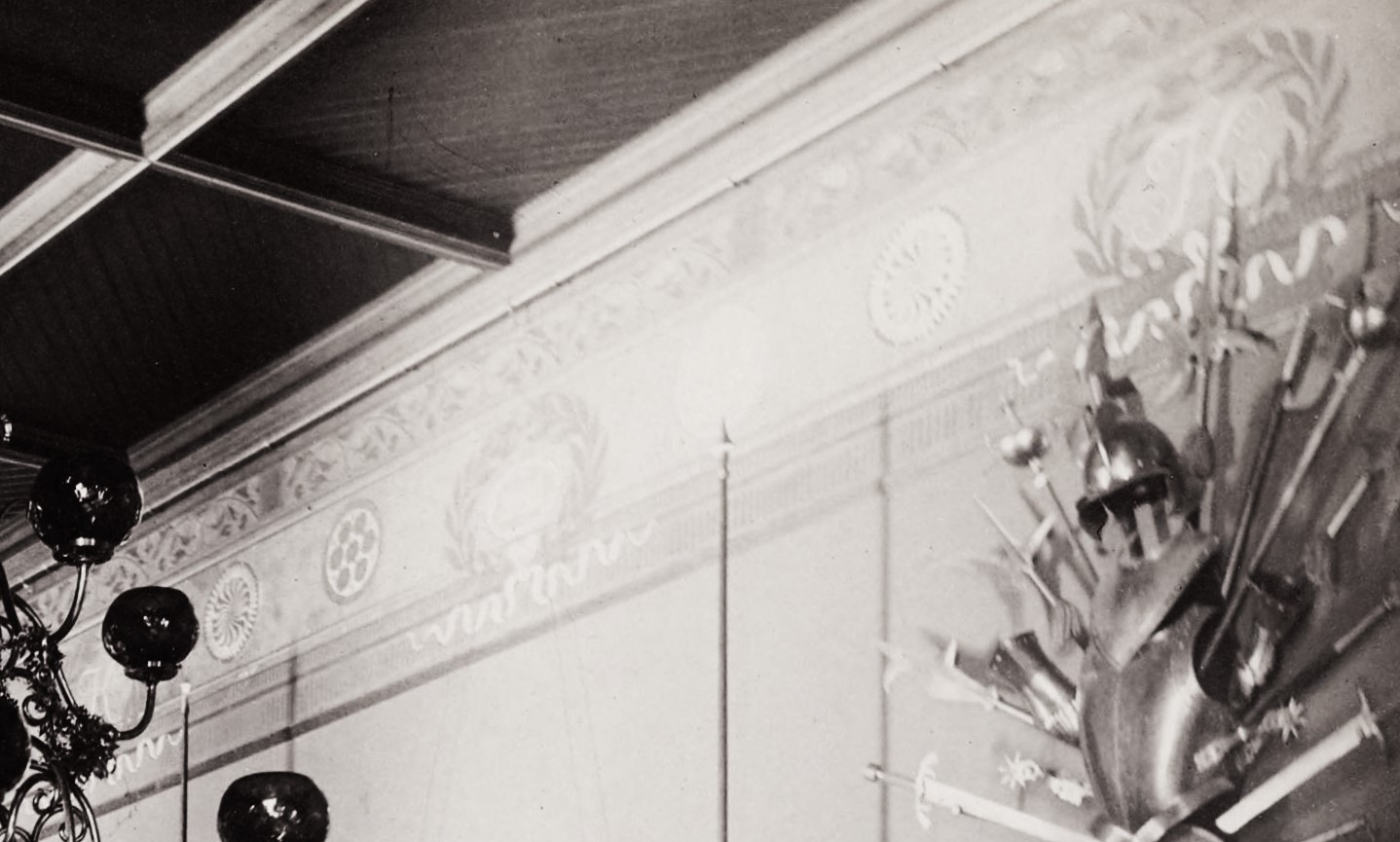
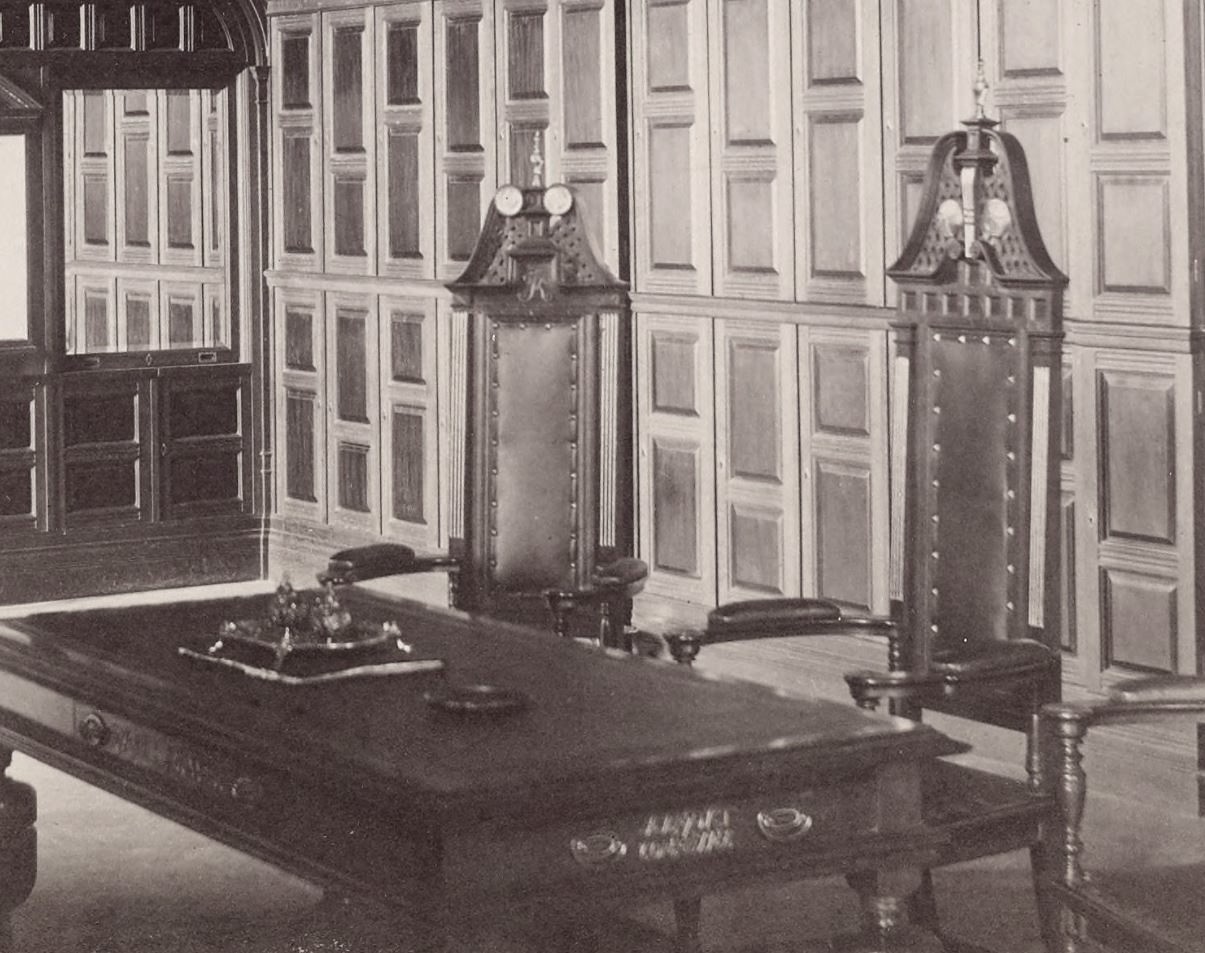
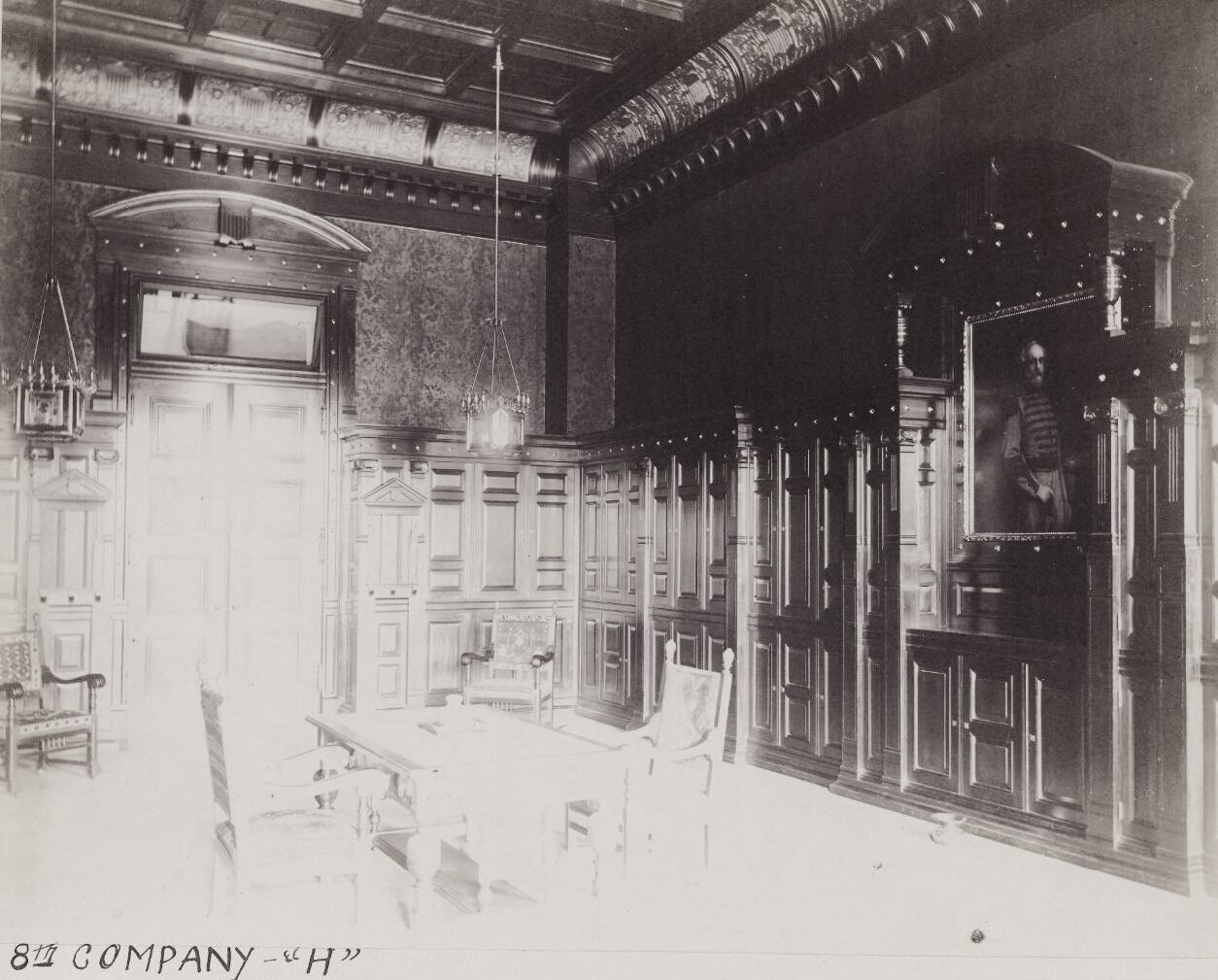
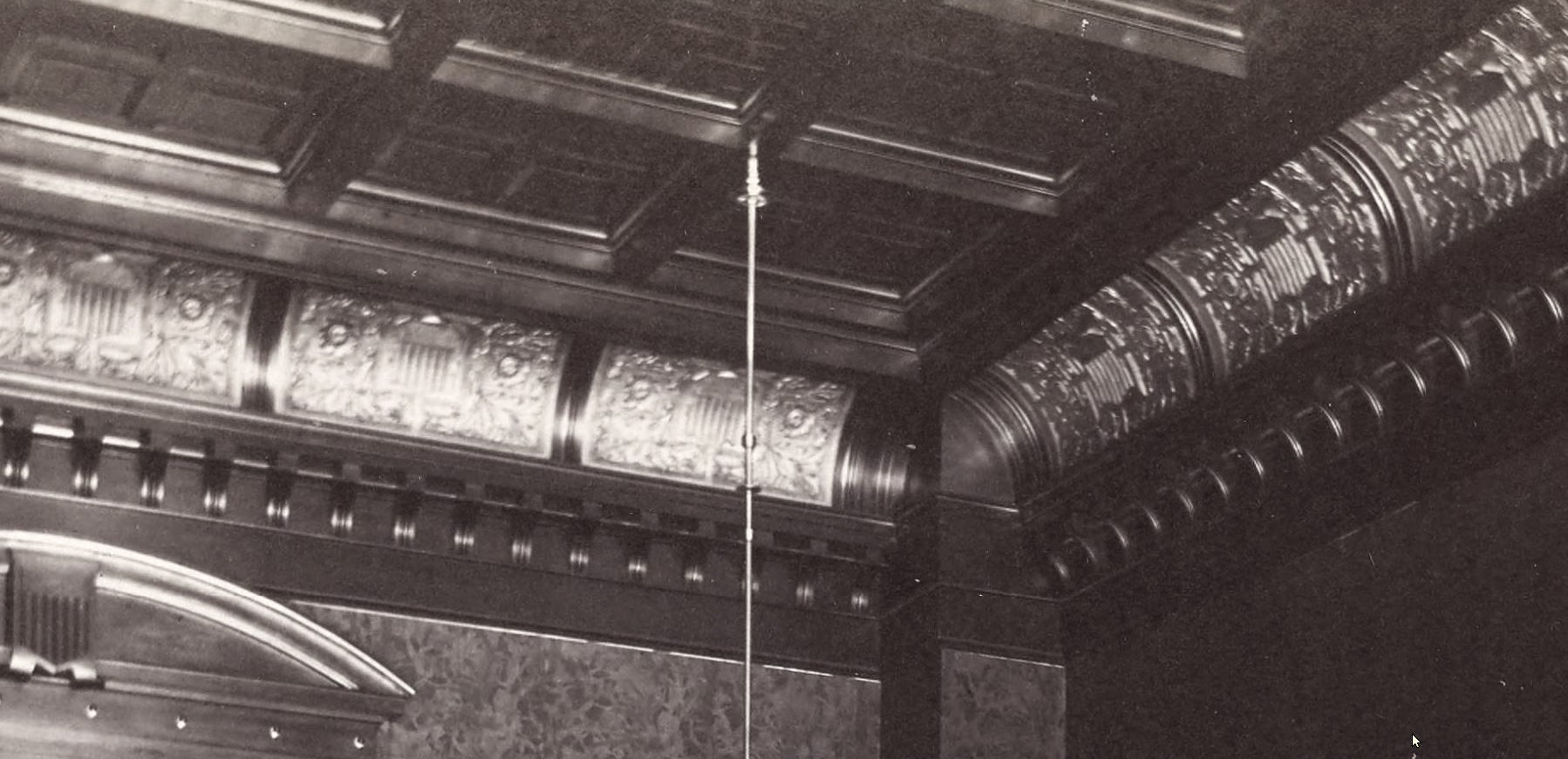
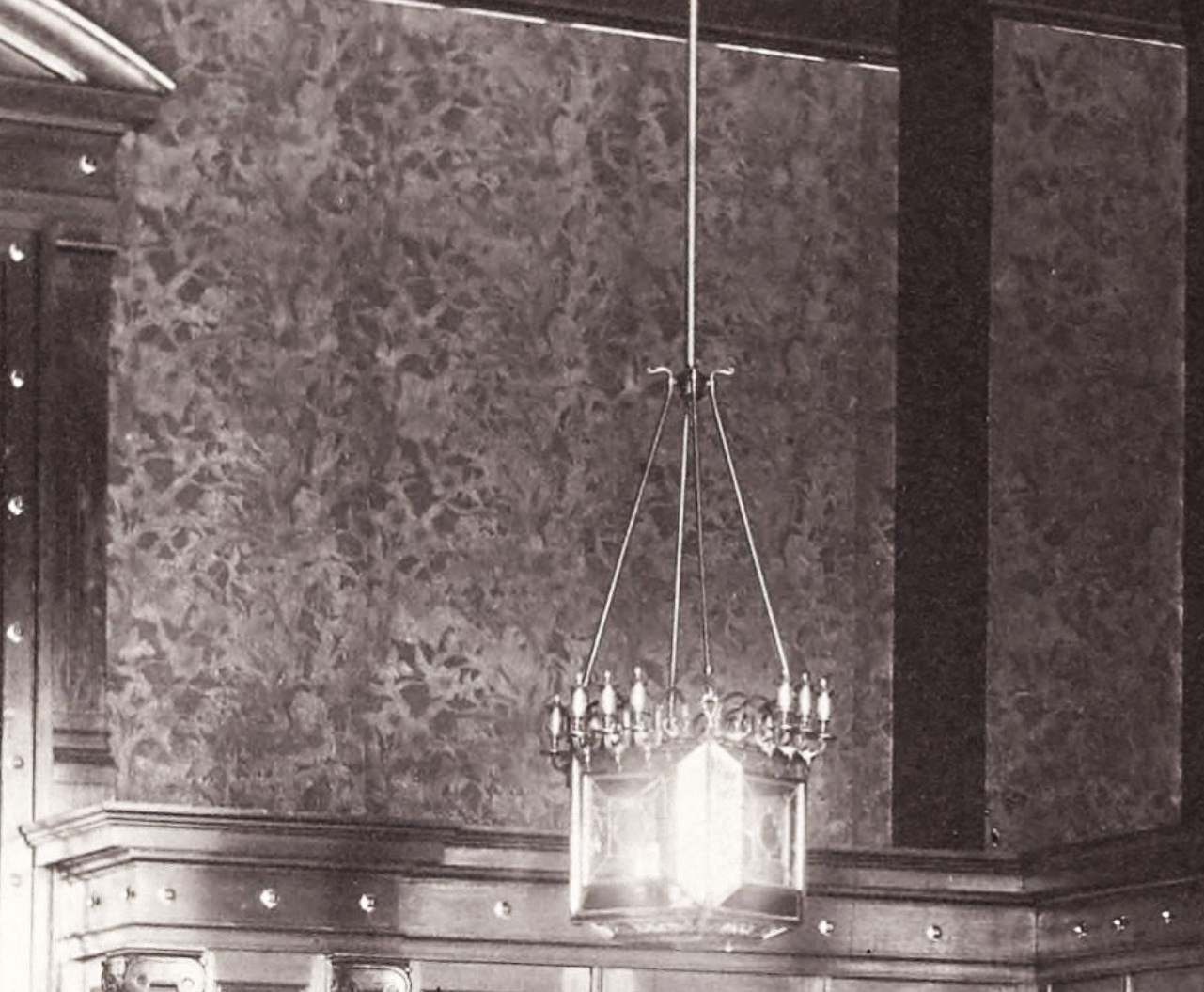
THE last three rooms as we approach the northern end of this long hallway have the reputation of being unusually neat and original in their arrangement. The trio begins with the eighth (H) company, that shown on our opposite page. (As shown above) The ceiling is paneled and the wood laid in divers forms with very good effect… The decoration of the ceilings of the various rooms has received very excellent attention, and they all show some peculiarly distinctive characteristic to match the purpose of the building. The cabinet work is plain and rich, the only ornamentation being a row of brass-headed nails extending along the top of the lockers. A recess is formed upon both sides of the room and contain the oil portraits of Captain George W. Smith and Captain H. C. Sumway, both ex-officers of this company, and both of the portraits accompanied by a small tablet bearing a transcript of the acceptance of their resignations from the then Colonel of the regiment… A mantel between the windows bears a handsome bronze lion clock and a suggestive howitzer whose murderous avocation is transformed into the peaceful one of supporting a thermometer.
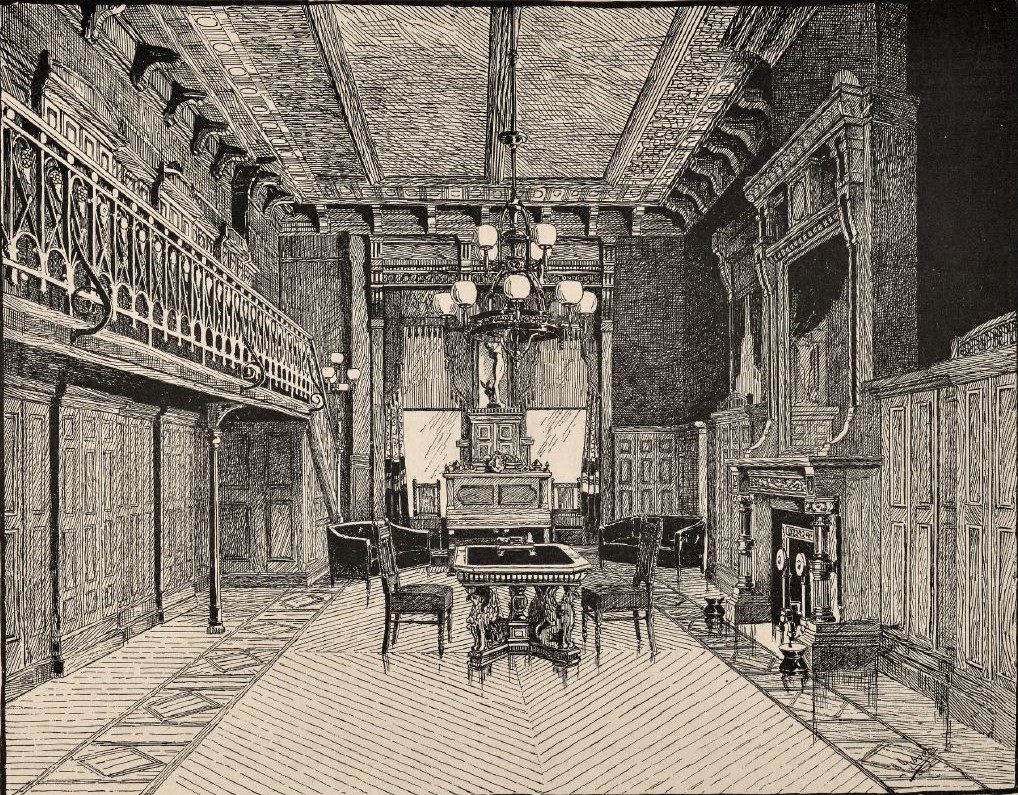
THIS room is architecturally different to all its companions —its double story, its balcony distinguishes it readily from the others… Mahogany is the wood employed throughout, finished with a dead or dull surface… It is noticeable that while the diversity in furniture is great, the disposition appears to have been to use oak or mahogany for cabinet wood, almost to the exclusion of all others. Between the windows stands a bronze of “War,” and on the mantel is the cup awarded the company raising the largest sum for the army building. This company succeeded to the extent of $15,041.23. Hardwood floors naturally enough are generally used throughout the building, though the presence of a handsome rug almost conceals the glassiness of wood. The floor here is in capital condition, with a neat border and an exceedingly high polish.
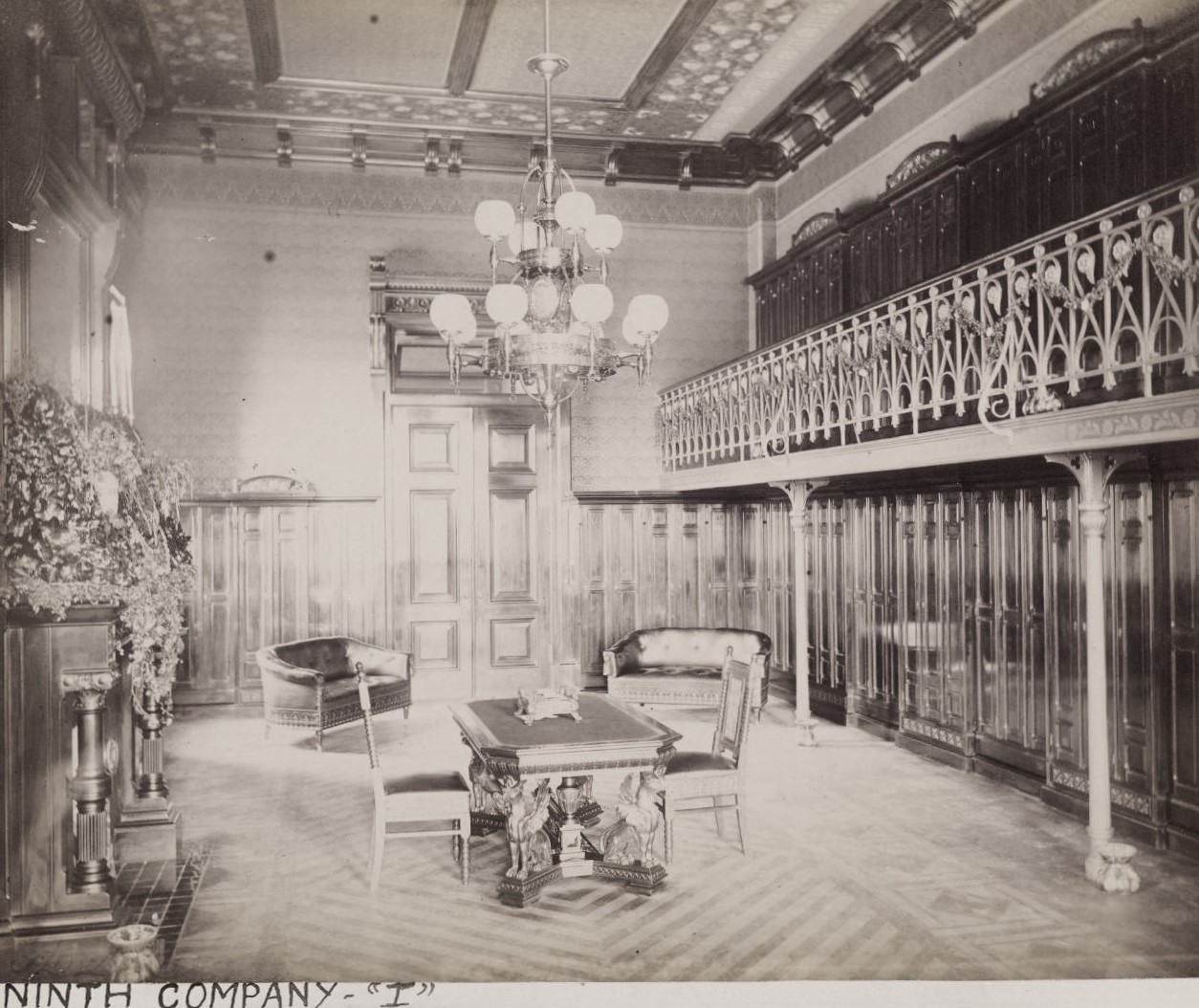
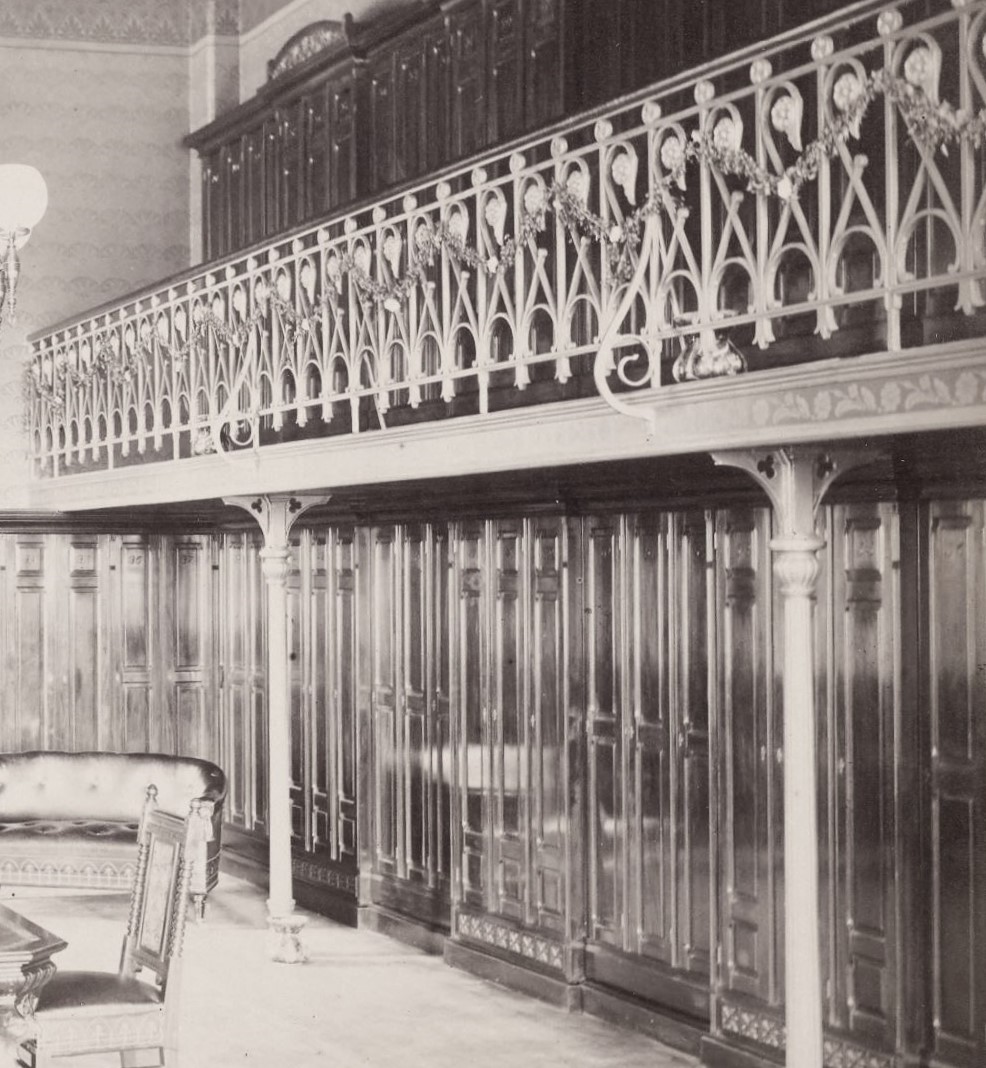
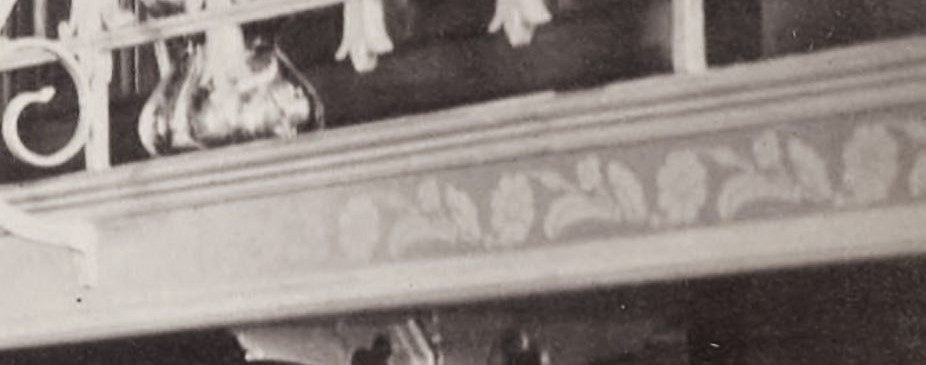

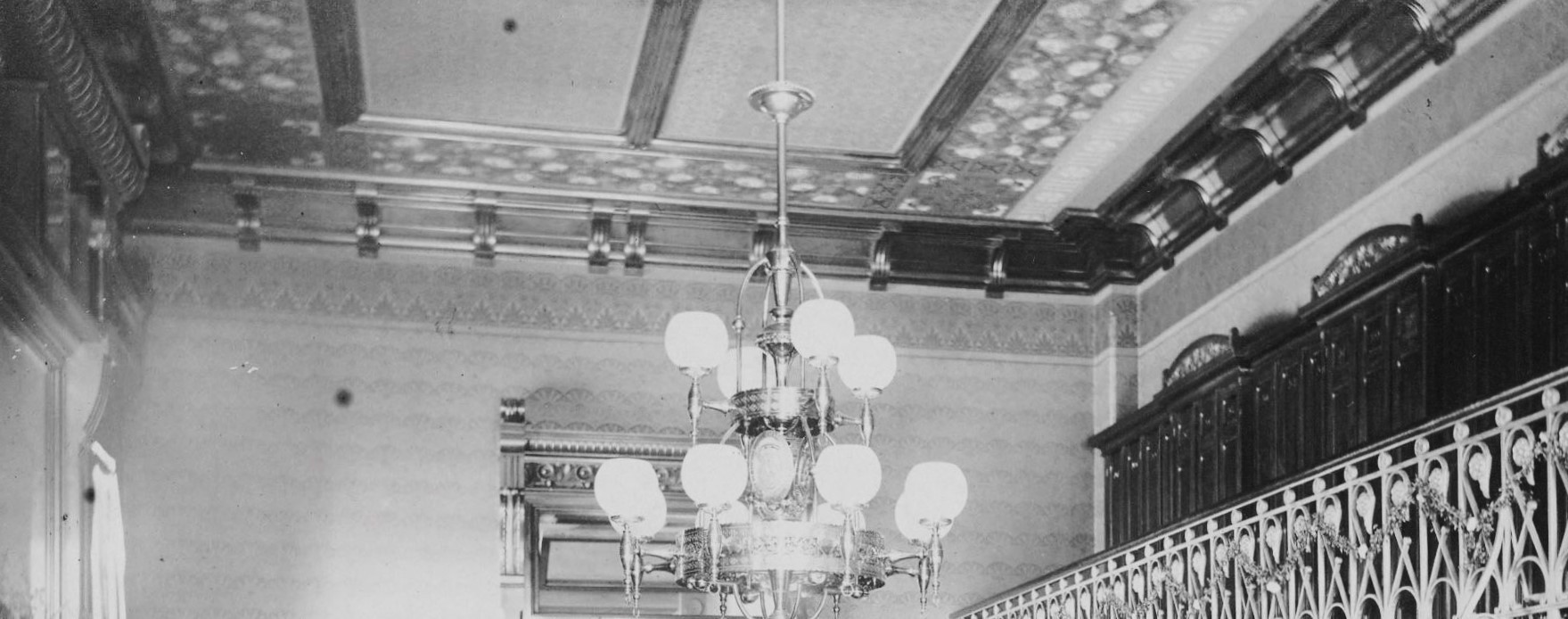
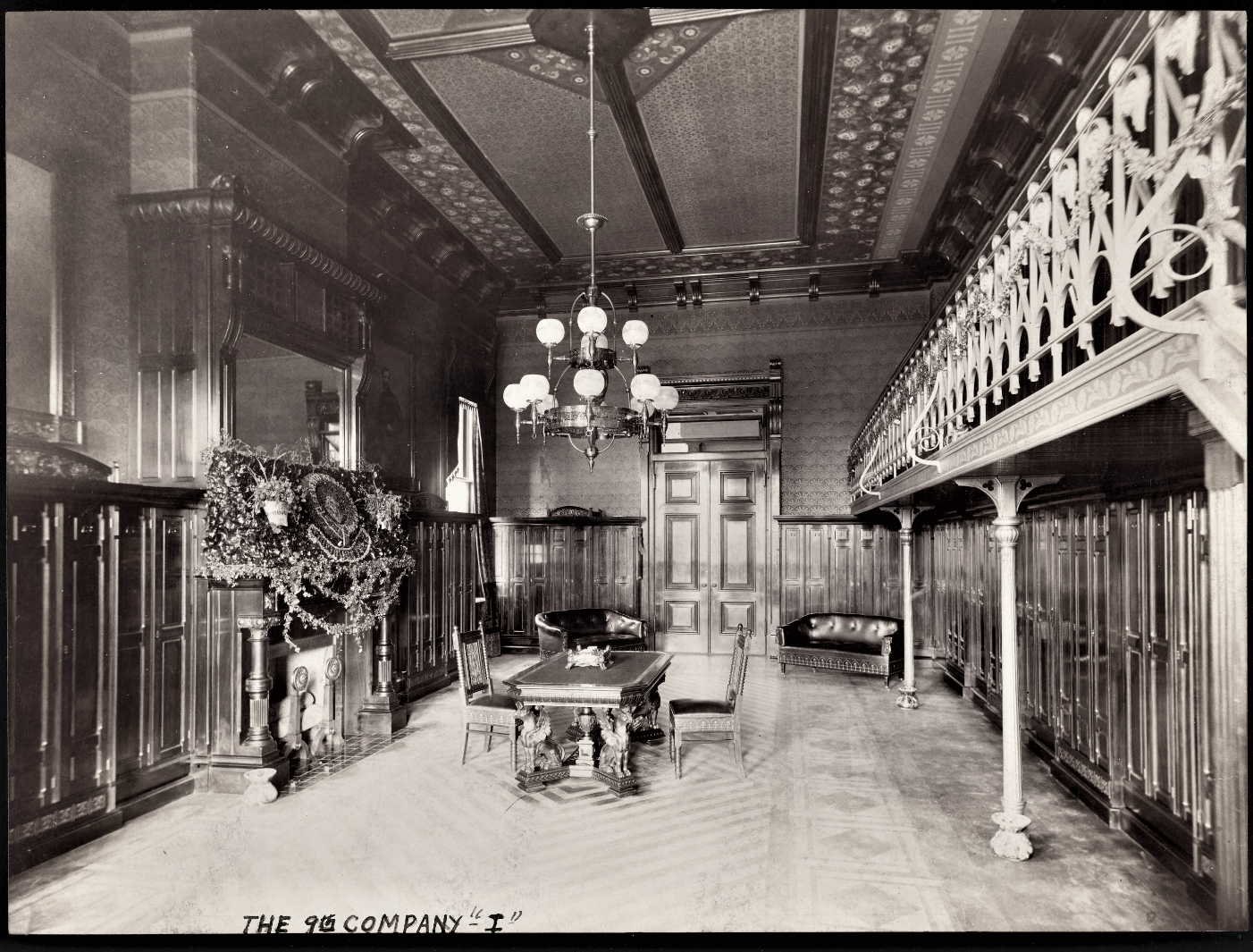


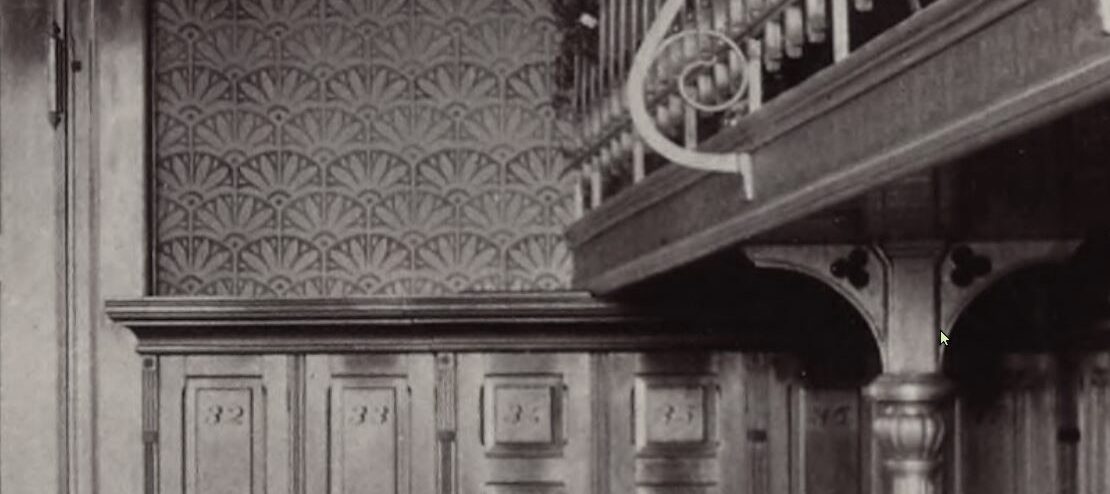
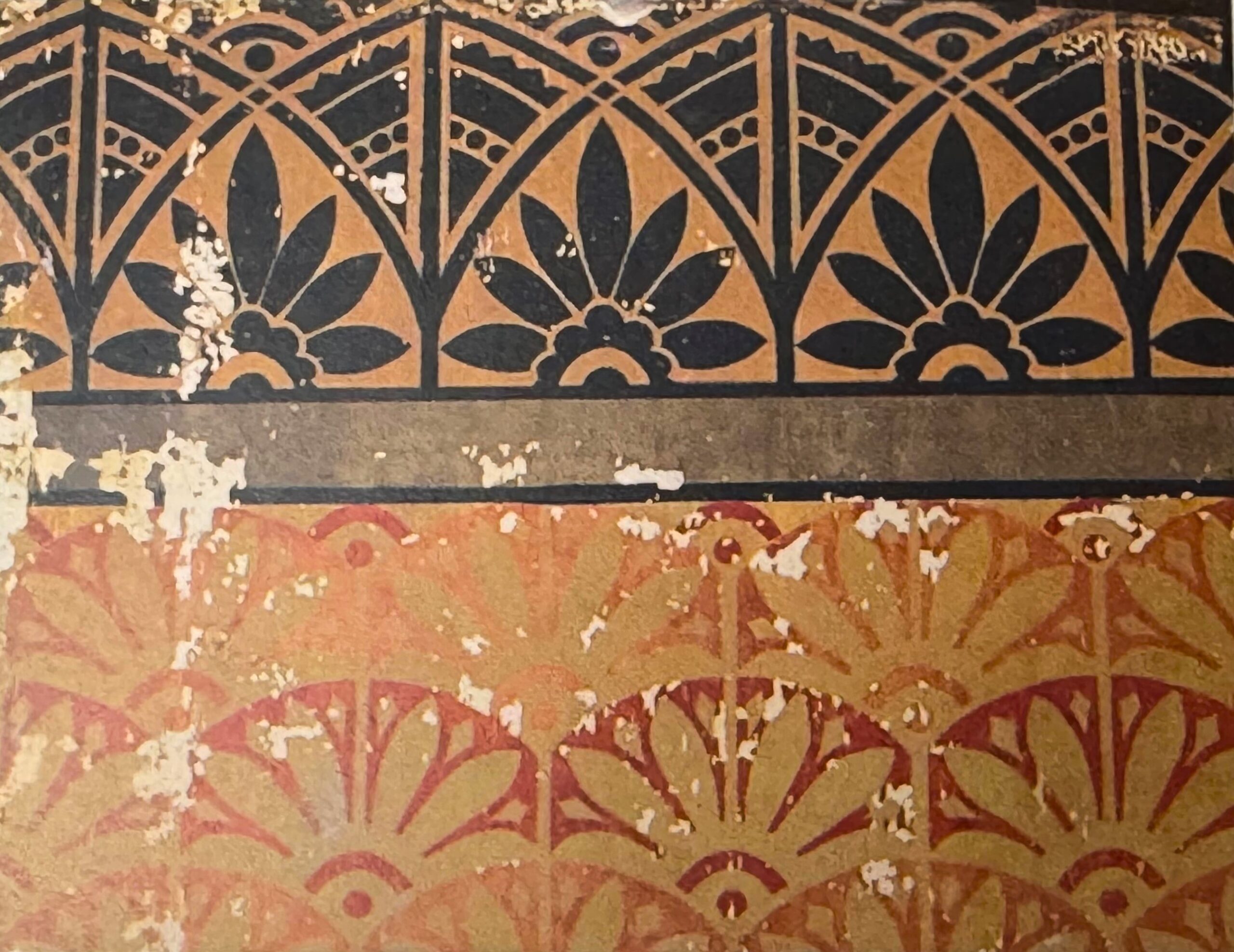

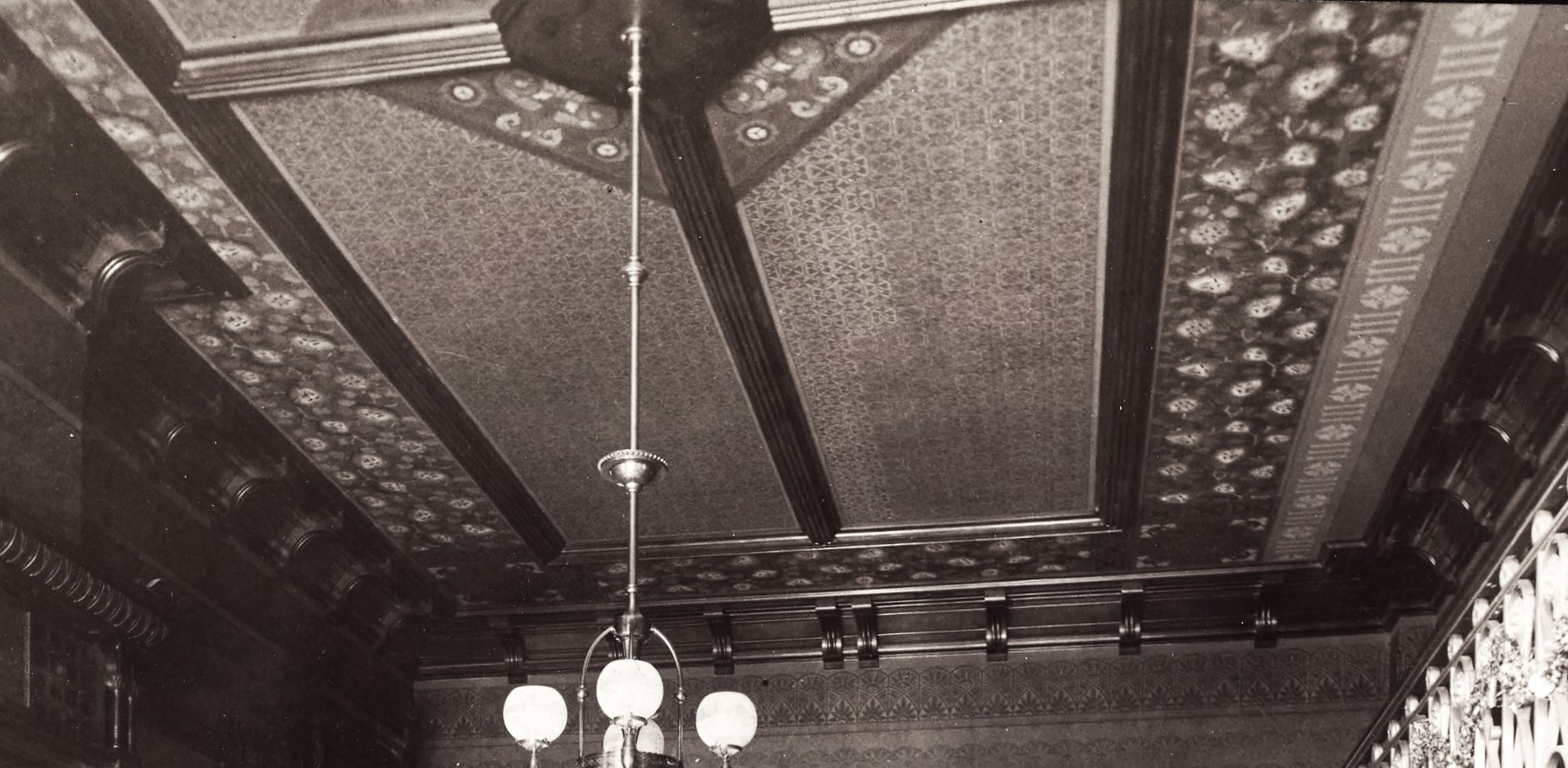
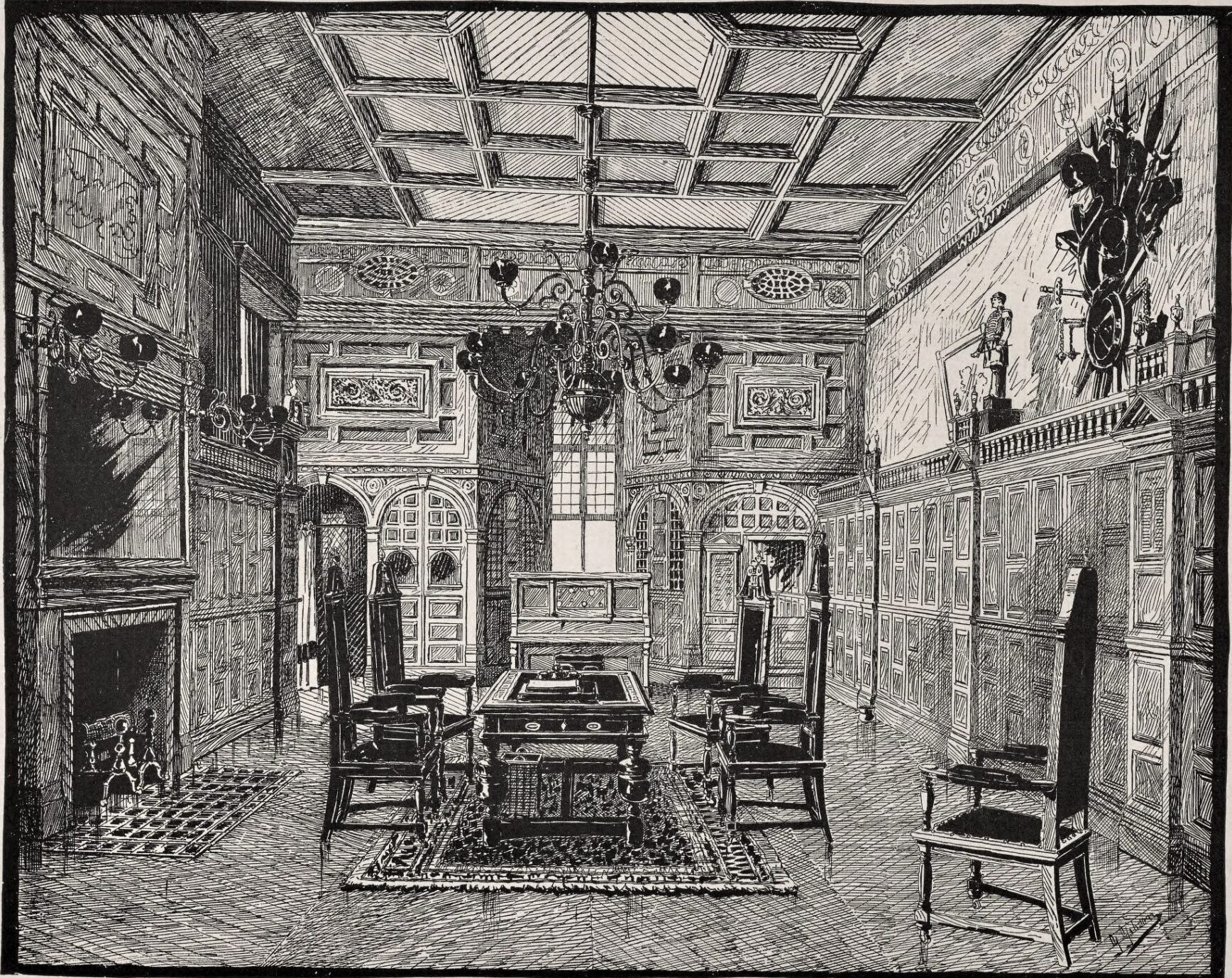
OUR last view is of the most elaborate and costly of all the rooms, and its decoration, while made after designs by one of the members of the company, bears unmistakable signs of the influence of Louis C. Tiffany & Co. Its many unique features and its richness make it unusually noticeable. The ceiling is paneled in wood, a form so popular with all the architects or decorators who labored upon the armory, and so entirely suited to harmonize with the general arrangement and finish of such a building. This company room may be said to have excited the admiration and to some extent the envy of the members of the other companies on account of the beautiful and tasteful decorations. Two small rooms at the further end of the apartment look down upon the parade or battalion drill-room, and are quite marvels of cabinet work in their way… There is a judicious use of drapery, portieres and curtains, and a tasteful variety generally of these hangings. Bronze statuettes of martial figures stand about upon prominent places, and oil portraits of former officers of the company hang at convenient and conspicuous points…