The Fireman Behind the Owl
Research sometimes leads into unexpected rabbit holes, and this group of photographs from the Hingham Public Library Glass Slide Collection did exactly that. While searching through the collection, I noticed that many images were only loosely identified, while others were left unidentified altogether. The first photograph that caught my attention was this playful scene with the owl. At first, it was simply an interesting and unusual image, but the more I studied it, the more connections began to appear. One of the men pictured on the shelf looked familiar, and I eventually realized he appeared in other photographs from the same collection. Although my photo studies usually focus on historic interiors, decorative arts, and domestic spaces, this image led me down a different path into late nineteenth-century people in Hingham, Massachusetts.
Thanks to Hingham Public Library for permission to use their photographs.
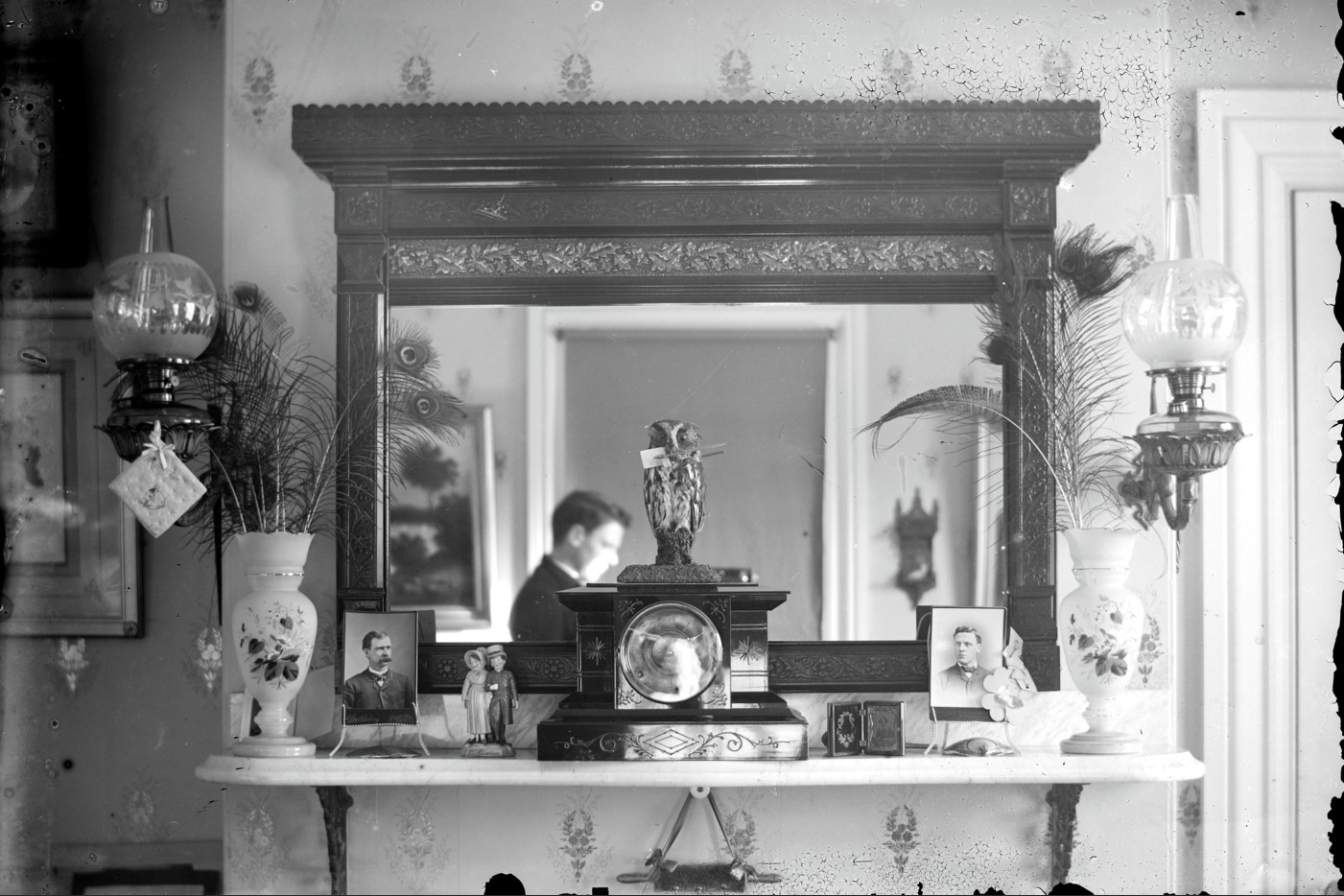
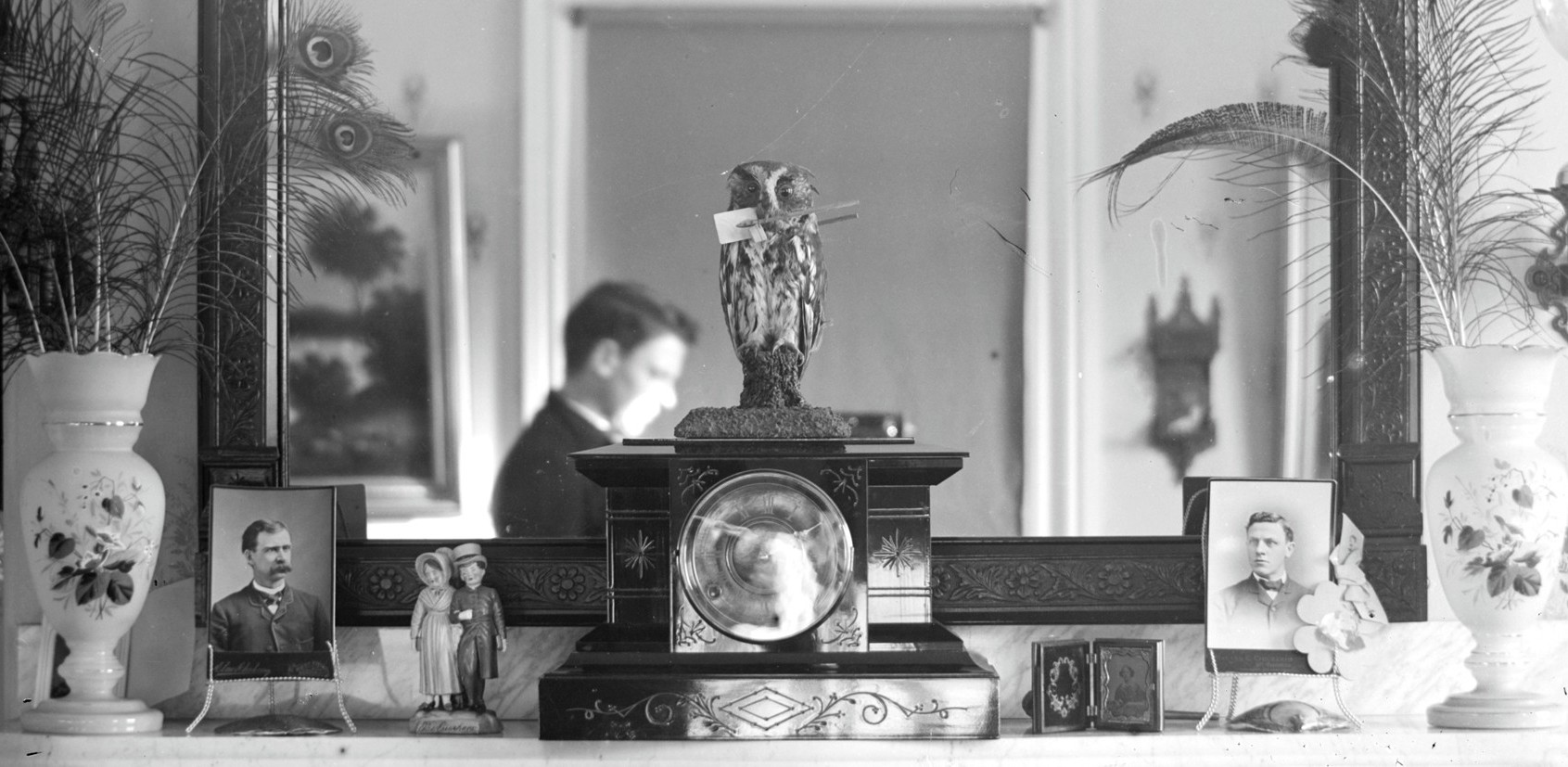
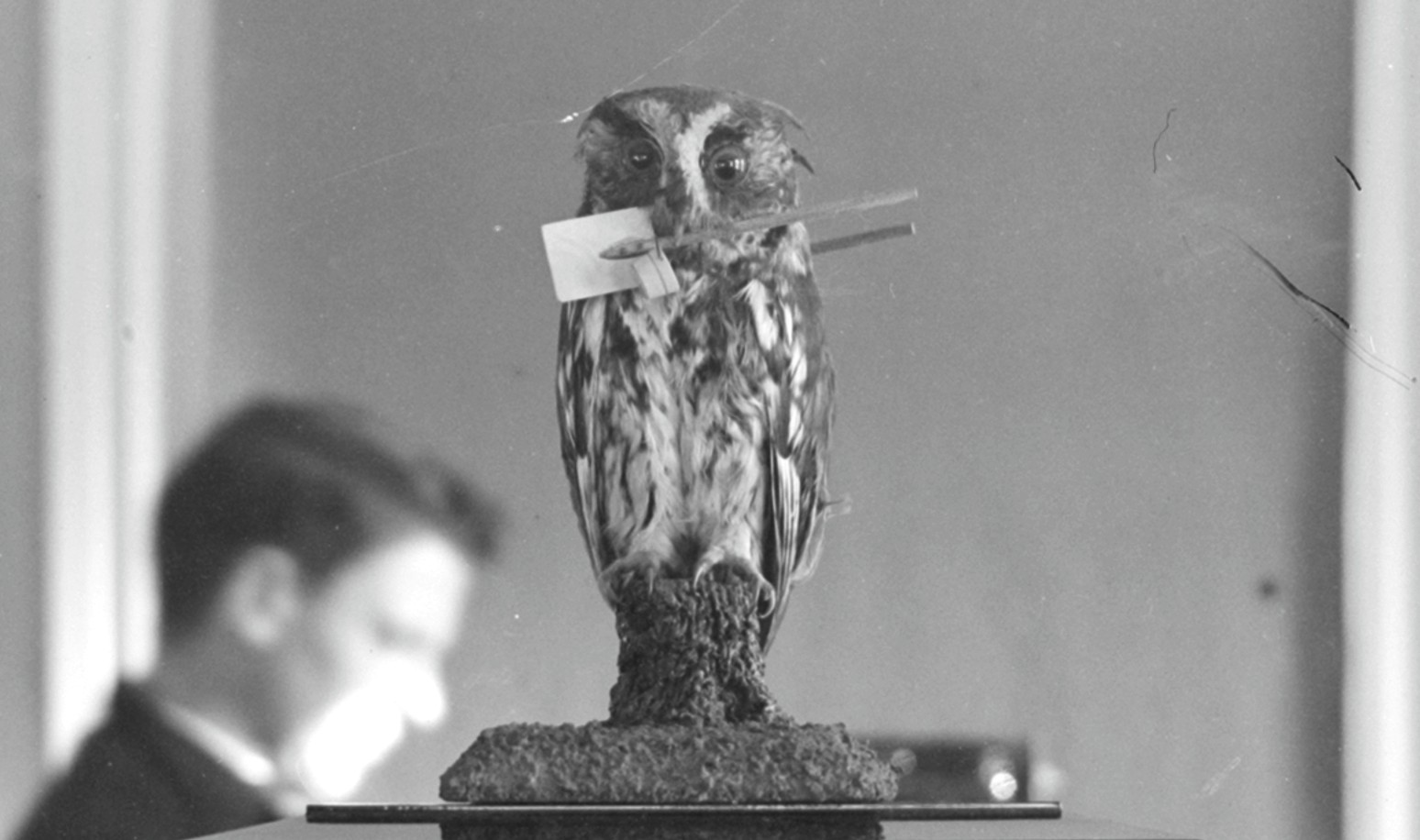
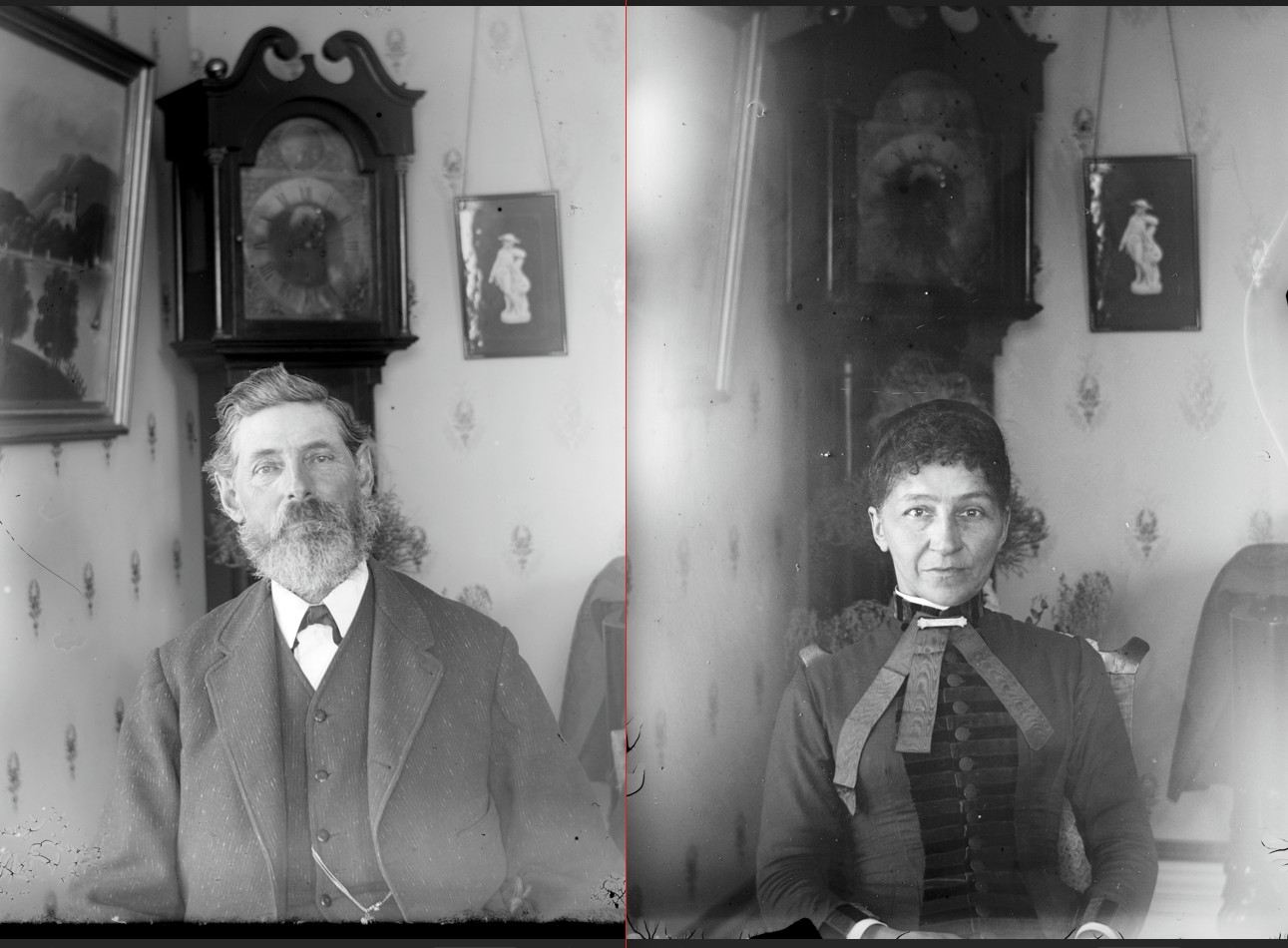
It is also interesting to see the man reflected in the mirror as he takes the photograph. Was he the person who placed the shovel in the owl’s beak, or was he simply recording a room where someone else had already staged the little scene? That part remains unknown, but the reflection adds another layer of intrigue to the image.
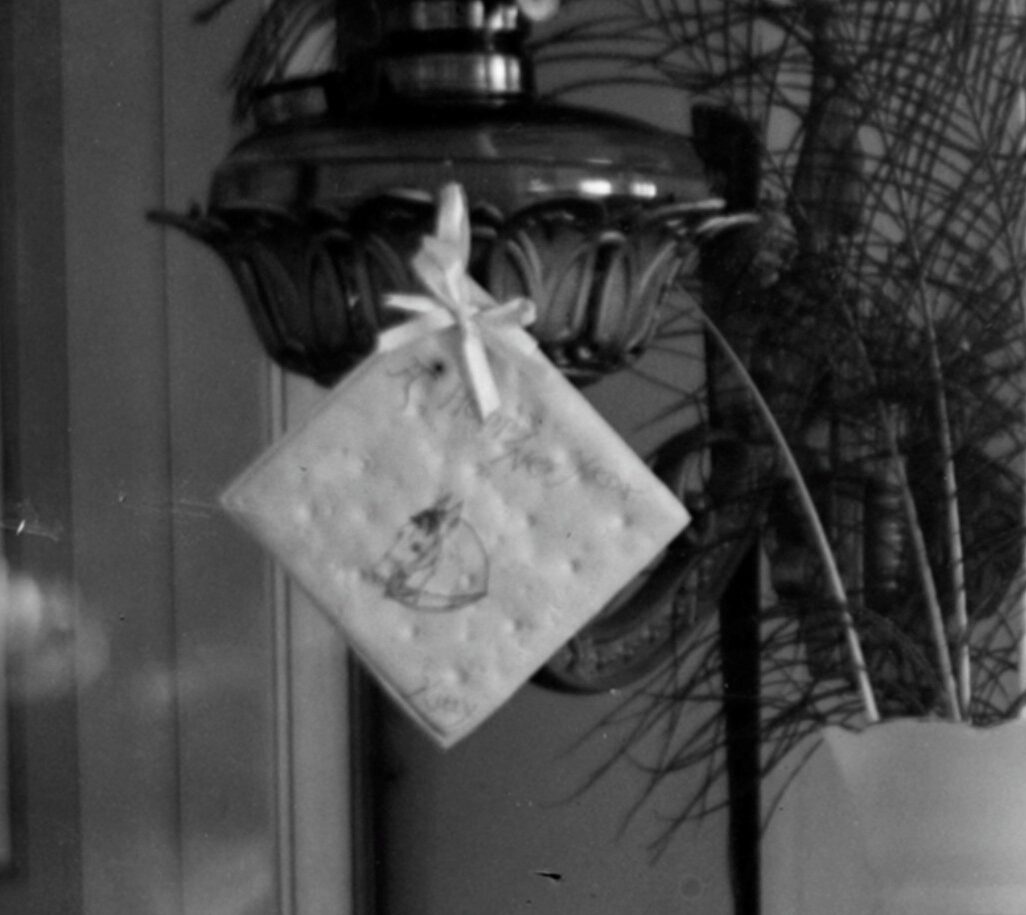
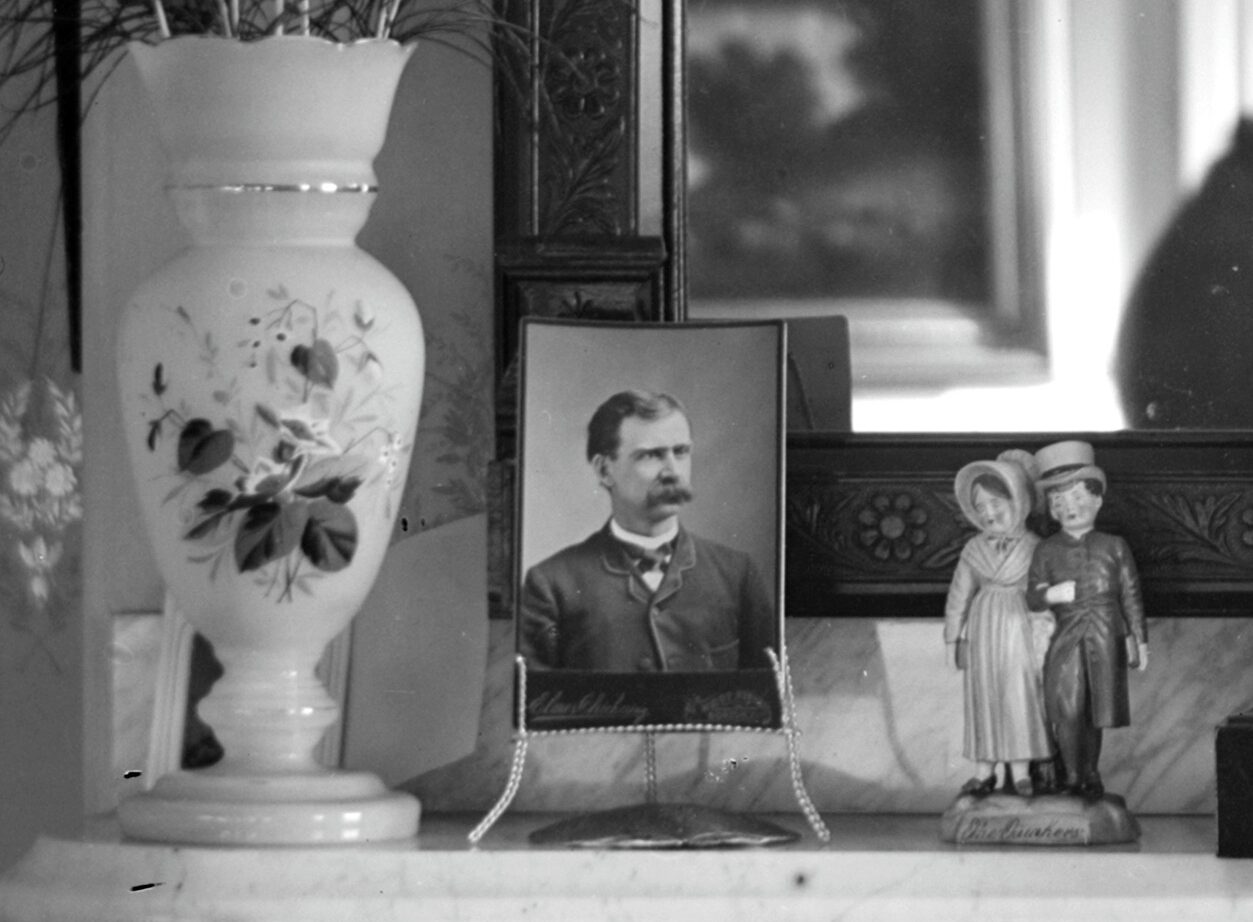
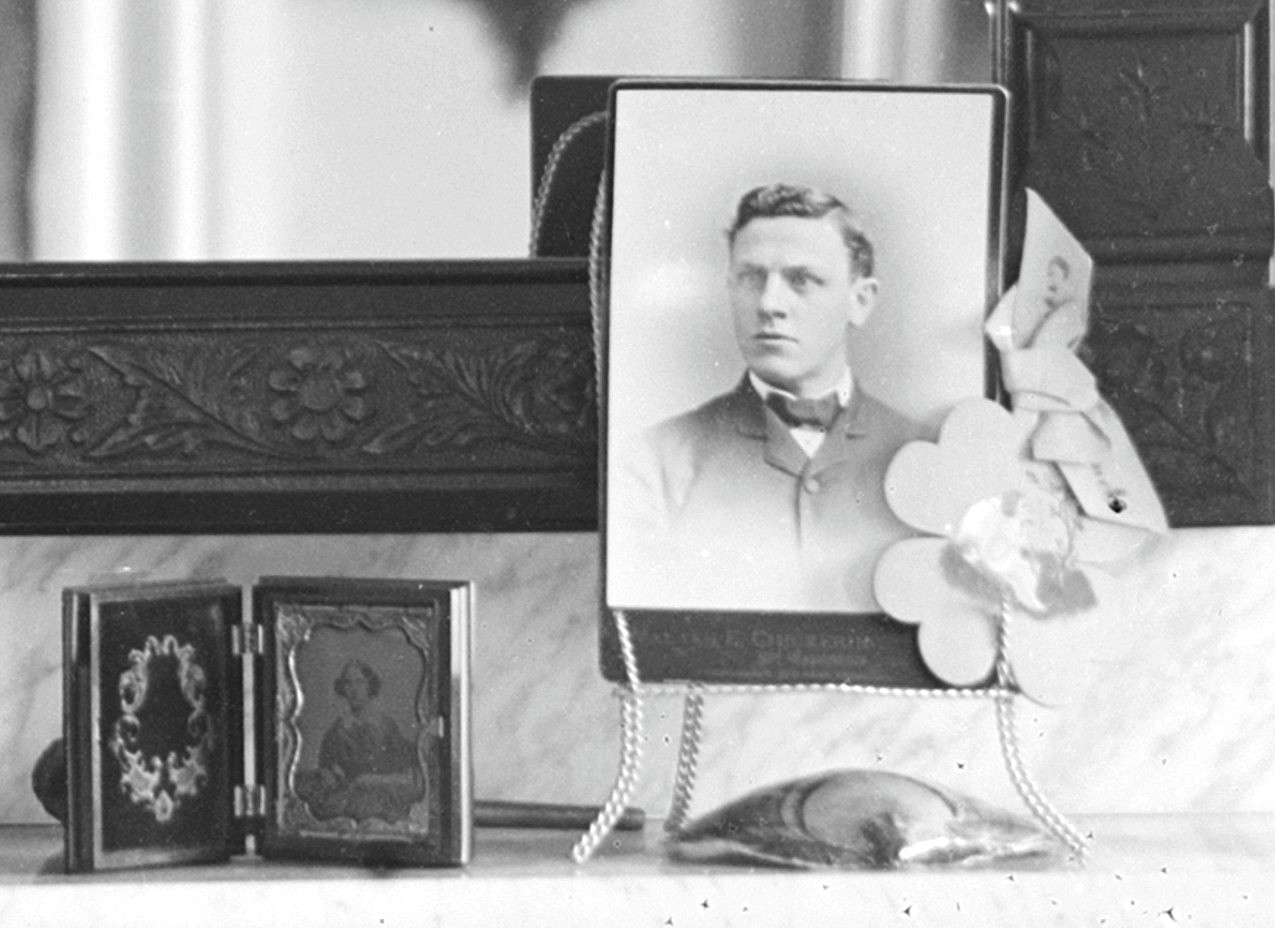

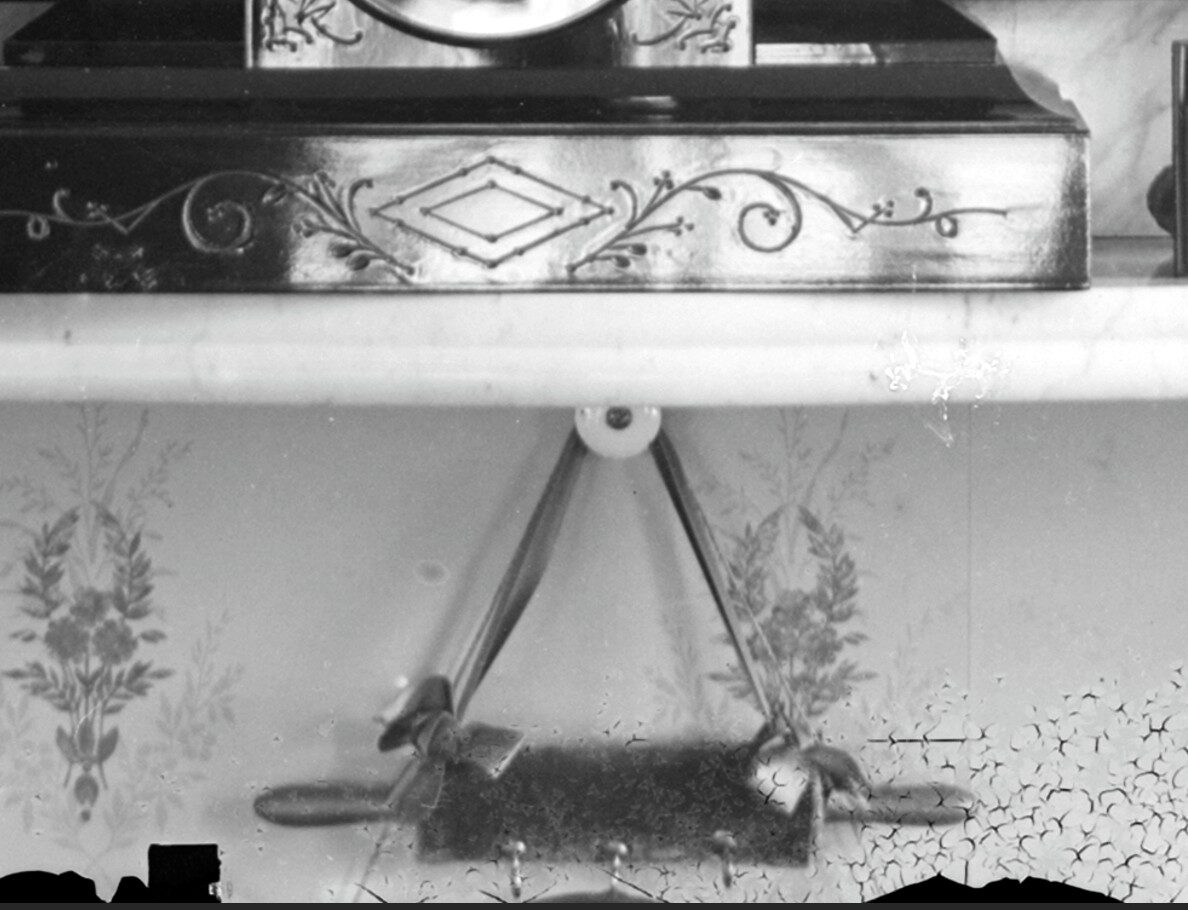
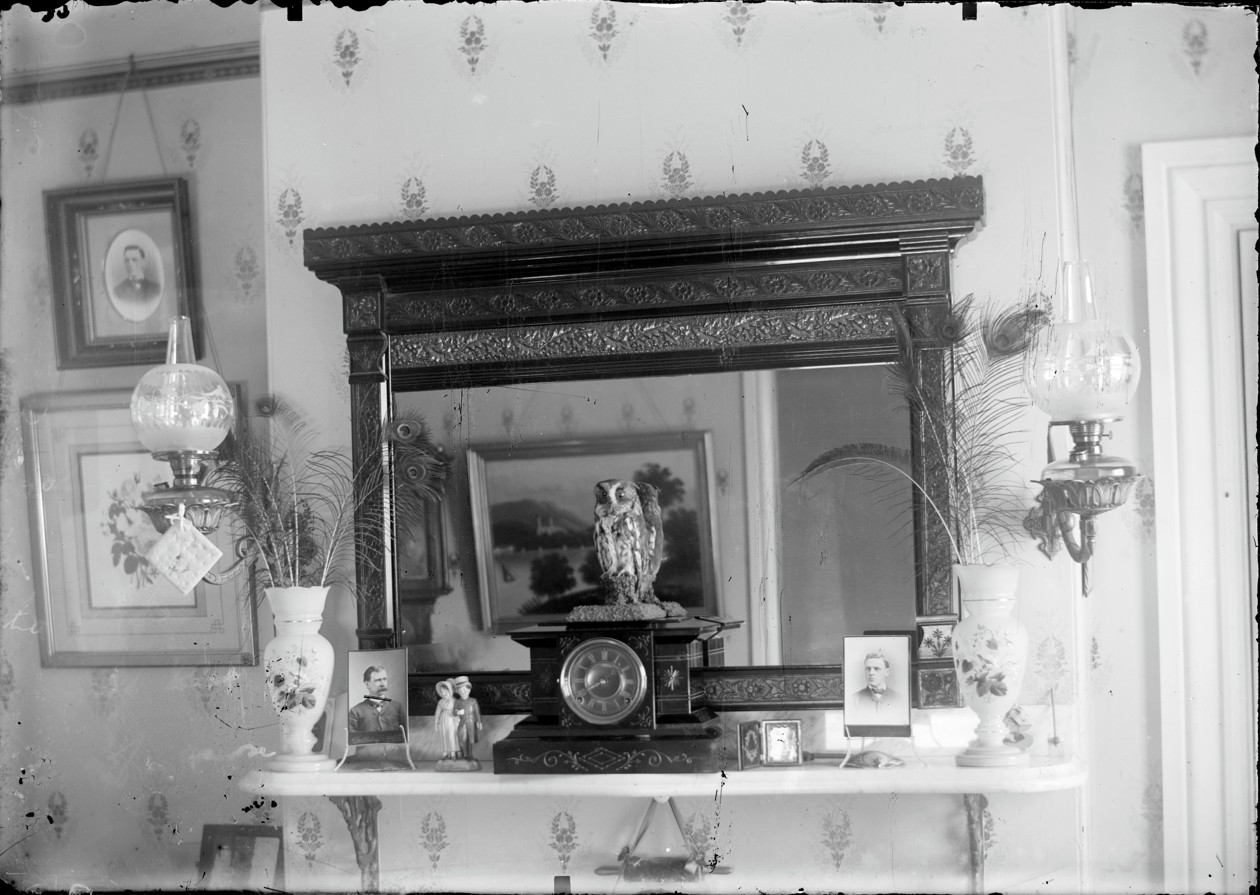
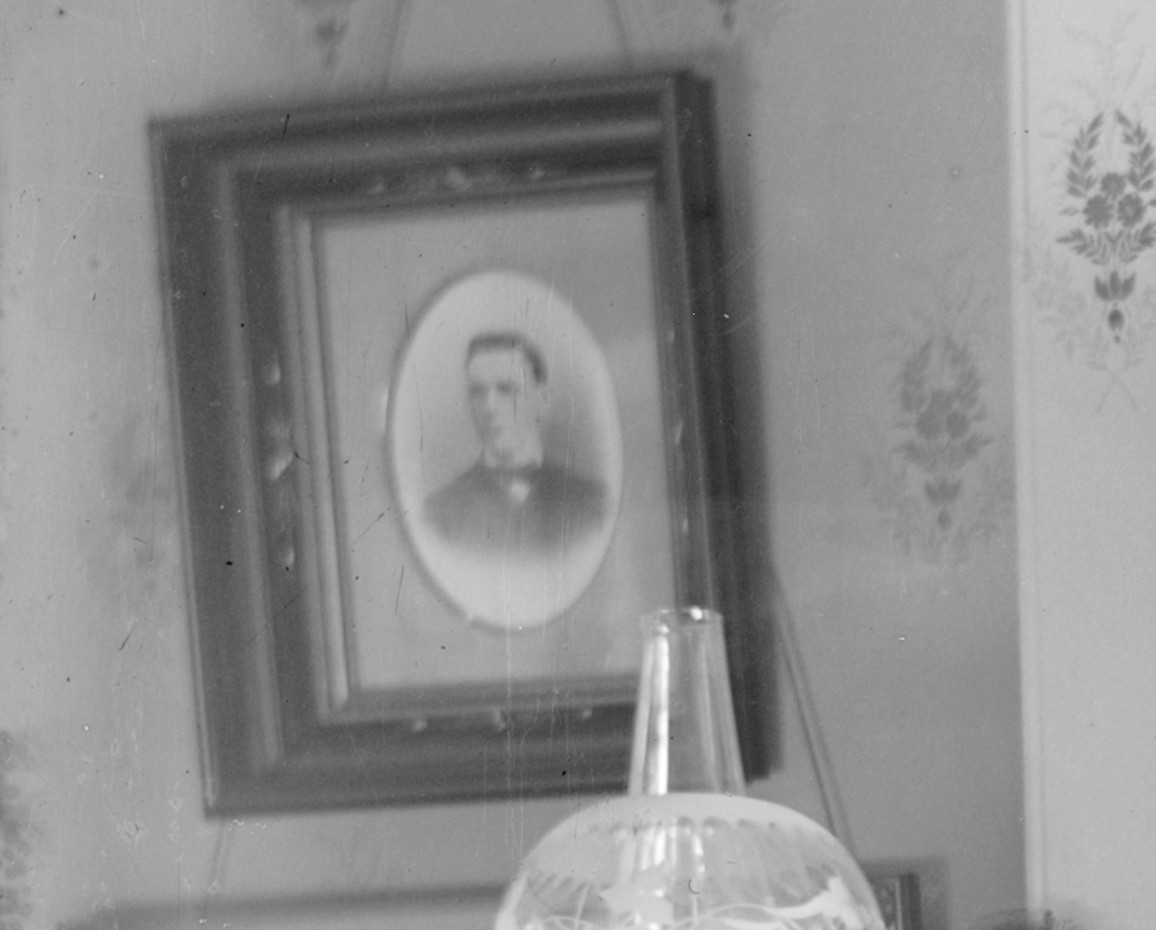
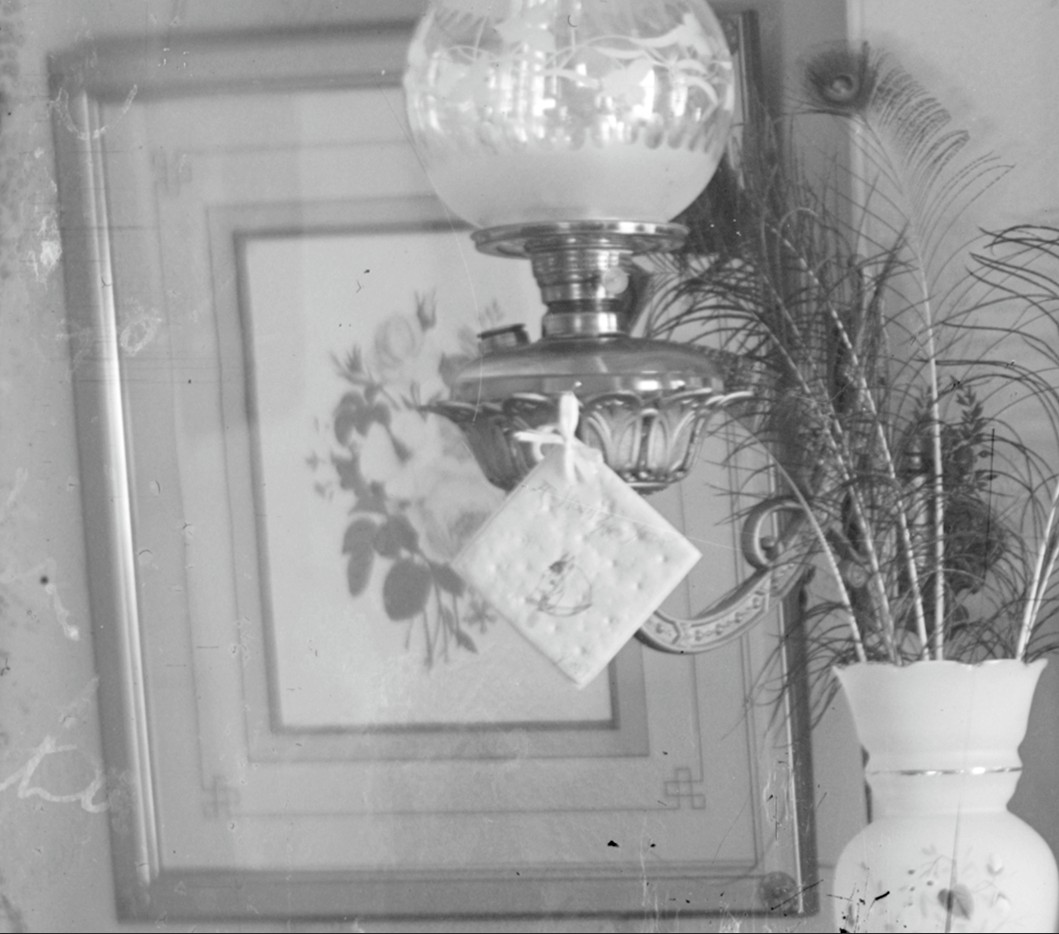

Looking more closely into the mirror’s reflection, we can see additional details from the opposite side of the room. To the left appears to be another clock, and to the right is a large framed painting. These reflected details help us understand more of the room’s layout, even though only one side of the space was directly photographed.
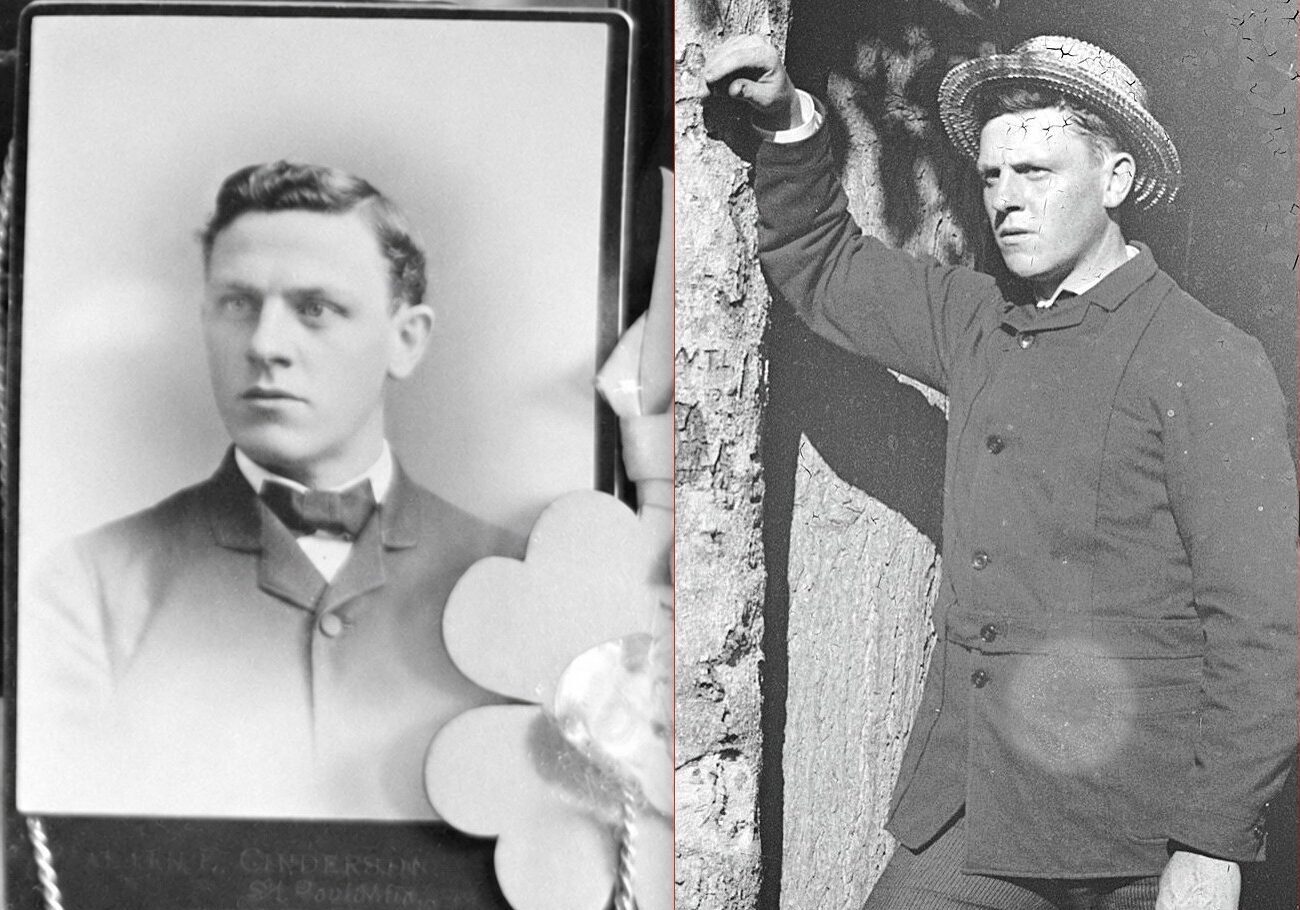
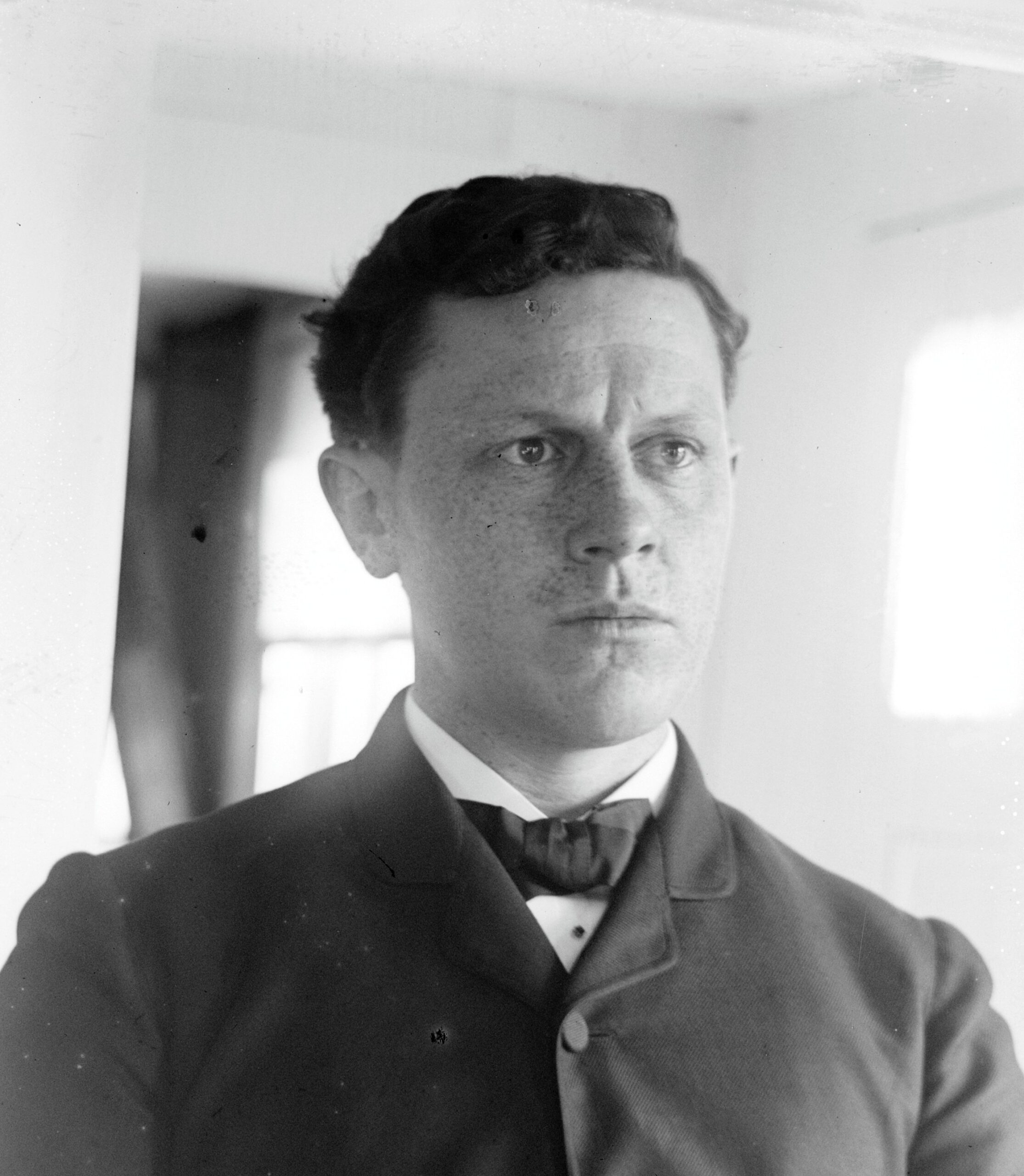
This may even be the man seen in the mirror’s reflection, perhaps the person taking the photograph of the room. If so, photography may have been one of his hobbies. On the right are several additional photographs from the collection that most likely show the same unidentified man. Could he be both the man posed in the mirror and the person responsible for taking some of these photographs?


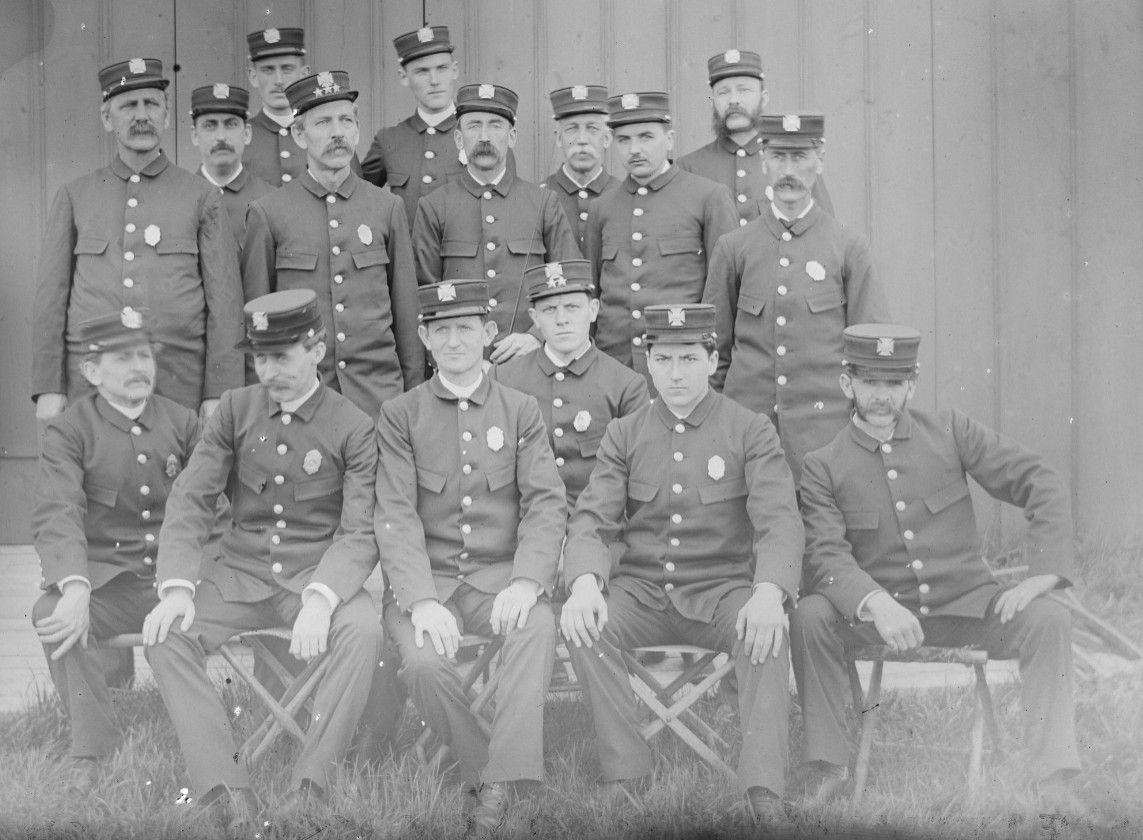
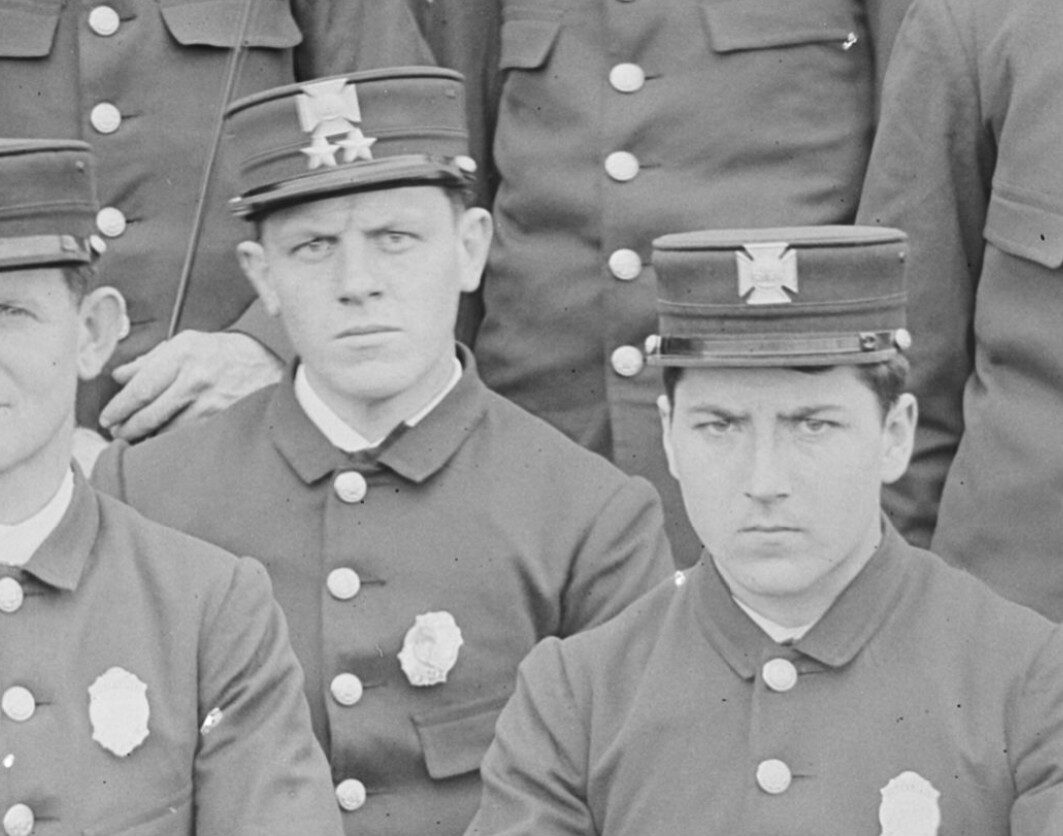
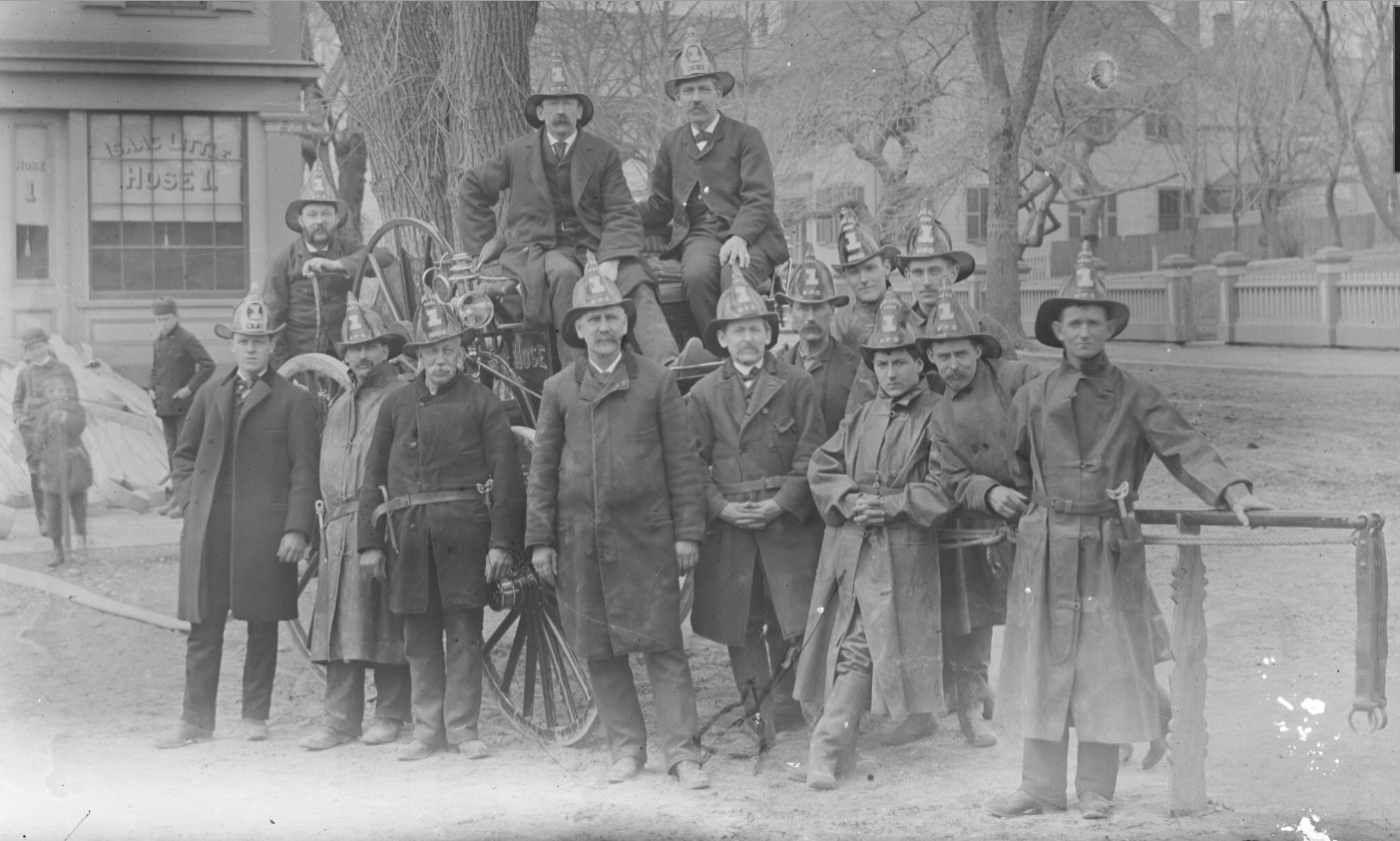
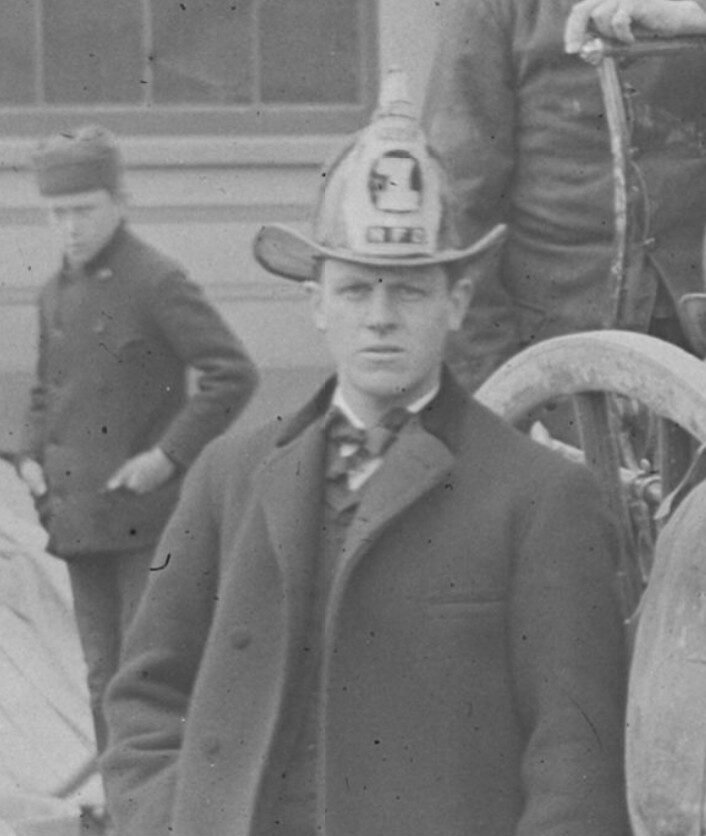
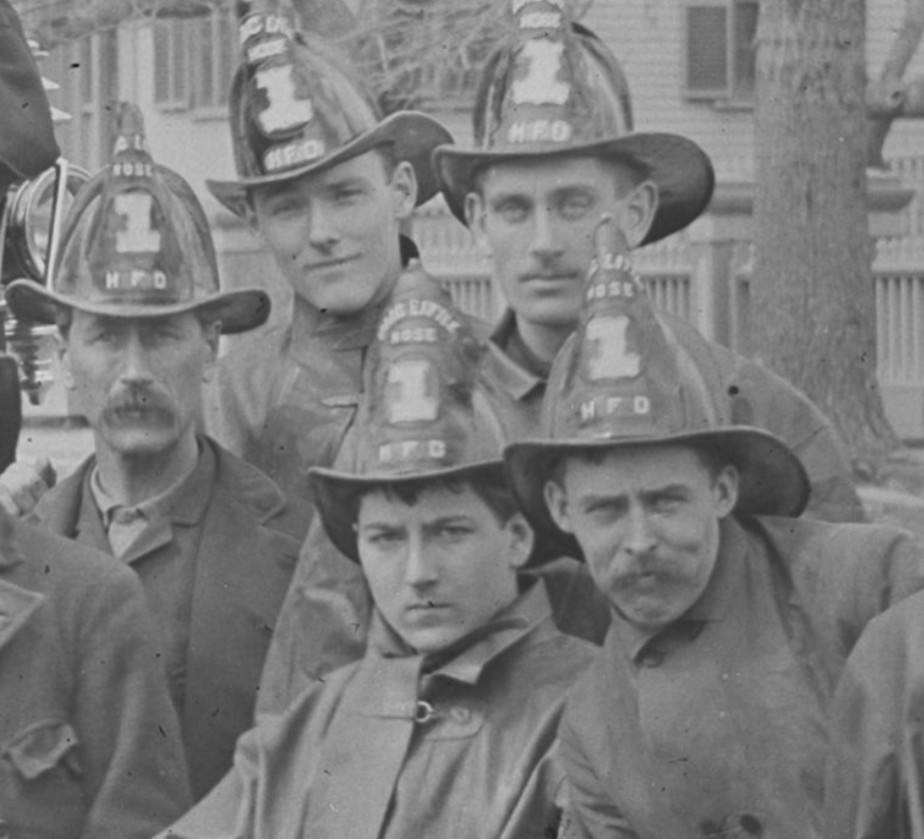

Take a close look at the two windows on the left. They appear to have large single-panel louvered shutters, which is an interesting architectural detail and may help identify the house if it still exists, or if it appears in another historic view of Main Street.
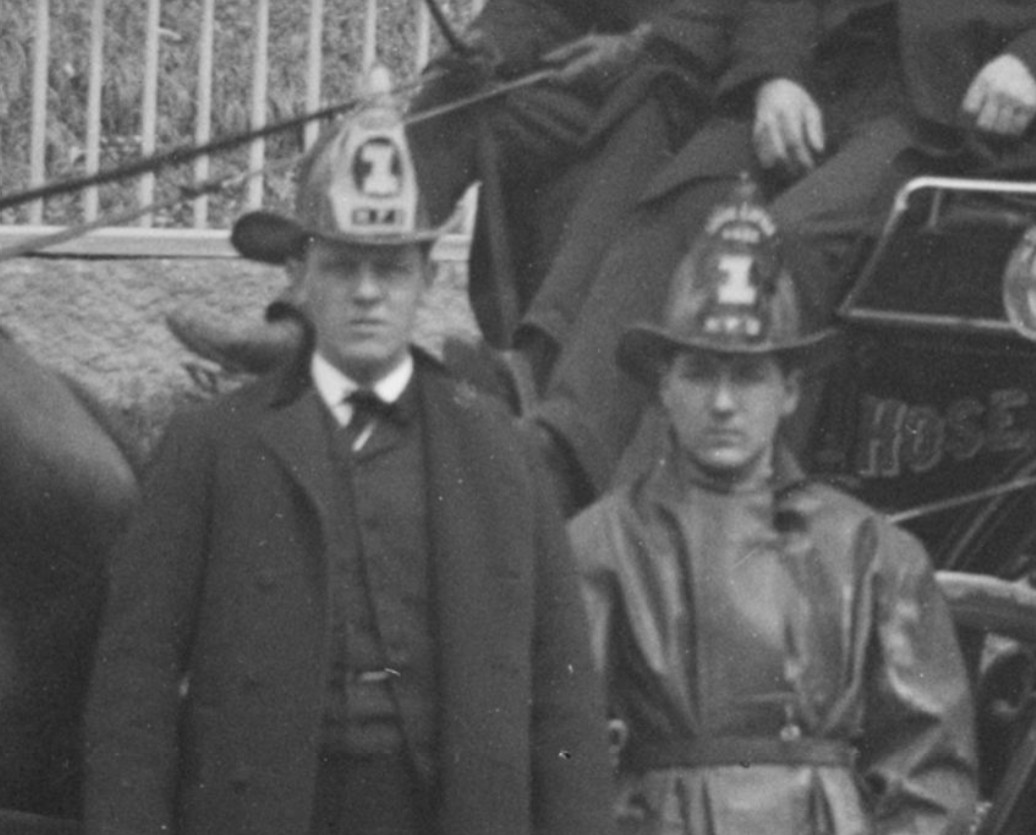
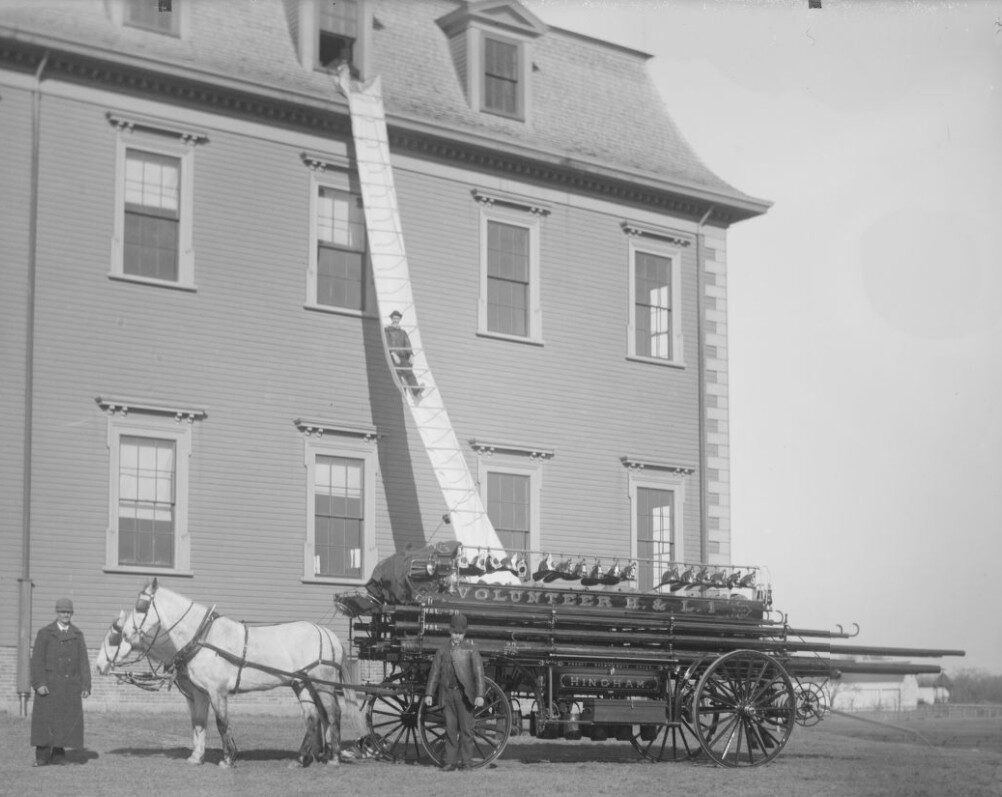
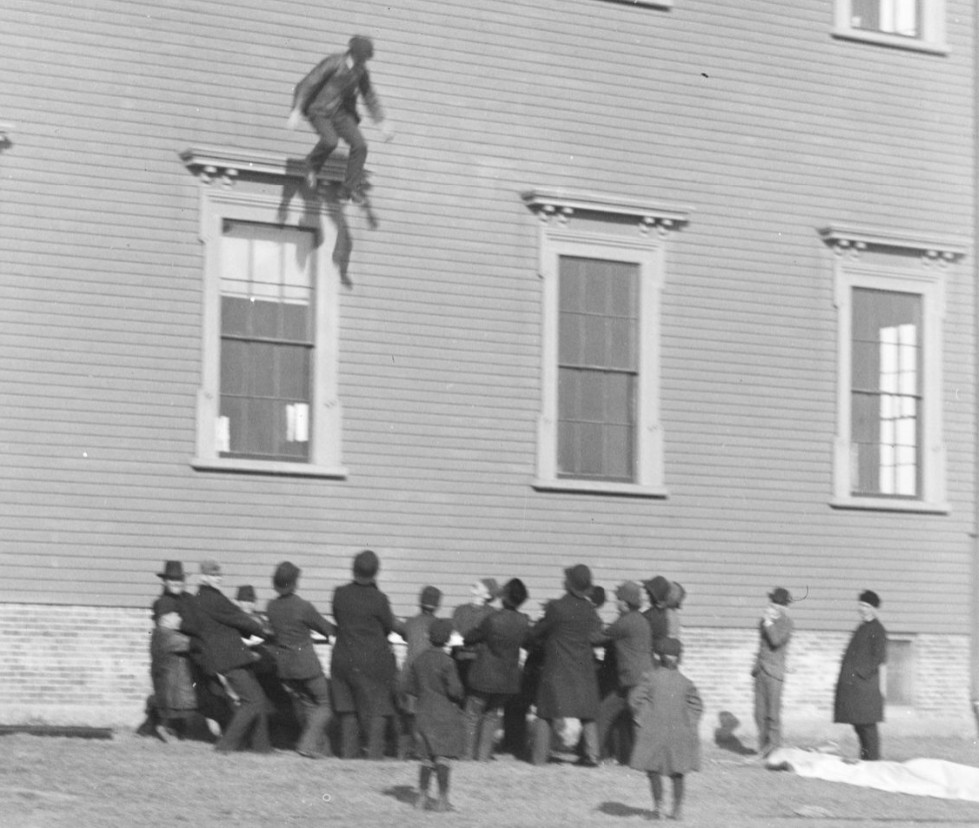
They also took time to photograph a fire drill, and it looks to have been quite an event. One especially interesting detail is the escape ladder, or perhaps slide, which adds another layer of curiosity to the scene.
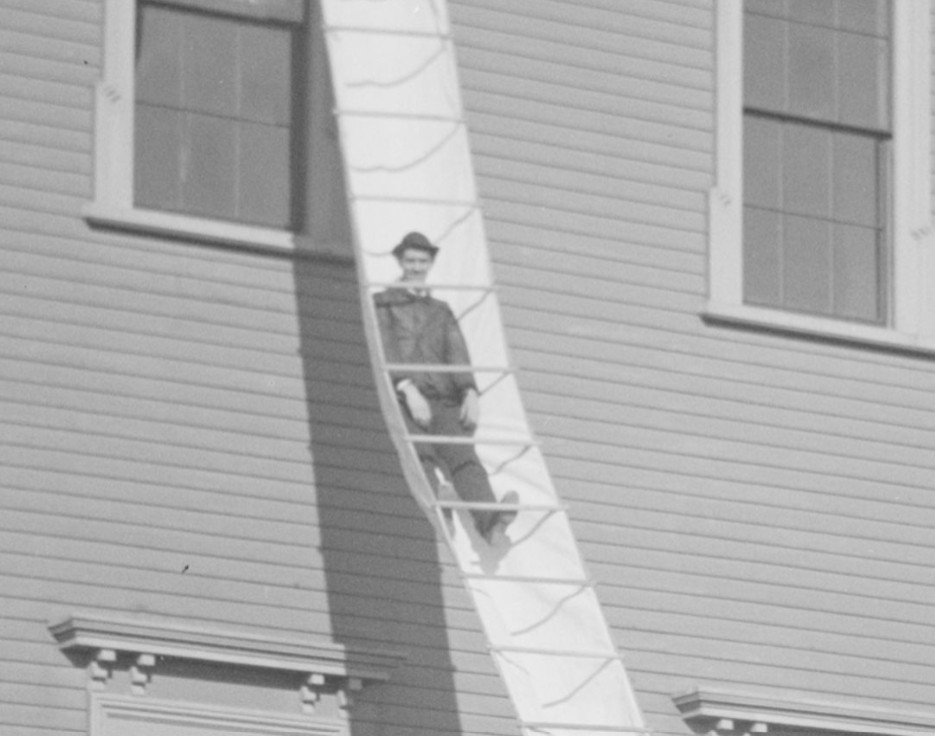
Scenes like this fire drill show that fire protection was not only about responding after a fire had started. It was also about preparation. Firemen practiced with ladders, hoses, wagons, and rescue equipment so they could act quickly when a real emergency occurred. Escape ladders, slides, and other rescue devices reflected a growing concern for getting people safely out of upper floors, especially as schools, factories, hotels, and public buildings became more common.
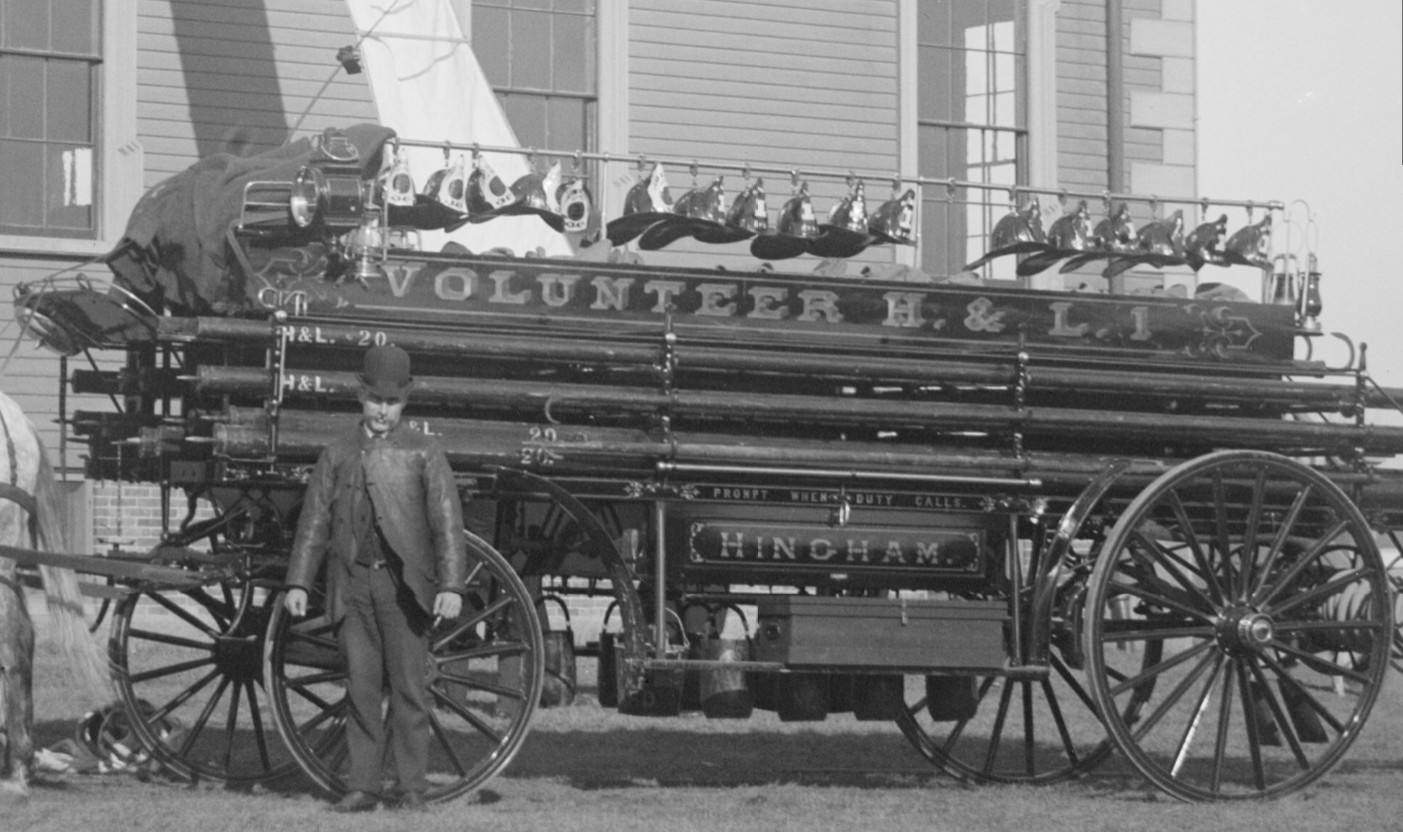
These late nineteenth-century drills mark an important transition. Fire companies were becoming more professional, more disciplined, and better equipped. What may look like a community spectacle in the photograph was also a serious exercise in public safety, showing how towns like Hingham were adapting to the risks of a changing modern world.

Like the owl, he watches from the edges of the image. He is present, but unnamed. The bucket and shovel, playful as they may be, also hint at work, service, and readiness. They connect surprisingly well to a life spent around horses, fire equipment, and the practical labor of protecting a town. What began as a curious little joke in a room became a doorway into a larger story of Hingham, its volunteer firemen, and one unidentified man who keeps reappearing from the past.
We may not know his name yet, but through these photographs, he is no longer completely lost. He stands in the background, blurred but present, helping lead us from a single strange detail on a mantel shelf into the fuller story of a life, a room, and a community worth remembering.
Leave questions, or your own research in the comments section below.
More articles can be find here.