Clara’s Parlor
12/13/25
24 Comments
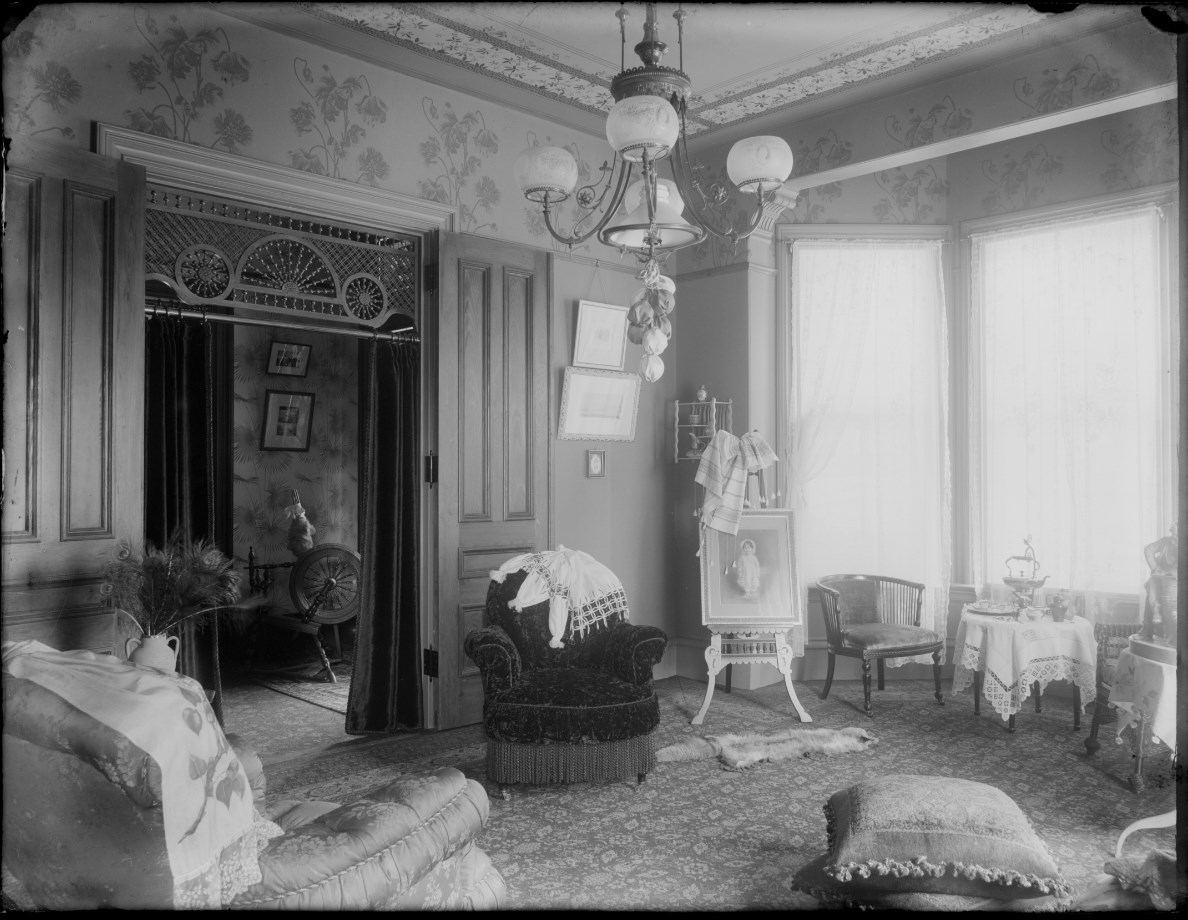
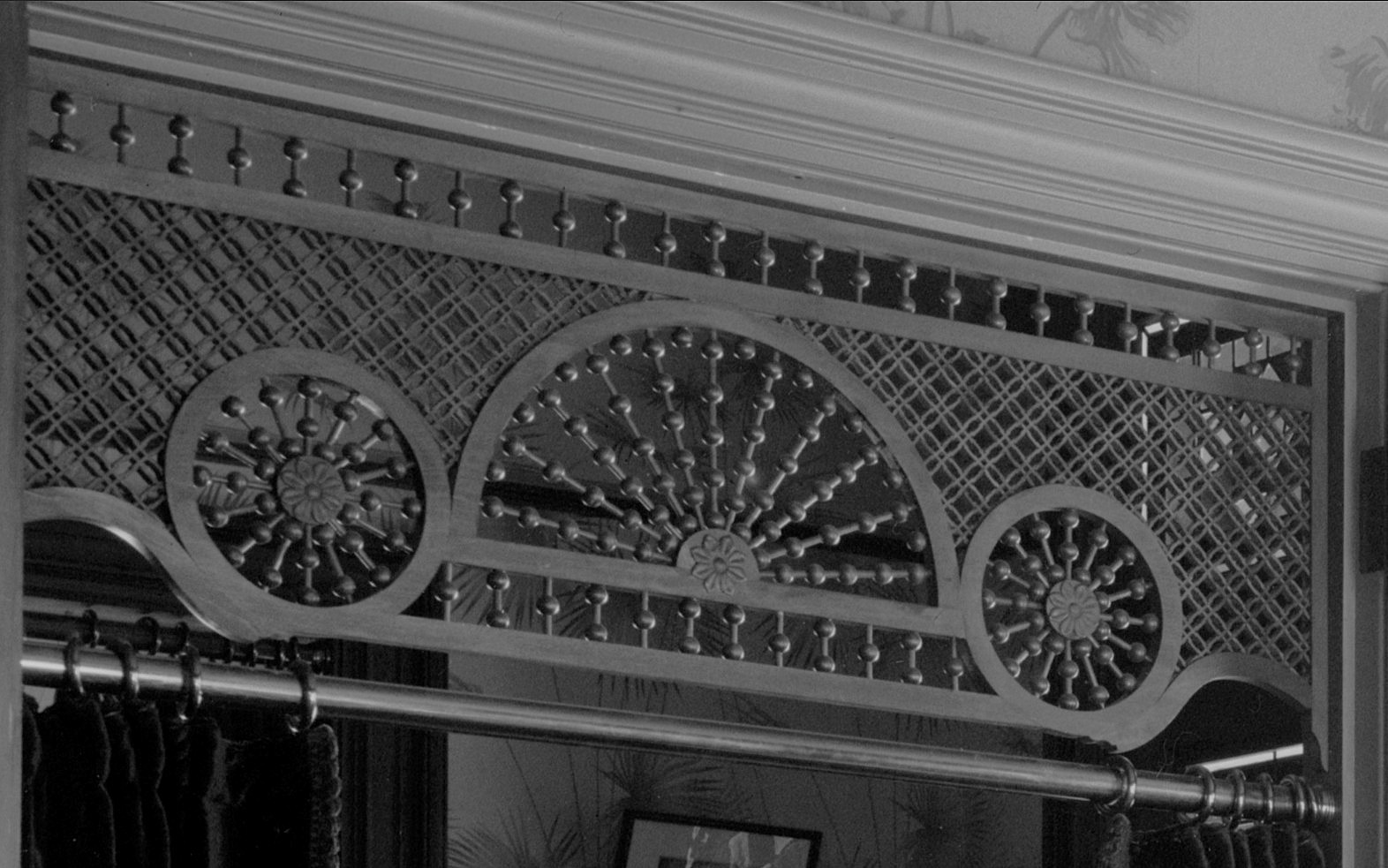
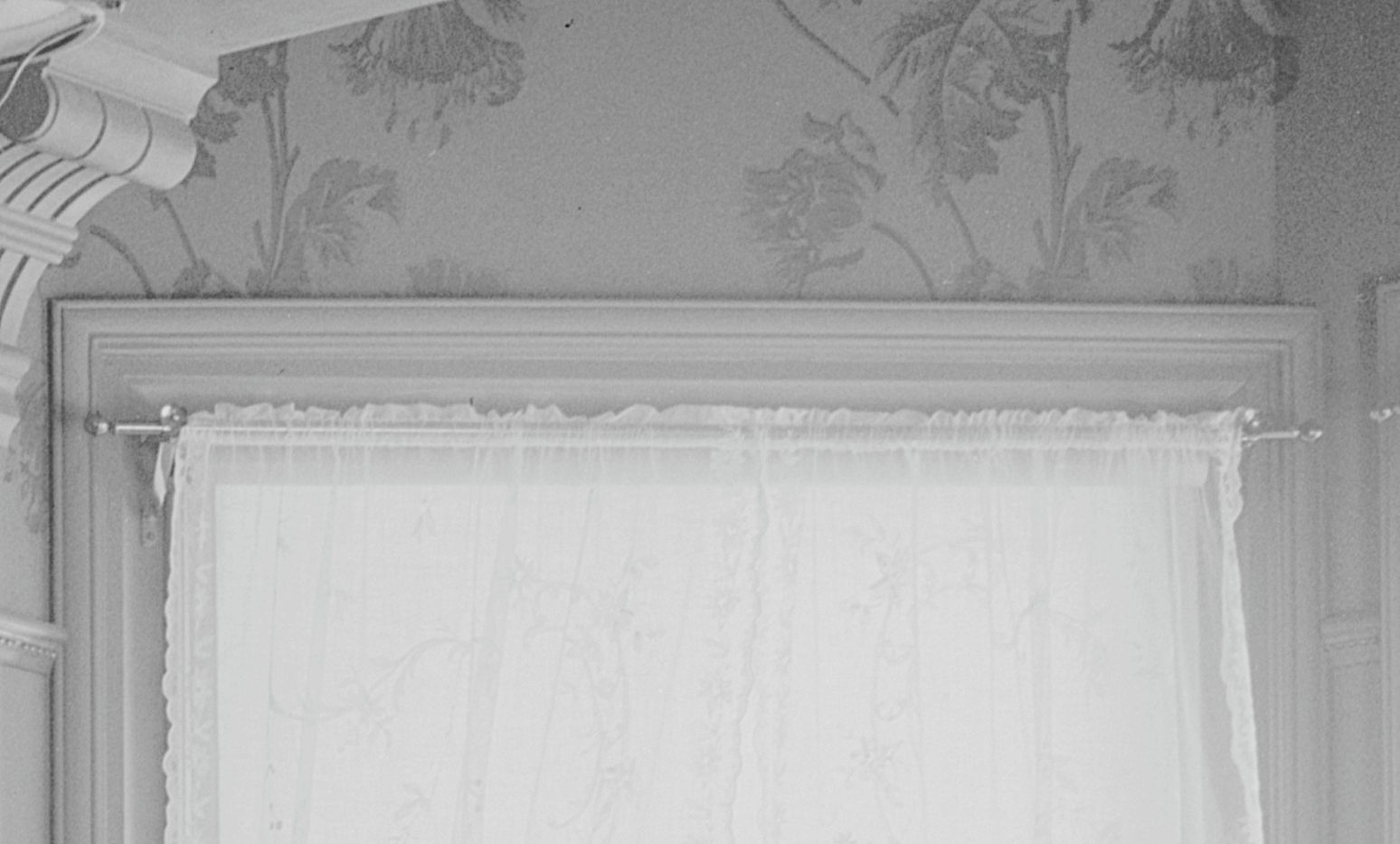
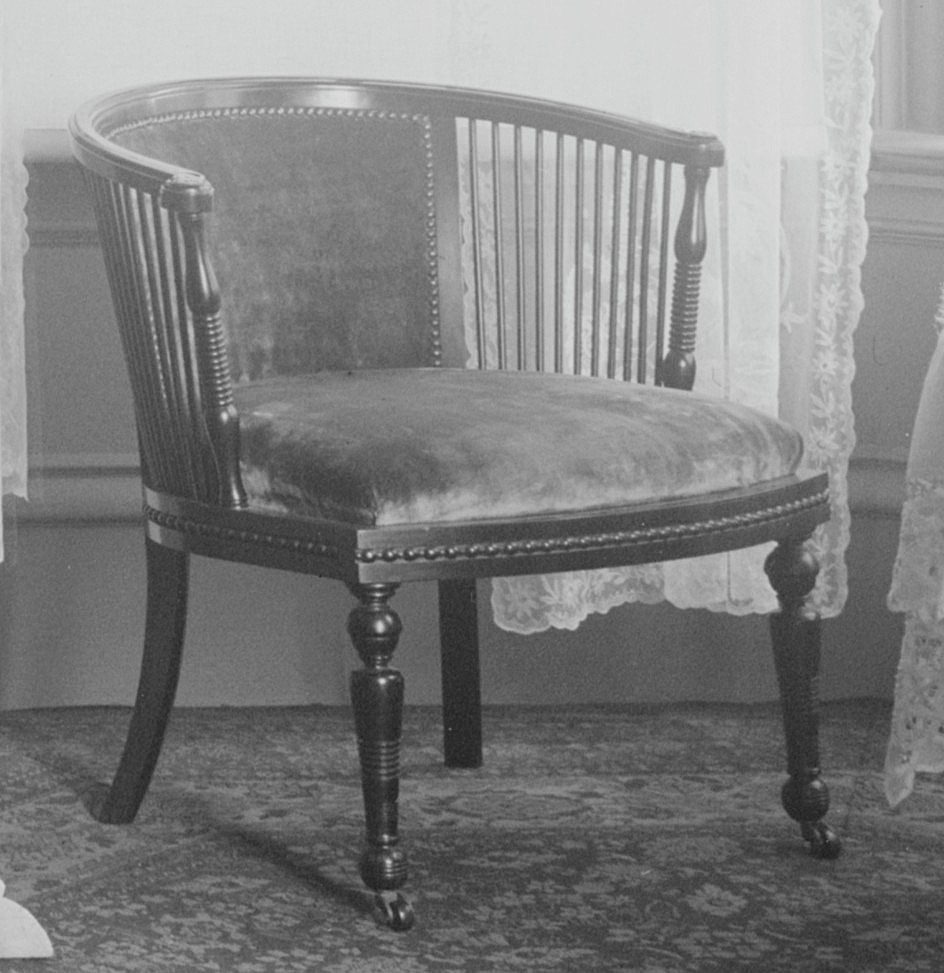
But perhaps someone on the board will enlighten us? This glass plate negative, titled “Clara’s Parlor,” takes us back to the late 1890s—an era later nicknamed the “Gay ’90s” in the 1920s, popularized in part by Richard V. Culver’s illustrations in Life magazine. The parlor is fully carpeted with wall-to-wall carpeting, and an arch divides off a small bay window. The room also has double doors that can close over the doorway, though the opening could also be more softly defined with portière curtains. Let’s dive deeper.
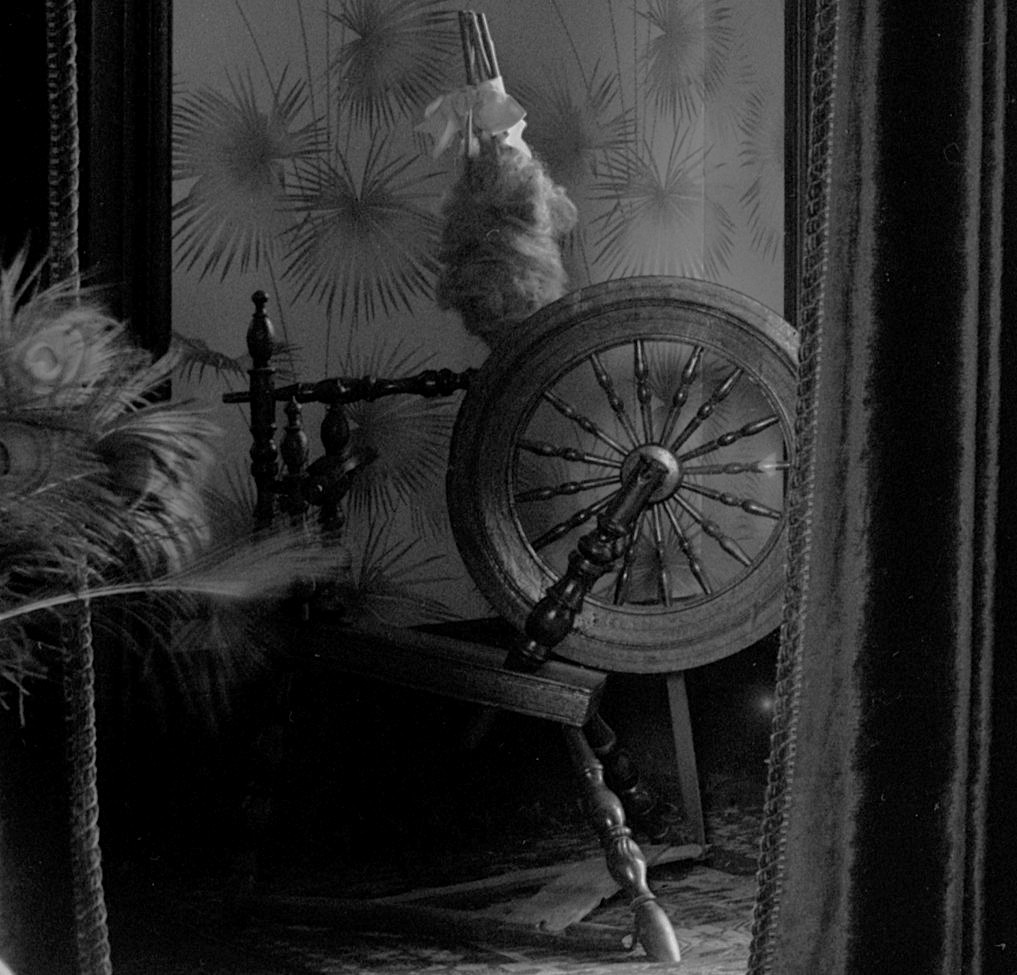
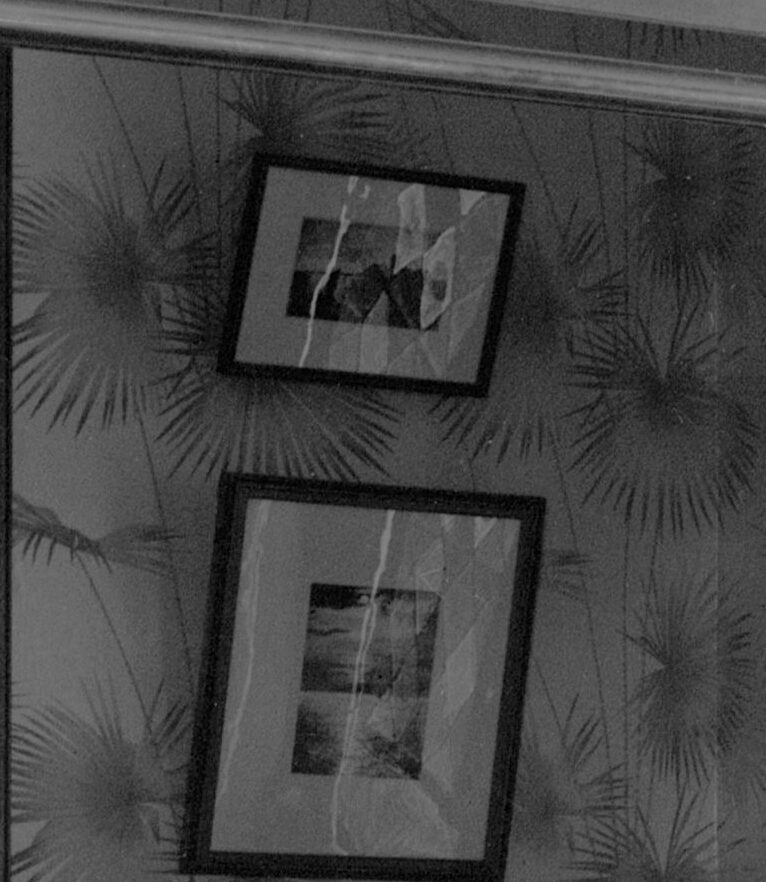
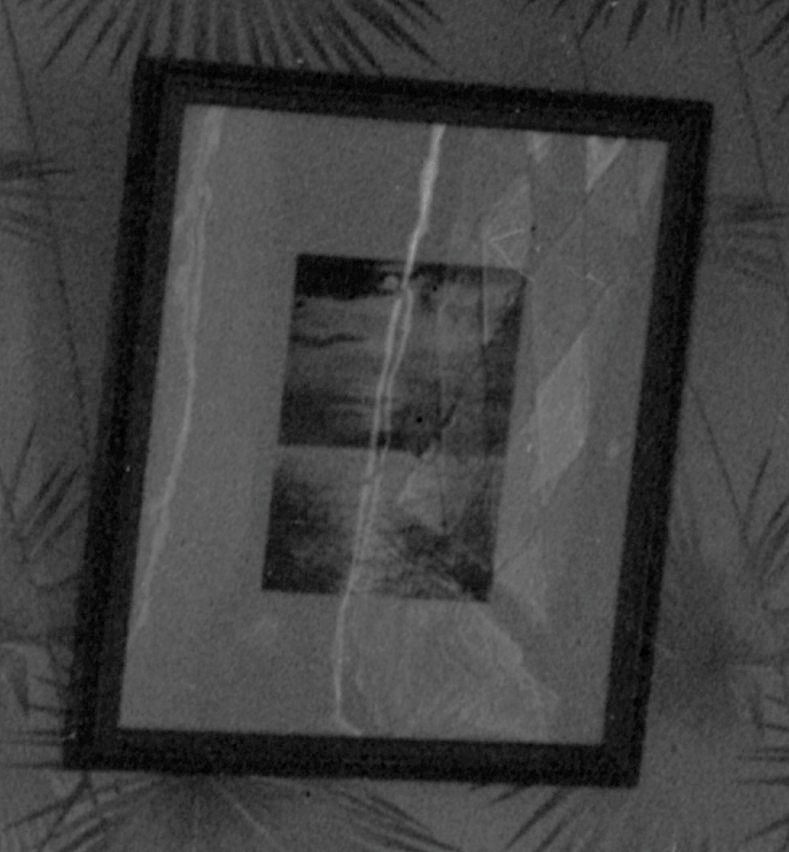
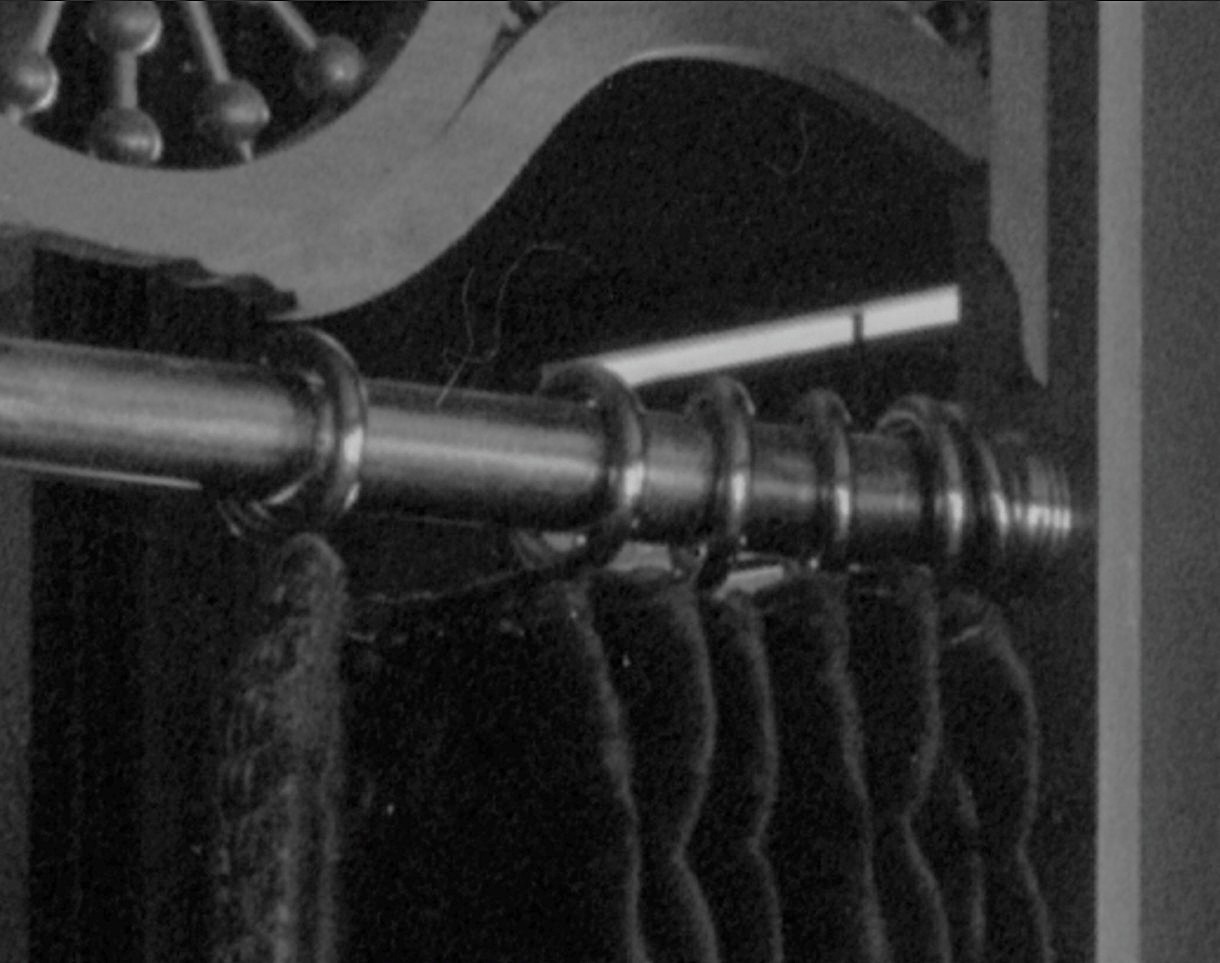

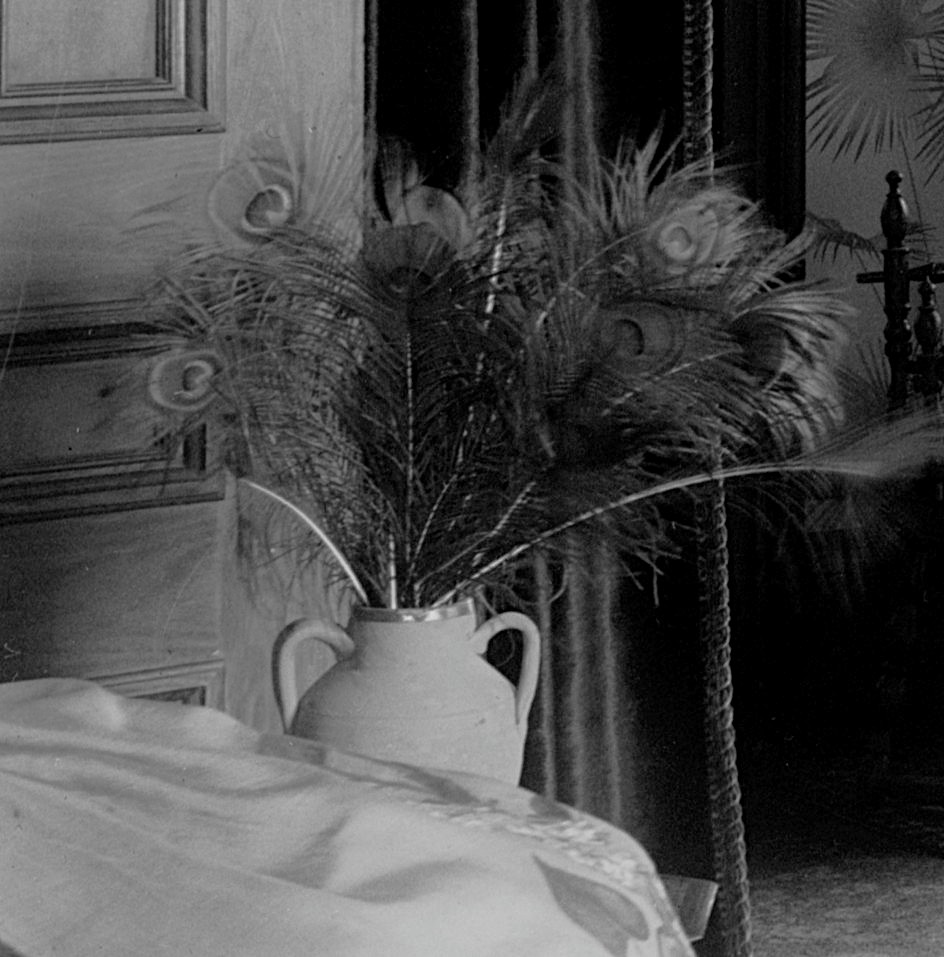

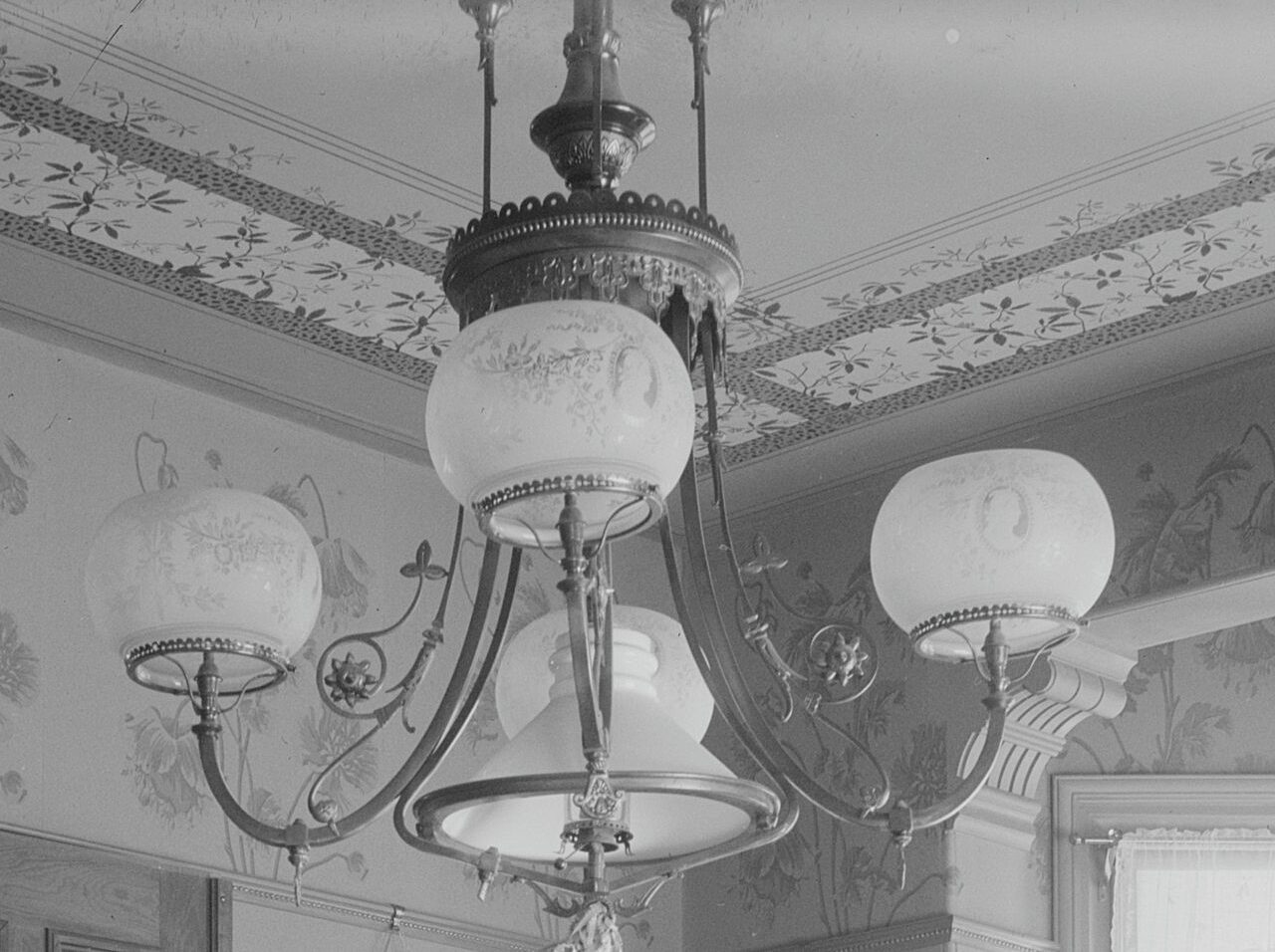
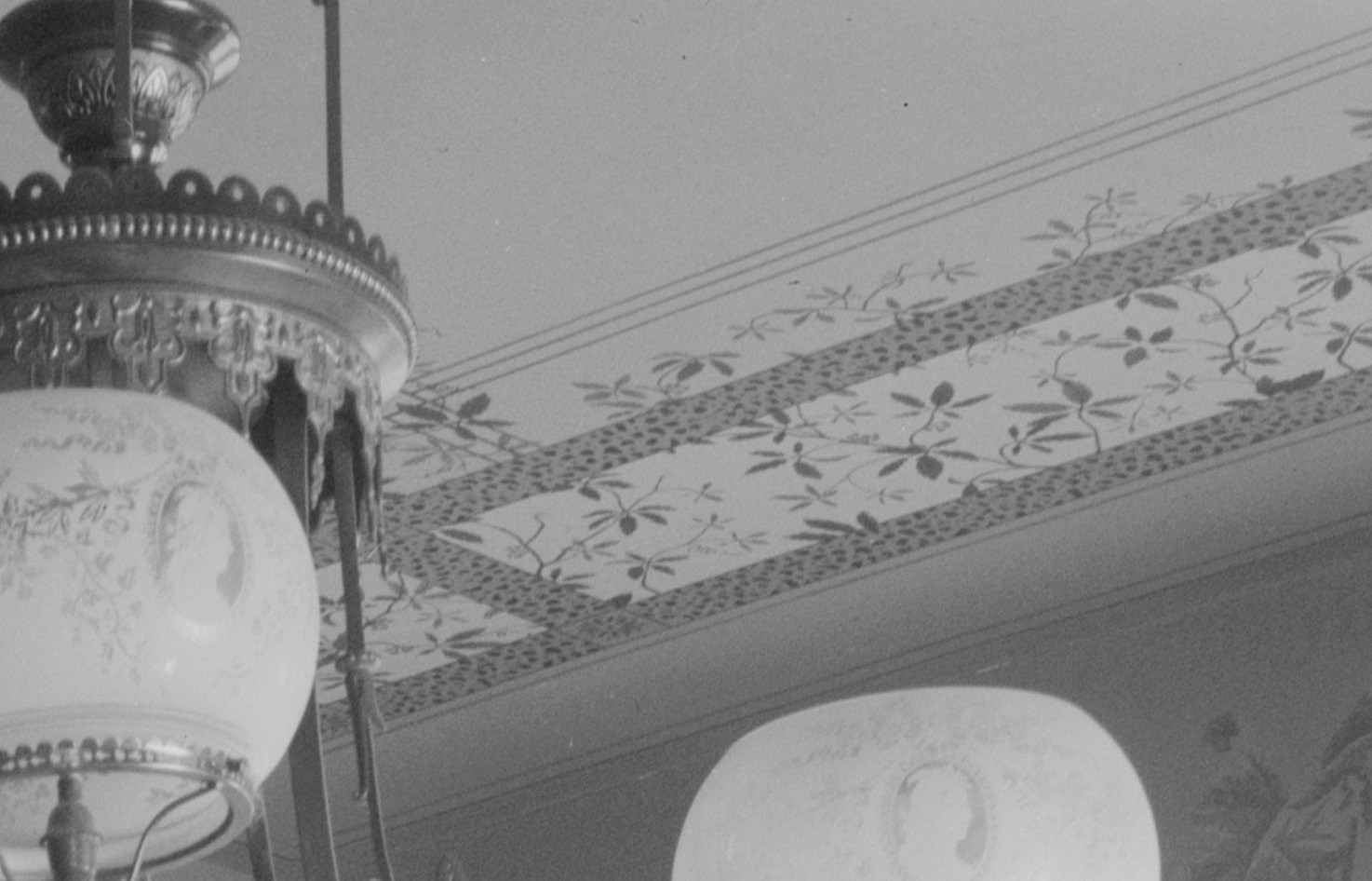
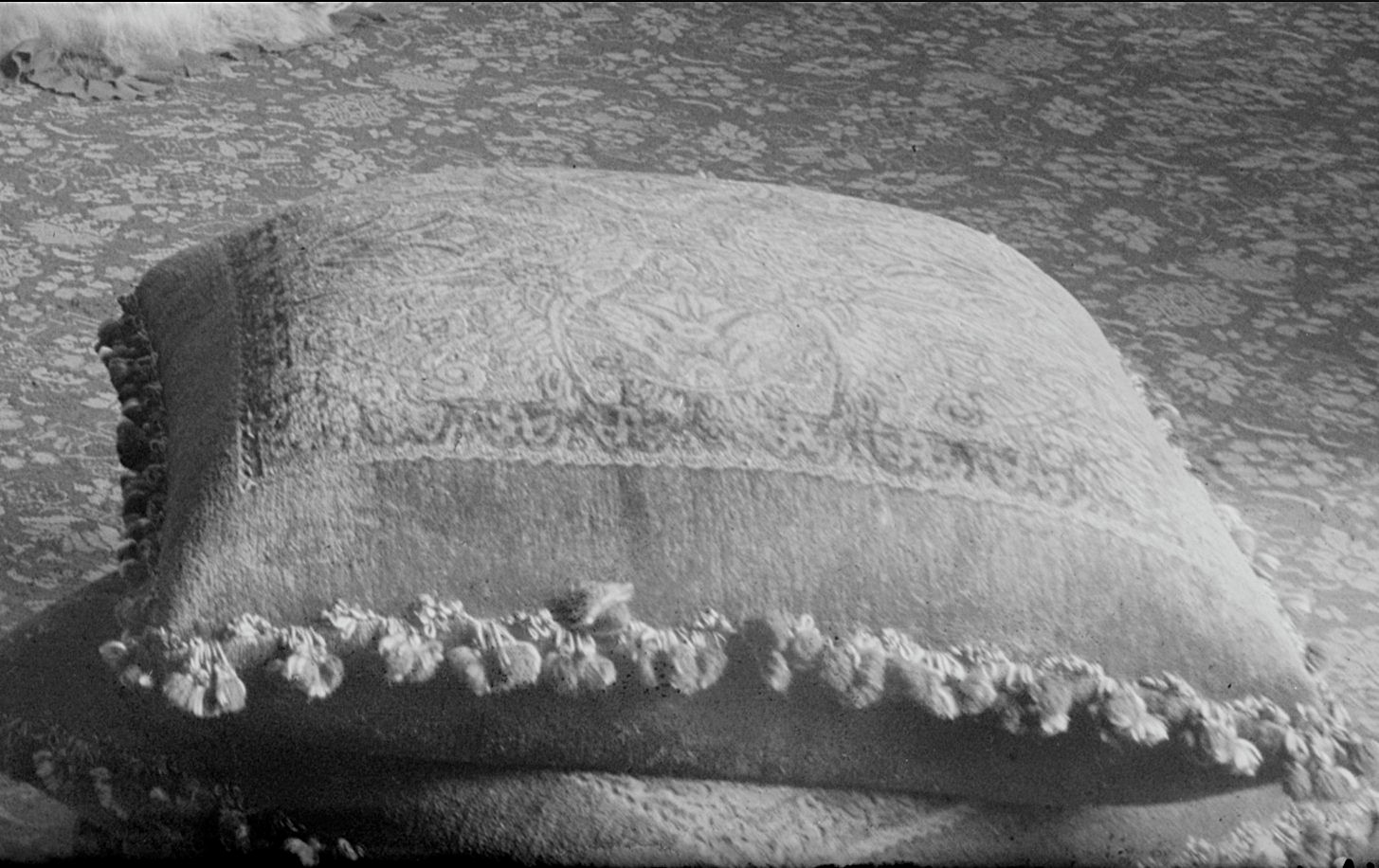
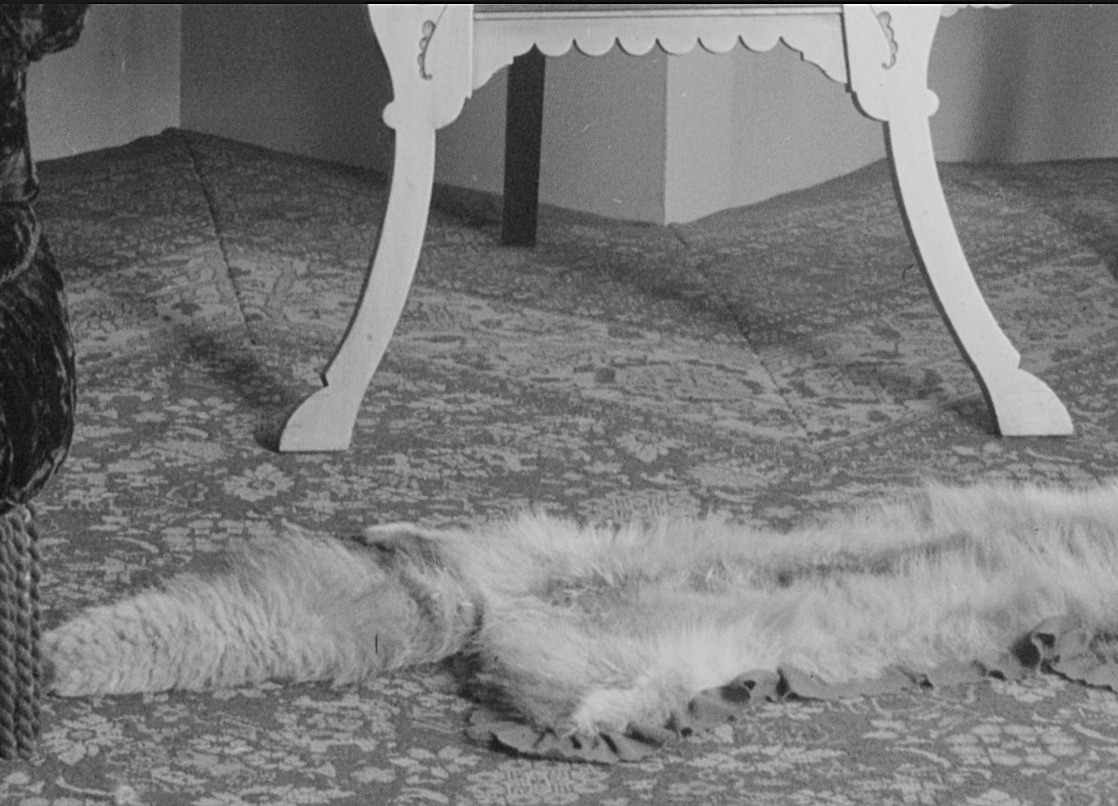
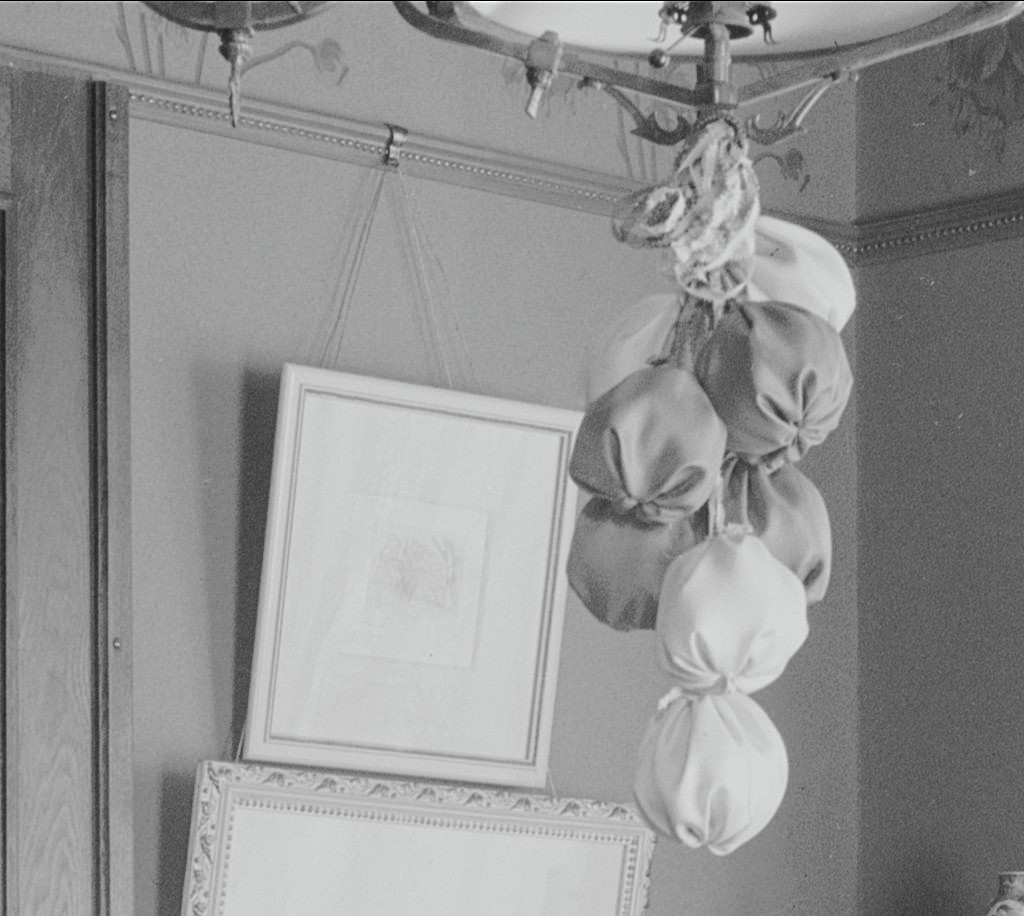
They sure did. Balloons were very much a thing by the late 19th century—most commonly made of rubber (latex) after the material became commercially available in the mid-to-late 1800s. They were often sold uninflated, then blown up by mouth or, for larger decorations, filled with gas such as hydrogen (and later helium) by vendors for special events. By the 1890s, balloons were familiar party novelties at fairs, celebrations, and children’s gatherings, and they show up in period photos often enough to remind us that Victorians enjoyed a bit of whimsy, too. These balloons look a little deflated—perhaps left up from a party a day or two earlier. In the background, you can also see a painting hanging from the picture rail. And while the room reads light, you can tell the walls aren’t painted white when you compare them to the brighter, lighter-toned objects in the scene.
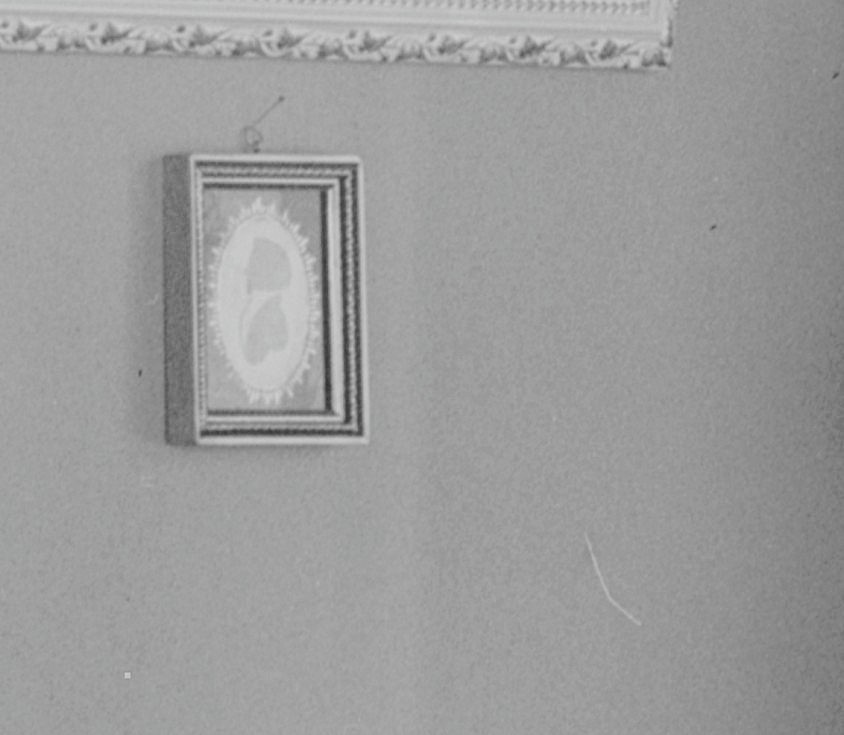
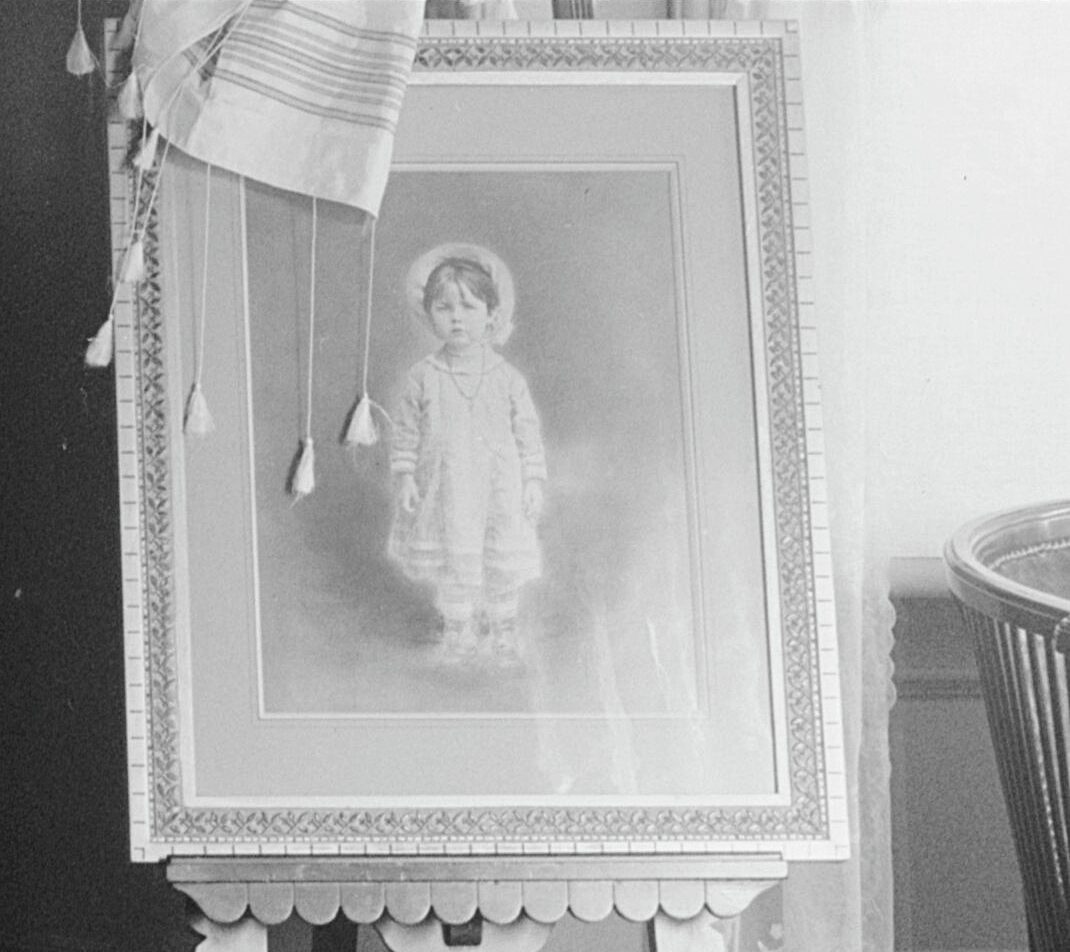
This kind of asymmetrical drapery over pictures or tables is very much part of the dramatic 1890s, leaning into a softer, less rigid presentation that pushes against earlier, more formal arrangements.
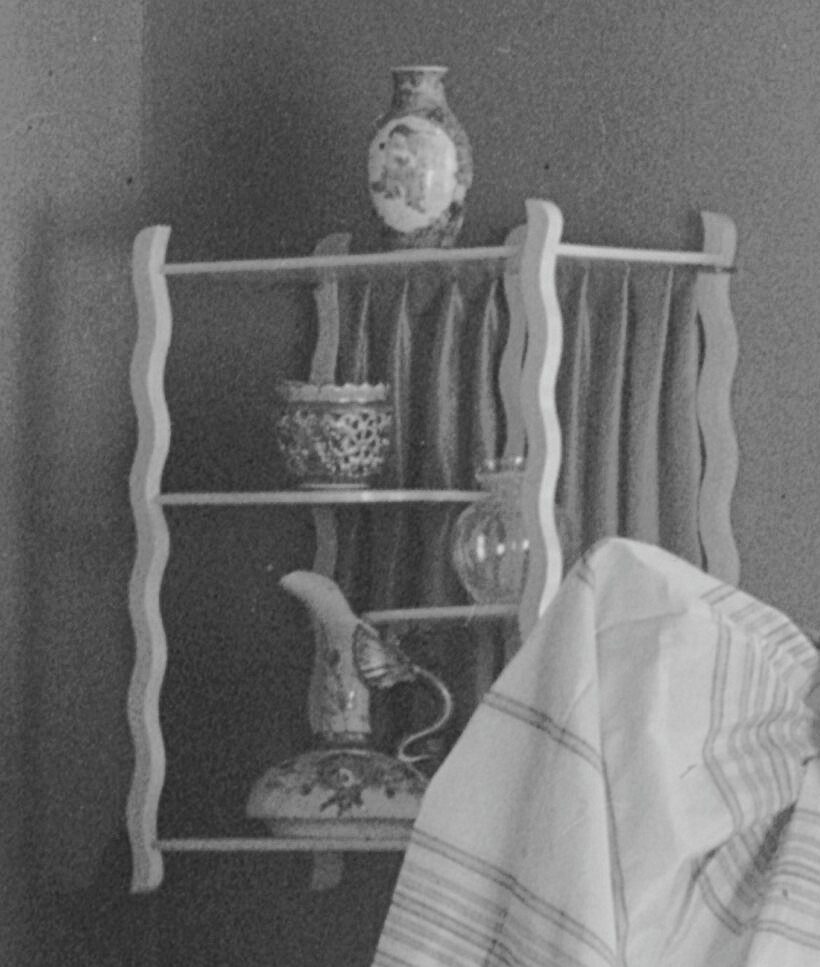

Thank you for joining me today! Now, let’s sit down and have a nice warm drink and enjoy the rest of your day or night!
For more articles click here.