Mystery Interior: Sitting Room
11/7/25
26 Comments
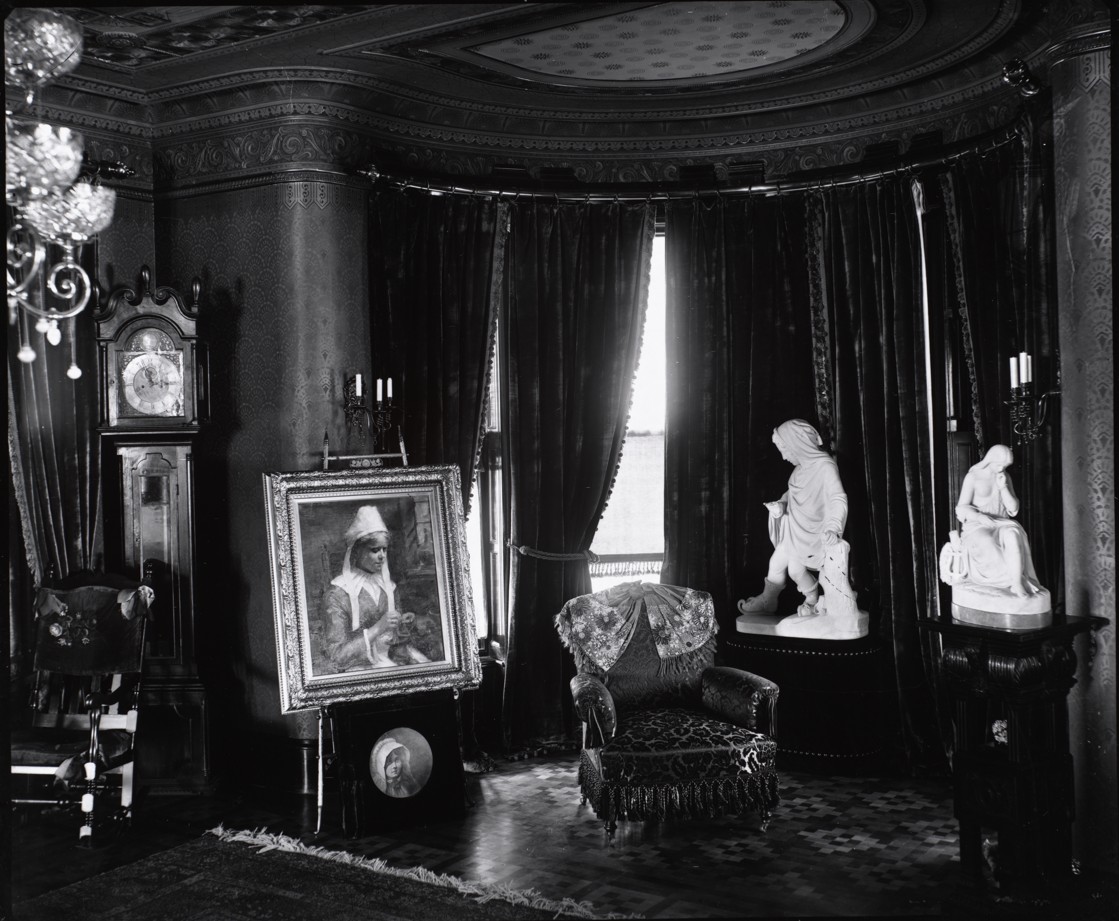

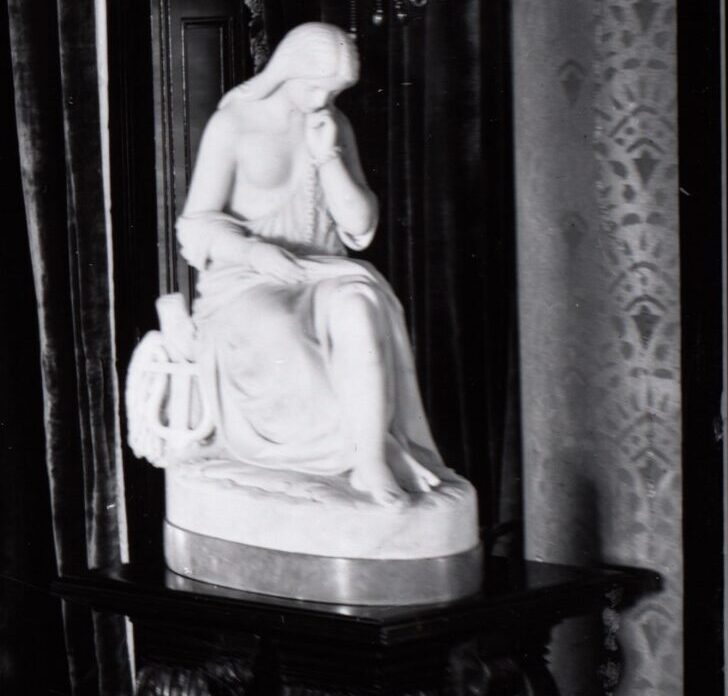
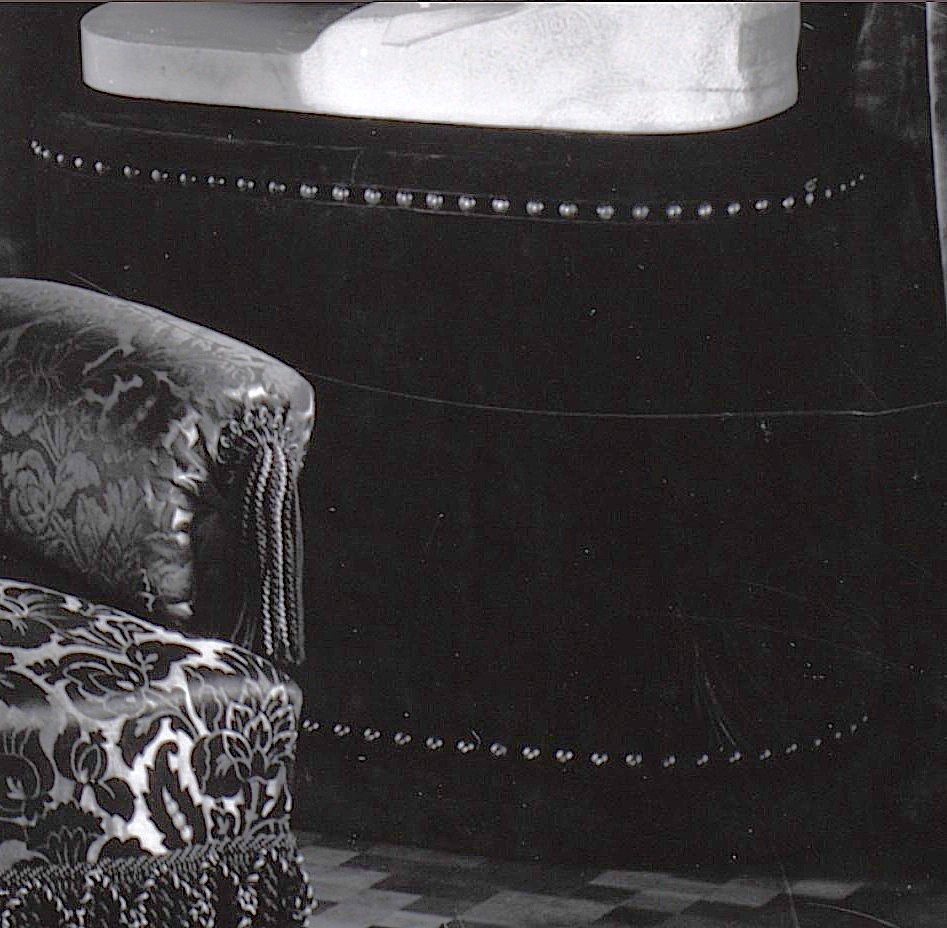
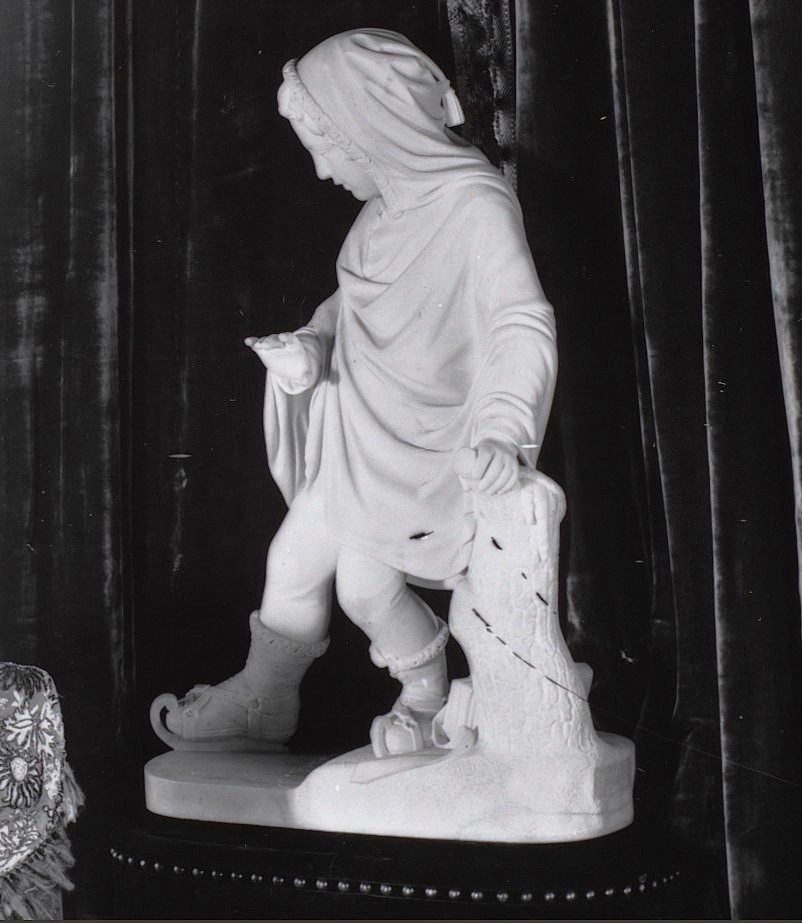


Just below, the woodwork of the window frame becomes visible, grounding the composition. The curtain pole itself follows the curve of the bow window, a thoughtful detail that preserves the architectural sweep of the alcove and ensures the drapery falls gracefully along its arc.

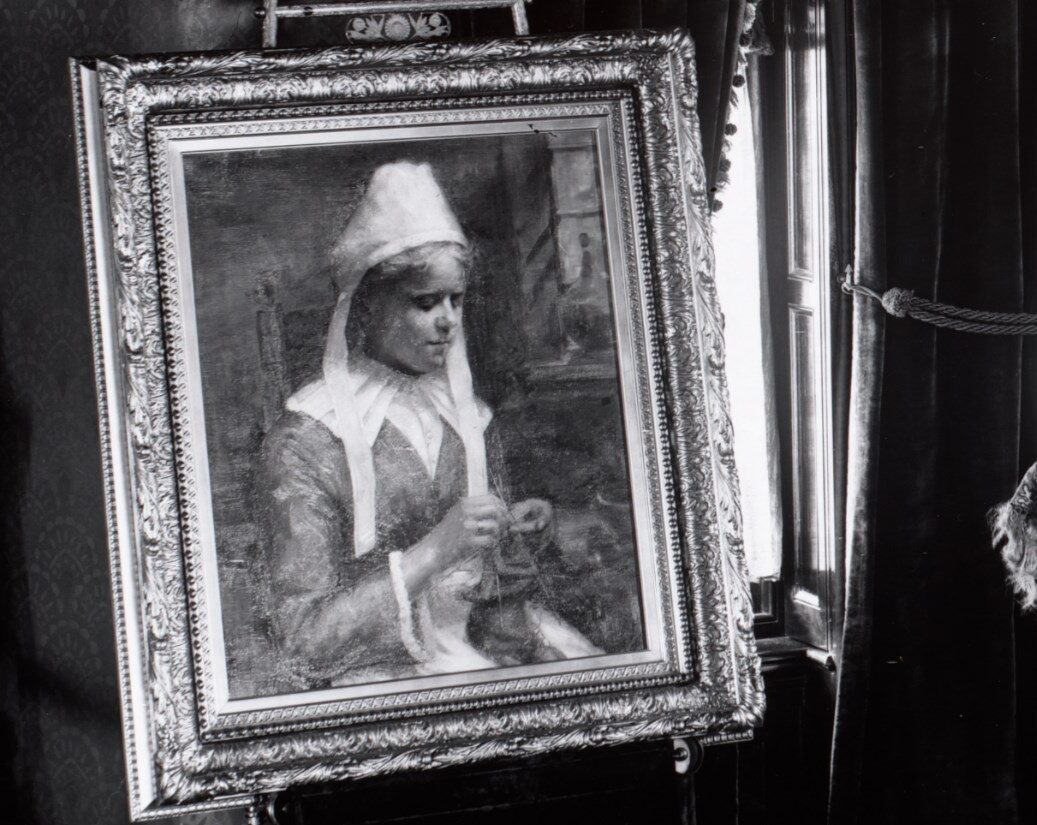
If anyone viewing this post recognizes the painting—whether by artist, title, or source—please share your insight in the comments below. Any confirmed identification will be added to update and expand this study of the room.

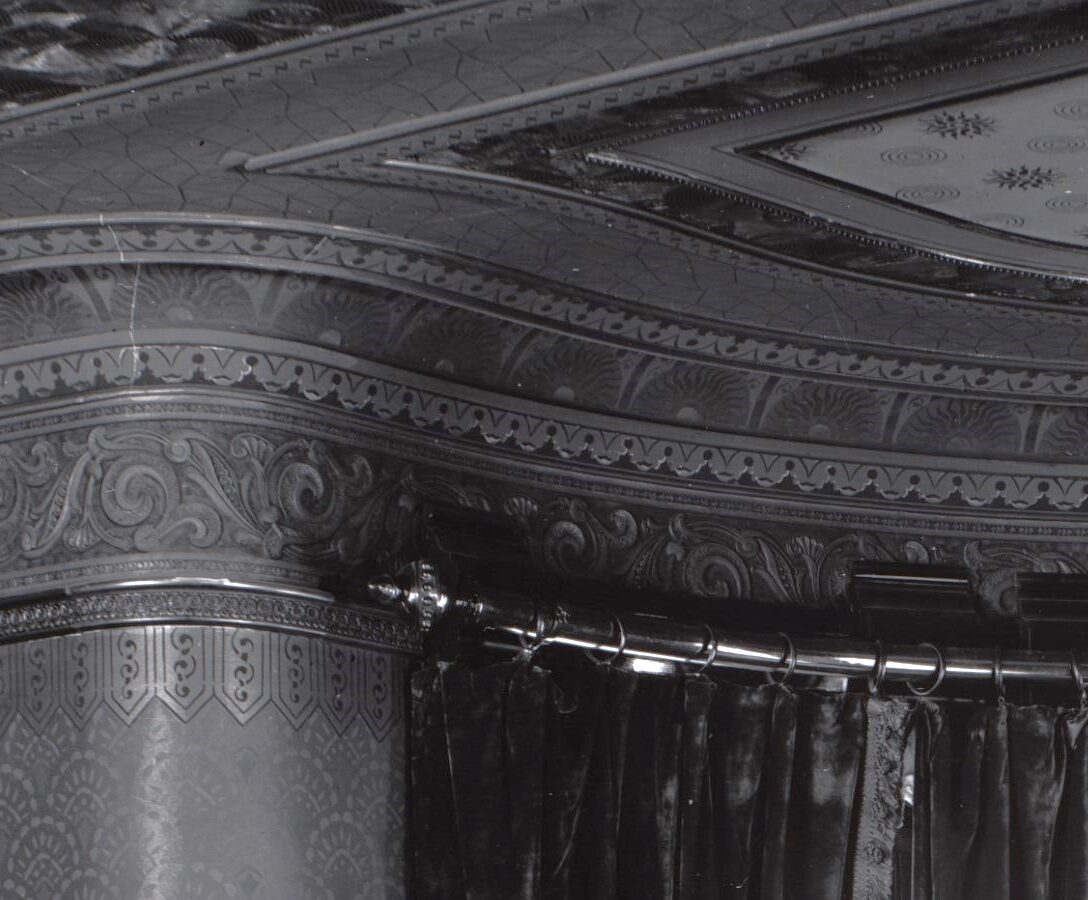
Below that, the curved cove plaster moldings are richly stenciled with radiating sunray forms and additional ornamental flourishes. These were likely applied in multiple tones and metallic accents to catch low light from gas fixtures—exactly the kind of work fashionable decorators took pride in during the 1880s–1890s.
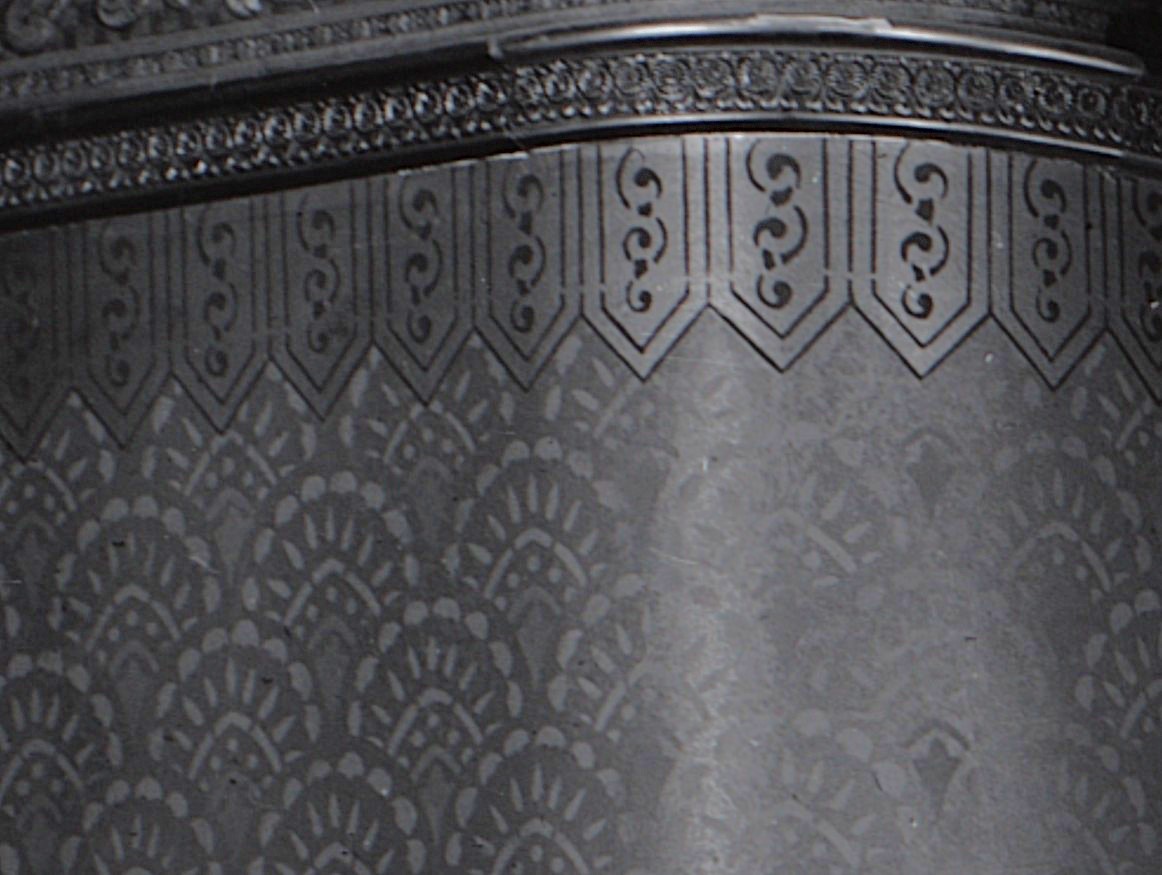
Just below the cove, the Lincrusta frieze creates noticeable texture and relief around the room. Its embossed surface helps transition the eye from ceiling ornament down to the more intimate scale of the furnishings. And positioned beneath the frieze is a curved picture rail, gilded so that it subtly reflects light along its arc—practical for hanging pictures, yet also decorative in its own right.
Finally, note the finial at the end of the curtain pole: it is bold, almost sculptural, and deliberate. Paired with the curved rod that follows the shape of the bow window, this detail reinforces the sense that the house was carefully furnished—not just with beautiful objects, but with real attention to how forms flow and emphasize the architectural lines of the room.
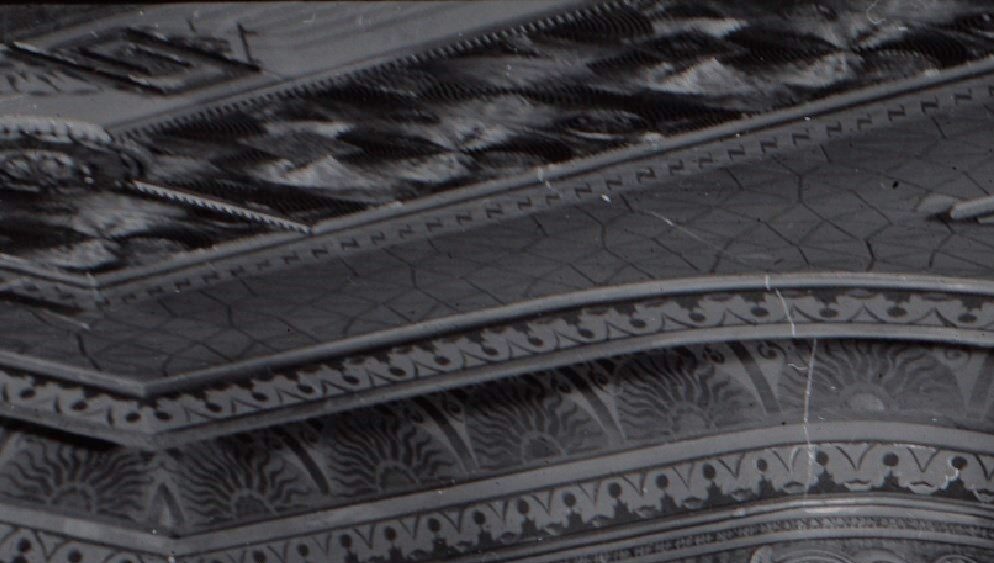
And yet, we only see one portion of the space here. The photograph gives us this intimate fragment, but leaves the rest to the imagination. One can’t help but wish we had a full view of the room—how the furnishings were arranged, how the decoration balanced across all four walls, and what other objects might have shared this dramatic, art-filled space. It is one of those interiors that quietly invites you to linger, study, and speculate.
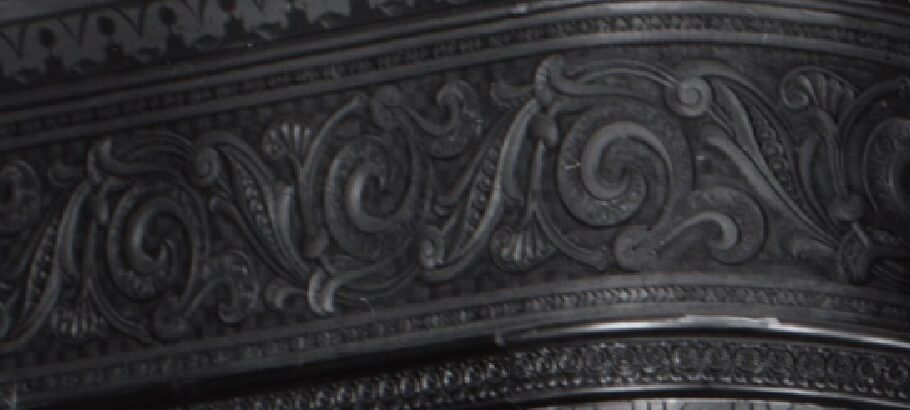
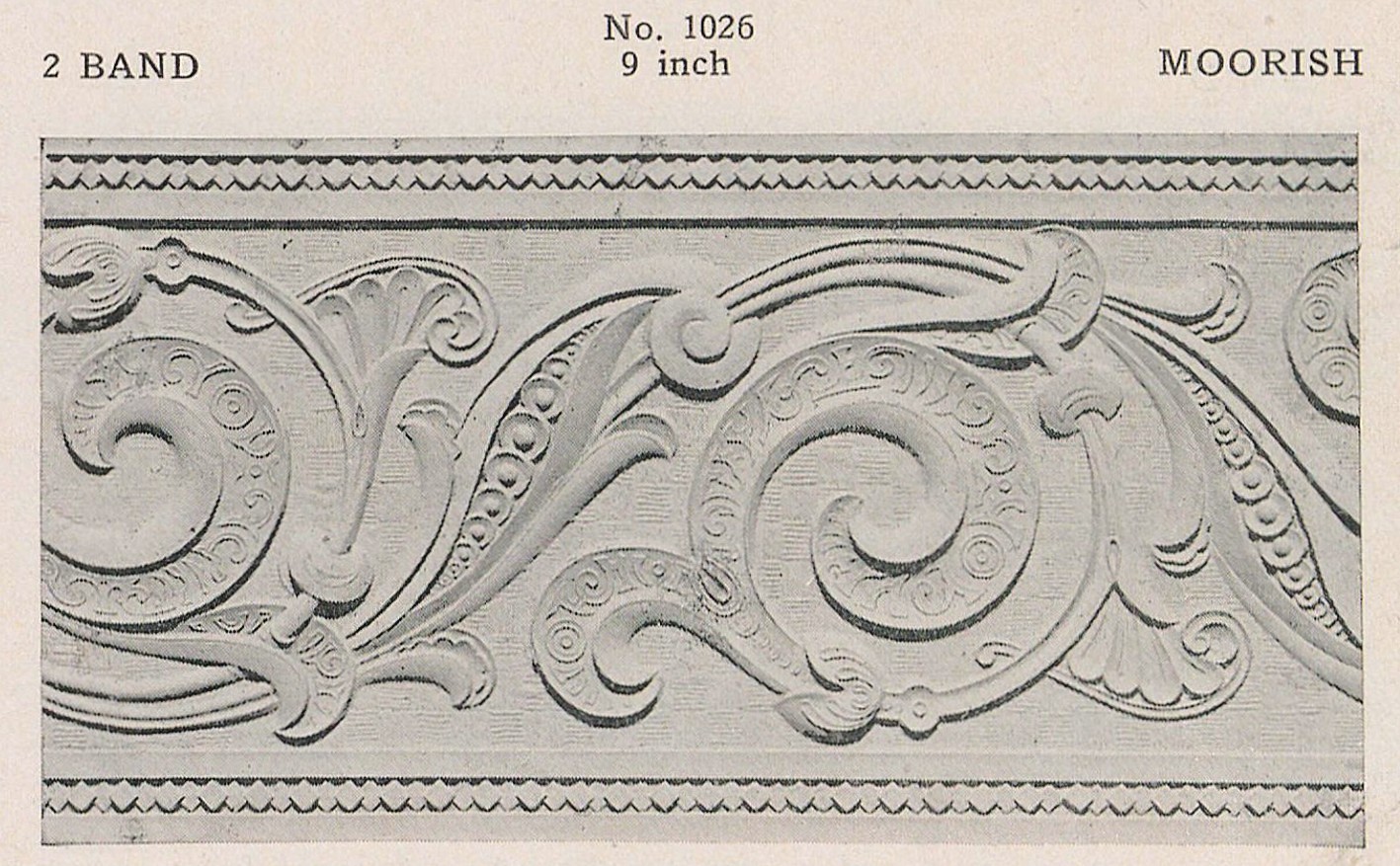
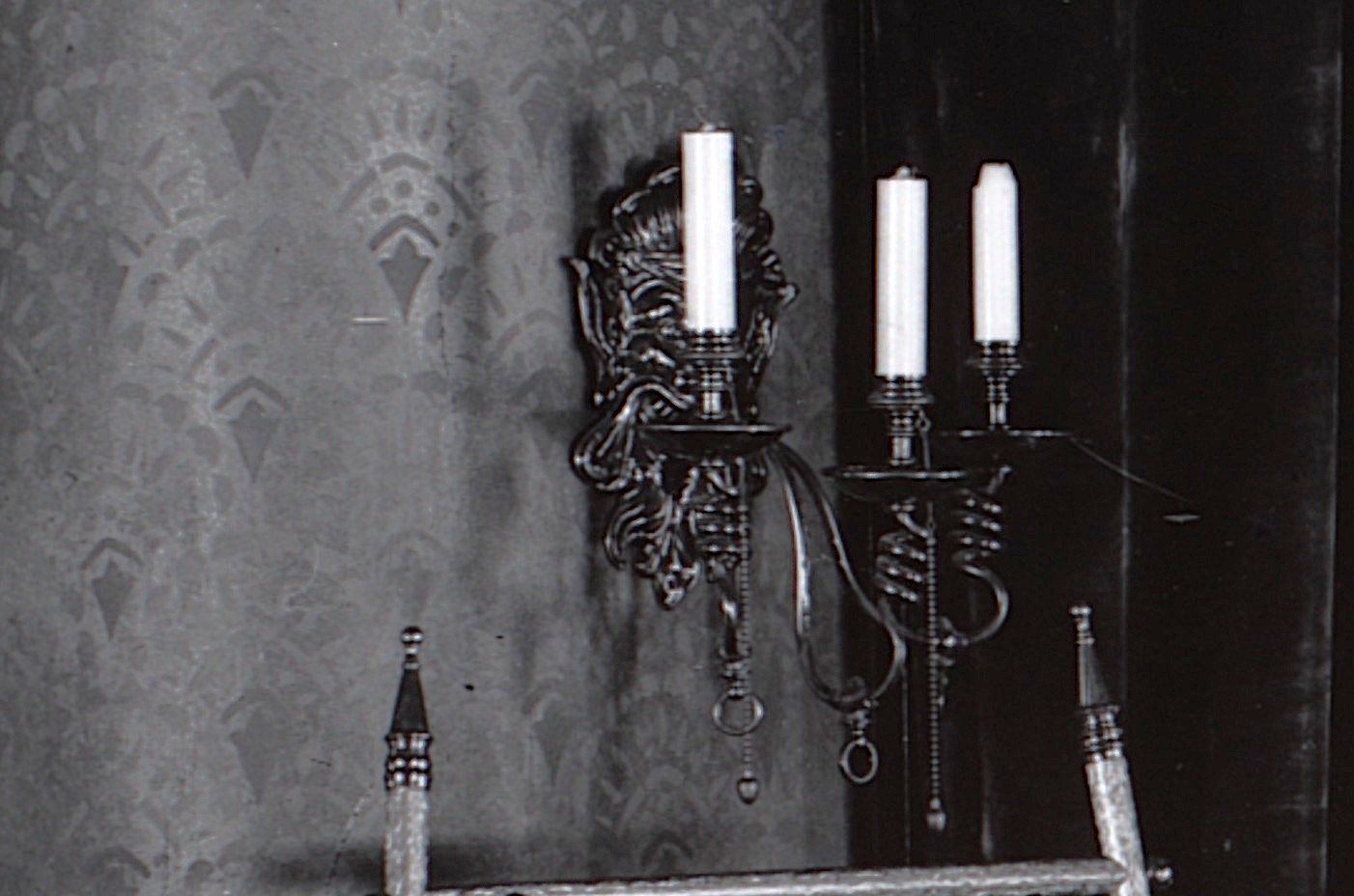
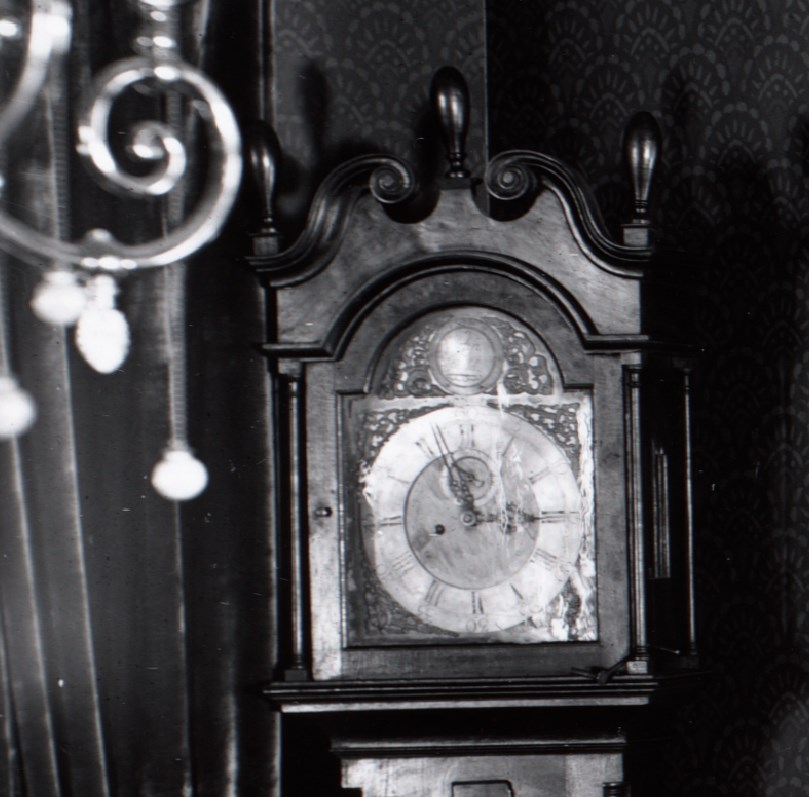
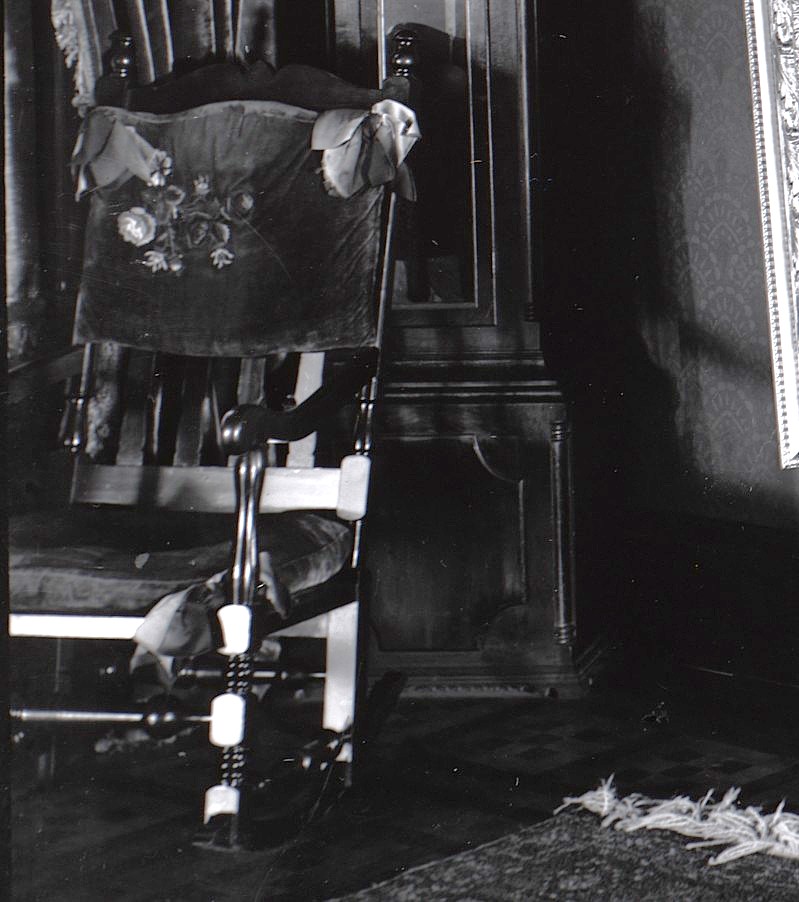
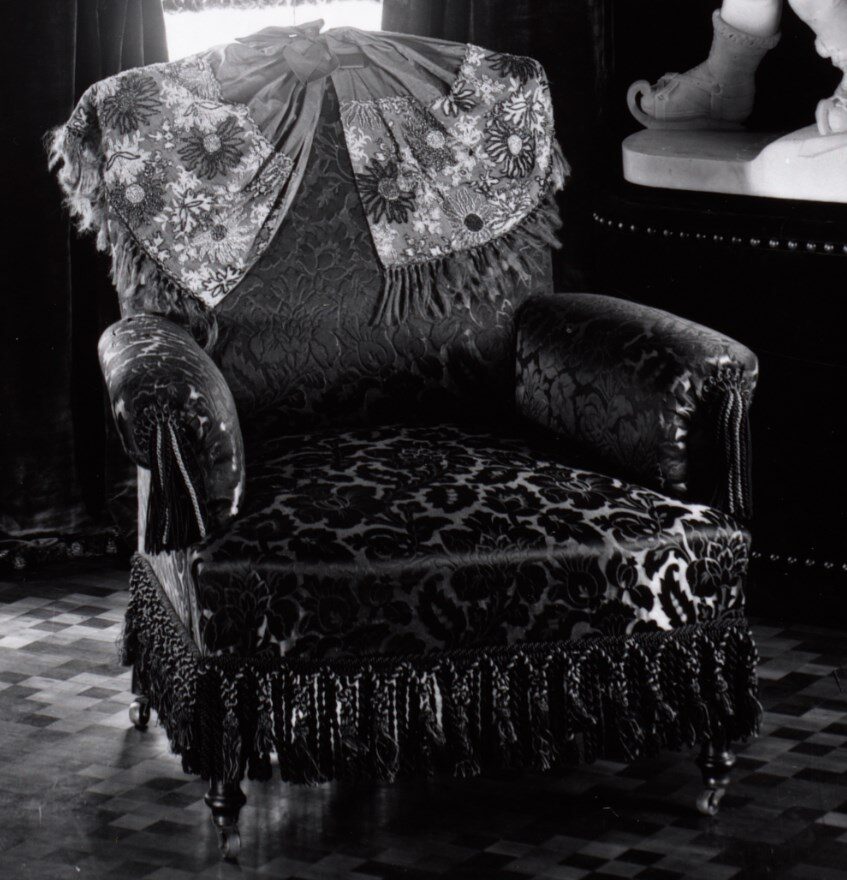
One can easily imagine sitting in that rocker, slowly taking in the room. This is the kind of interior that unfolds gradually—where each glance reveals a new texture, a new motif, a new detail hidden in plain sight. To spend time here would be to let the layers of pattern, craftsmanship, and intentional beauty quietly work on the mind, the way a piece of music or poetry does—not all at once, but slowly, richly, and continuously.