III. Almy, Bigelow & Washburn; Drapery Department
10/16/25
6 Comments
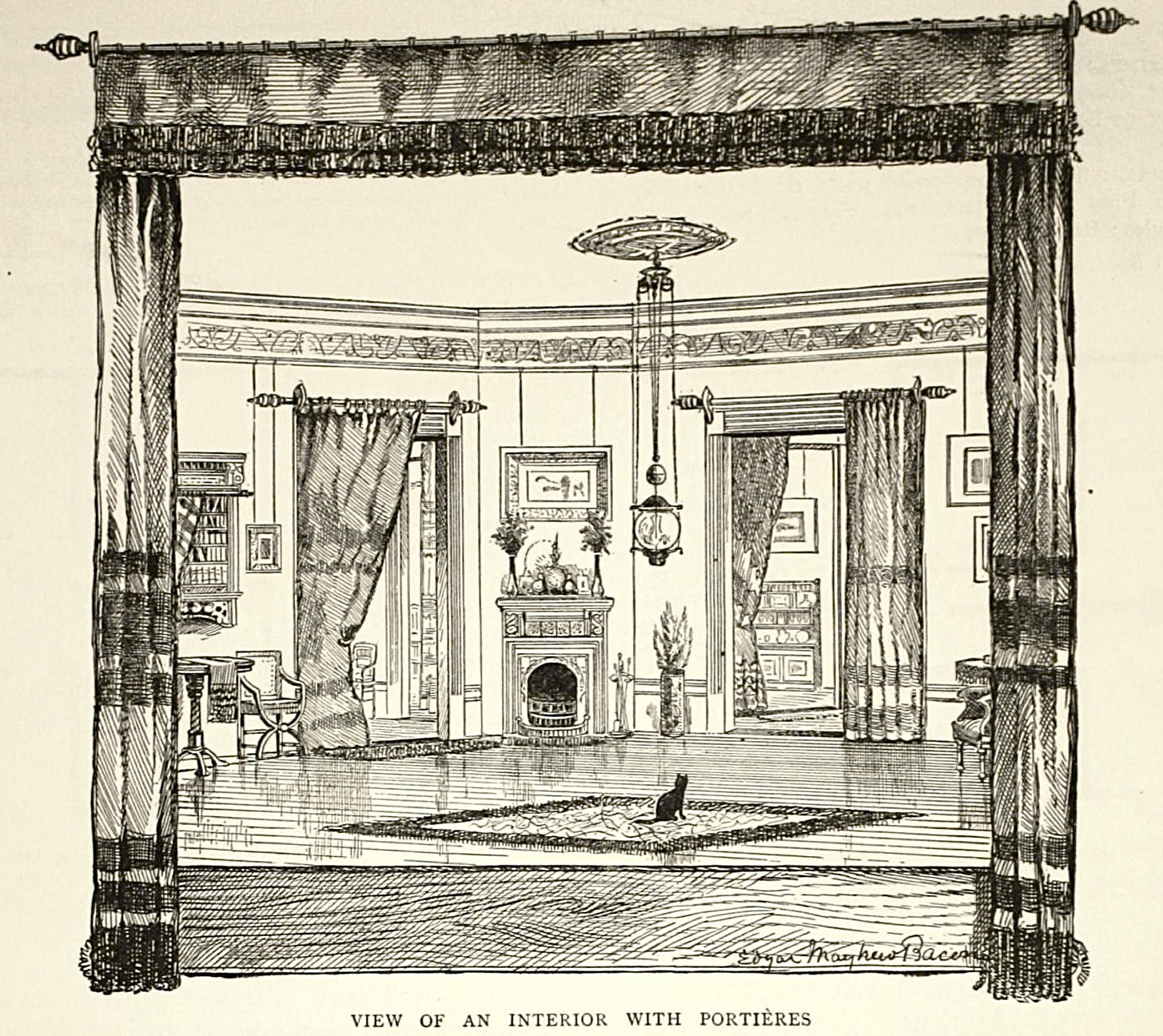
By the late Victorian era, ready-made draperies and portières had become increasingly common as department stores and mail-order catalogs began offering coordinated sets. Window curtains were typically sold in matching pairs of chenille, rep, or damask—often advertised as “complete with dado and fringe.” These were pre-lined with sateen and finished with headings for poles or rings. Beneath these heavier layers, households often added lace or muslin undercurtains, available by the yard or in finished lengths, to filter light while preserving privacy.
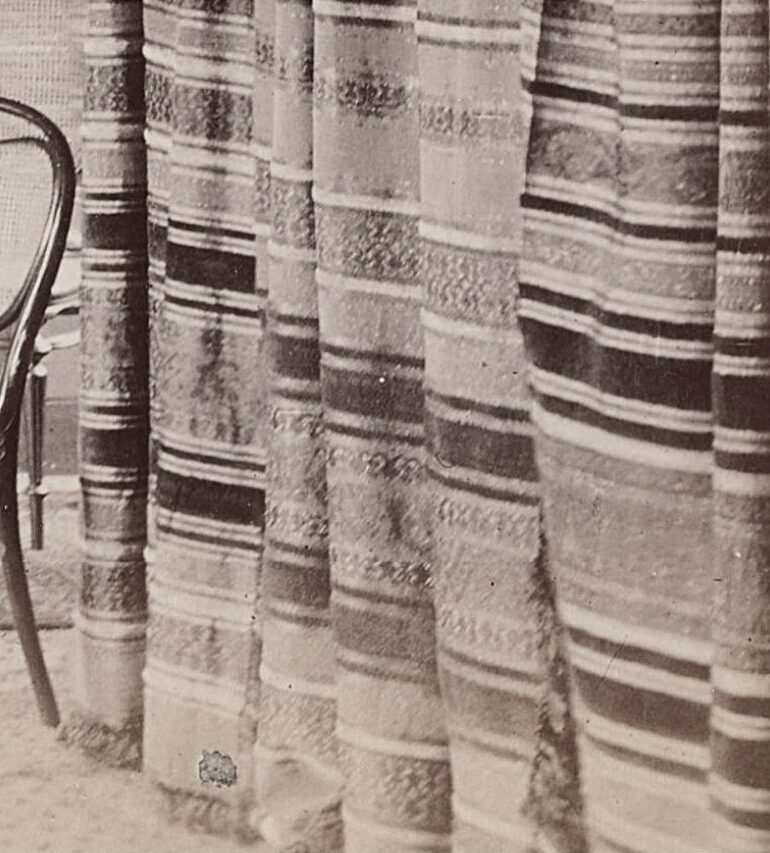
Portières, sold in the same departments, were designed as companion hangings for doorways, made of the same fabrics and trims and often sold “per pair” or “per strip.” Advertisements from the 1880s promoted “Chenille Portieres—heavy fringe, dado top and bottom” and “Wool Rep Draperies for doors or windows,” emphasizing their interchangeable function. Ready-made versions came in standard lengths, fully fringed and tasseled, and could be mounted on fixed poles or swinging portière rods. Their wide availability made it possible for even modest homes to achieve the richly furnished, upholstered appearance so admired in the 1880s.
What is a Dado?
In this context, a dado refers to a decorative horizontal band or border woven or applied across the lower portion of a curtain or portière—similar to the dado or wainscot on a wall. In late-19th-century textiles, it typically appeared as a contrasting panel of pattern or color near the bottom edge, sometimes mirrored at the top for symmetry. This “dado and fringe” treatment added visual weight and echoed the architectural detailing of a room’s lower wall, creating a cohesive and well-balanced effect.

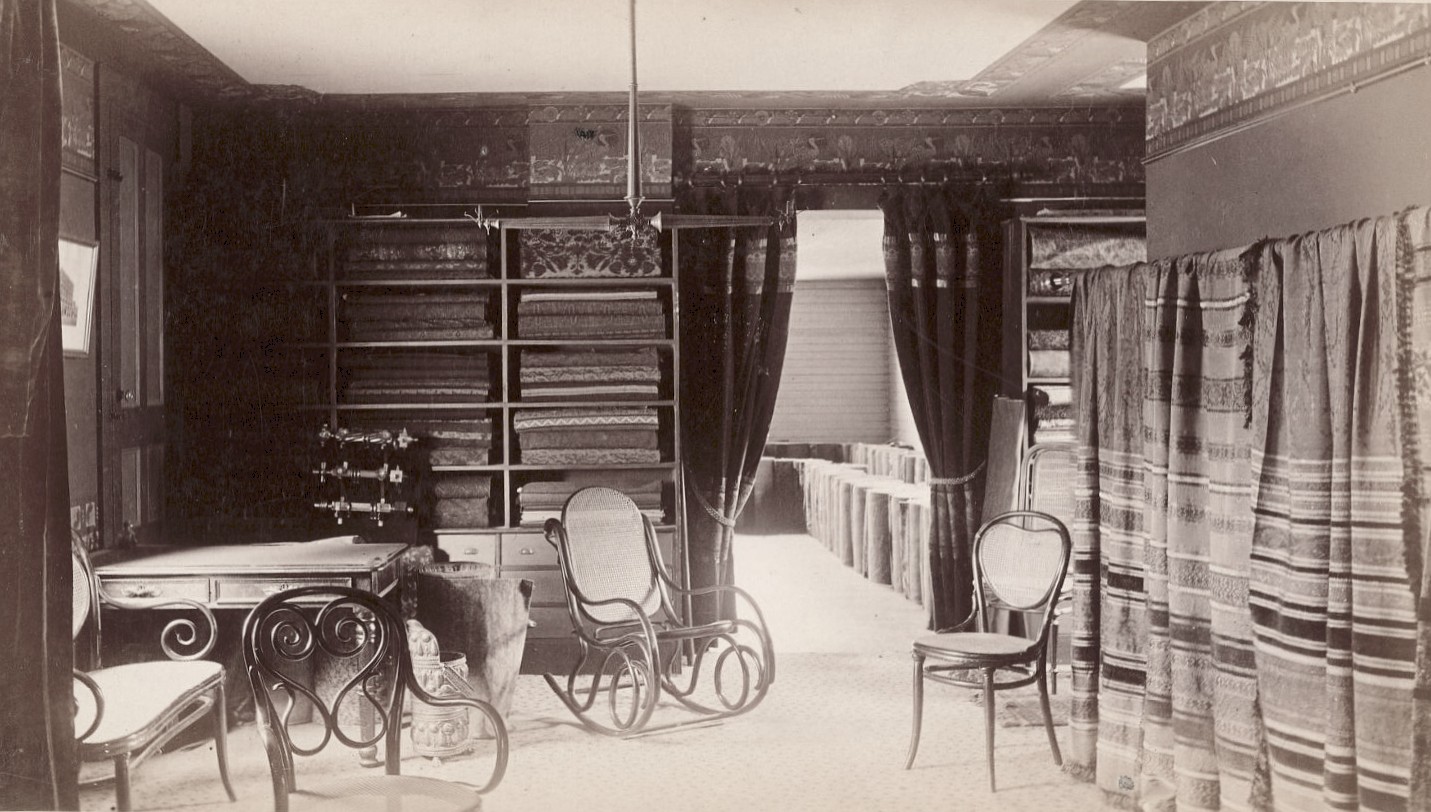
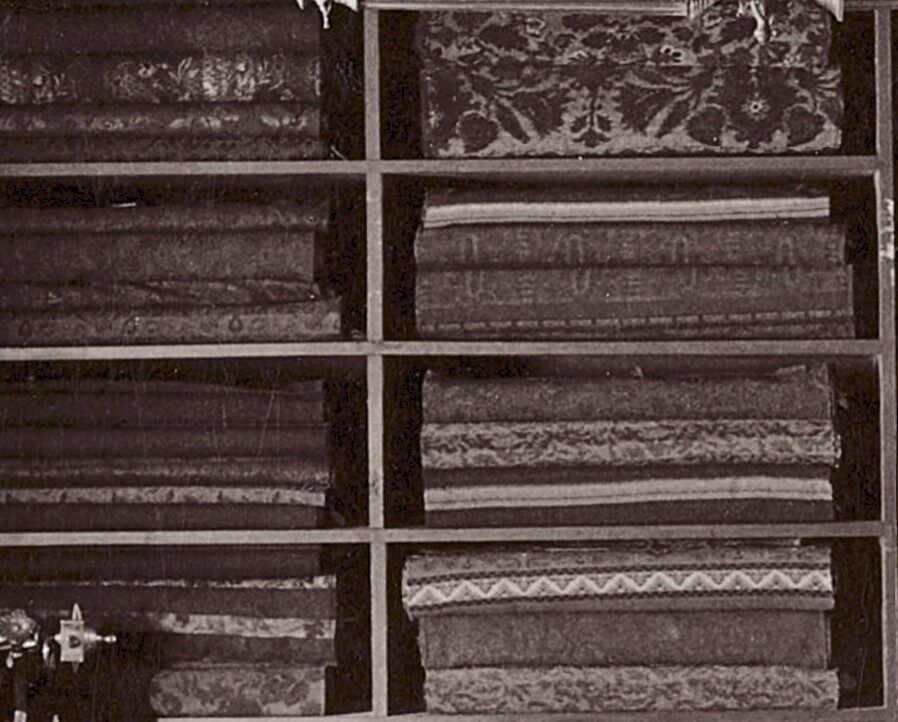
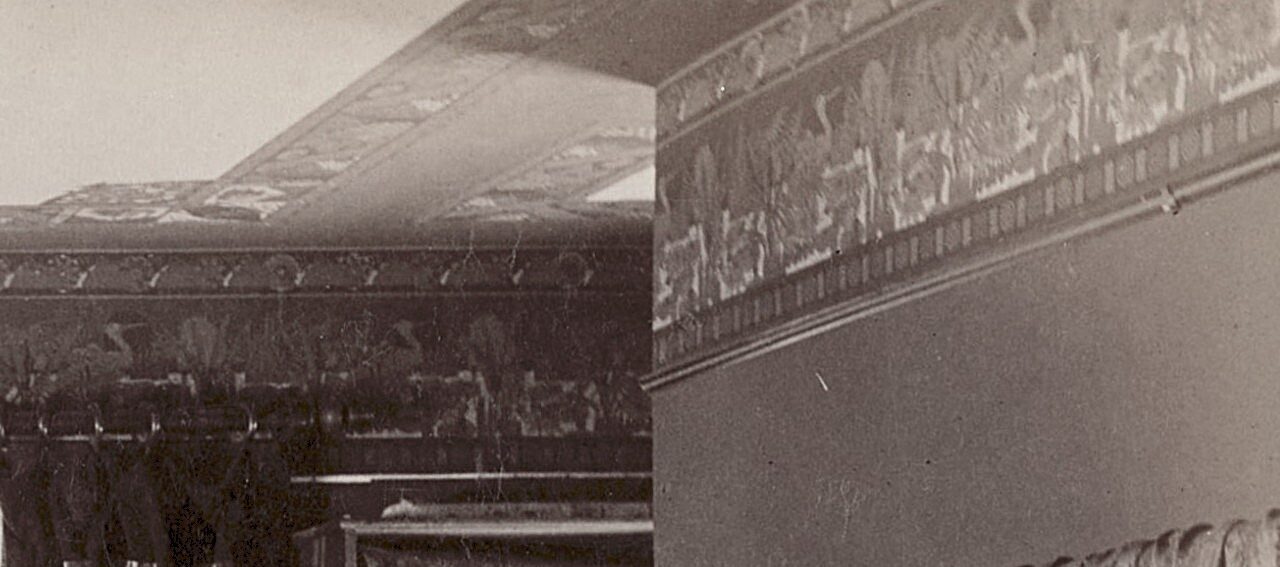
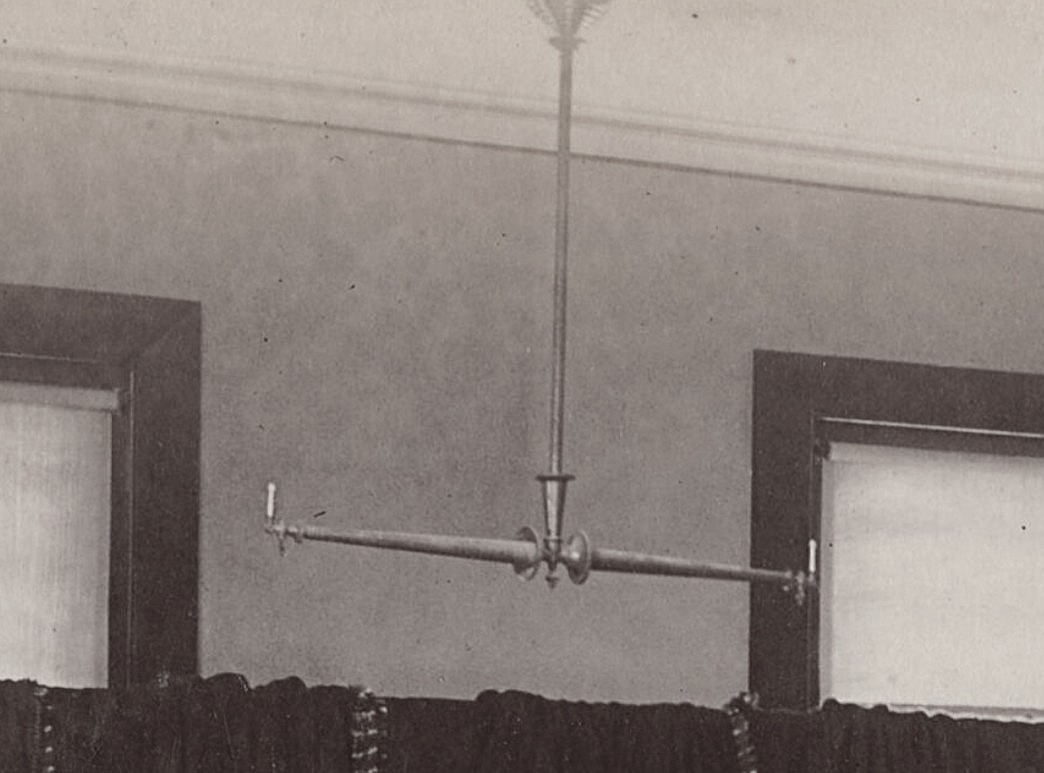
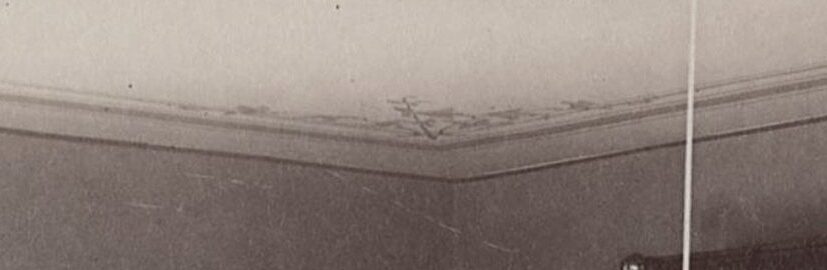
Stepping into the Upholstery Department felt almost like entering a friend’s drawing room. At Almy, Bigelow & Washburn, the space was tastefully decorated with wallpaper and ceiling borders that added warmth and refinement. Around the room were bentwood chairs for resting, a comfortable rocking chair for lingering, and—most importantly—shelves lined with a generous array of upholstery fabrics inviting customers to explore and select.
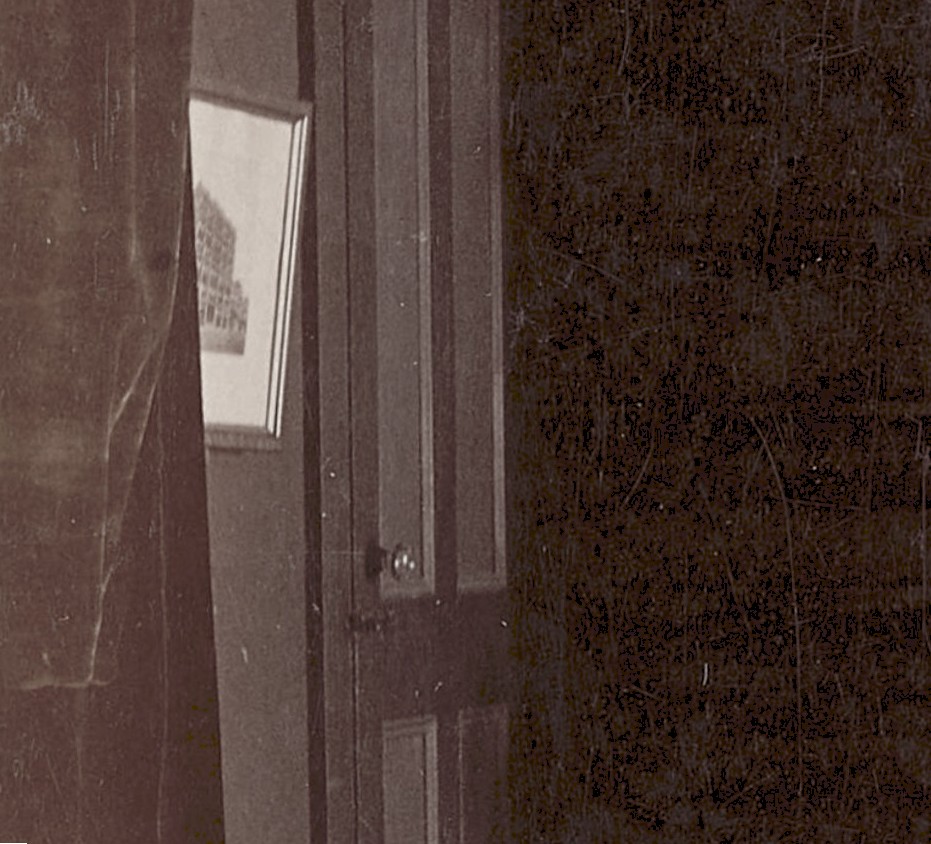
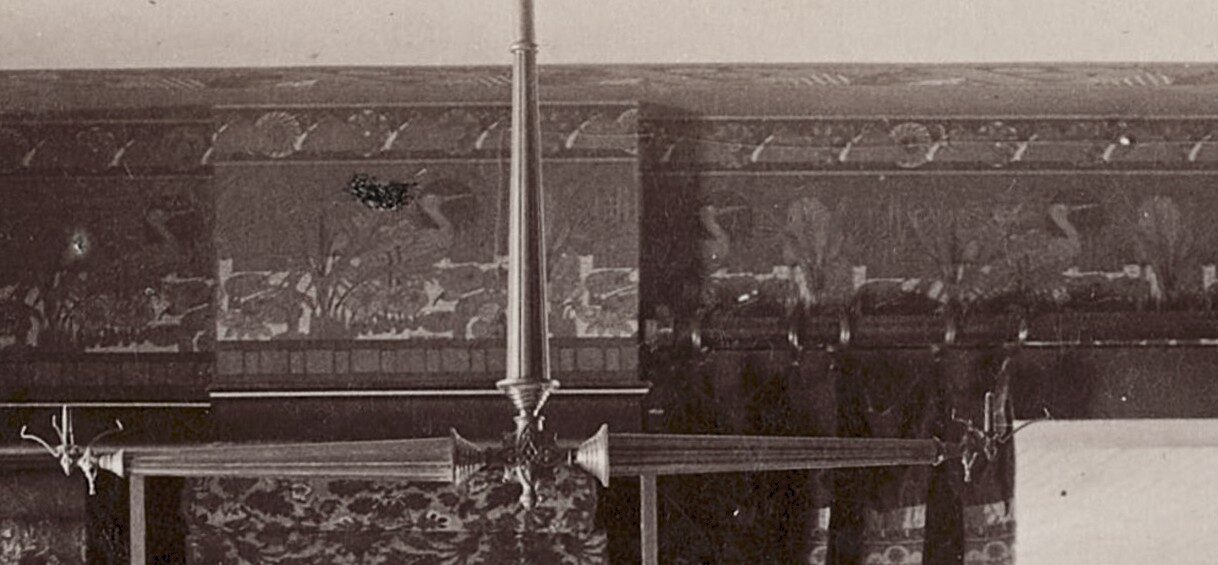
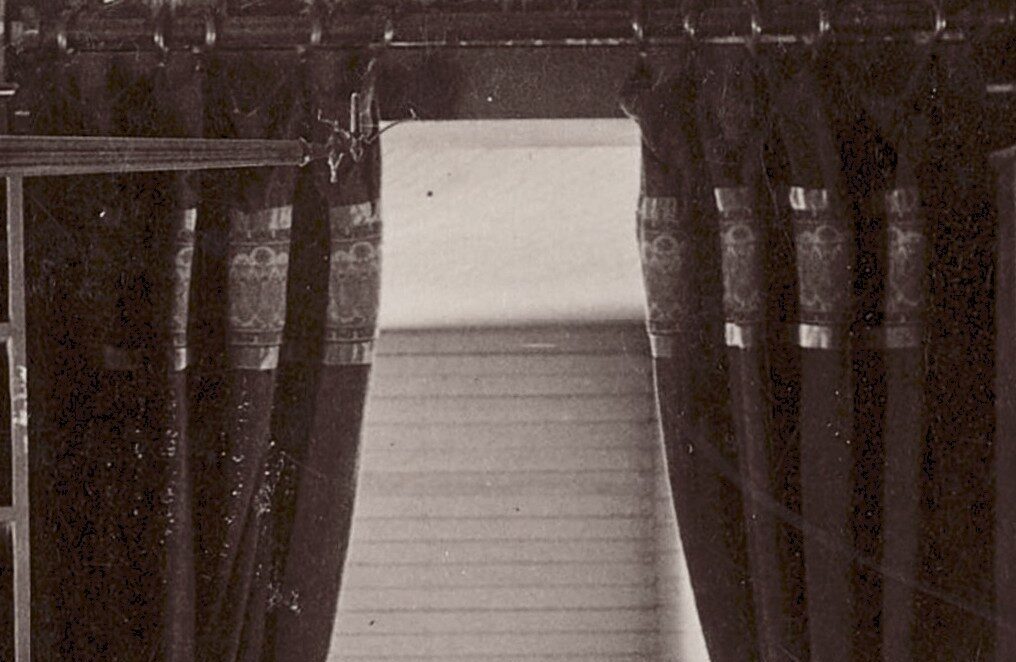

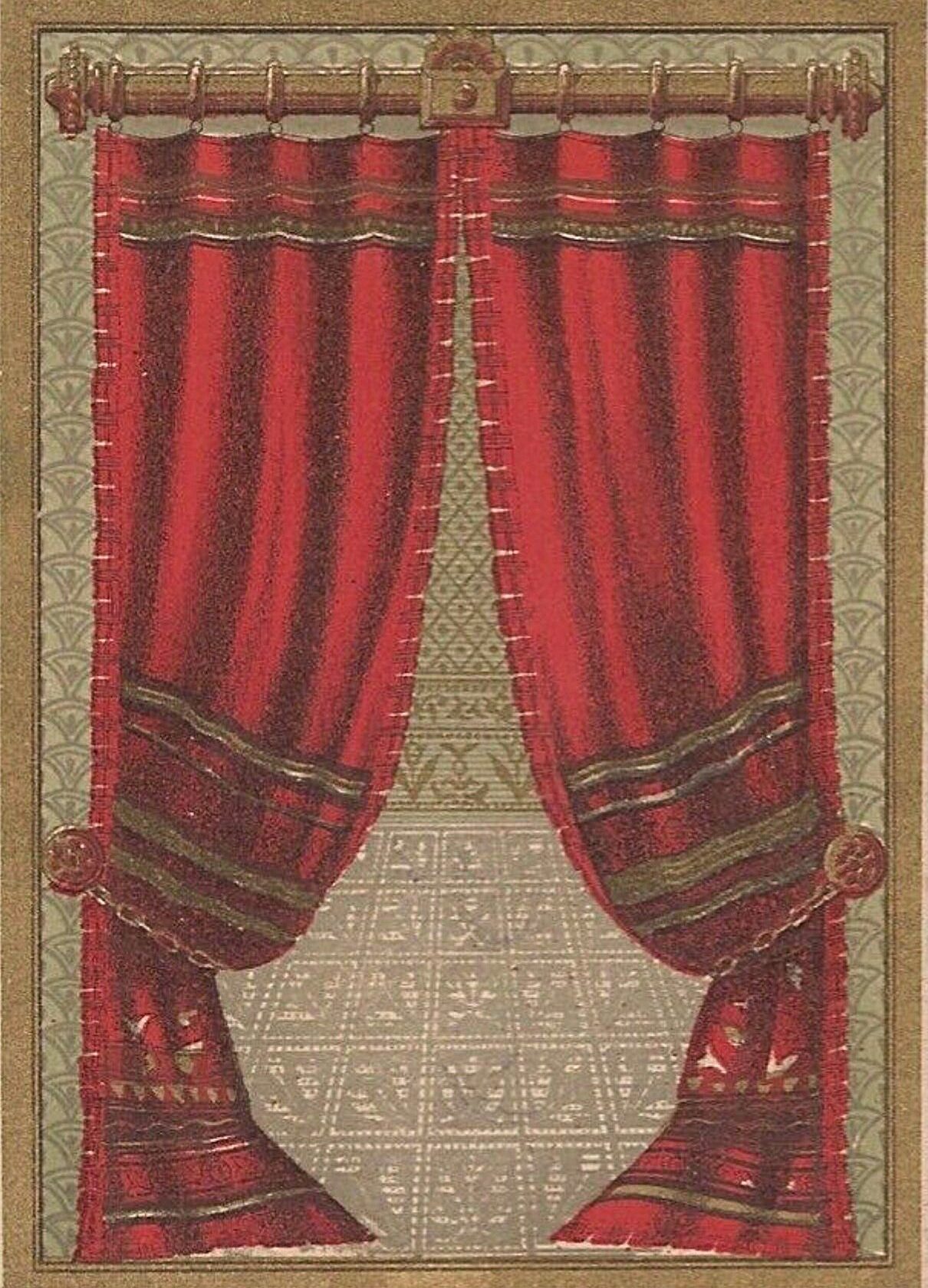
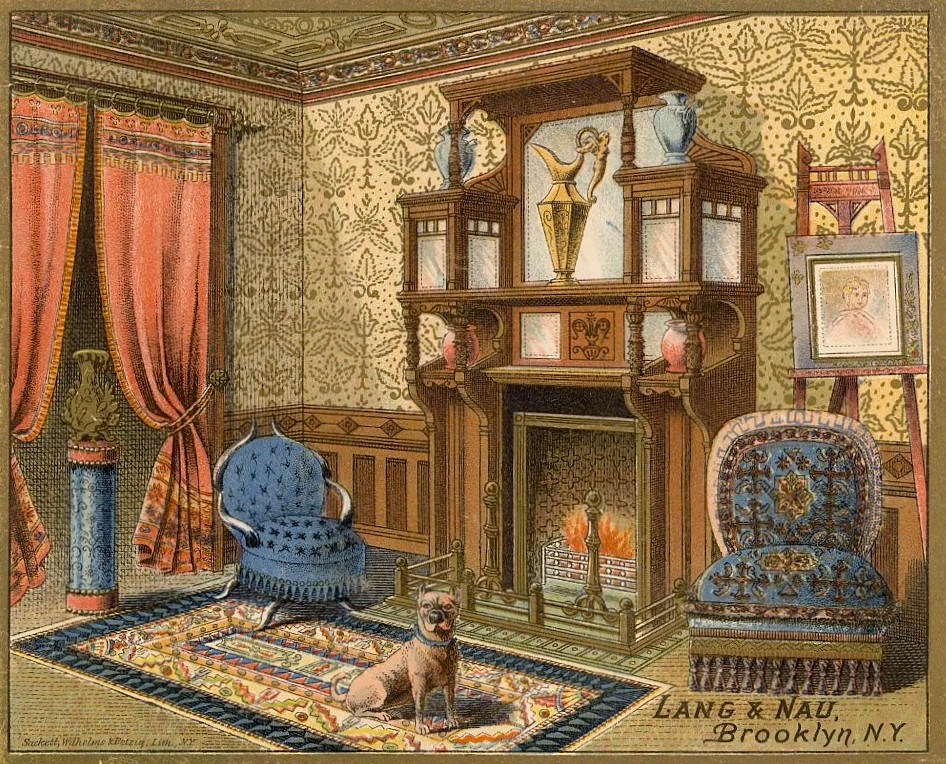
Portières and window draperies often followed the same decorative trends, featuring horizontal borders in keeping with the Eastlake aesthetic. The fashionable tripartite wall treatment—with frieze, fill, and dado—was echoed in textiles, giving curtains and portières a similarly structured and harmonious design. However, contemporary decorating manuals frequently advised against using identical fabrics for both doors and windows. While the colors or hues might coordinate, the doorway hangings were often treated differently to create visual distinction. In this old postcard, note the popular olive green, red, and gold color combination—a favored palette of the era. Also visible is a drapery chain elegantly drawing the curtain aside, a stylish and practical detail of the time.
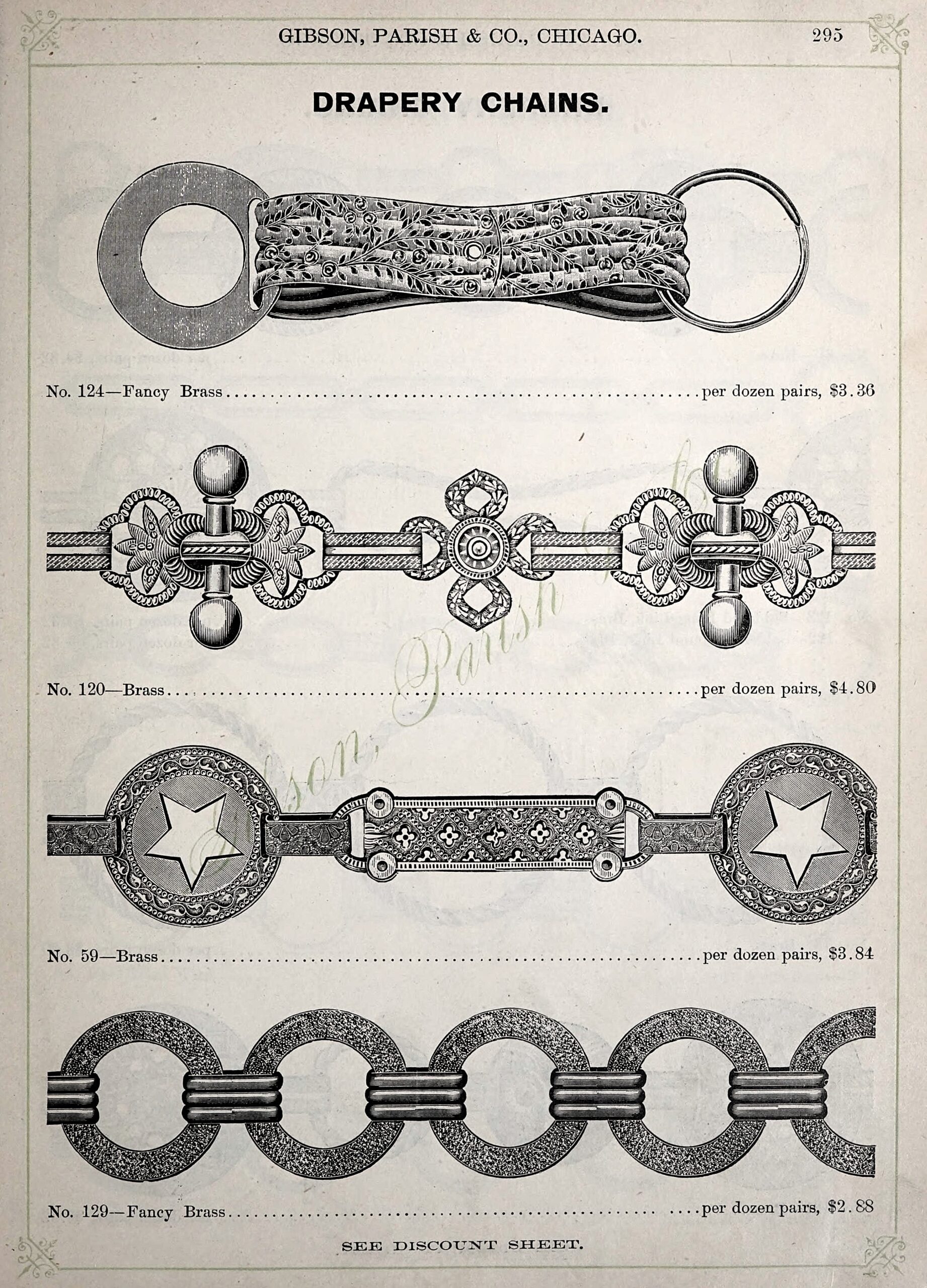
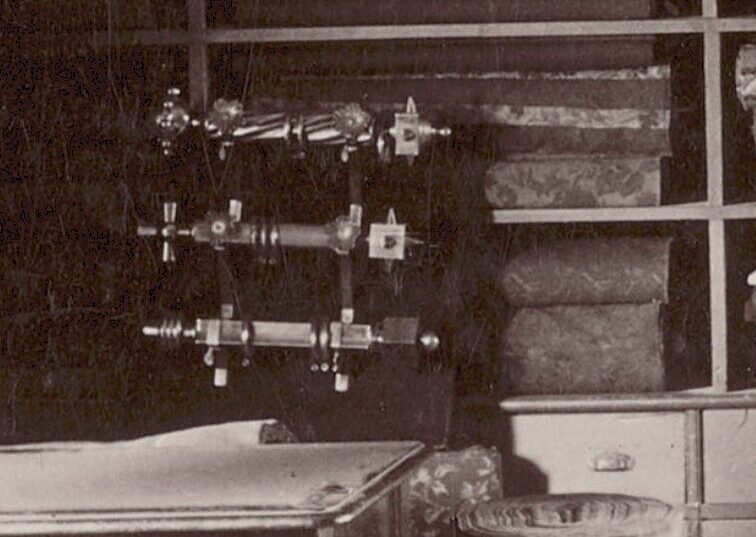
Mass-produced metal drapery chains were available both in stores and through mail-order catalogs like this one from the 1880’s. They came in a wide range of styles and finishes, offered at various price points to suit different tastes and budgets. These chains provided a decorative yet practical way to hold curtains and portières neatly to the side, adding a refined finishing touch to Victorian interiors.
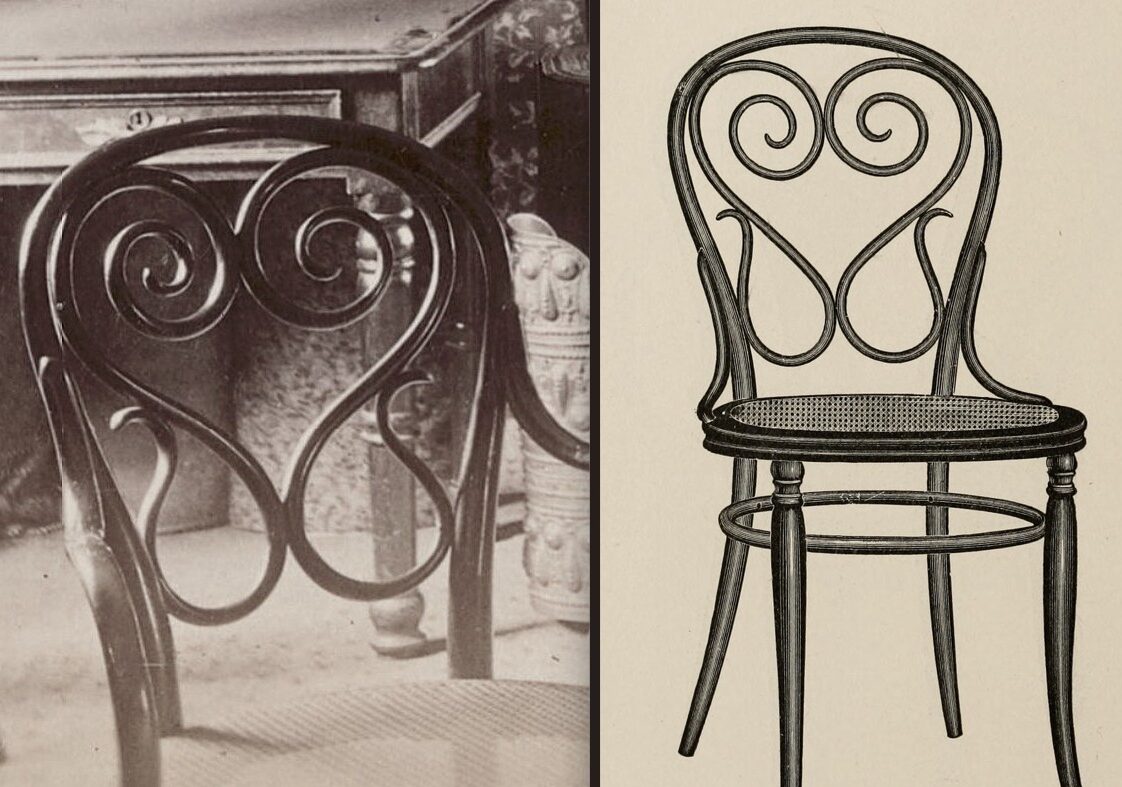
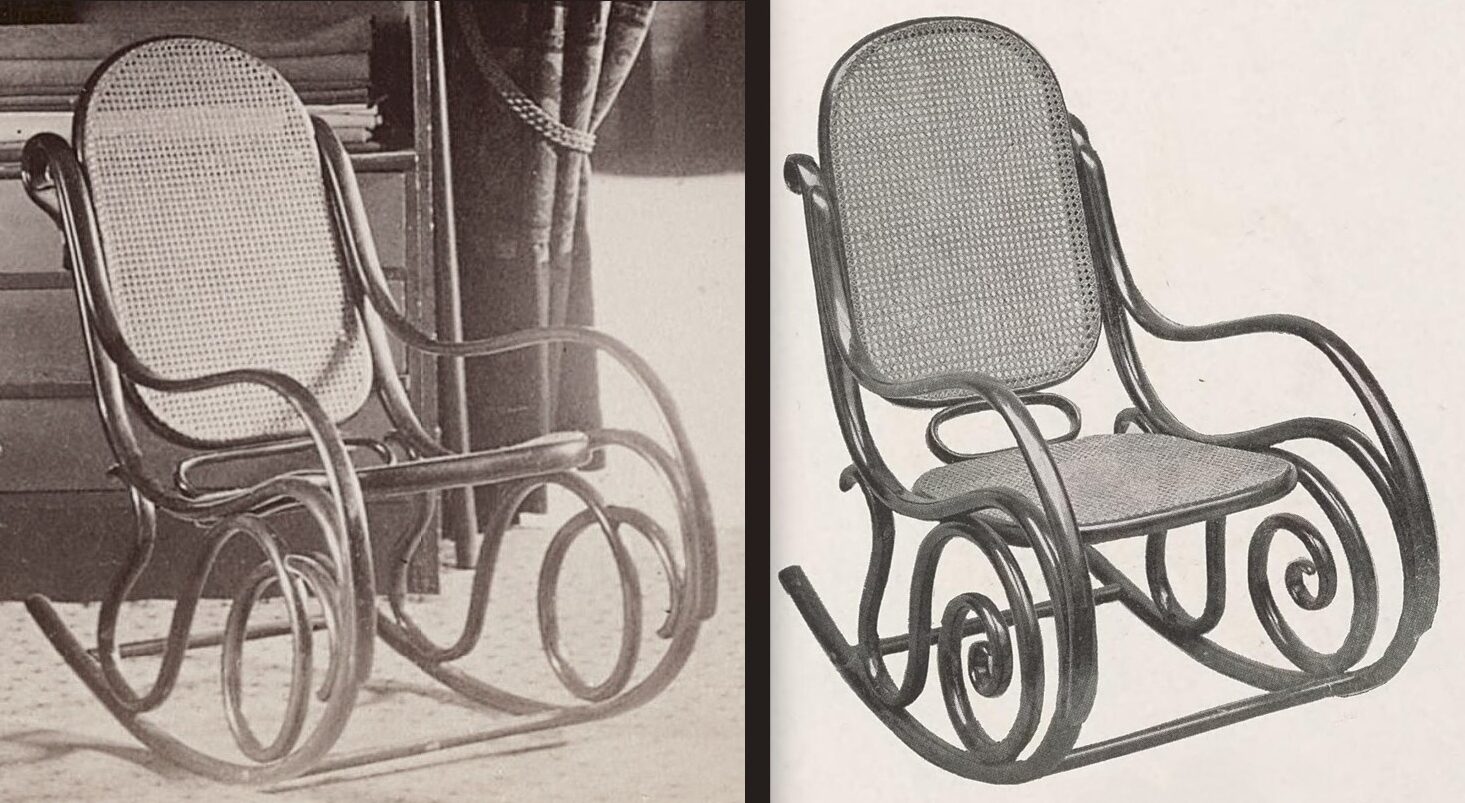
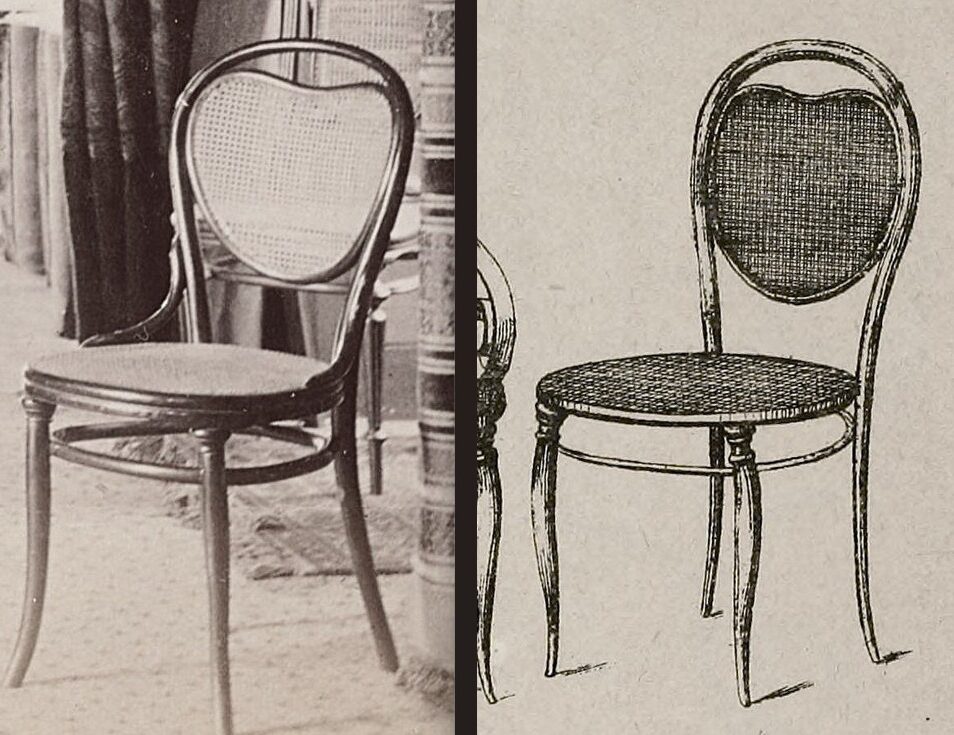
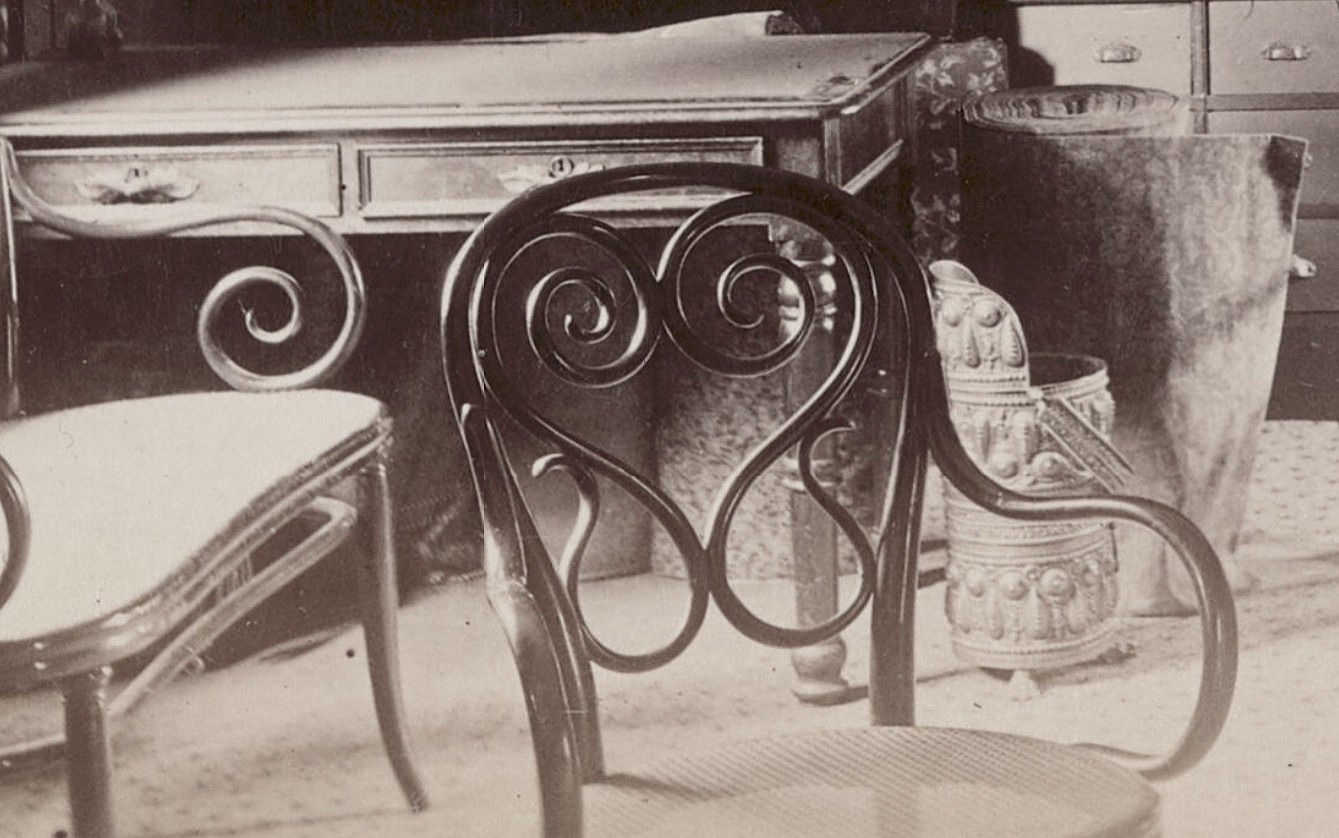
A brief note on bentwood chairs: Michael Thonet (1796–1871) is widely credited with inventing—and, more importantly, industrializing—the steam-bent solid-beech process behind classic bentwood furniture. After years of experimentation during the 1830s and 1840s, he moved to Vienna in 1842, where his firm, Gebrüder Thonet, perfected factory methods that mass-produced light, durable chairs and rockers from standardized, steam-bent parts—the most famous being Chair No. 14, introduced in 1859. While earlier artisans had bent thin laminations or small components, such as Windsor chair bows or Samuel Gragg’s 1808 “elastic” chairs, Thonet’s achievement lay in scaling the process for solid wood. This innovation made the graceful looped rockers and caned seats of bentwood furniture both accessible and immensely popular worldwide.

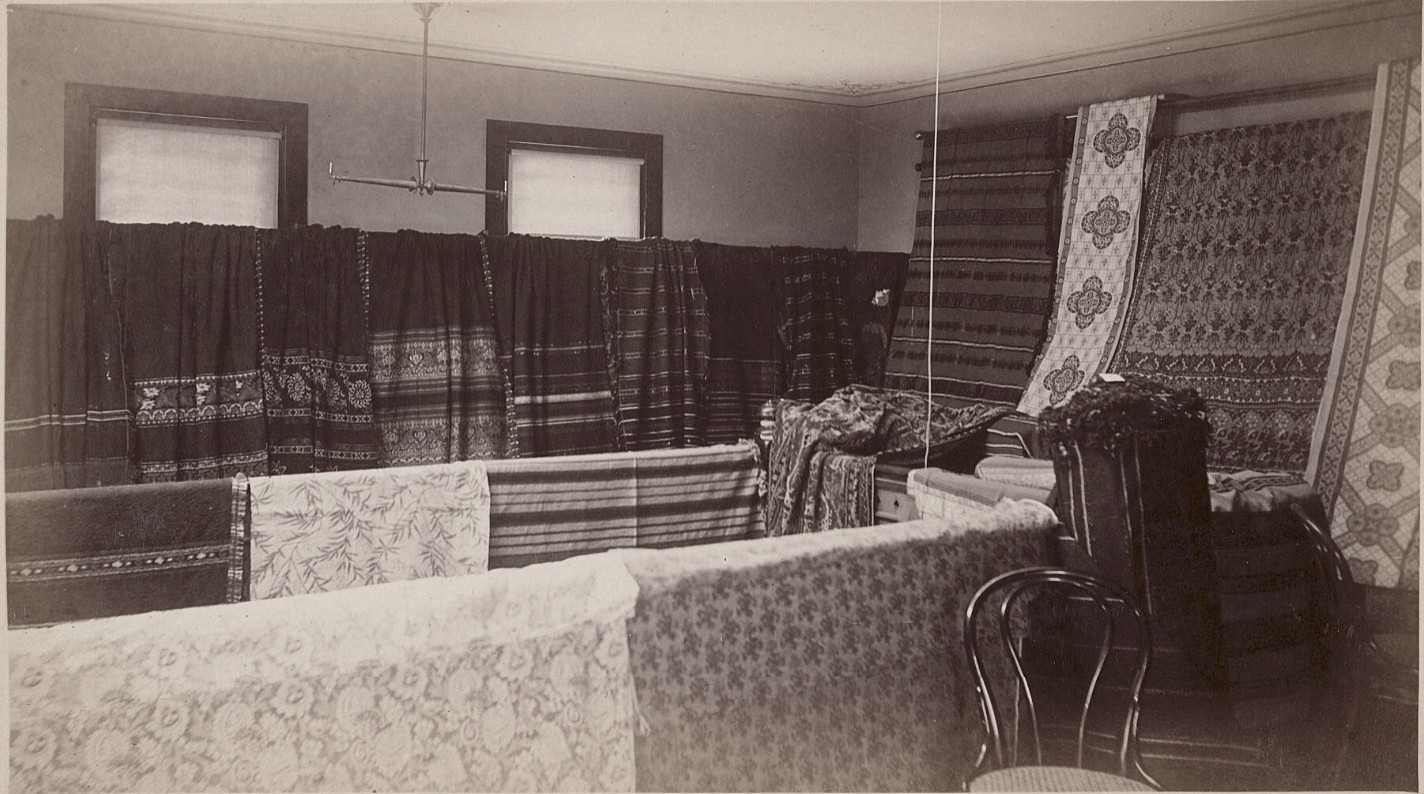
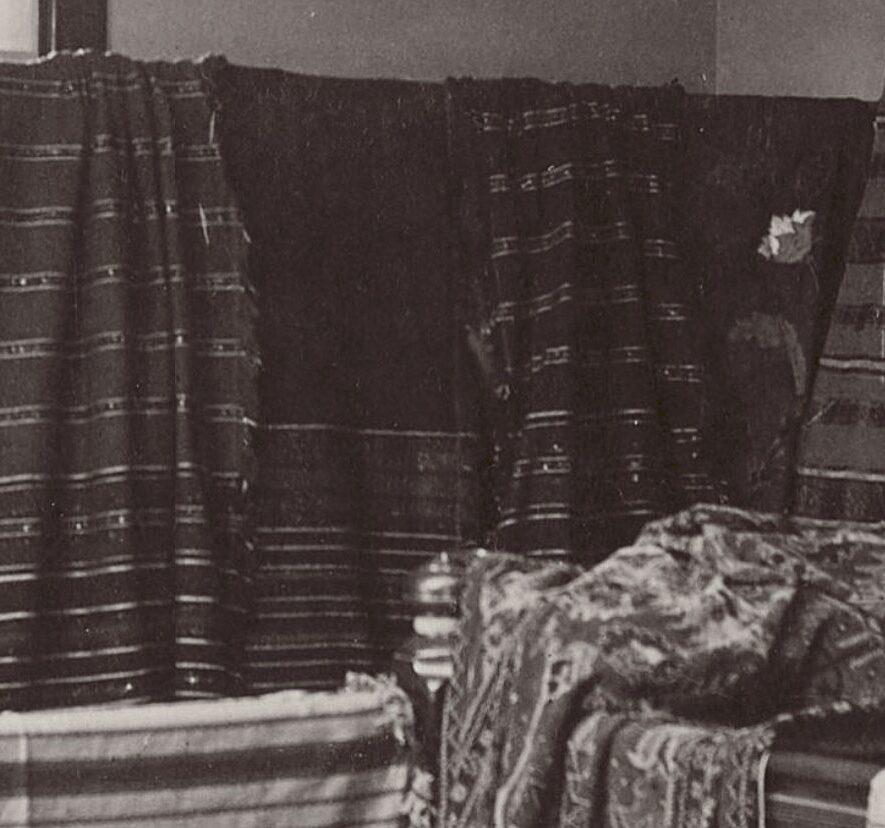
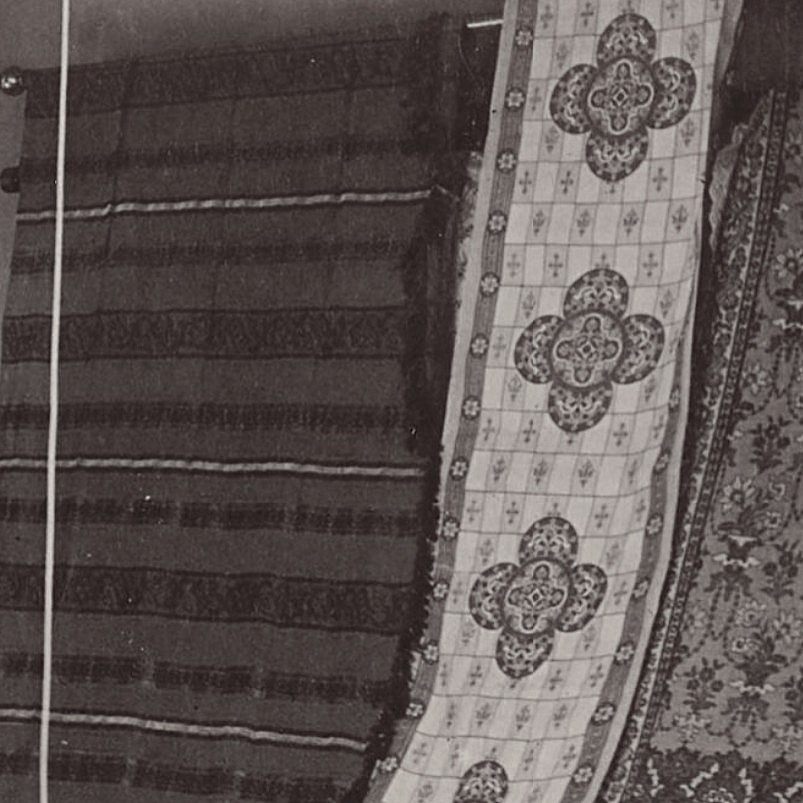
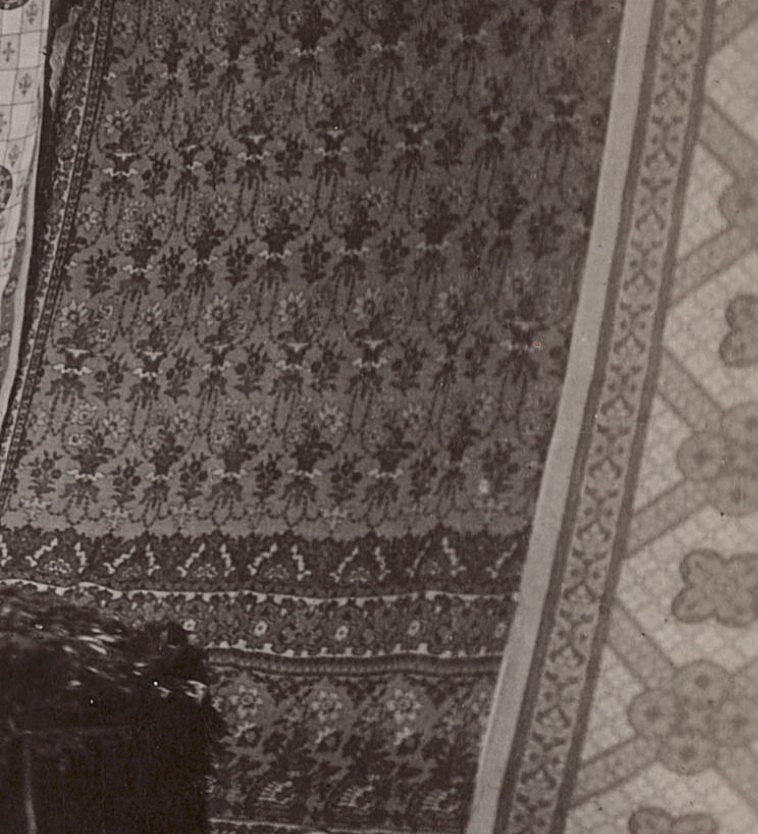
This space, labeled *Interior Furnishings*, appears to display an assortment of curtains, portières, and related materials. It’s unclear whether additional goods were also offered here, but from what we can see, the room contains a rich variety of fabrics typical of late-19th-century interiors.
Unlike some of the more orderly departments, this area has a slightly less formal arrangement, with bolts of fabric and samples arranged more casually. At the center, the layout suggests an open staircase—or perhaps a skylight well—surrounded by a railed perimeter. Draperies and runners hang over the railing, providing an inviting view of the textures and patterns available to shoppers below.
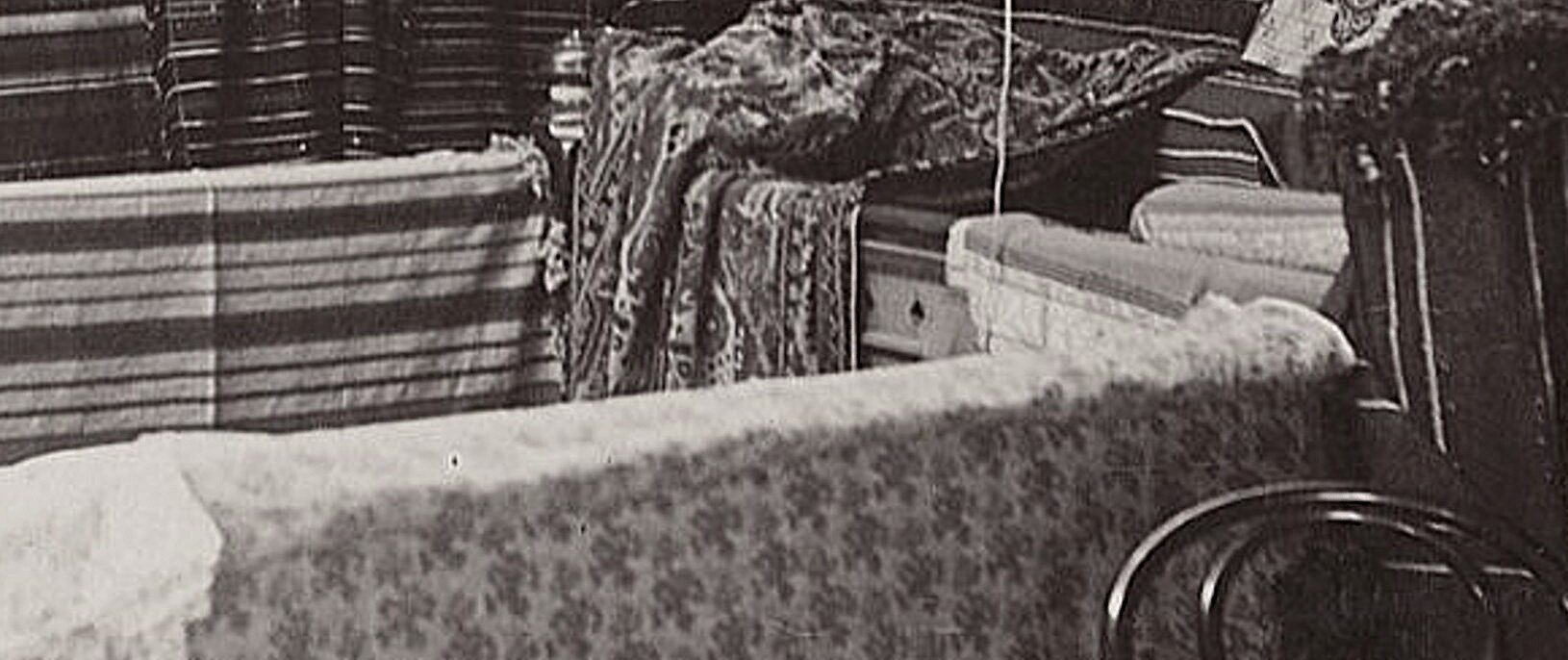
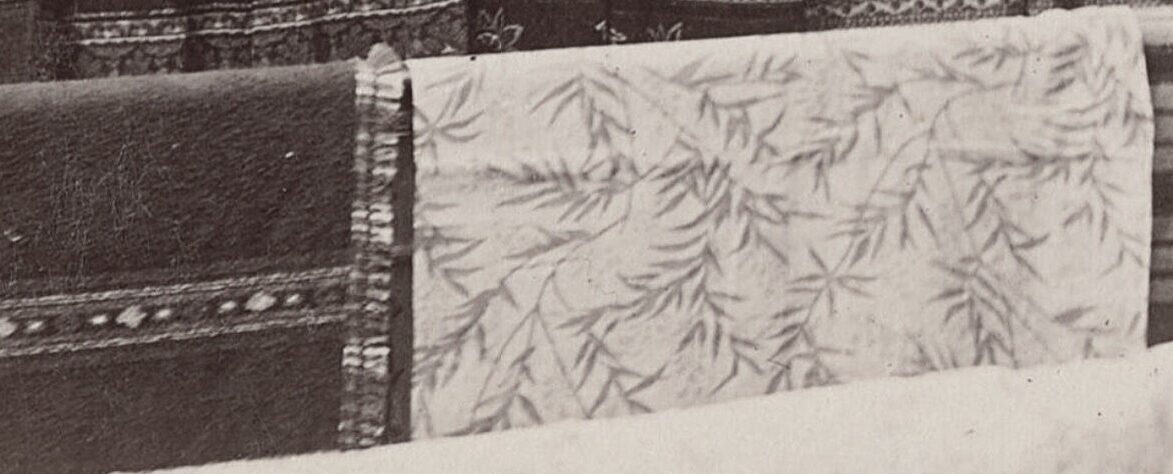
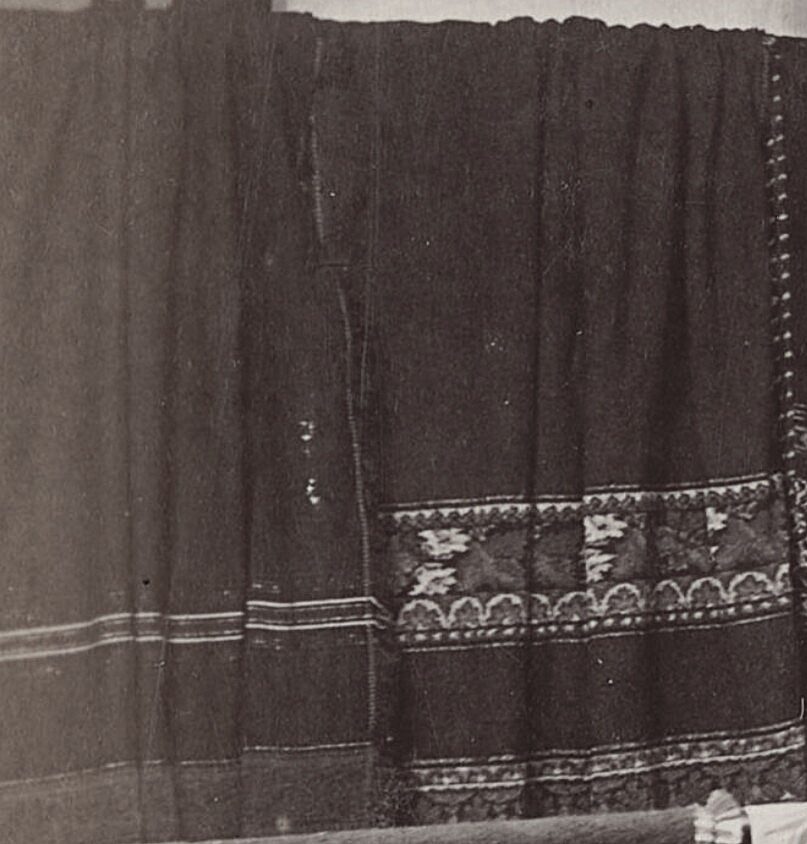

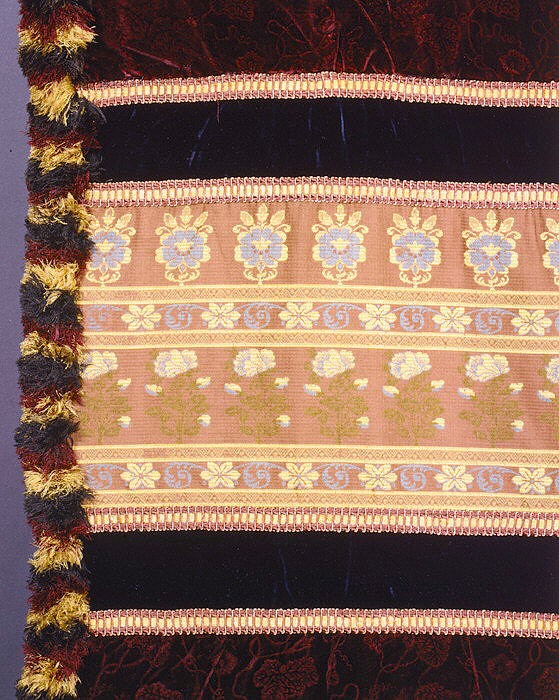
See this remarkable full portière by clicking here.
That’s enough shopping for one day. See you next time!
See more articles like this by clicking here.