II. Almy, Bigelow & Washburn; Carpet Shopping
10/3/25
21 Comments
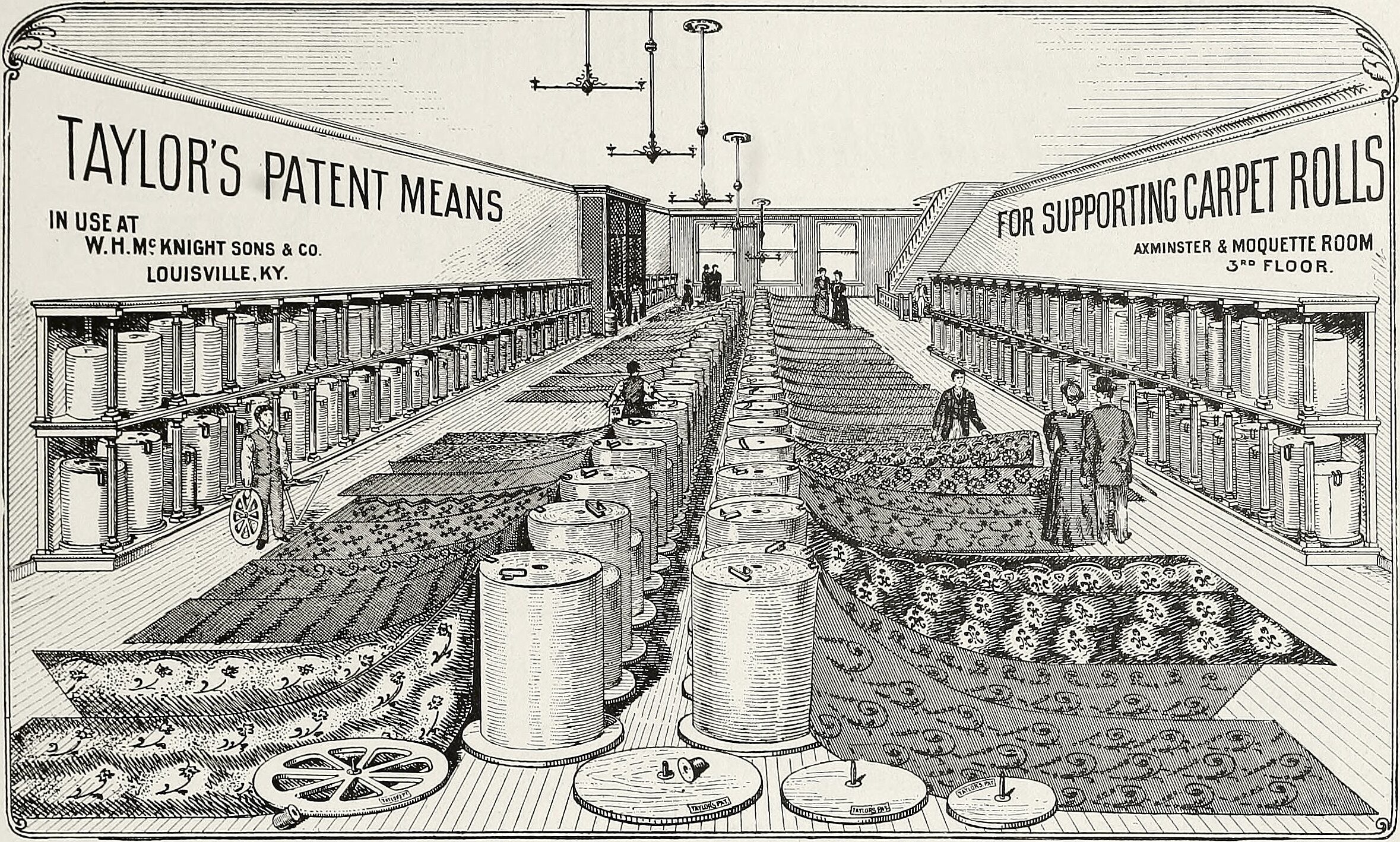
Carpet was a big business in the late 19th century. Often misstated by tour guides as a luxury only for the very wealthy, carpeting had become accessible to much of the middle class thanks to cheaper mass production. All types of carpeting—from throw rugs to installed wall-to-wall—were available. Showrooms were popping up in many cities with mass-produced carpets ready for your needs in a wide variety of colors and styles. Carpets from the Middle East and Asia were also being imported at a rapid pace into the United States.
Main weaves for wall-to-wall carpeting you’ll see in the period:
- Tapestry Brussels — loop pile; pattern formed with printed yarns; economical, very common for wall-to-wall.
- Body Brussels — loop pile; yarn-dyed; considered better than tapestry.
- Wilton — cut-pile “velvet” cousin to Brussels; richer hand; same loom family.
- Ingrain/Kidderminster — flat woven, reversible; budget option; sometimes used wall-to-wall.
- Axminster — knotted/woven pile; premium room-size carpets existed, but for fitted work Brussels/Wilton dominated.
Beyond fitted carpets, households in the late 19th century layered floors with portable rugs for comfort, color, and seasonal flexibility. These were sold ready-made in standardized sizes through department stores and carpet dealers, and imported examples were widely available alongside domestic makes.
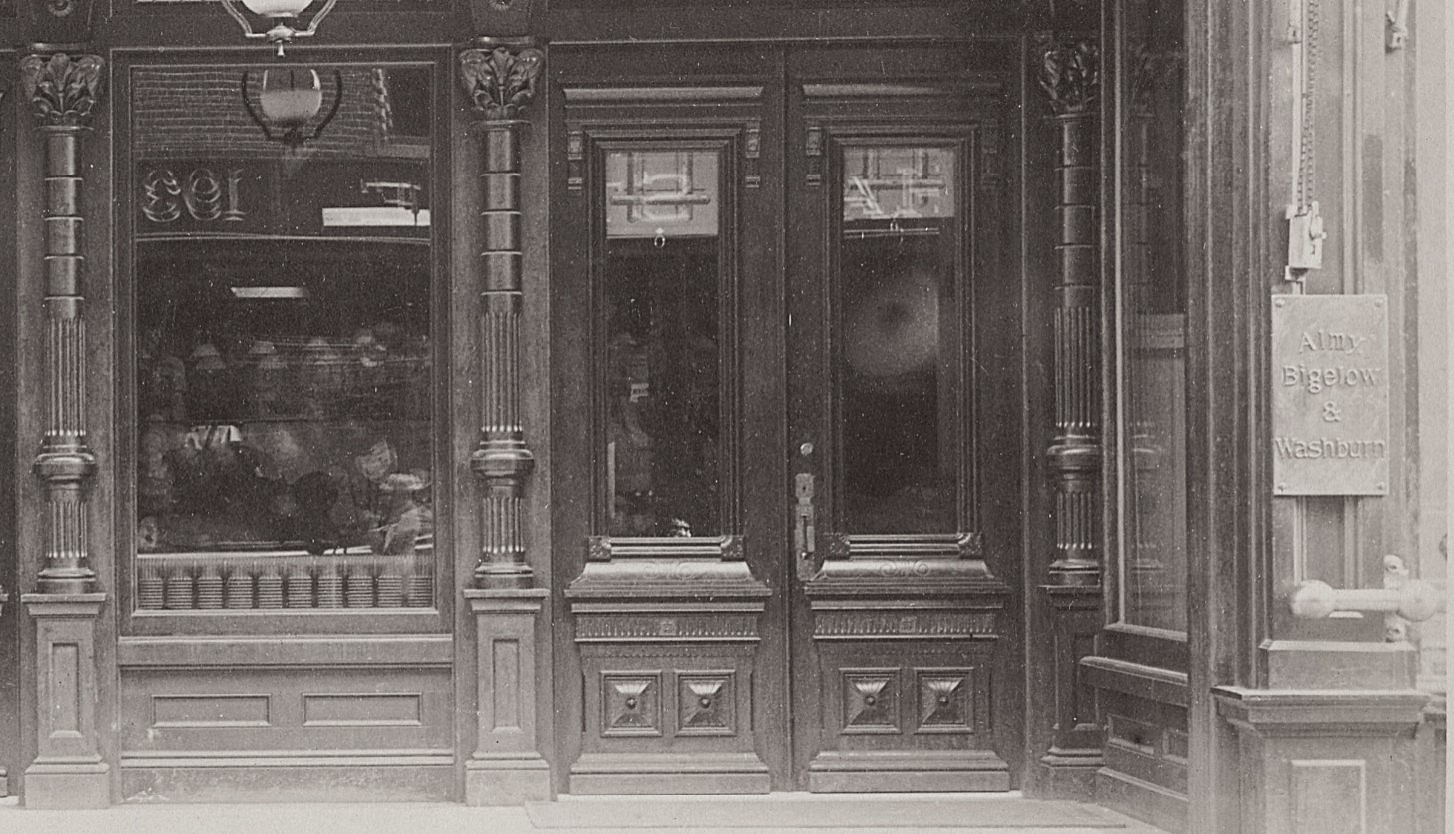
Entering through the front door of Almy’s in the late 19th century could be as thrilling as any modern shopping trip. The goods on offer were notably elaborate, and the attention to the smallest details was often superior to what we see today. With that in mind, let’s make our way to the first department called…

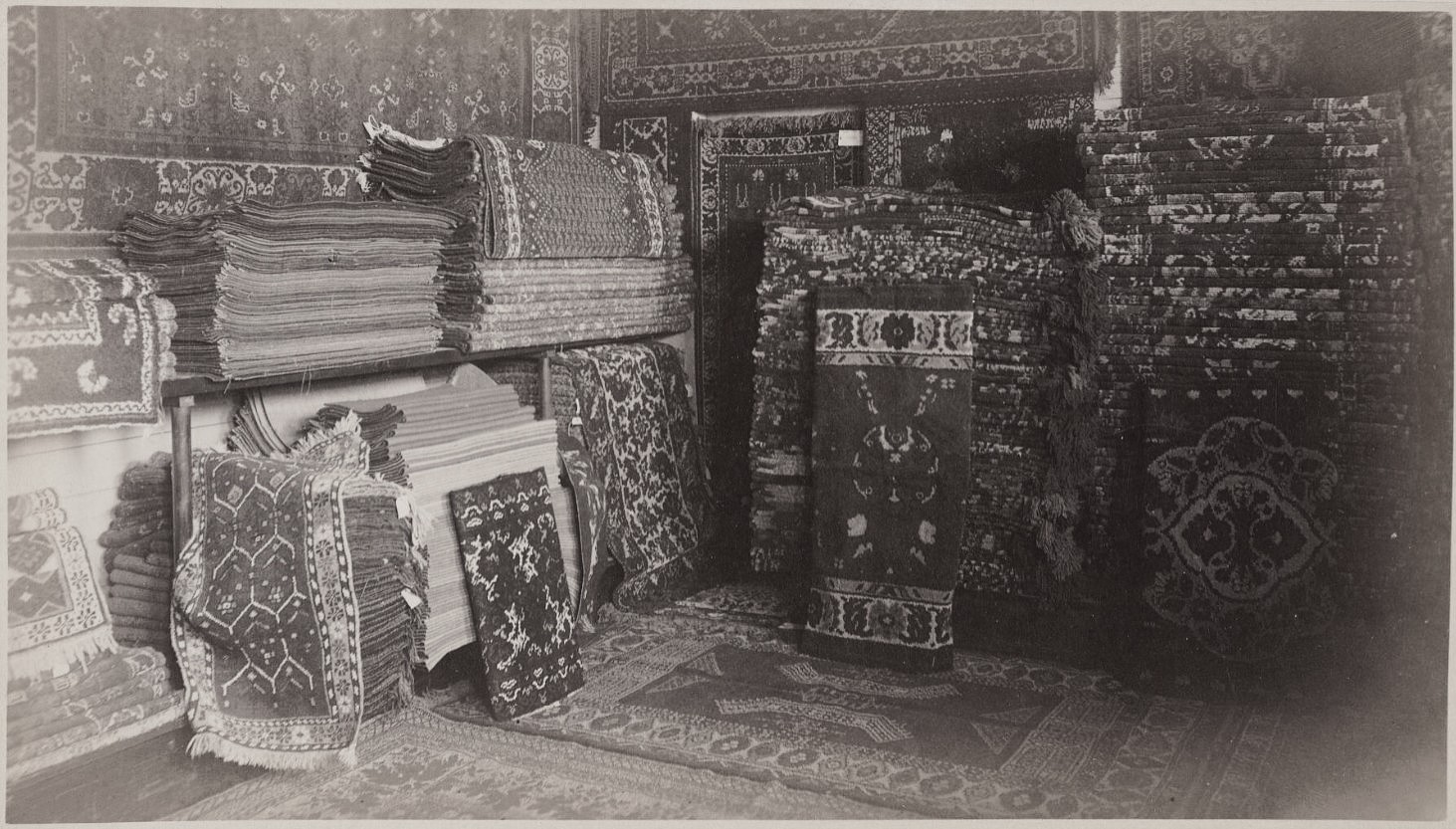
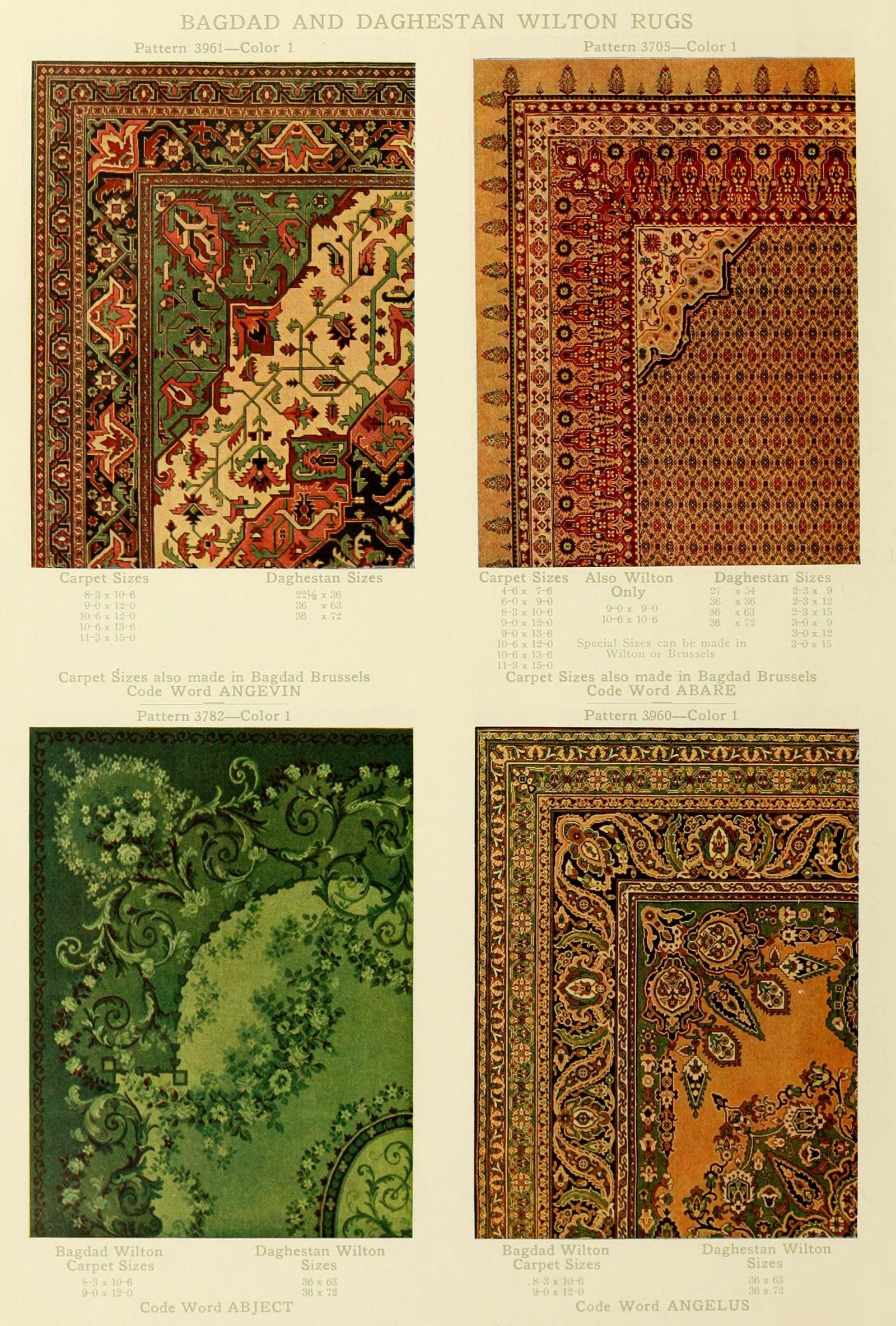
Imported carpets then—and now—draw from long-standing regional traditions, so the visual language stays remarkably consistent. Floral Herati fields, central medallion layouts, allover gul motifs, and teardrop boteh (the precursor to “paisley”) appear across 19th-century and modern examples alike. Workshops in Tabriz, Kashan, Kerman (Persia), Oushak/Hereke (Ottoman Turkey), Bokhara and Caucasian districts, and Indian centers like Agra/Amritsar kept to established loom widths, knotting methods, and border formulas—elements passed down through apprenticeships—so patterns and proportions remained stable.
While late-19th-century dyestuffs shifted from strictly vegetable sources (e.g., madder, indigo, weld) to include early aniline dyes, the palettes stayed grounded in familiar crimsons, indigos, soft golds, and bottle greens. As a result, a new rug from these regions today can look strikingly similar to an 1880s piece: same border hierarchies (guard stripes flanking a main border), familiar field repeats, and comparable knot densities for the type. Even finishing details—overcast edges and fringed warps—persist.
In short, continuity of technique + workshop tradition + market preference explains why imported designs feel “timeless,” with only subtle shifts in hue intensity or weave fineness across the decades.
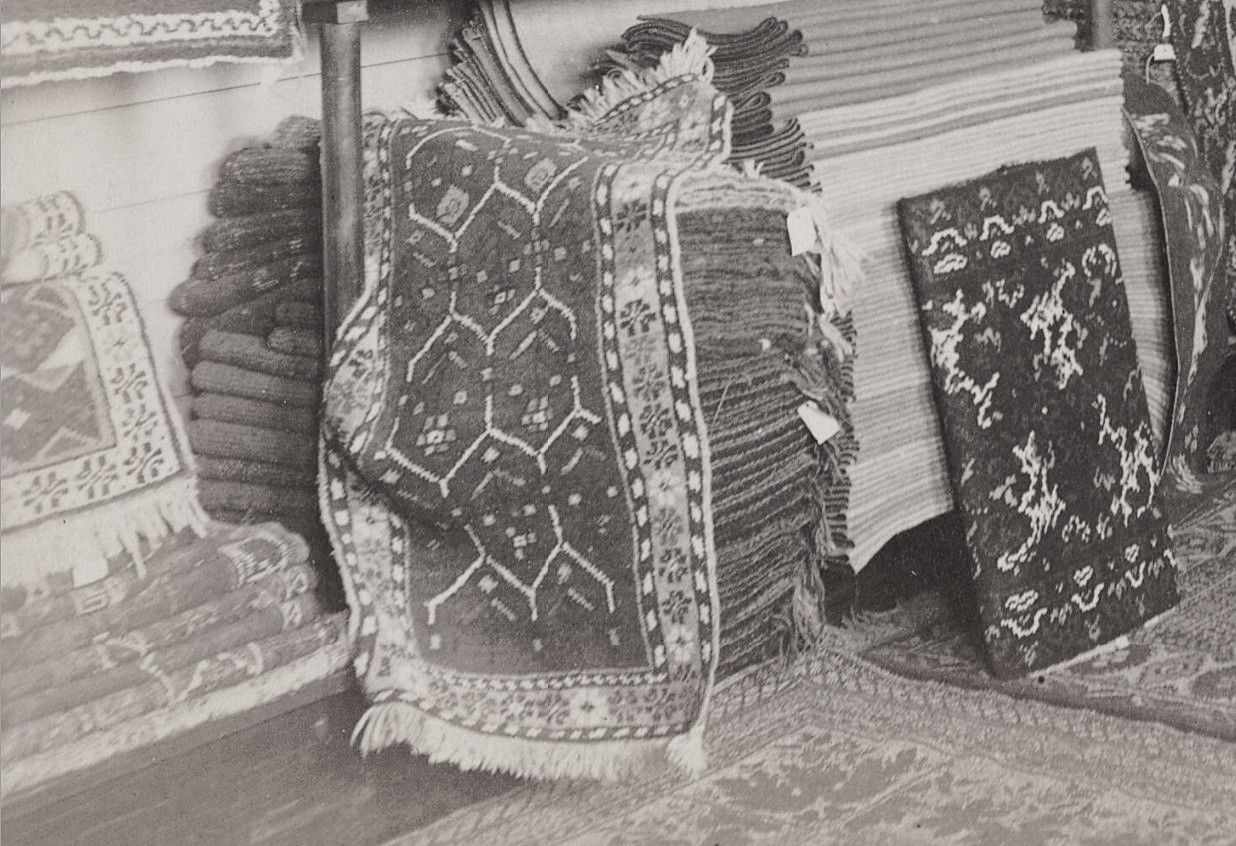
Here is a small rug that can be placed in a doorway, beside a nightstand, or along the side of a bed. Historic photos show rugs of many sizes positioned throughout rooms—adding warmth, protecting traffic paths, and framing furniture groupings.
- At the foot or side of beds
- In front of dressers and wardrobes
- Before fireplaces and parlor stoves
- By washstands or sinks
- Inside doorways and at room transitions
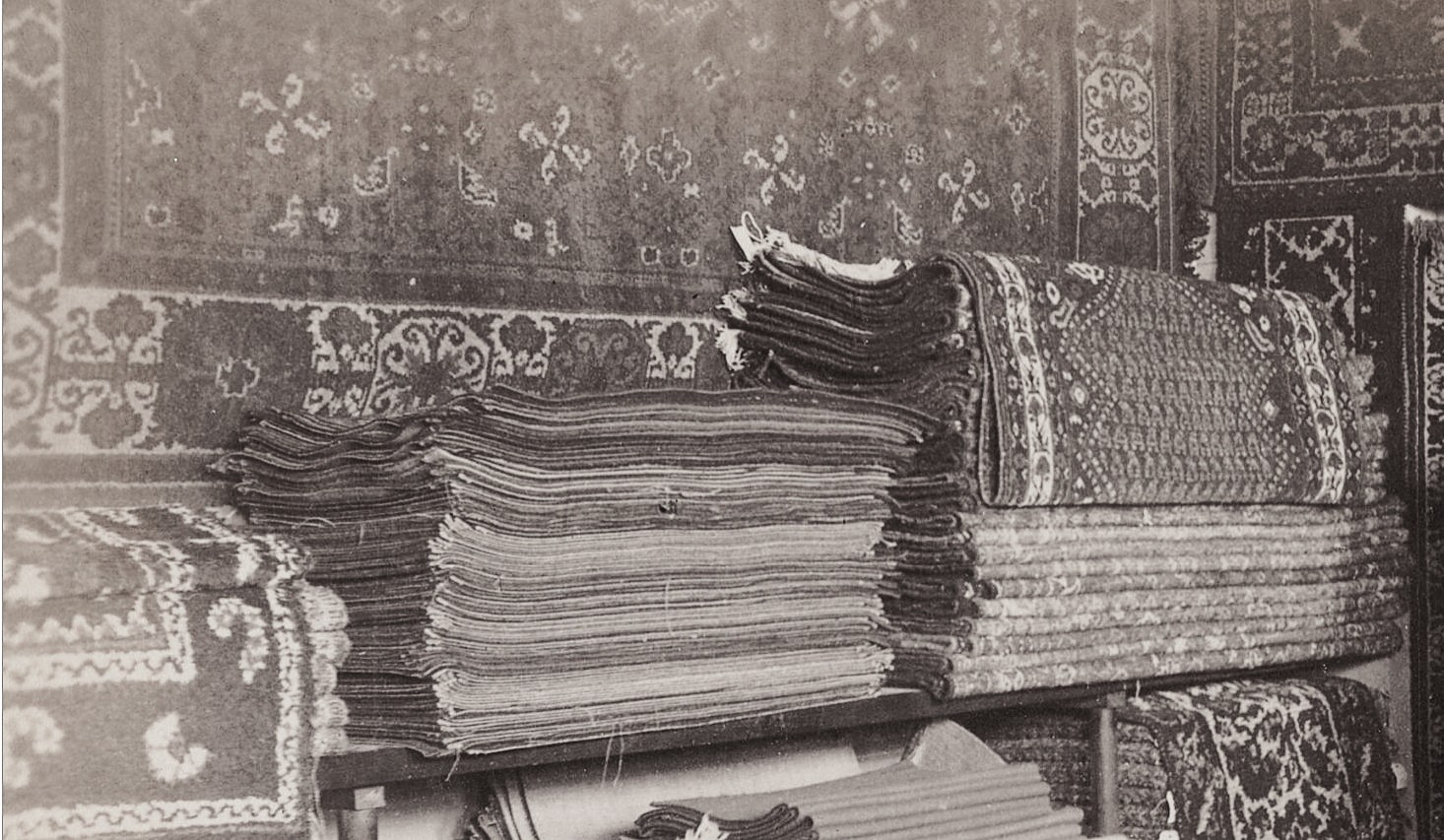

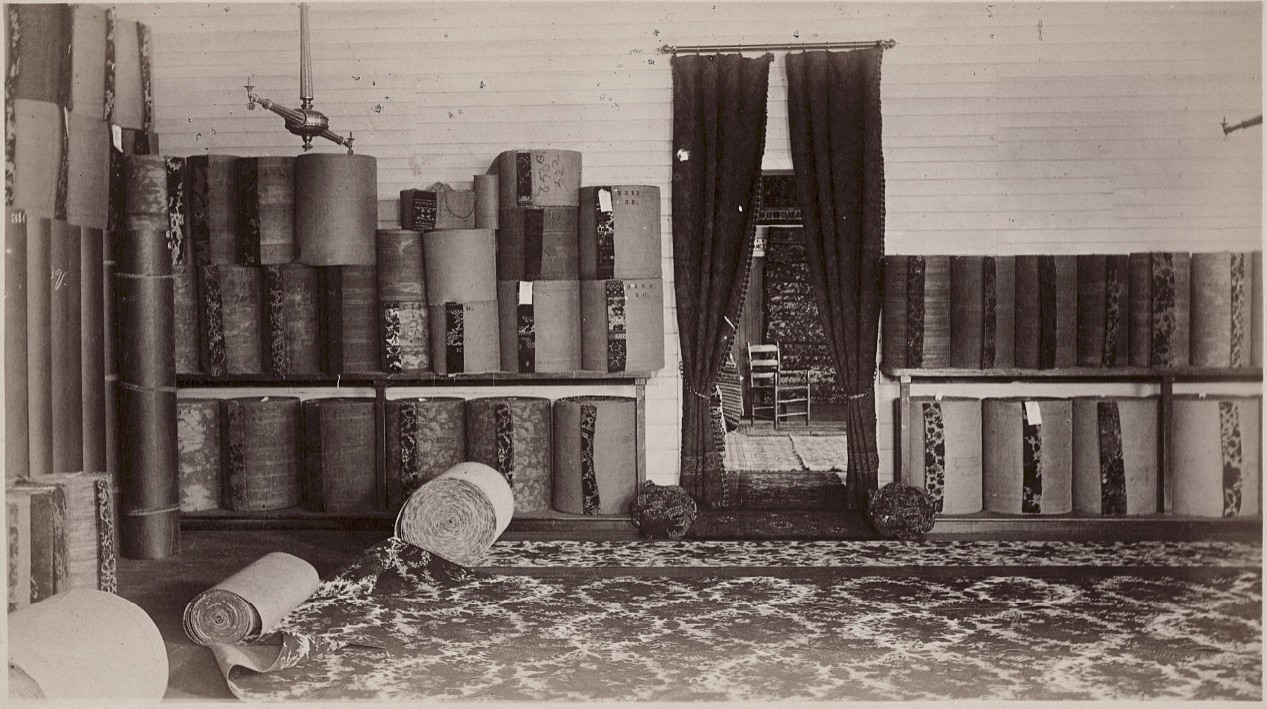
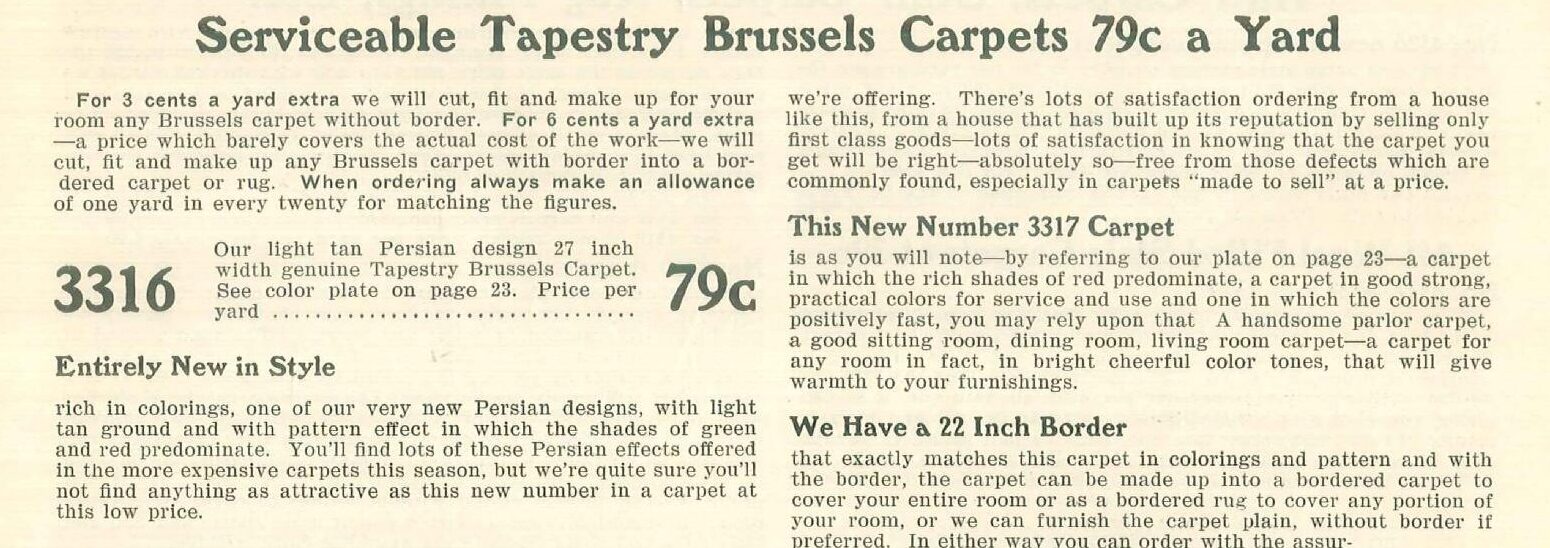
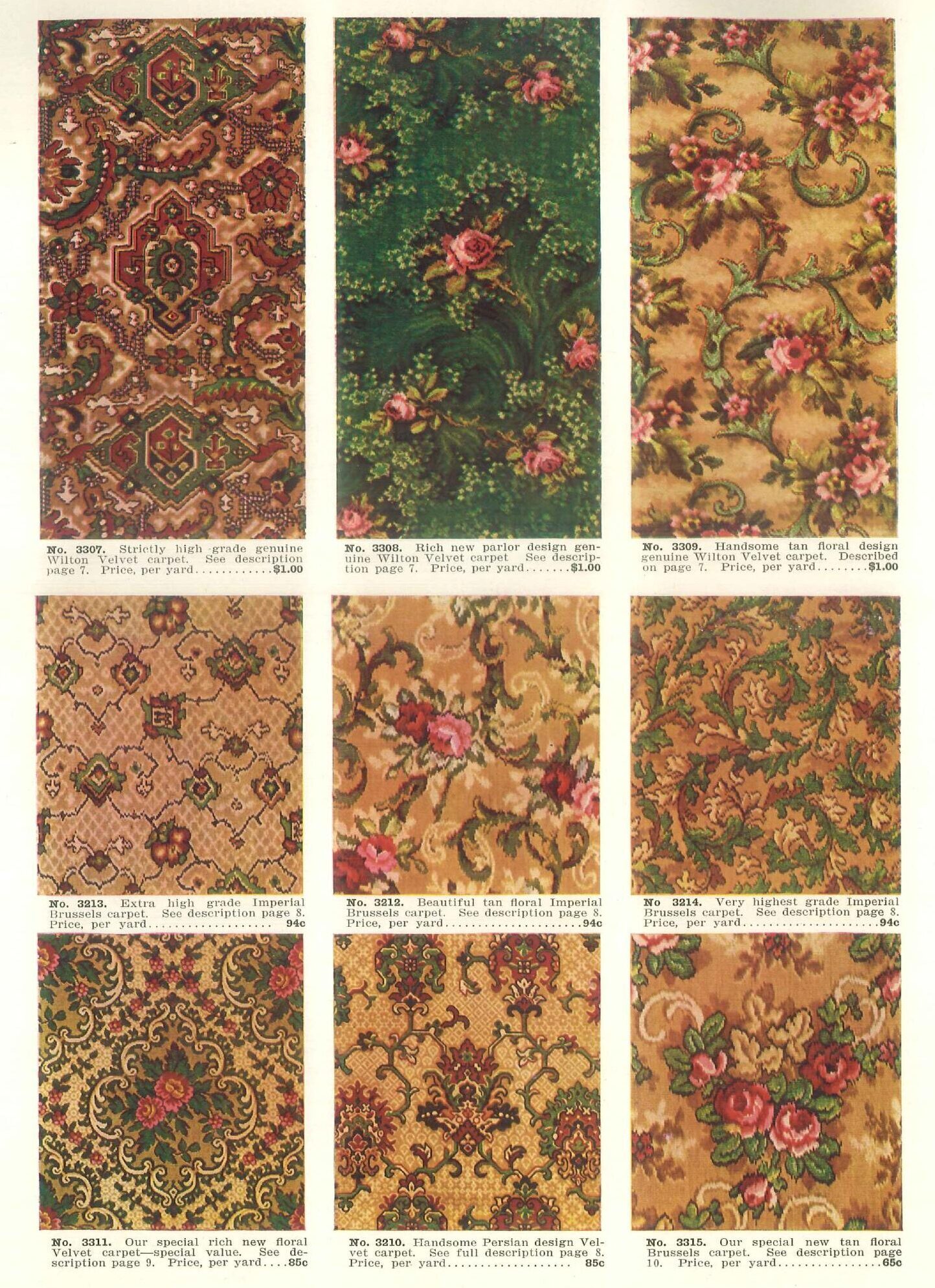
Tapestry Brussels typically sold for 55¢–$1.00 per 27″ linear yard (better grades up to ~$1.25). Because 27″ equals ~0.75 sq yd, that’s about $0.73–$1.33 per sq yd in 1880s dollars—roughly $24–$44 per square yard today. In other words, a basic tapestry grade landing near $25 (modern equivalent) is a sensible mid-market estimate.
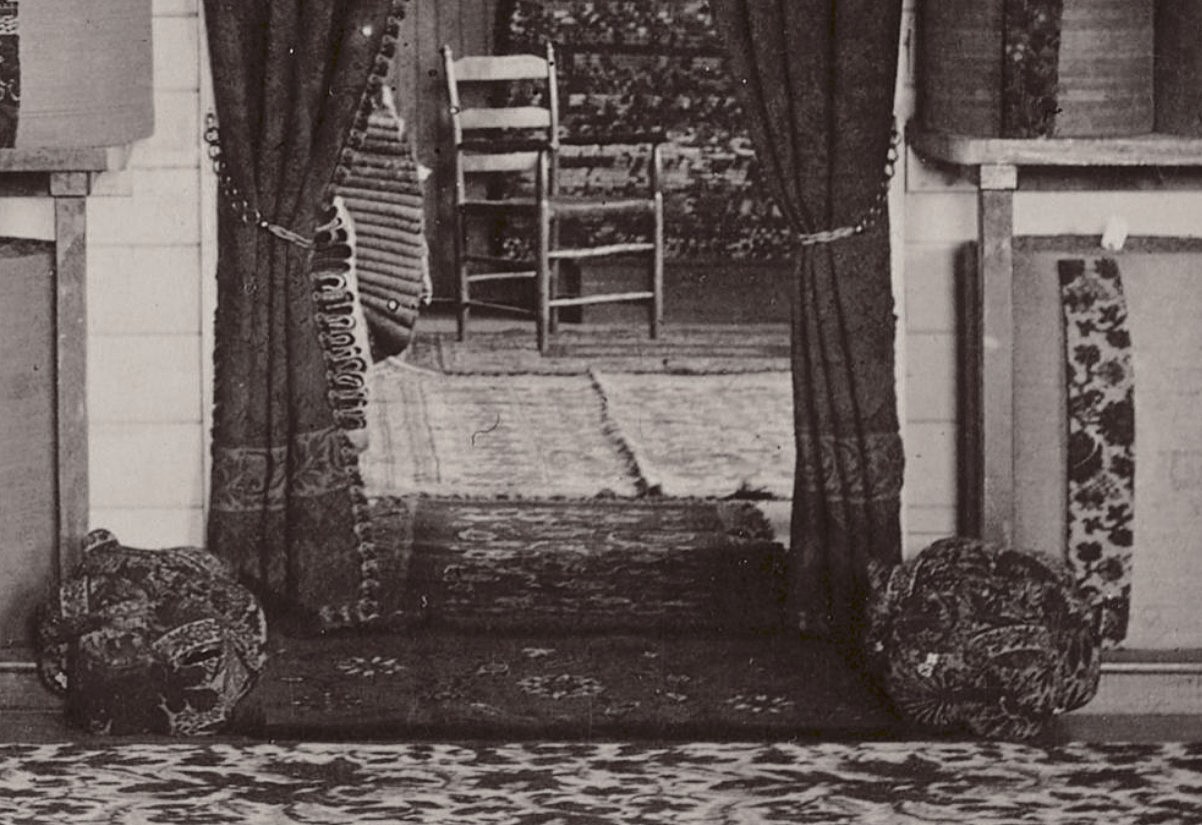
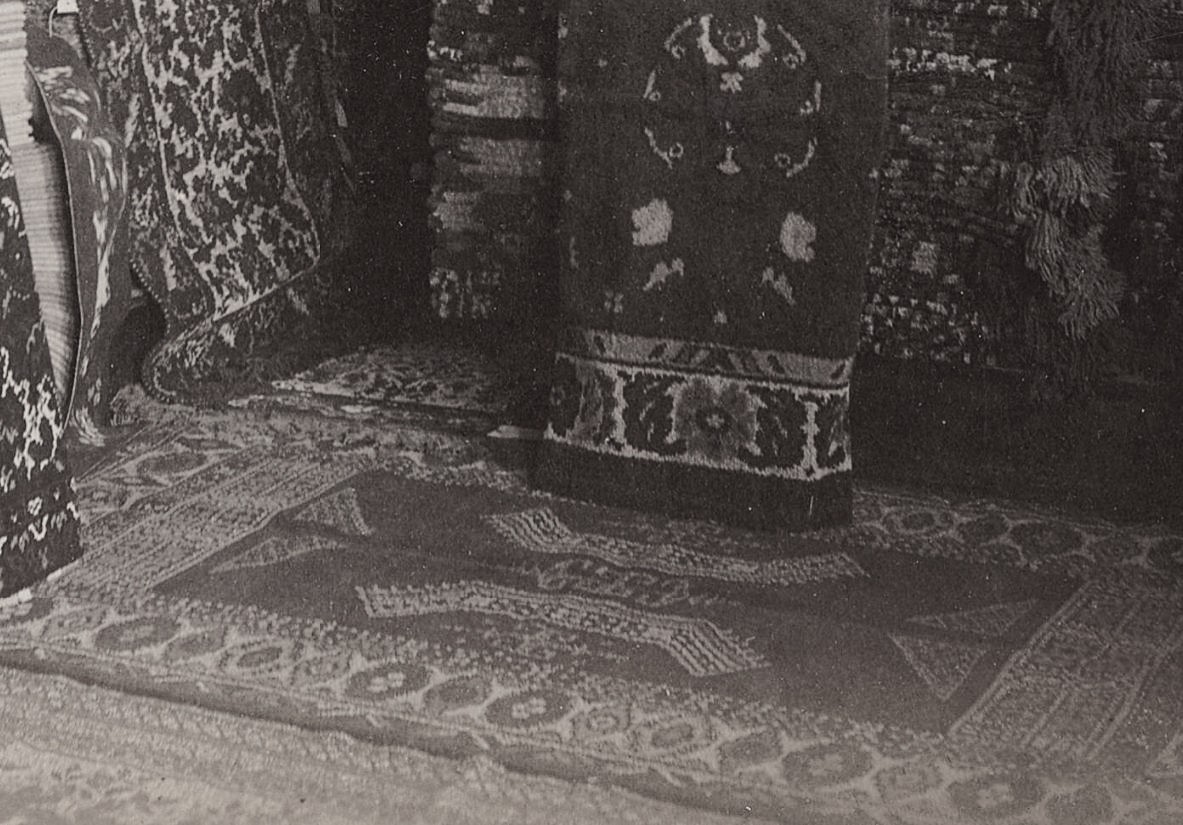
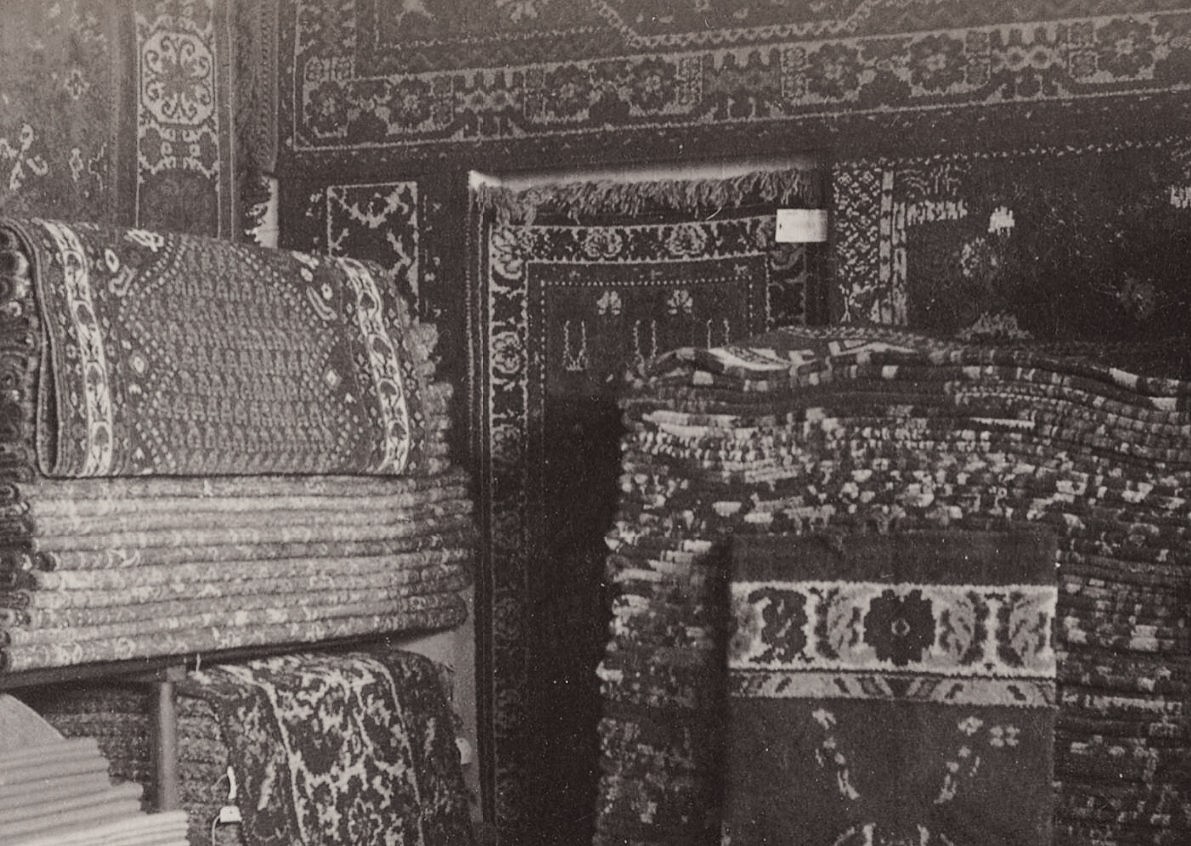
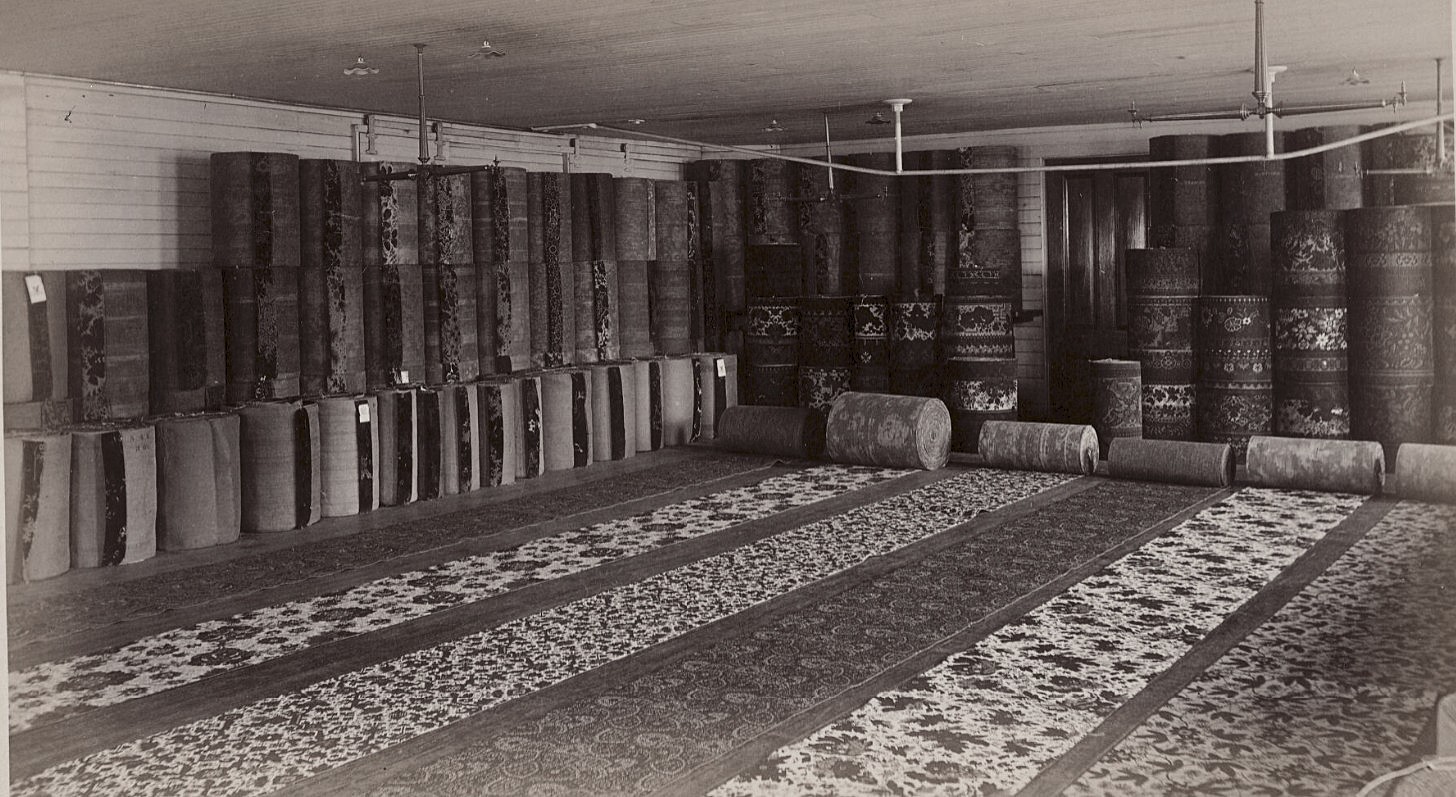
Looking in from this side, rugs are everywhere—stacked, rolled, and hung. Metal drapery chains hold back the portières, likely another item offered in the drapery department. On both the left and right are carpet footstools, perhaps sold as accessories within this tapestry section.
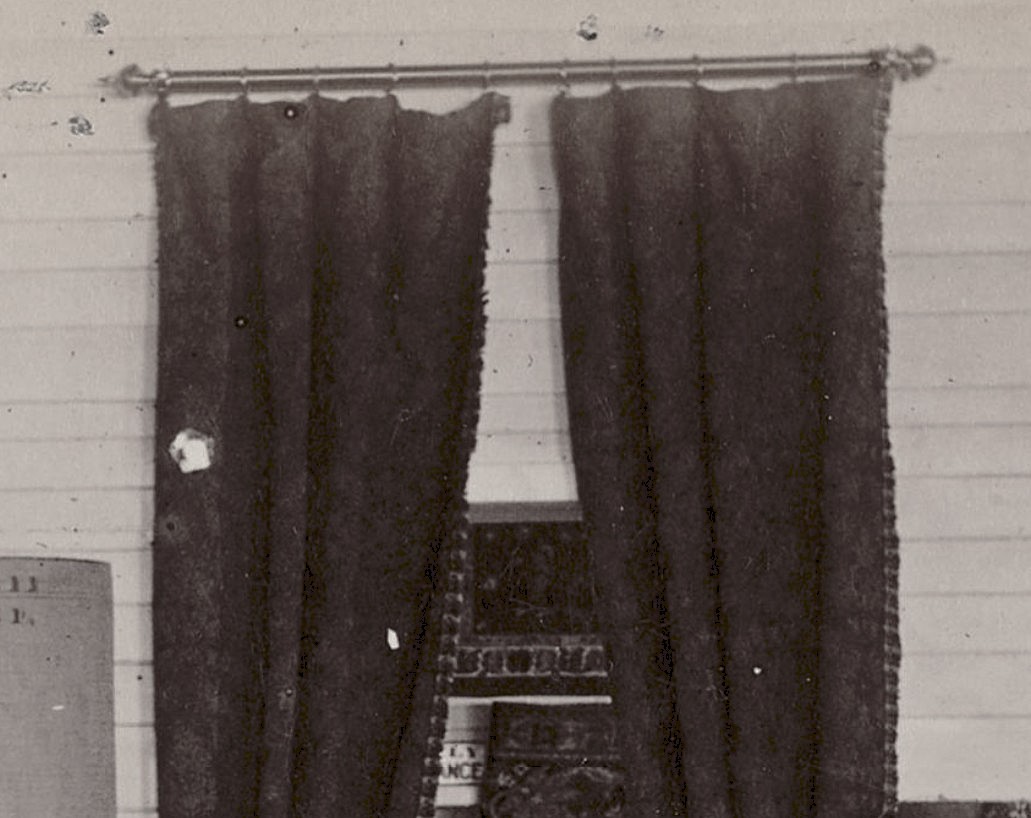
Portières help divide the two rooms, softening drafts and framing the passage. It’s also possible the curtains were sold upstairs in the drapery department. We’ll be visiting that next time.
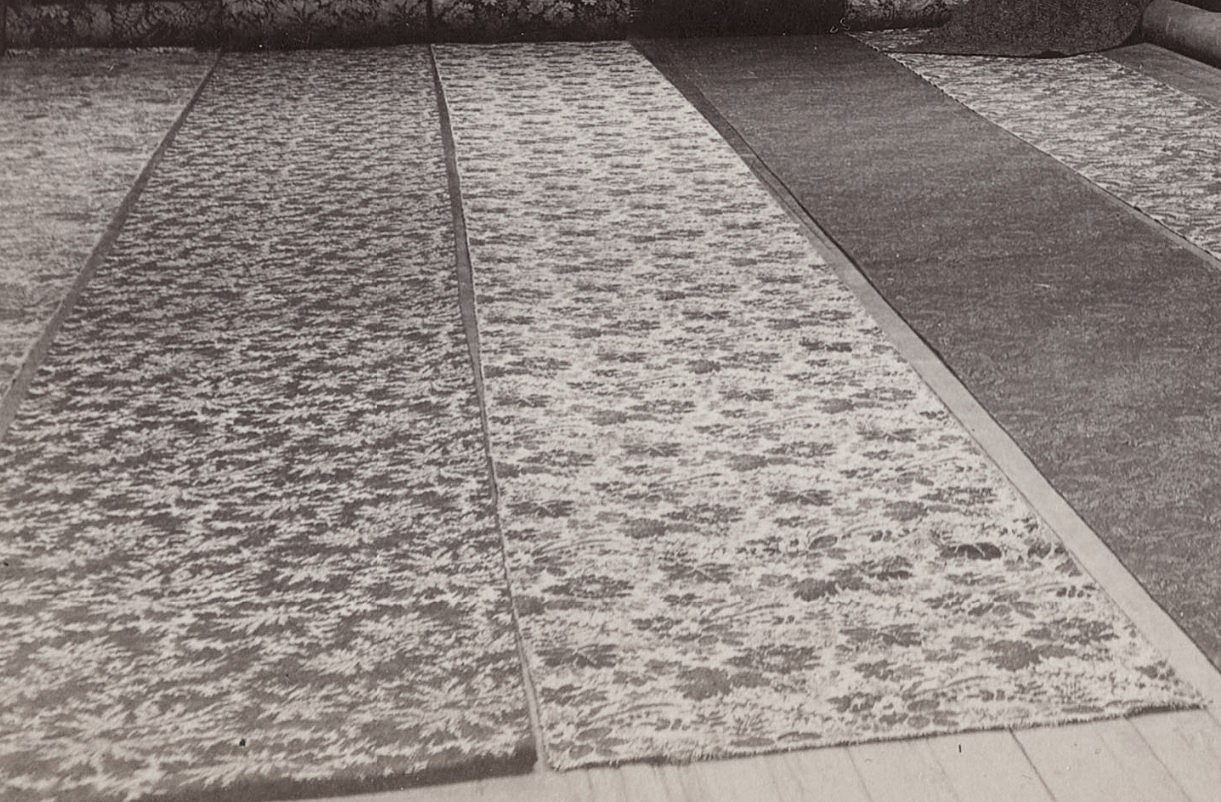
- Strips at ~27″ widths; seams repeating across the field at regular intervals.
- Borders cut in, corners mitered for a framed effect.
- Fittings around hearths, door casings, and built-ins carefully scribed.
- Perimeter tacked allowing later lifting and re-use.

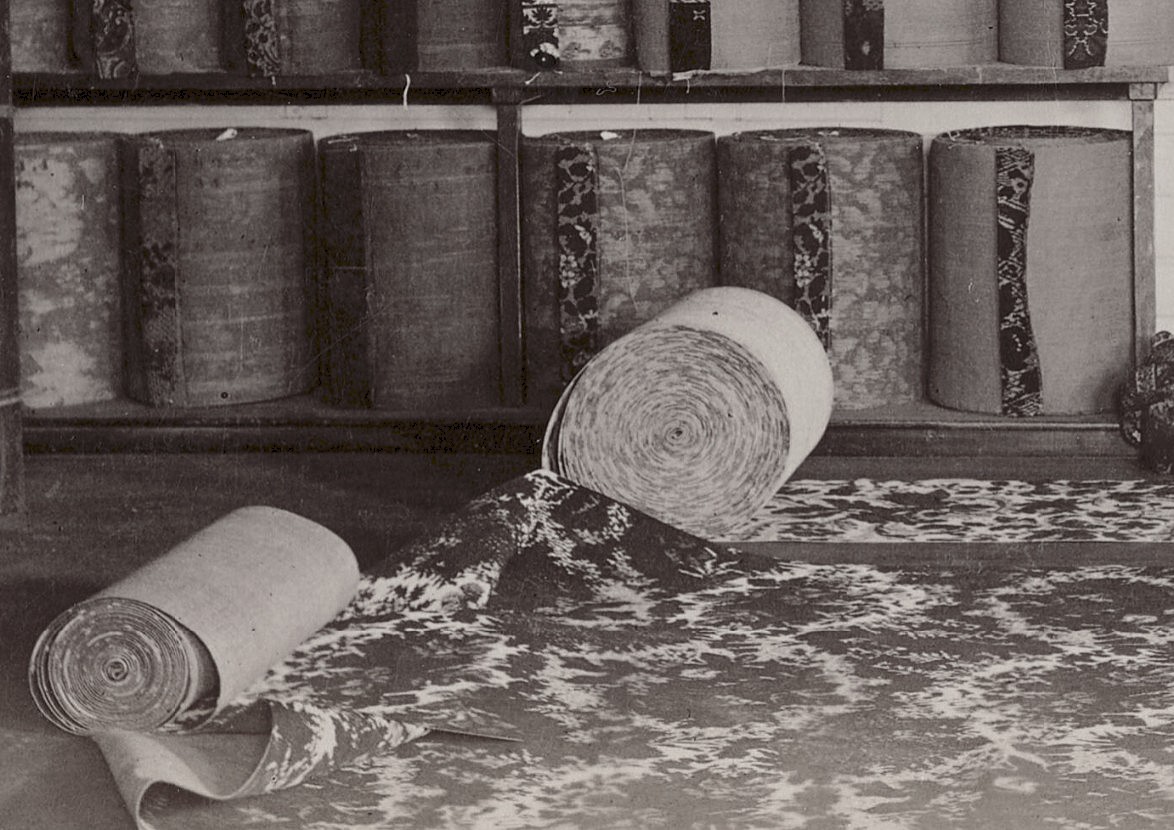
“Brussels” is a loop-pile carpet: the pile yarns form small, uncut loops on the surface, creating a durable, slightly pebbled texture. Two commercial types were common in the 1800s: body Brussels (colors carried as full warps through the backing) and tapestry Brussels (warp-printed yarns for lower cost). Both appeared widely in Victorian interiors.
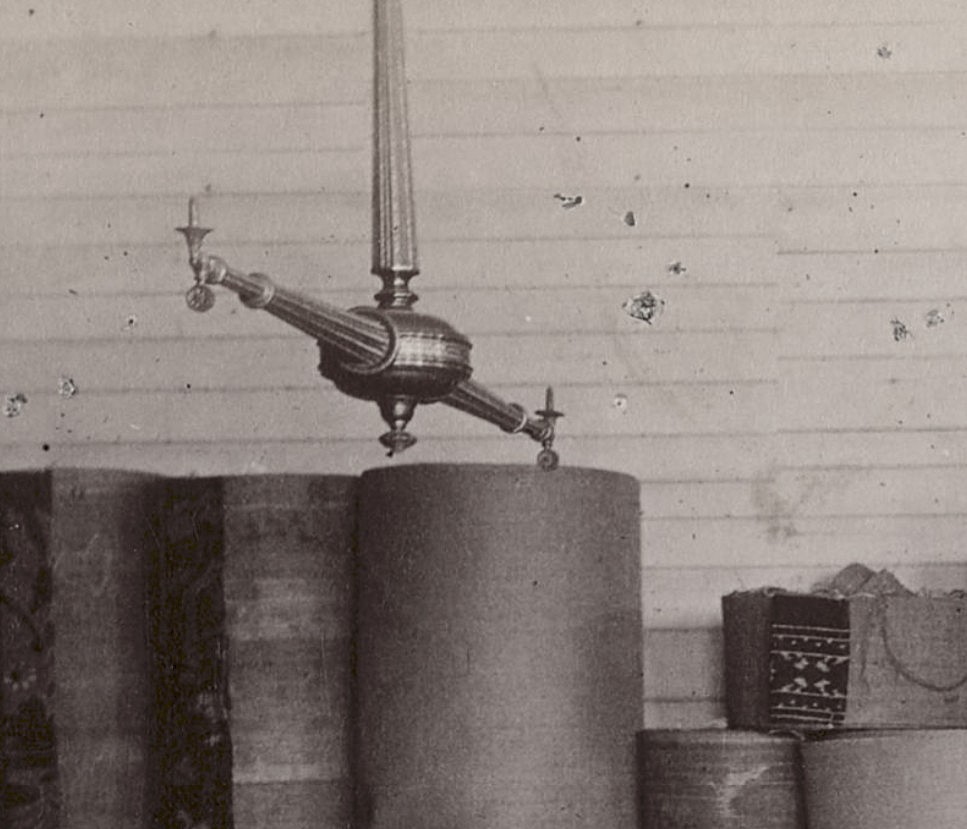
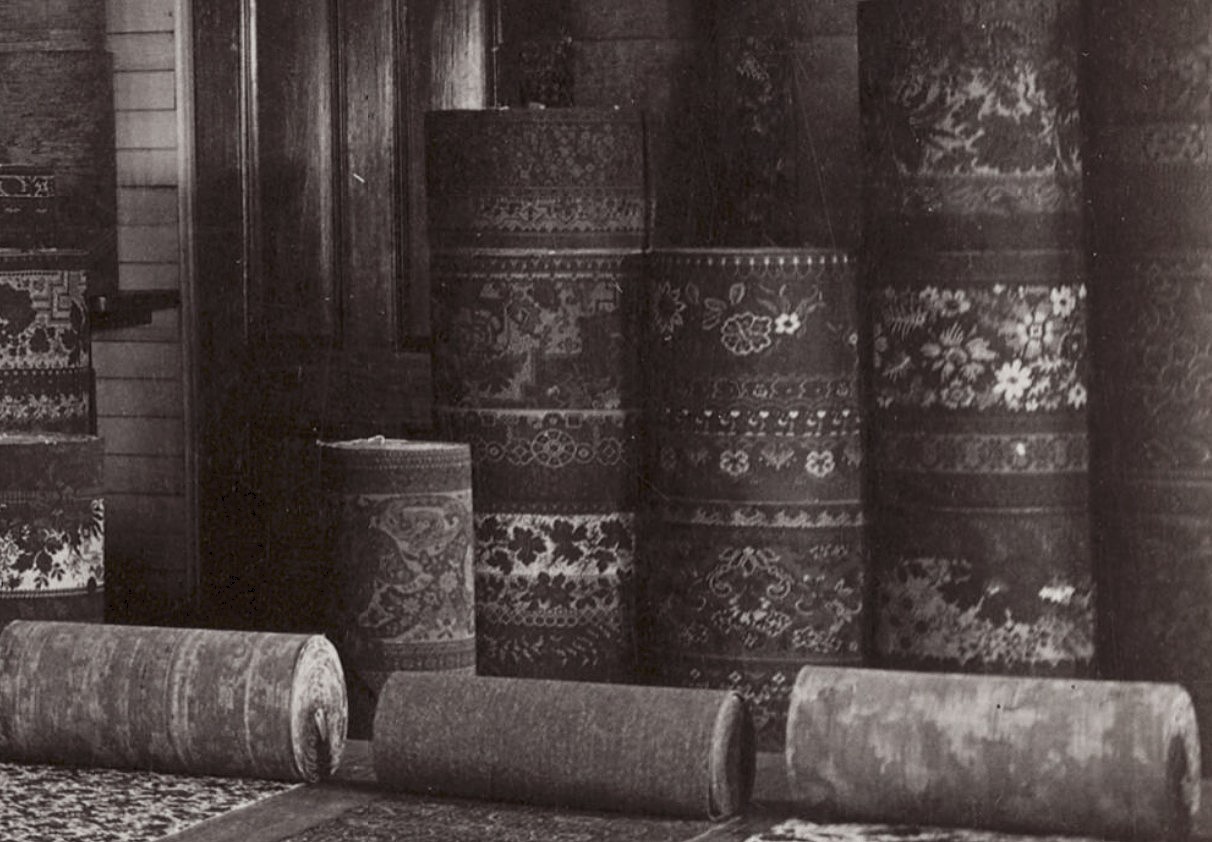
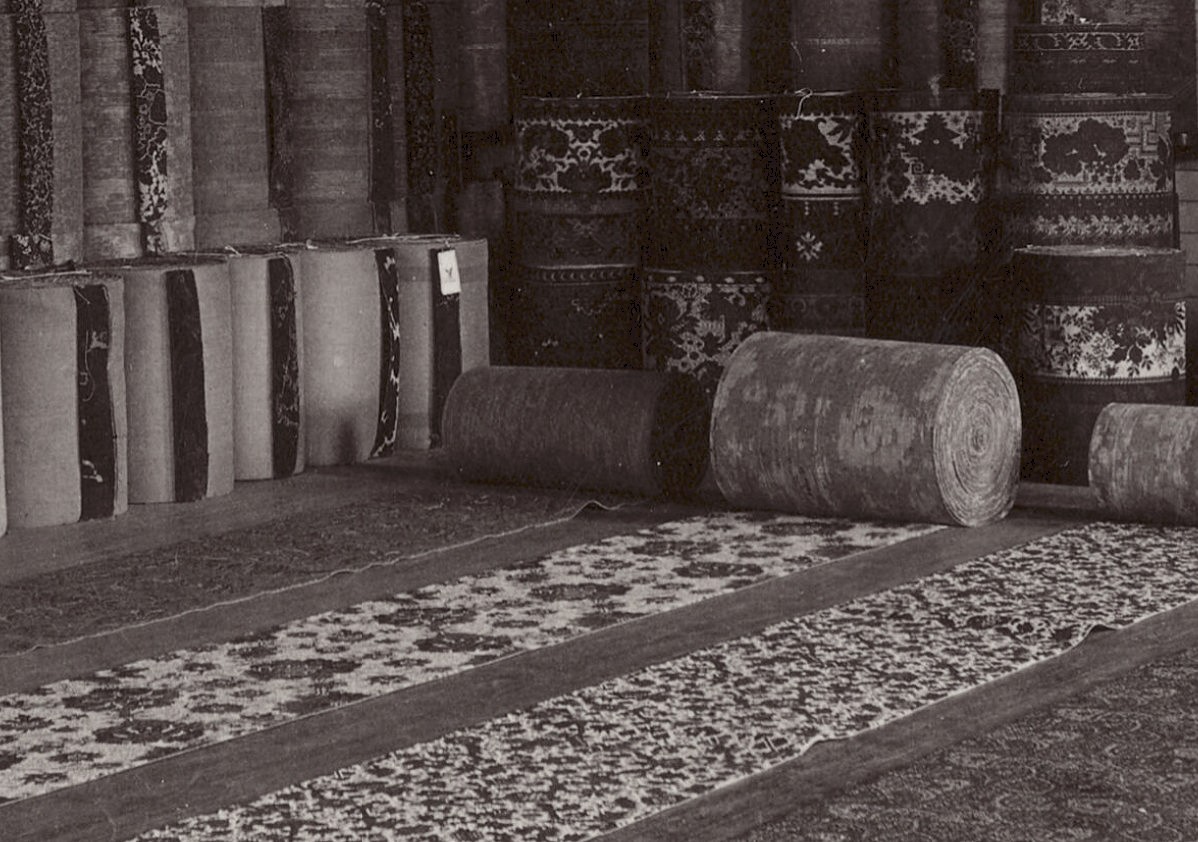
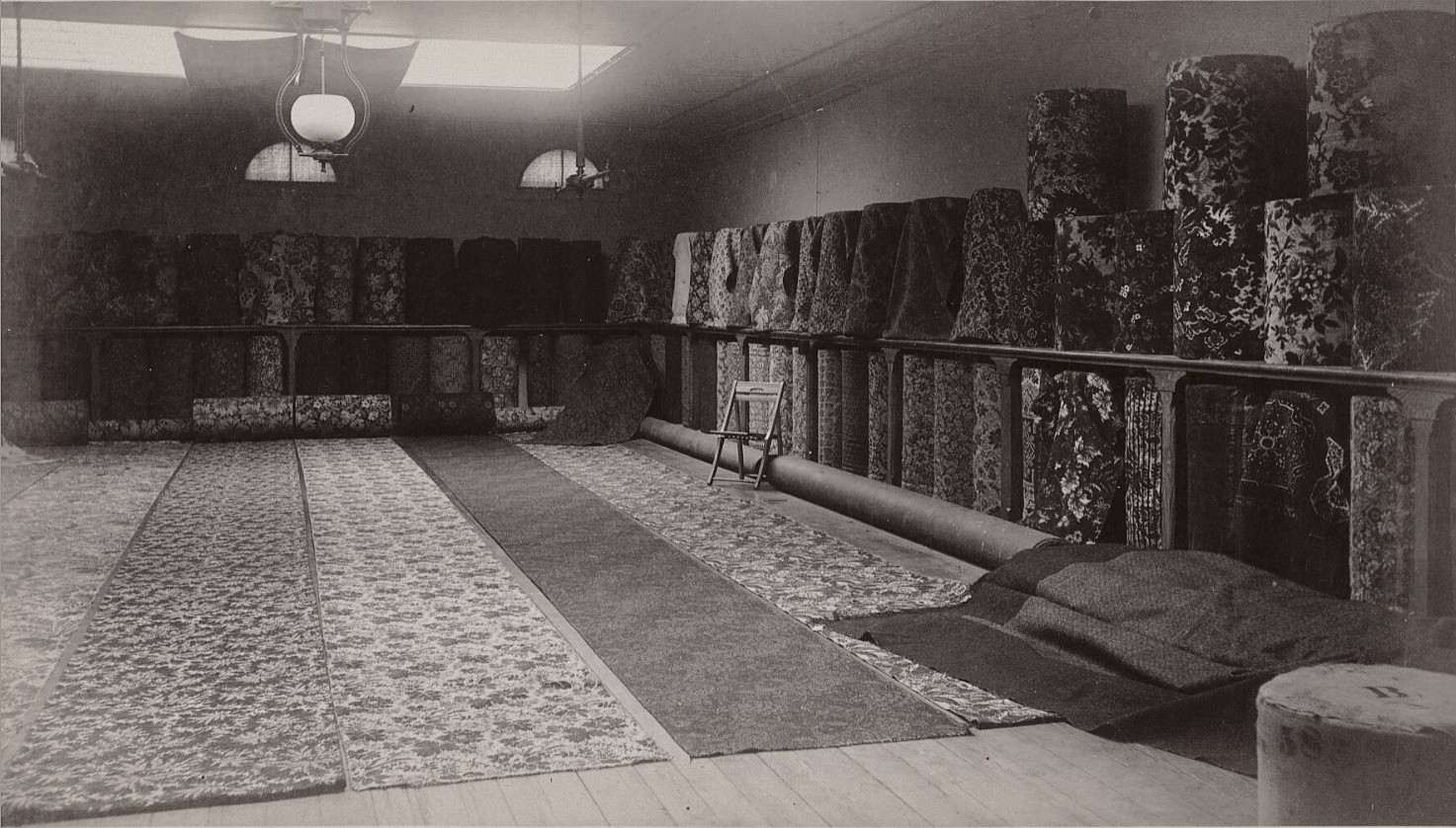
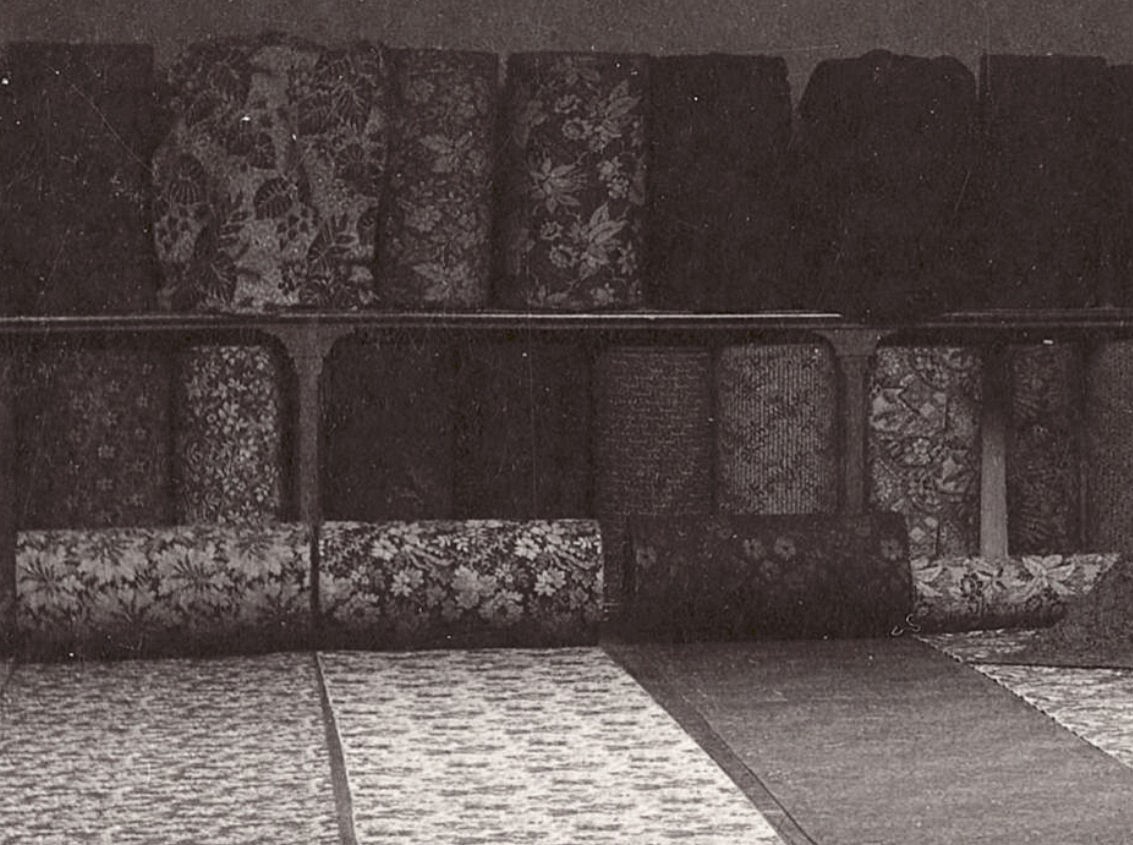
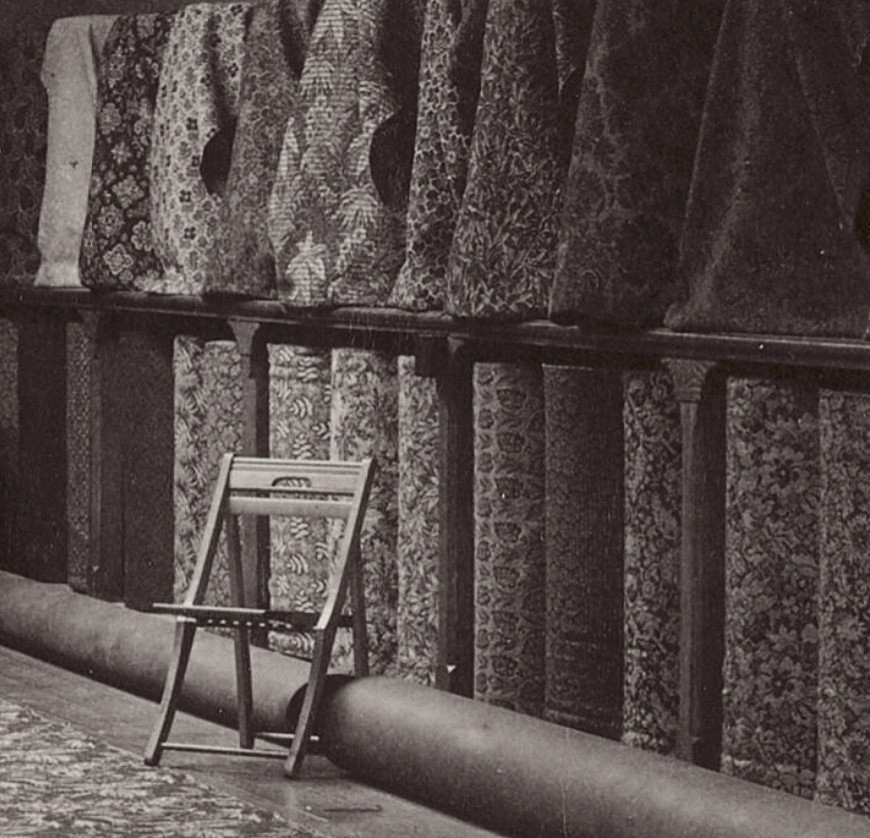
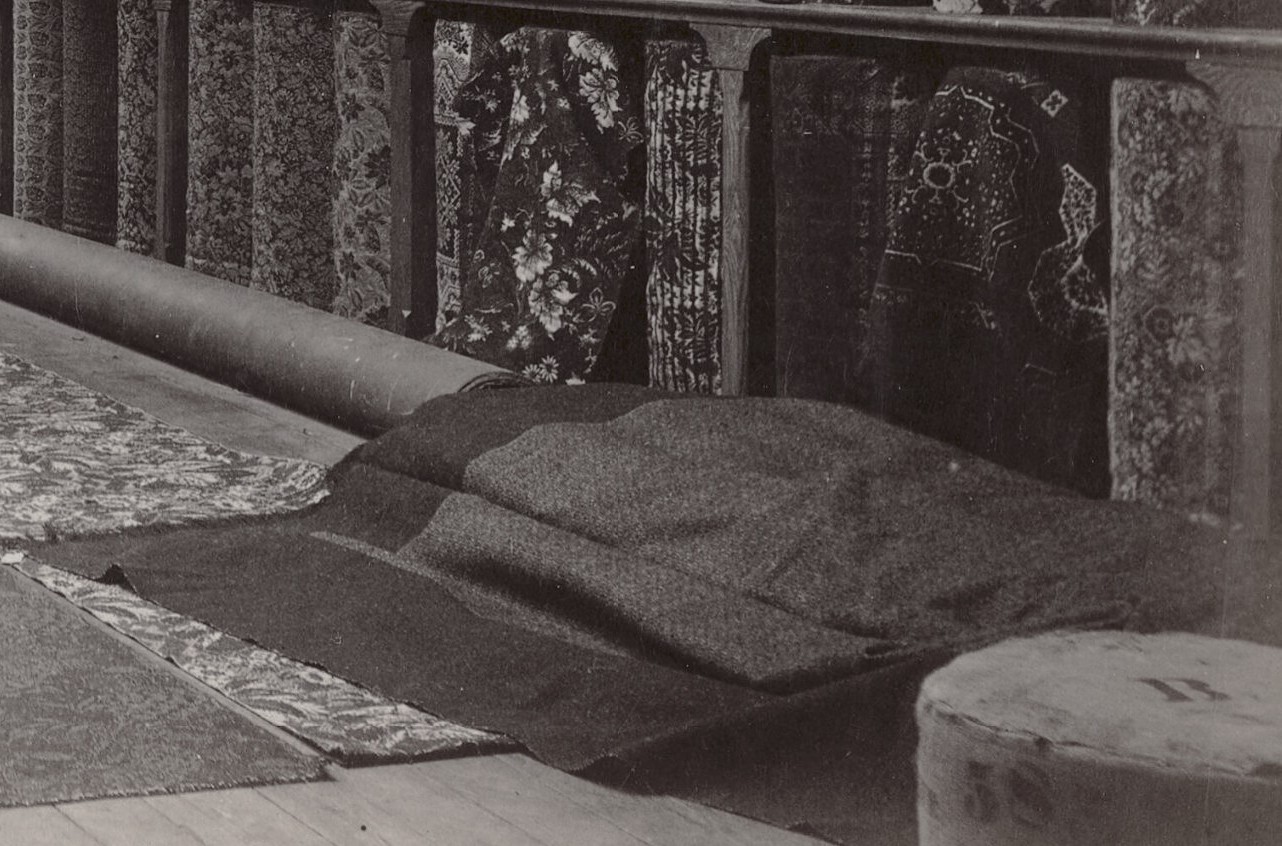
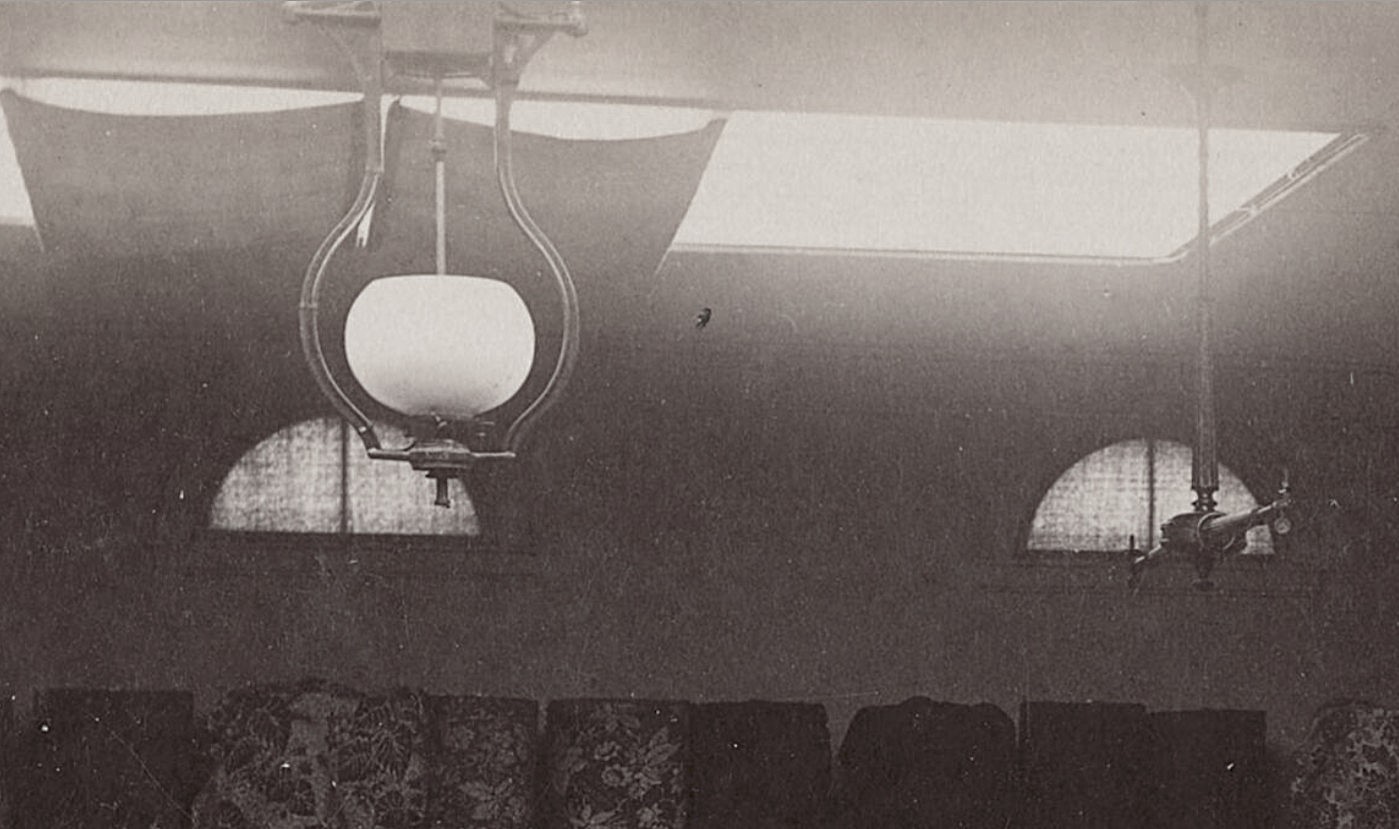
We now enter this low-ceilinged storage room to look around. Notice the long pipe on the ceiling? Could this be used for feeding the carpet through and cutting? Displaying? Put your thoughts in the comments section below.
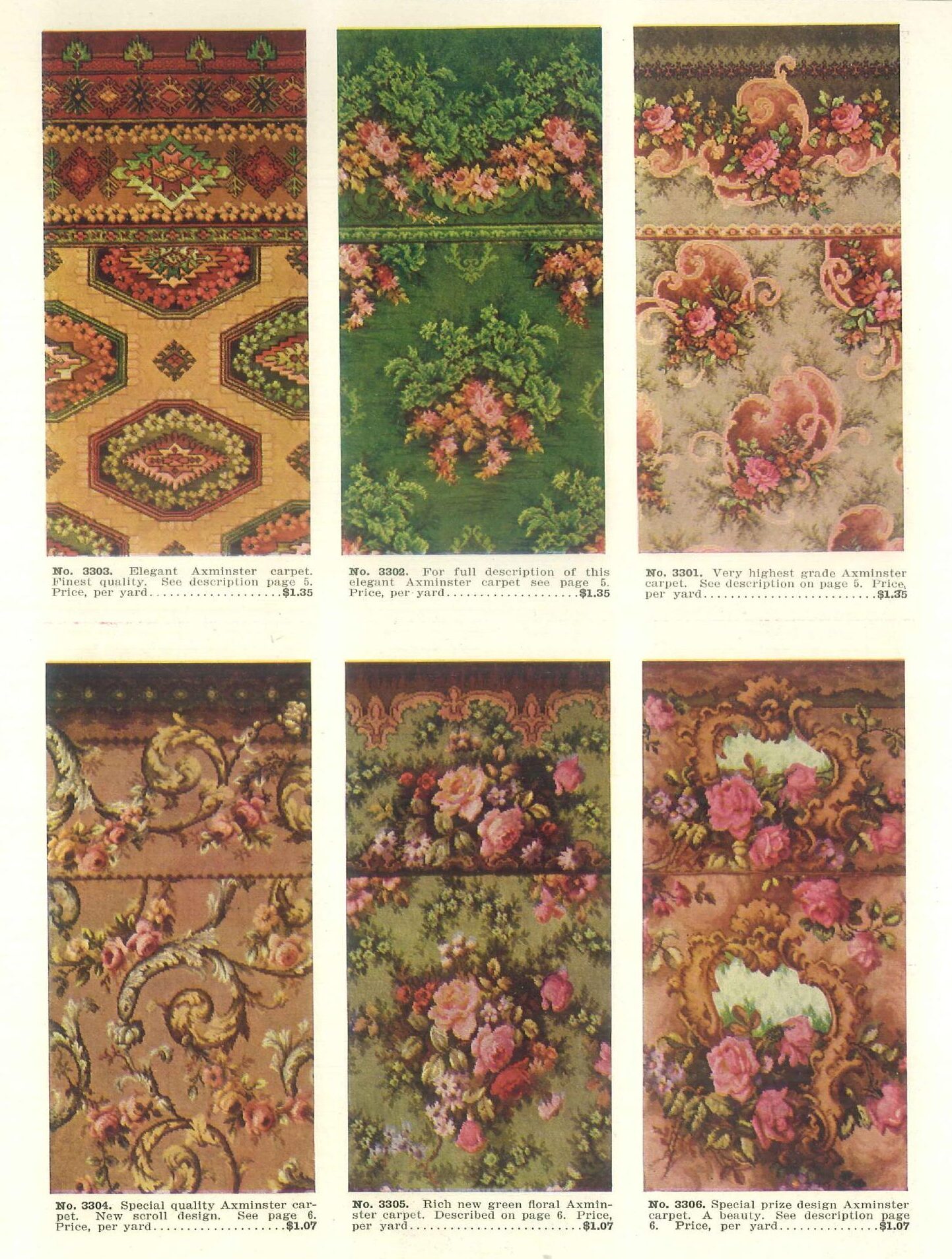
This website called Antique Homes has a helpful article on carpeting and includes images showing how borders were attached. Click here to visit.
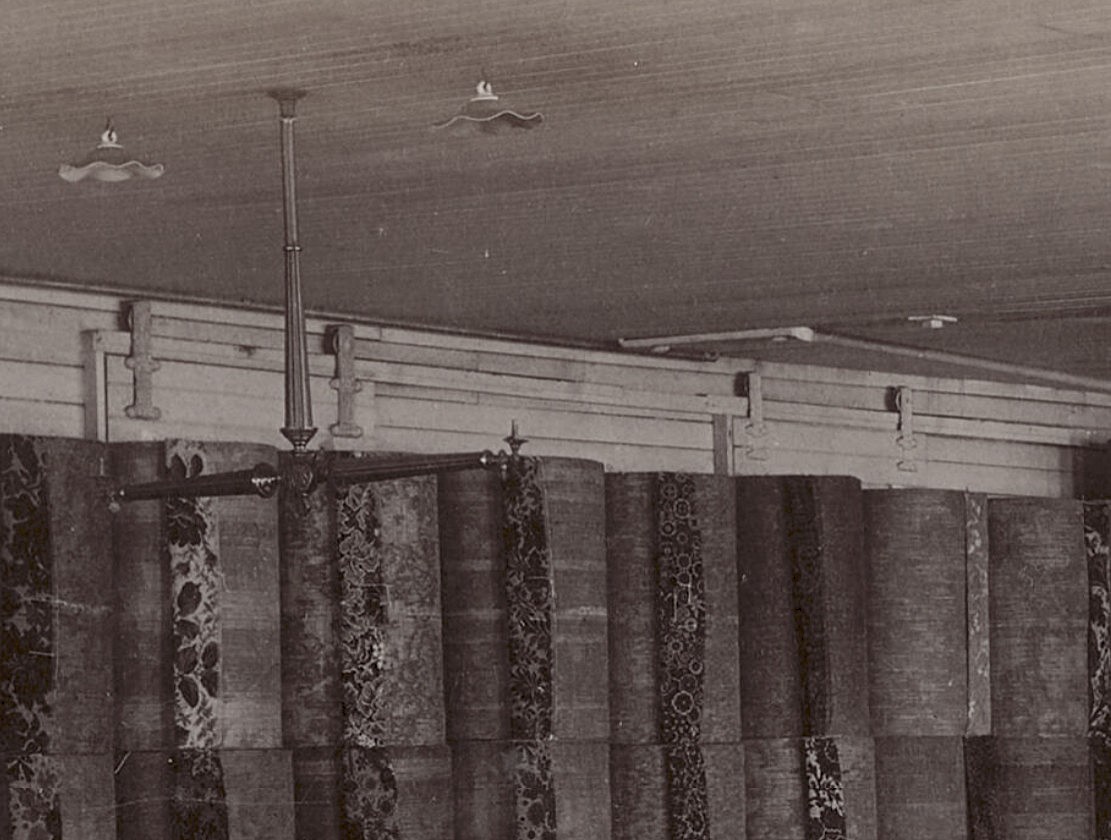
Notice the large rolling doors are fully covered by carpet rolls?

Before electric vacuums, households cleaned fitted carpets by lifting the made-up strips, hauling them outdoors to beat, and using brooms, damp tea-leaf sweeps, and druggets to control dust between major “spring-cleanings.”
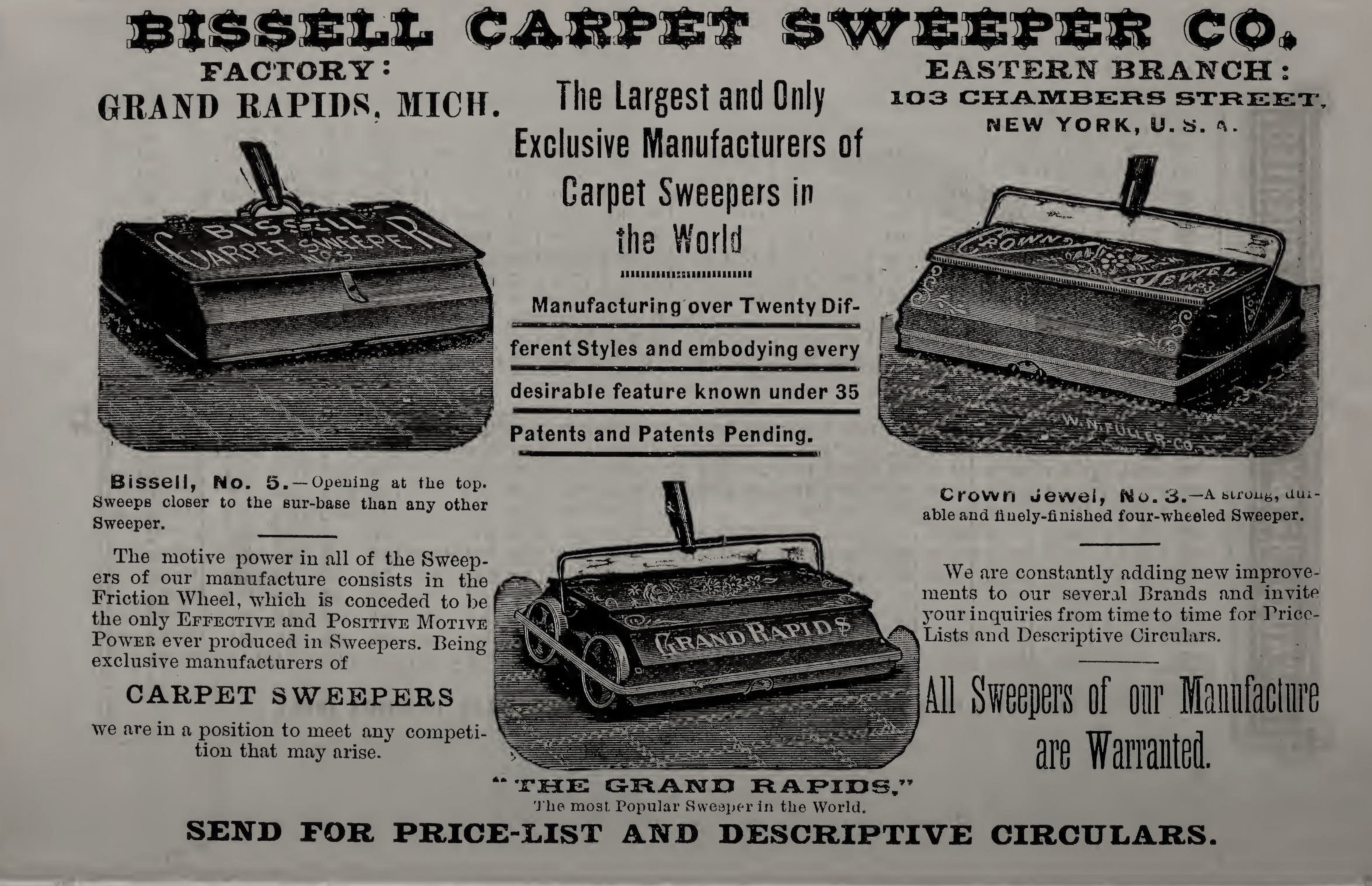
The big shift was the mechanical carpet sweeper: in 1876, Melville R. Bissell of Grand Rapids patented a compact box with brush rollers and dust pans that picked up grit without lifting the carpet—perfect for wall-to-wall interiors which would become known as The Bissell Carpet Sweeper. He and his wife Anna Bissell built a business around it; after Melville’s death in 1889, Anna became the company’s chief executive and expanded BISSELL internationally.
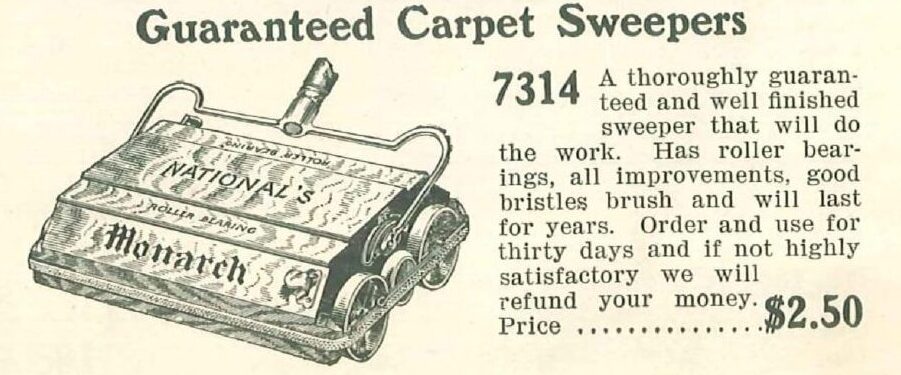
Late-Victorian homes relied on sweepers and beating until powered suction arrived in the early 20th century—famously with Hubert Cecil Booth’s large, horse-drawn vacuum in 1901, and later domestic uprights.
Next time we need to buy draperies or portieres and will visit the Upholstery and Drapery Departments!