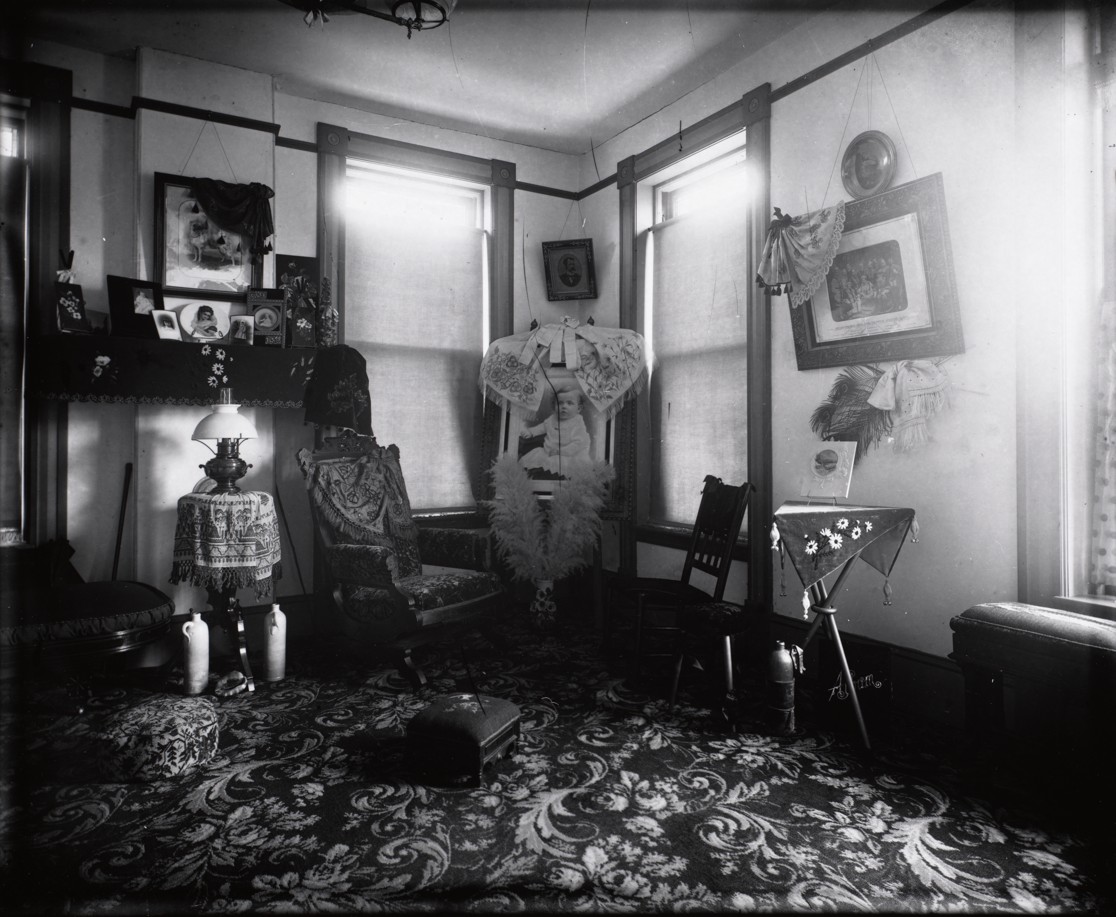
Today’s interior comes from a mystery home, offering a glimpse into a modest yet thoughtful middle-class setting. The room is furnished with practical pieces that would have been within reach for many families of the time, balancing function with a touch of refinement. Though the walls and ceilings may strike some as understated compared to grander interiors of the era, the space still presents a number of fascinating objects. Each detail—whether a carefully chosen furnishing or a decorative accent—offers clues into the everyday tastes, values, and aspirations of its inhabitants. Looking all the way to the right, you can see there is a polka-dot sash curtain on that window but no others.
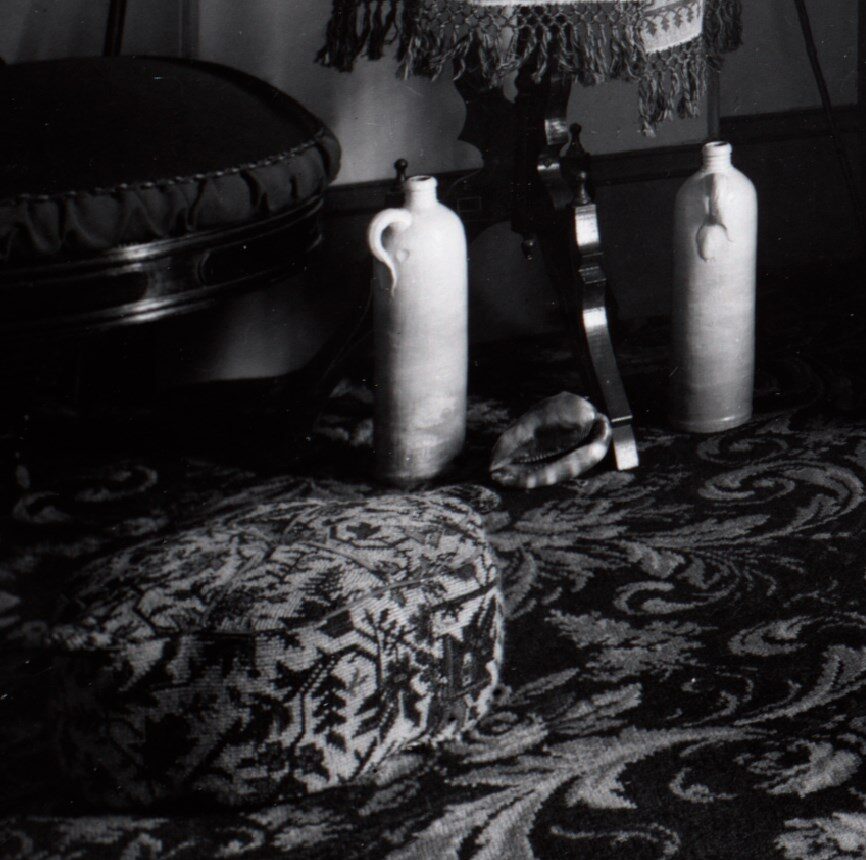
As we look around the room, it becomes clear that the owner had a fondness for collecting jugs. Two can be seen resting on the floor near the legs of the table. To the left, a chair displays two distinct tones of fabric—its front gathered neatly, trimmed with multicolored braided piping. A carpet-covered footstool, a common household piece of the era, sits nearby. On the floor beside the jugs rests a large shell, an object that immediately draws the eye. Was it a treasured memento from a seaside trip, carried home as both a keepsake and a conversation piece?
The room is anchored by wall-to-wall carpeting, a feature that gave Victorian interiors both warmth and a sense of luxury. Another footstool makes an appearance here—this one framed in wood and topped with careful embroidery. Pieces like this combined function with artistry, offering a place of rest while also displaying the handiwork and decorative taste of the household. In modest homes especially, such touches provided refinement and individuality without great expense.
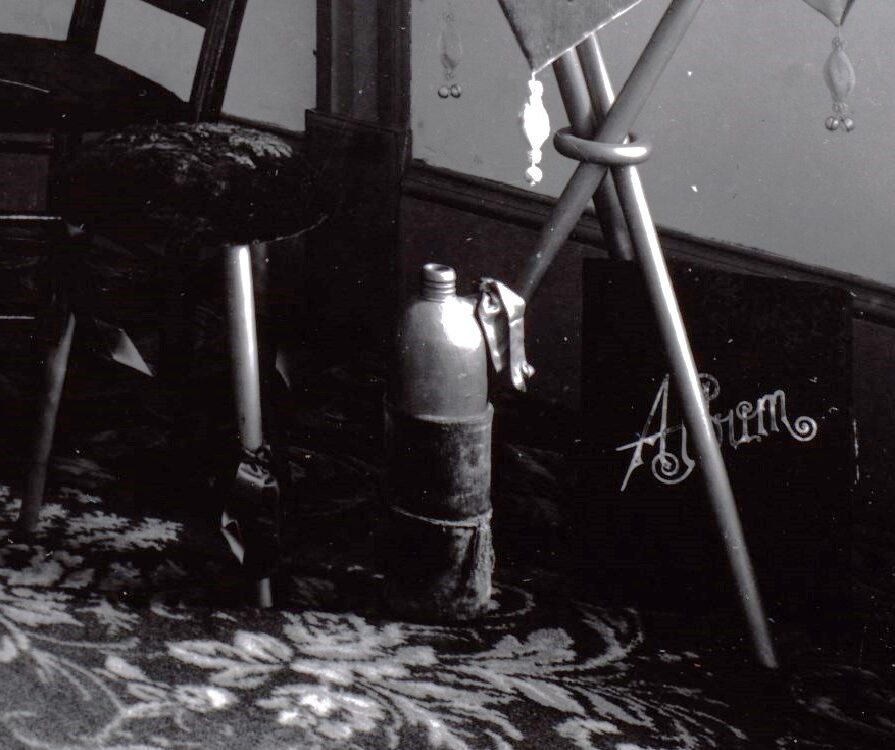
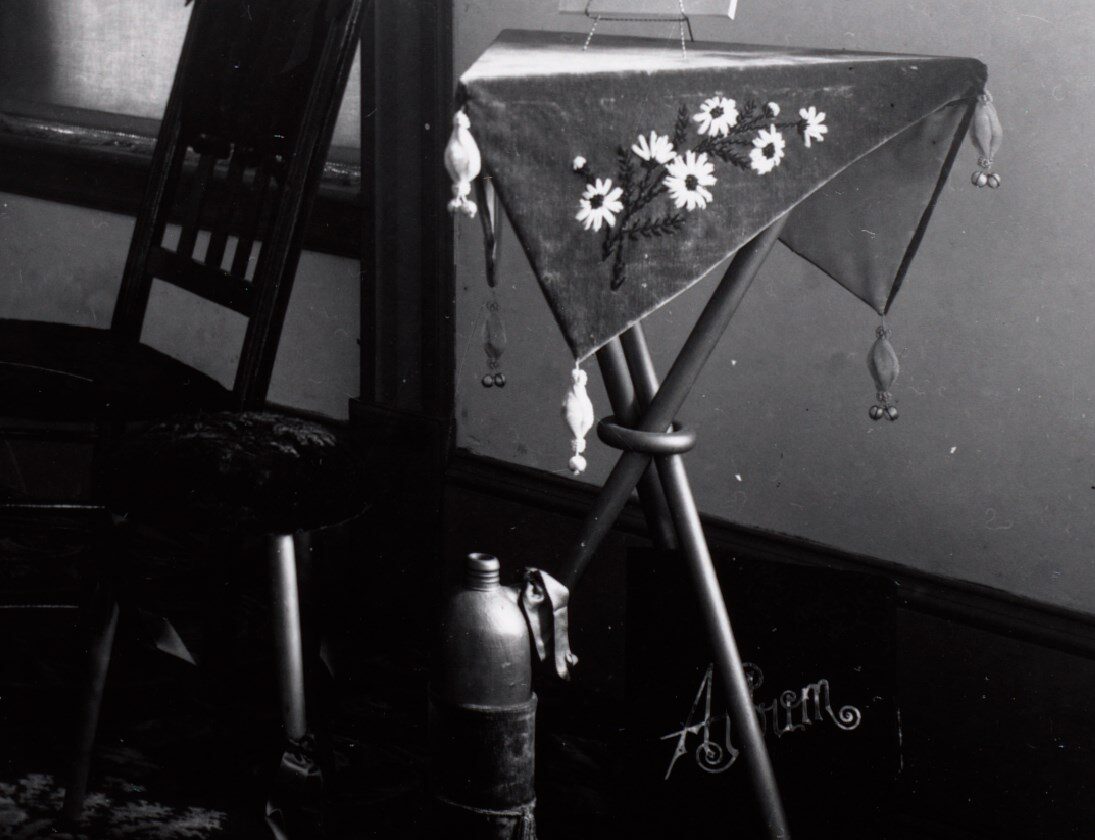
Beneath the distinctive three-cornered table and partly hidden behind the jug rests a plush photo album, a style widely used in the late 19th century for storing cabinet cards of family and friends. Its padded cover and large format made it both practical and decorative, often serving as a parlor centerpiece. Leaning casually against the table leg, it suggests frequent use and easy access for guests to browse through. To the left sits a small stool whose legs closely resemble those of the table itself—raising the possibility that it may have been part of a matching set, a common feature in Victorian interiors where coordinated furniture ensembles added harmony to a room.
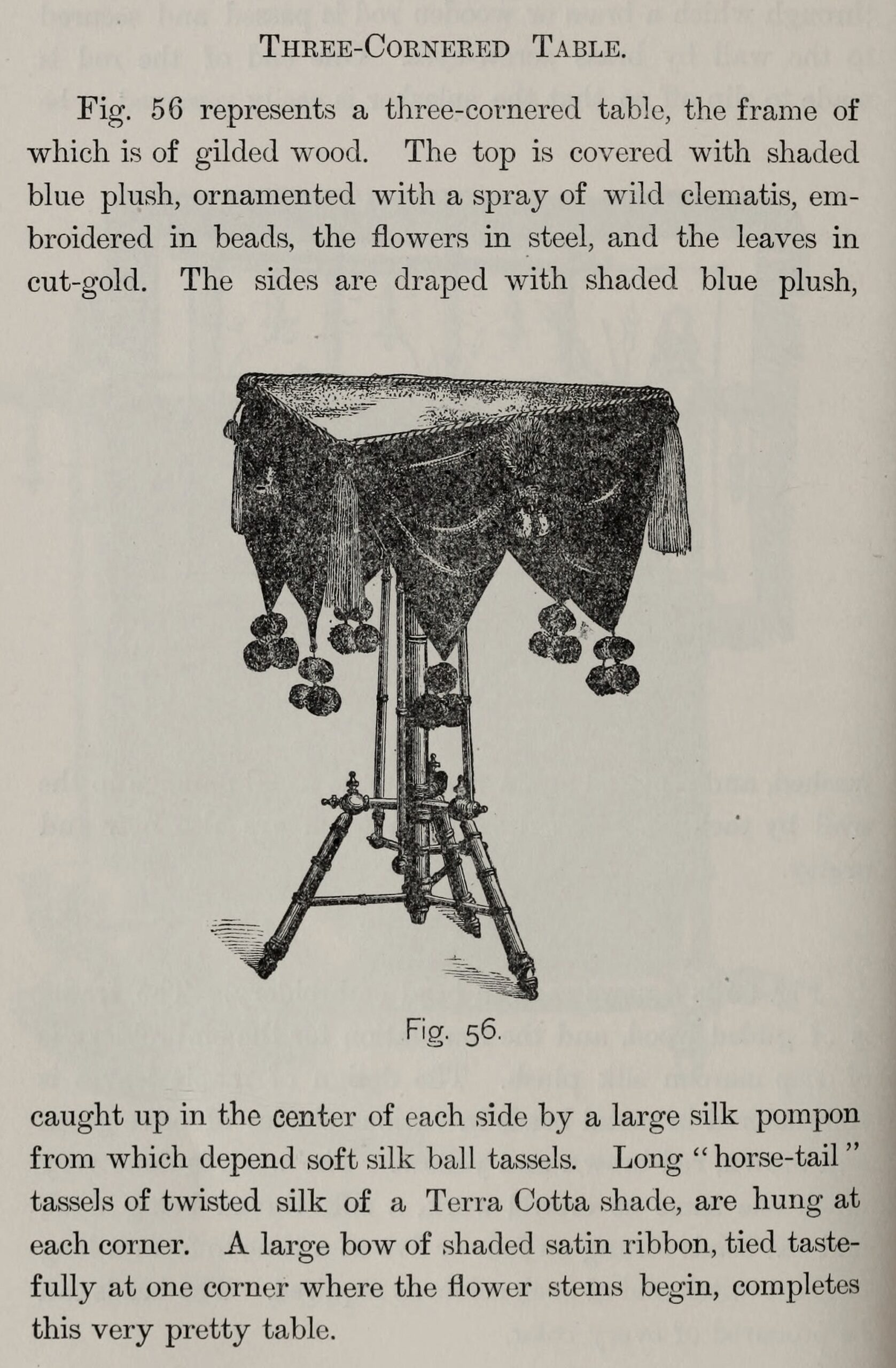
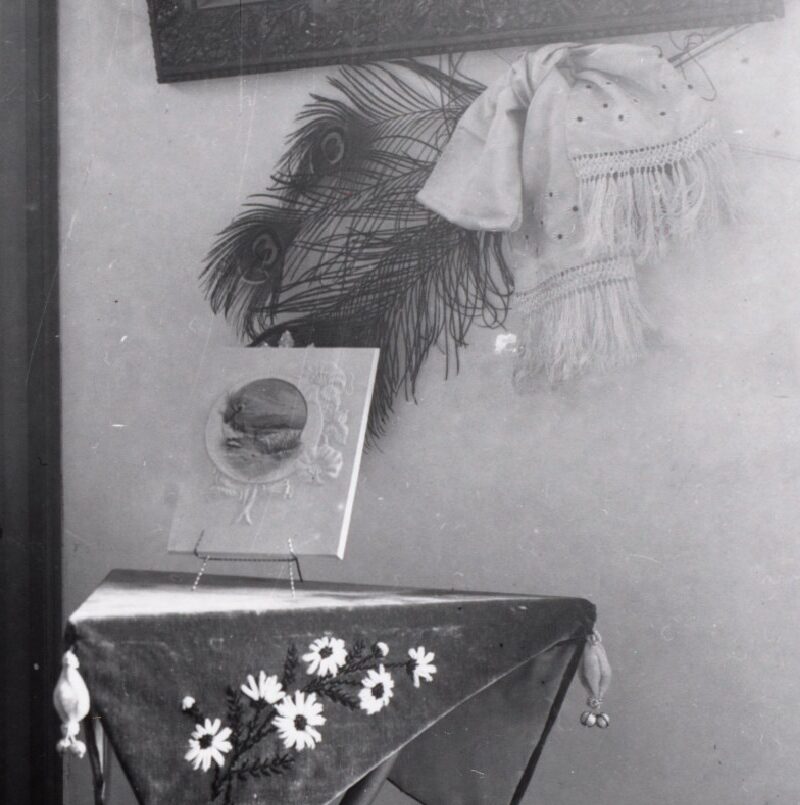
This tablecloth appears to have been custom-made to fit the triangular top of the table. Three-corner tables were not unusual in late 19th-century homes and served many purposes—ideal for displaying a decorative object, a plant, or a vase. The embroidered flowers on this cloth may well have been the handiwork of the lady of the house, as embroidery was a popular pastime and a way to personalize household furnishings. The tassels at each corner add an extra touch of charm, their unique style enhancing the handcrafted feel of the piece. During the period, countless catalogs and pattern books circulated, guiding women in the art of embroidery and helping to spread this trend across middle-class households.
This book provides instructions for creating your own tablecloth designed specifically for a three-cornered table. It makes for a fascinating read, offering not only practical guidance but also insights into the decorative principles of the time. What is especially interesting is how many of those same design ideas—balance, symmetry, and attention to texture—continue to resonate in home décor today.
On top of the table rests a distinctive object displayed in a twisted wire easel. At first glance, it almost appears to be a plaster cast with a painted surface, though its exact nature remains uncertain—perhaps someone more familiar might recognize it, or even some of the other objects in the room. Adding to the display are several peacock feathers, which were a highly fashionable decorative element of the era. These feathers were collected and arranged in many ways: set upright in vases, tucked above paintings, or even bundled together and wrapped in a scarf. Their shimmering colors and exotic associations made them a favorite accent in late 19th-century interiors.
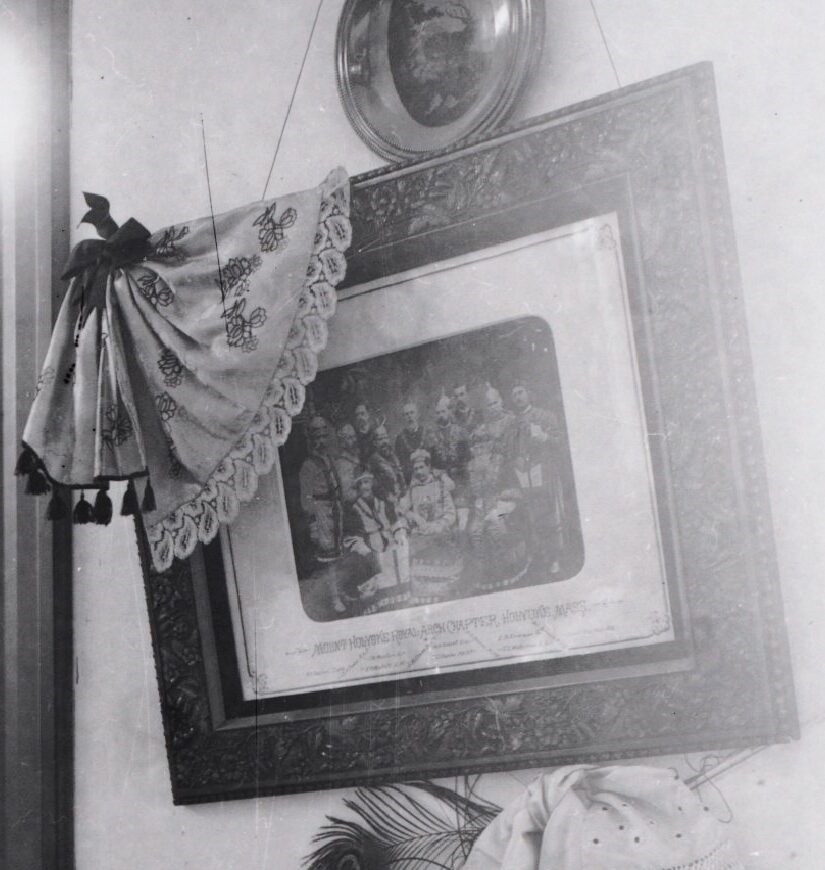
This Aesthetic Movement frame contains a fascinating group portrait, depicting what appears to be members of a local chapter or society in Holyoke, Massachusetts. Given that the photograph from Milan P. Warner (1848 – 1903), a professional photographer based in Holyoke, Massachusetts, it is quite possible the image was taken in Holyoke itself. The combination of the elaborate frame and the formal gathering within it offers both artistic and historical value, capturing not only the style of the period but also a glimpse into the civic or social life of the community.
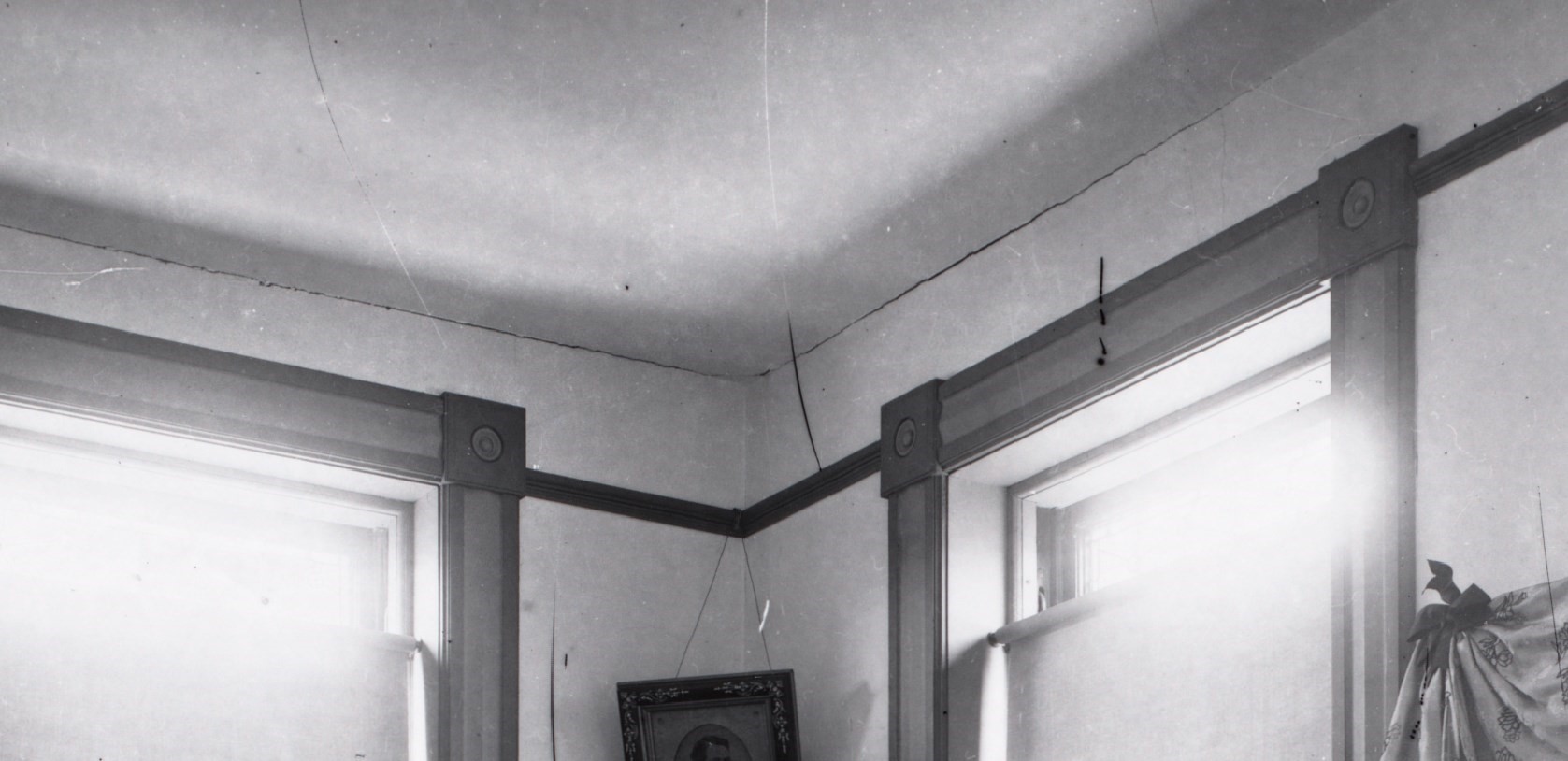
Here we can see the ceiling beginning to crack along the seam where it meets the wall on both sides. Interestingly, the room has no corner molding, though a picture rail runs along the walls to provide a decorative and functional element. The woodwork is painted in two contrasting colors, adding visual interest to the trim. The window shades are mounted unusually low—about a foot below the top of the window—while the windows themselves show no hardware at all for drapery, leaving them stark and unadorned compared to typical Victorian interiors.
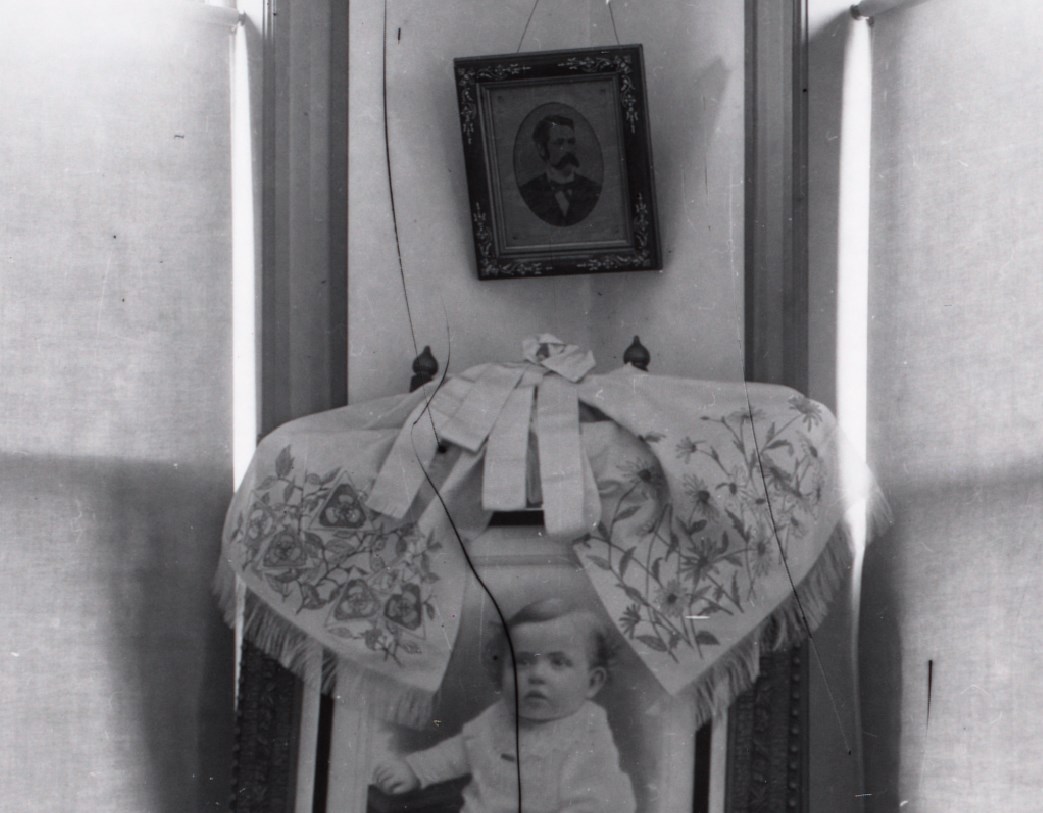
An Eastlake-style framed portrait of a man hangs from the picture rail in the corner of the wall, its bold lines and geometric detail characteristic of the style. Just below, resting on an easel, is a photograph of a baby boy—perhaps a family member memorialized in a more intimate setting. Draped over the top is another finely embroidered scarf, adding a decorative flourish that softens the angularity of the Eastlake frame and reflects the Victorian fondness for layering textiles with furnishings and art.
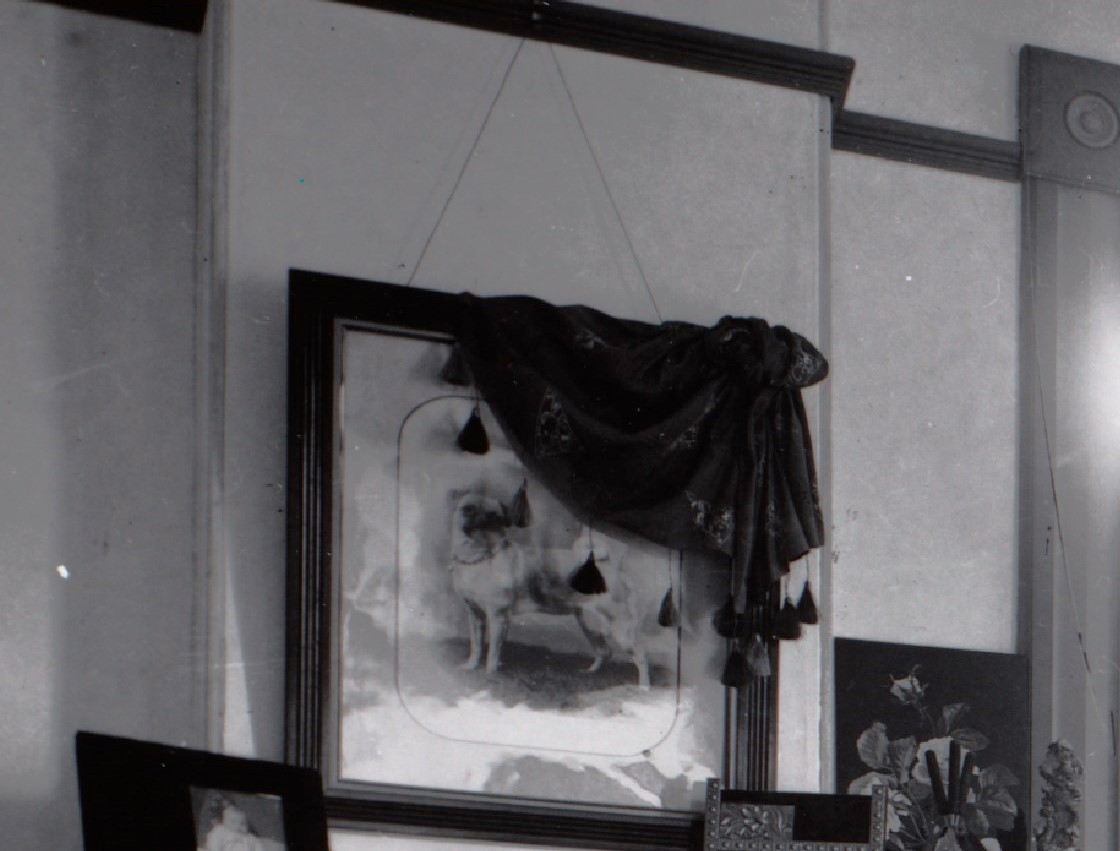
This photograph of a pug may well represent the family’s own pet, captured as a beloved companion. On the other hand, it could simply be a popular print or a studio image of the time, chosen because the owner admired the breed or enjoyed the subject.
A shelf is mounted on the wall, draped in a heavy fabric that gives it a sense of presence. Displayed across it are numerous family photographs, turning the shelf into both a functional and sentimental feature. Toward the right stands the most striking piece—a frame in the Aesthetic Movement style, adorned with gold and velvet trimmings and designed with a circular opening that feels both inventive and elegant. At the center of the shelf rests what appears to be a decorative plate, while to the right hang two flower paintings, perhaps the handiwork of someone within the household. Between them, cattails can be seen, adding a natural motif to the arrangement. Just beyond, a distinctive bottle catches the eye, contributing to the eclectic mix of objects that enliven the scene.
Painting and the arts were immensely popular in the 1880s, with both men and women taking pride in creating and displaying their own works. What makes this particular view so engaging is not only the artwork but also the glimpse it gives us into the decorating trends of the era. In the background, one can see vases arranged with care, privacy curtains drawn for comfort, drapery adding elegance, and other ornamental details that reflect the period’s taste for layered, richly adorned interiors.
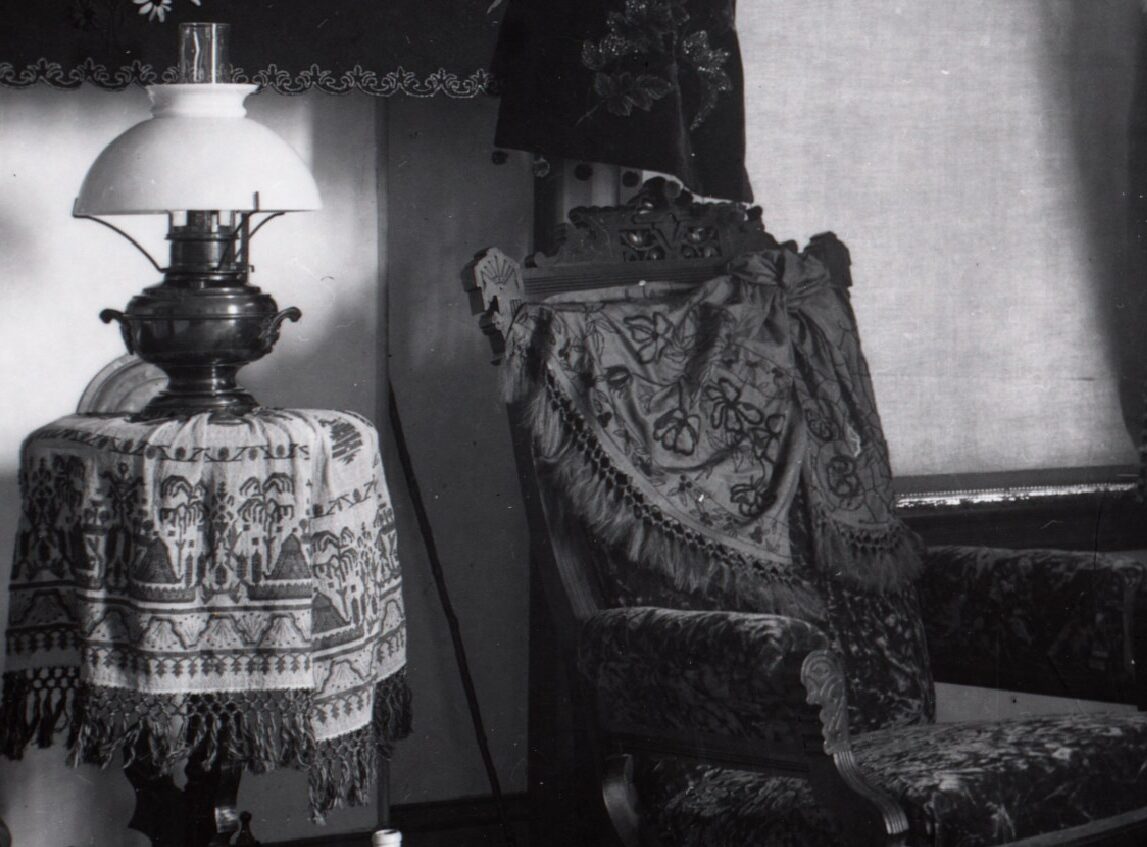
Covering the back of a chair with a scarf was not only a practical way to prevent wear but was also regarded as stylish and artistic. It allowed a simple chair to take on a more decorative appearance while extending its life. The table nearby is draped in a striking fringed cloth, its design forming geometric shapes that almost resemble small pyramids. Such textiles added both texture and visual interest, reflecting the Victorian taste for layered decoration and intricate detail.
Civility is expected. This site is devoted to historic architecture and the stories it carries, so please keep discussions within those walls. Comments are overseen by both readers and automated moderation. If you spot a remark that crosses the line, click the red flag in the upper right corner of the comment.
Political commentary of any kind is strictly forbidden.