The Highlands: Fairfield Avenue
6/13/25
11 Comments
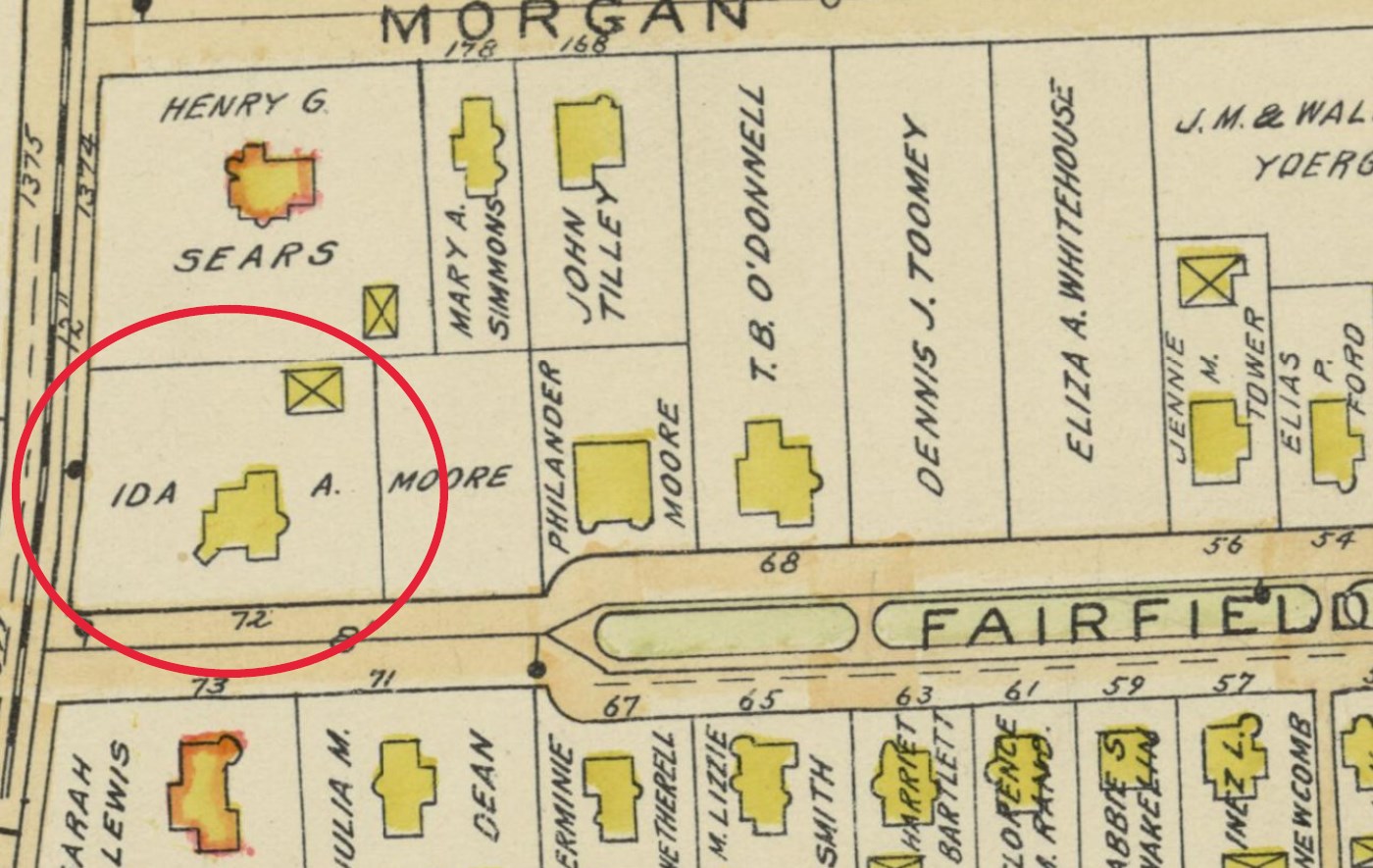
This elegant street was developed in the Highlands neighborhood in the late 19th century as part of the city’s expansion. It was known for its landscaped central greenbelt, park-like setting, and distinguished homes constructed between the 1880s and 1910s. Today, the road still maintains a parkway and features remarkable historic homes, many of which retain their original beauty.
The Transcript Telegram in 1883 stated that Daniel O’Connell is grading Fairfield Avenue from Northampton Street to Pleasant street [sic], parallel and north of Lincoln street [sic]. The land in that vicinity is owned by Rosewell M. Fairfield and James F Allyn and the opening of this widestreet [sic] will put serval find building lots in the market. Leslie B. White was also instrumental and owned a significant amount of property here as well.
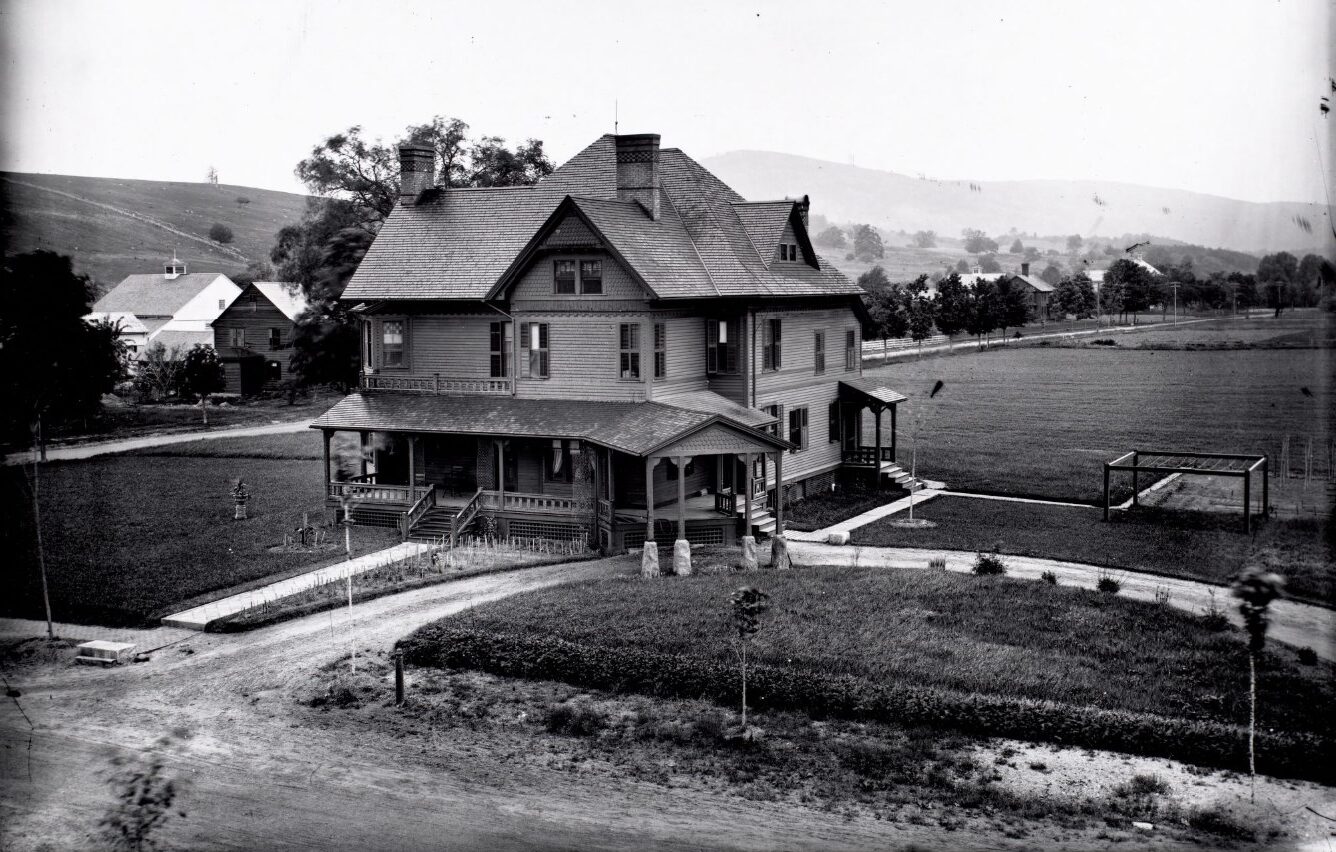
In a newspaper article on July 14th, 1884, it stated that Fairfield Avenue is now open for public travel. Built on the corner of Fairfield Avenue and Northampton Road, Roswell Fairfield constructed a large three‑story Queen Anne, designed and built by Fairfield. The house faces Fairfield Avenue, and the road visible in the background running behind the house is Northampton. The property behind the house would later become the home of Esleek.
Fairfield Avenue would be constructed directly across from the home of William Prentiss. Fairfield owned many of the plots and sold several homes that included electric bells and electric gas lighting. Electric gas lighting sometimes refers to lamps that had been wired with electric switches to electronically spark the gas light using wall-mounted controls.
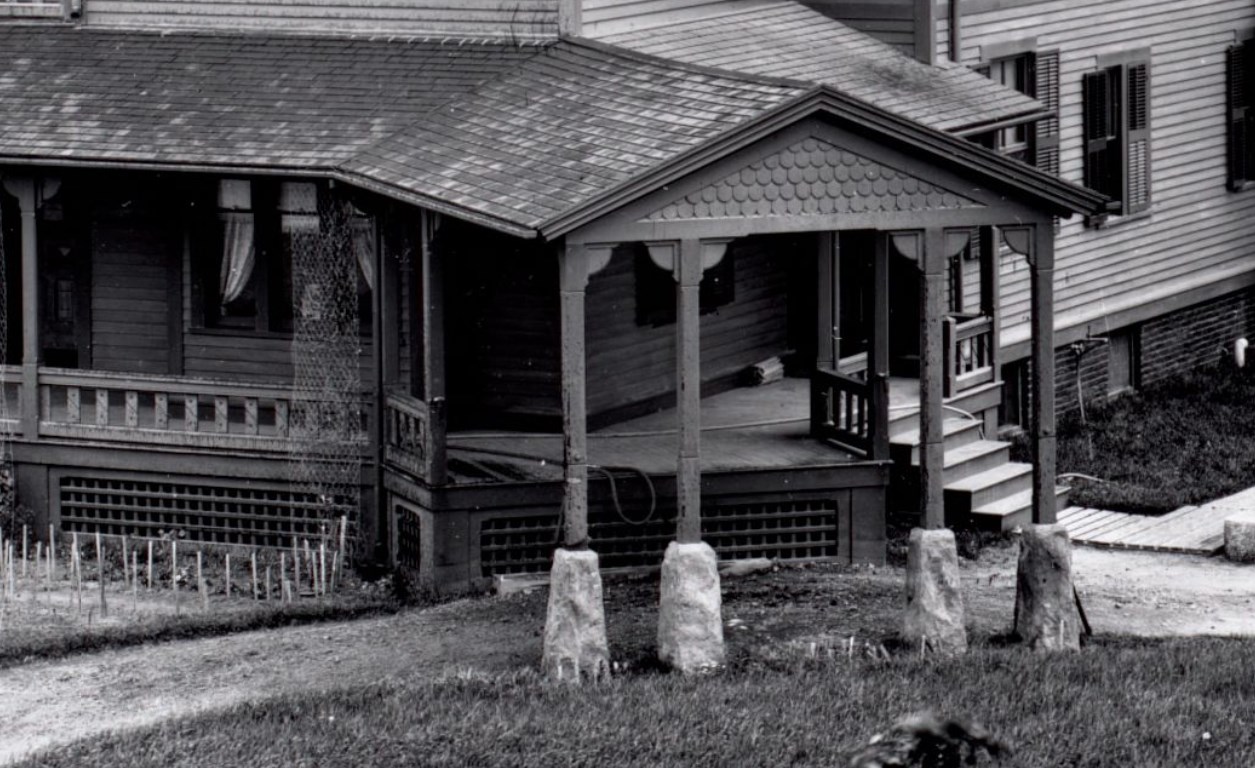
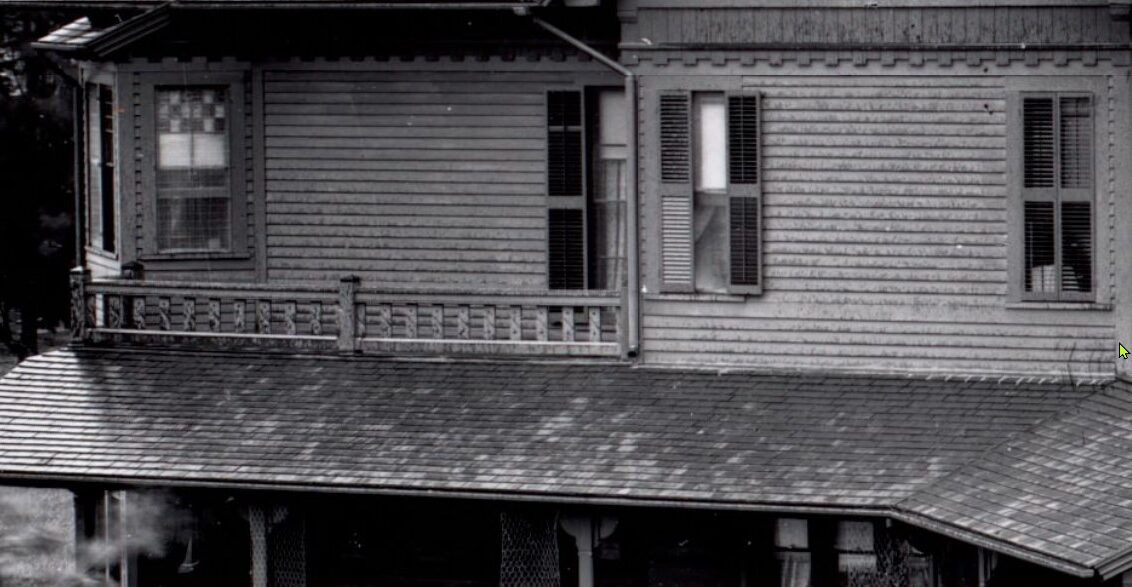
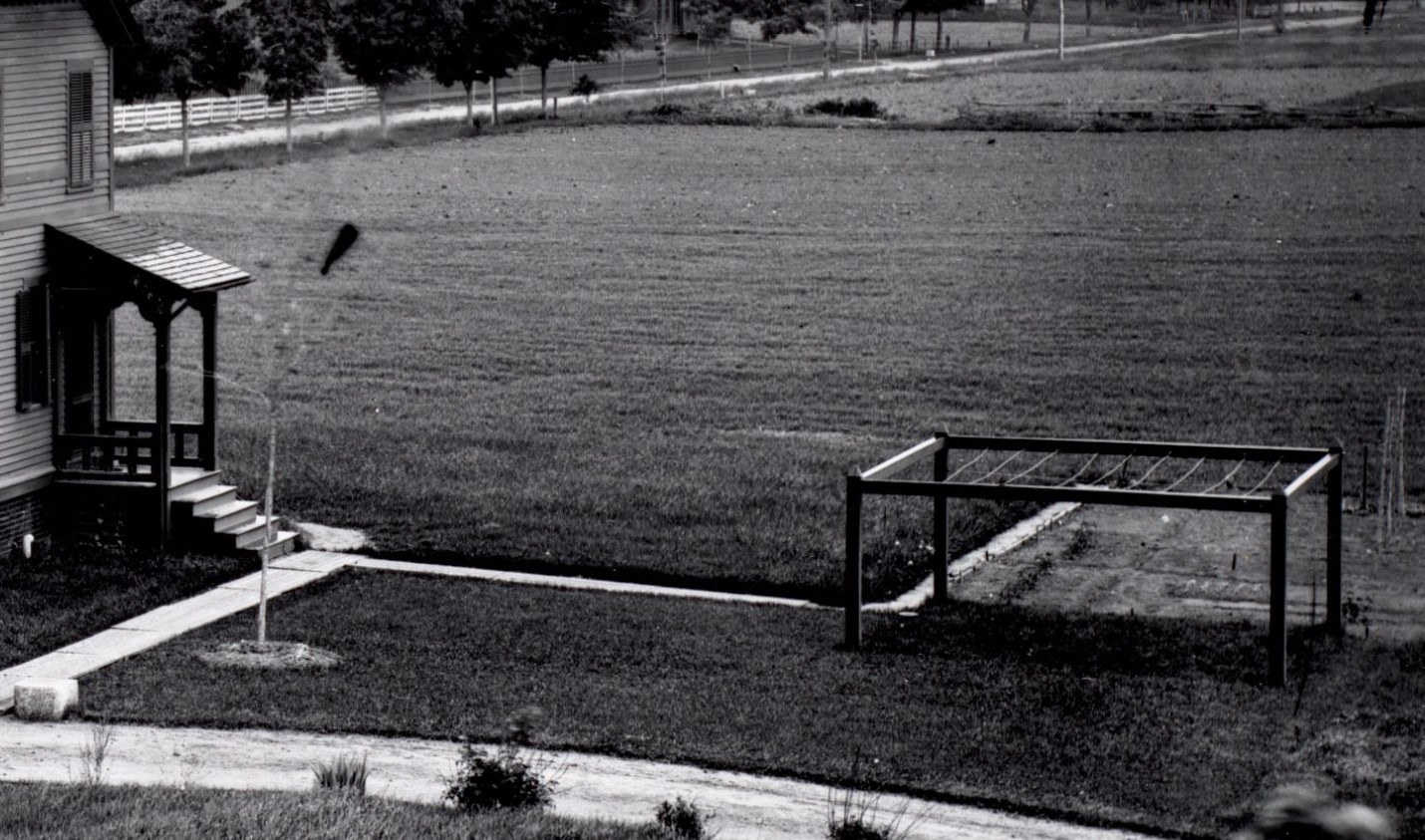
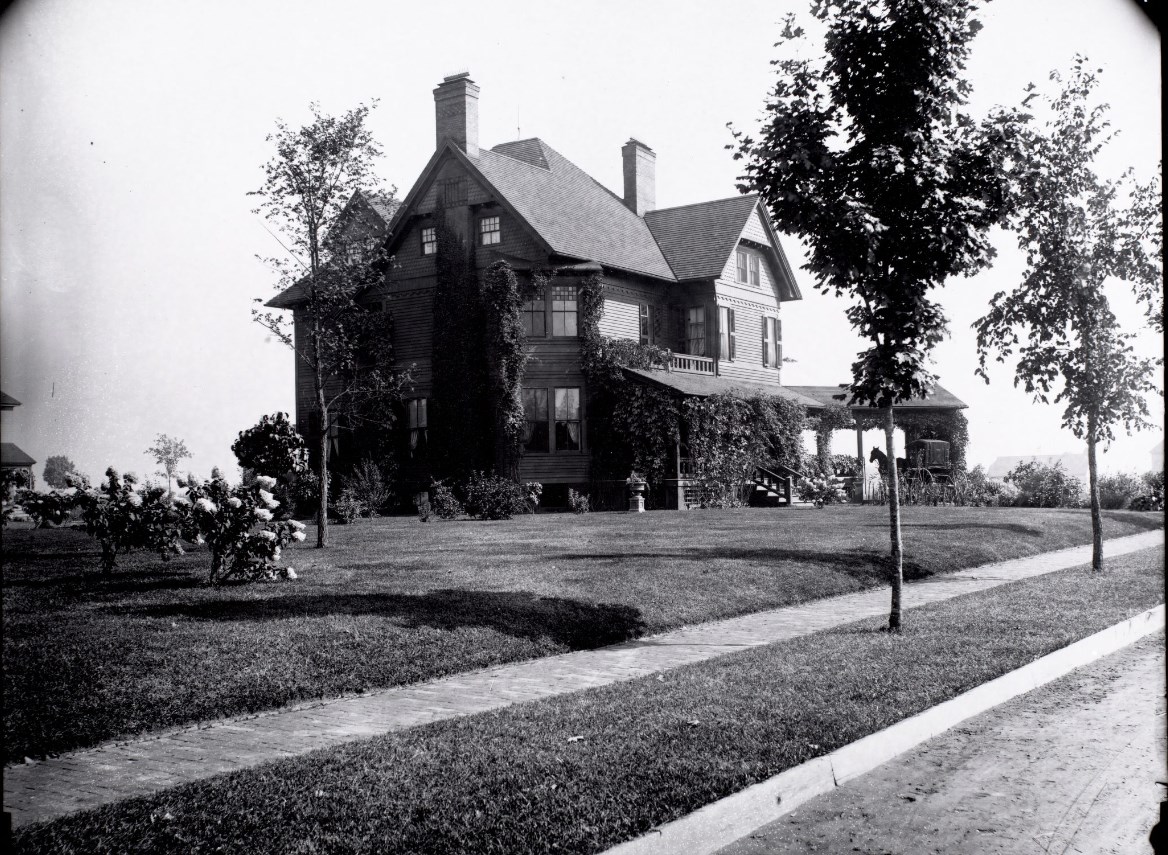
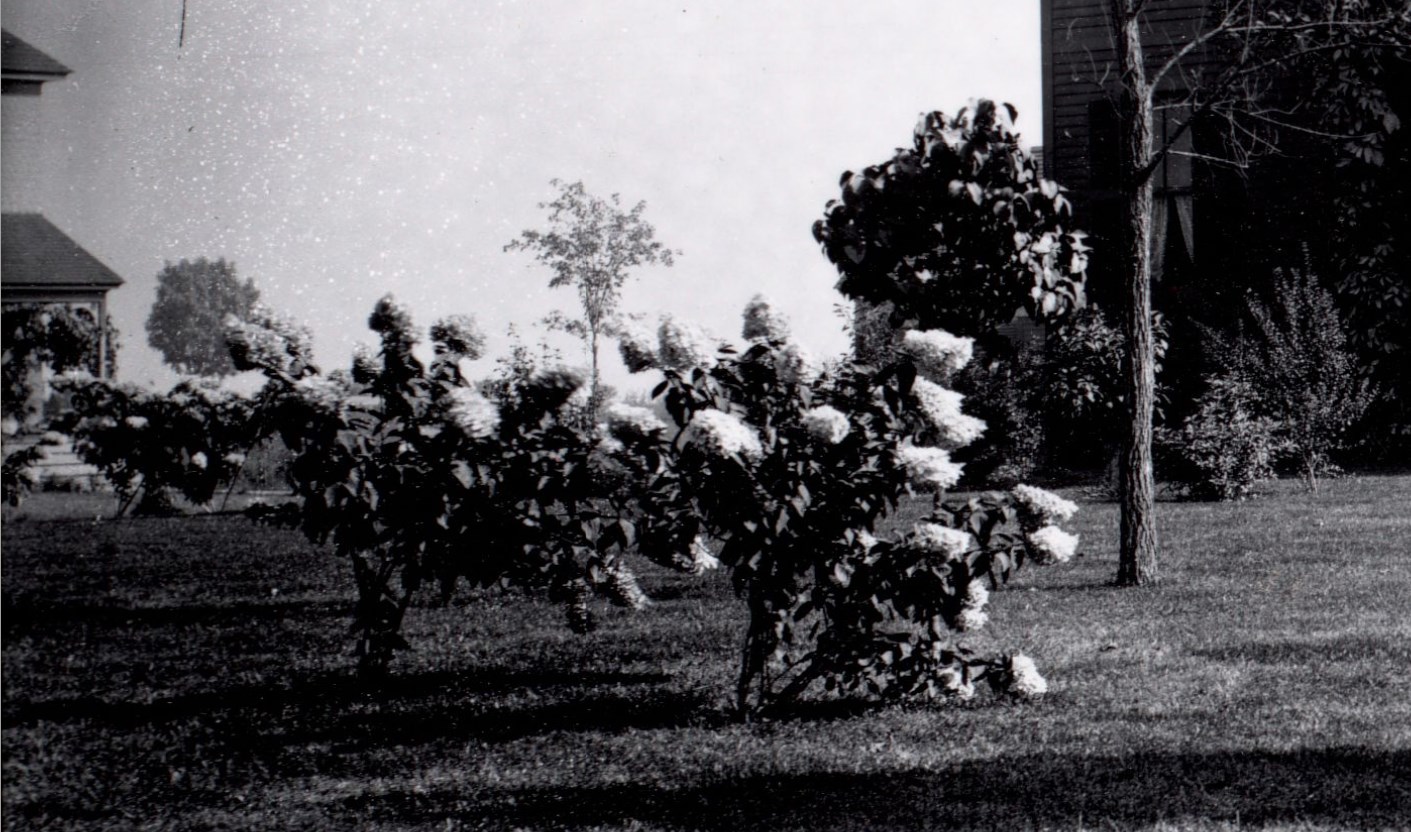
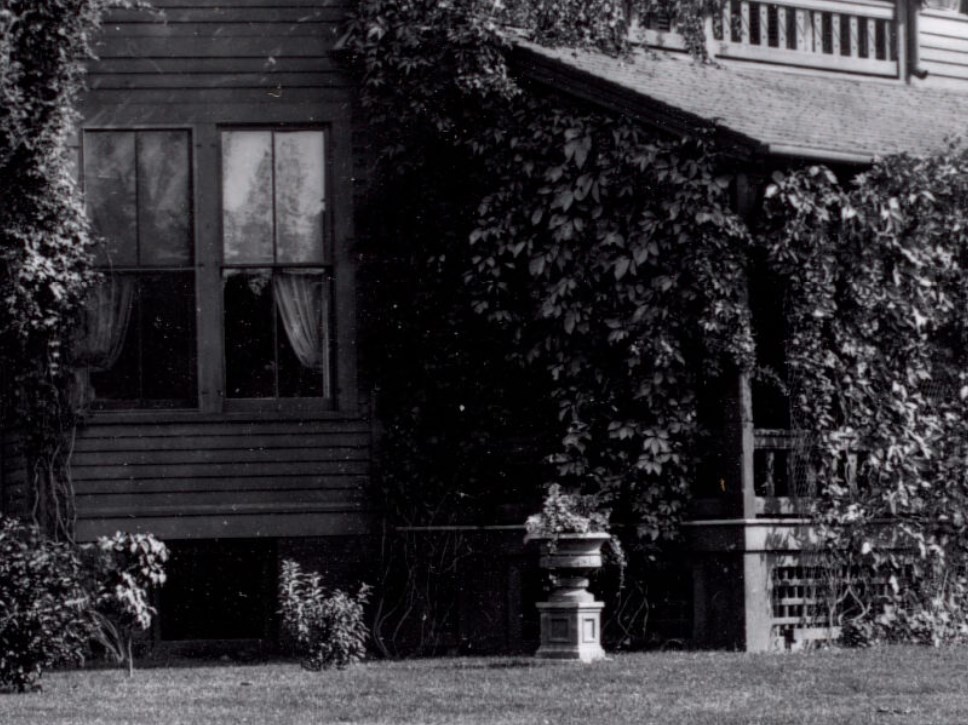
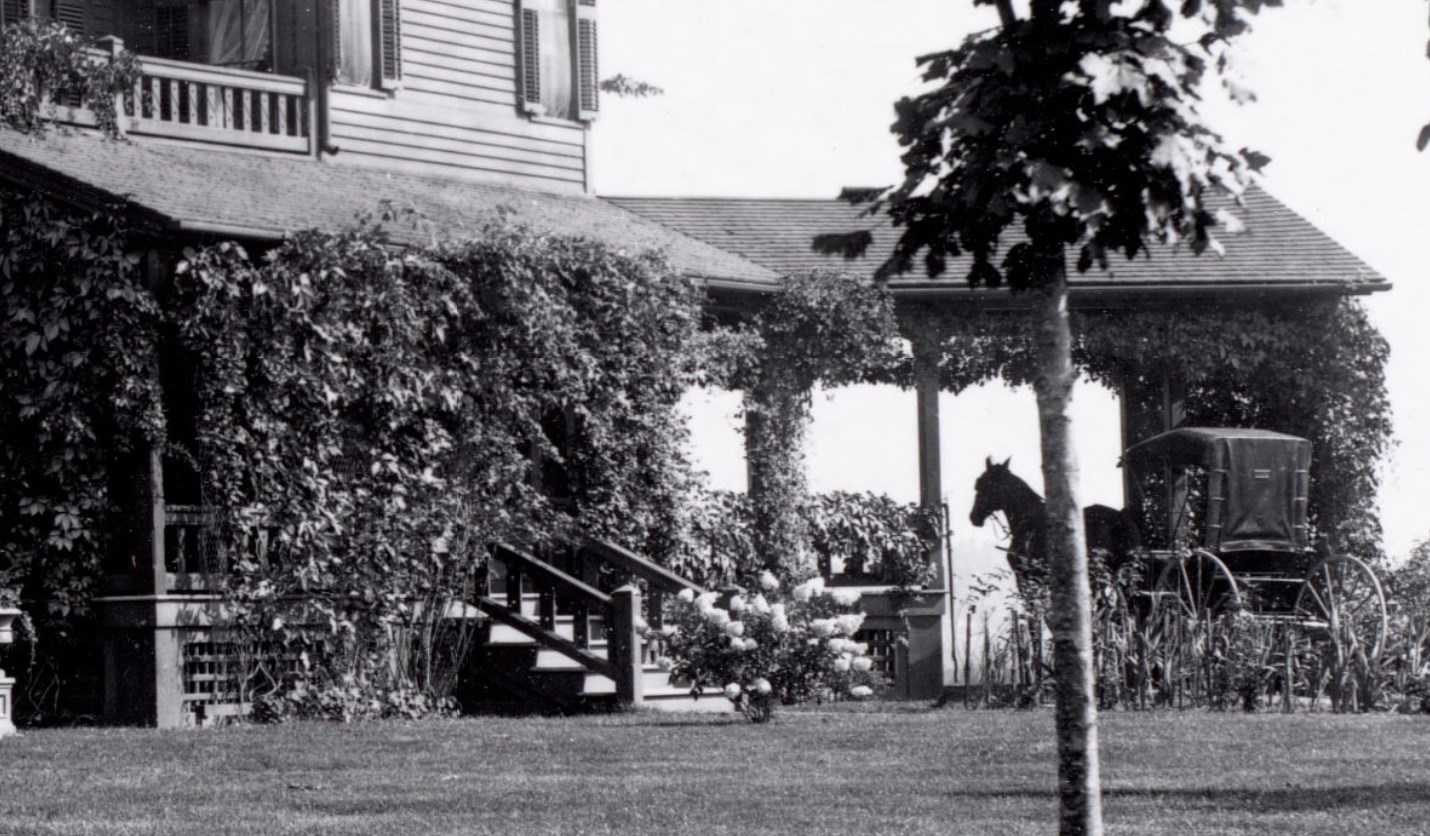
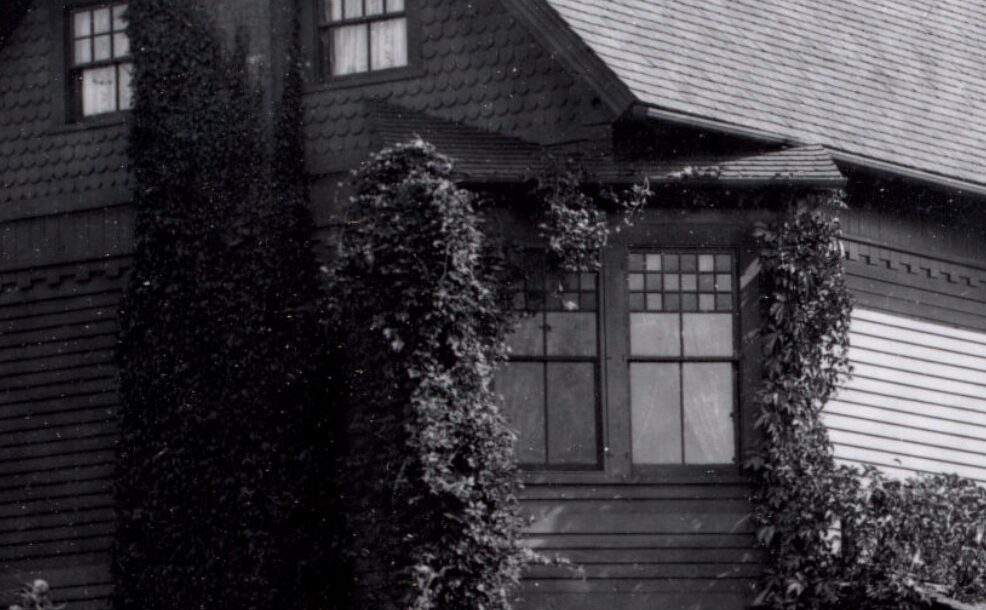
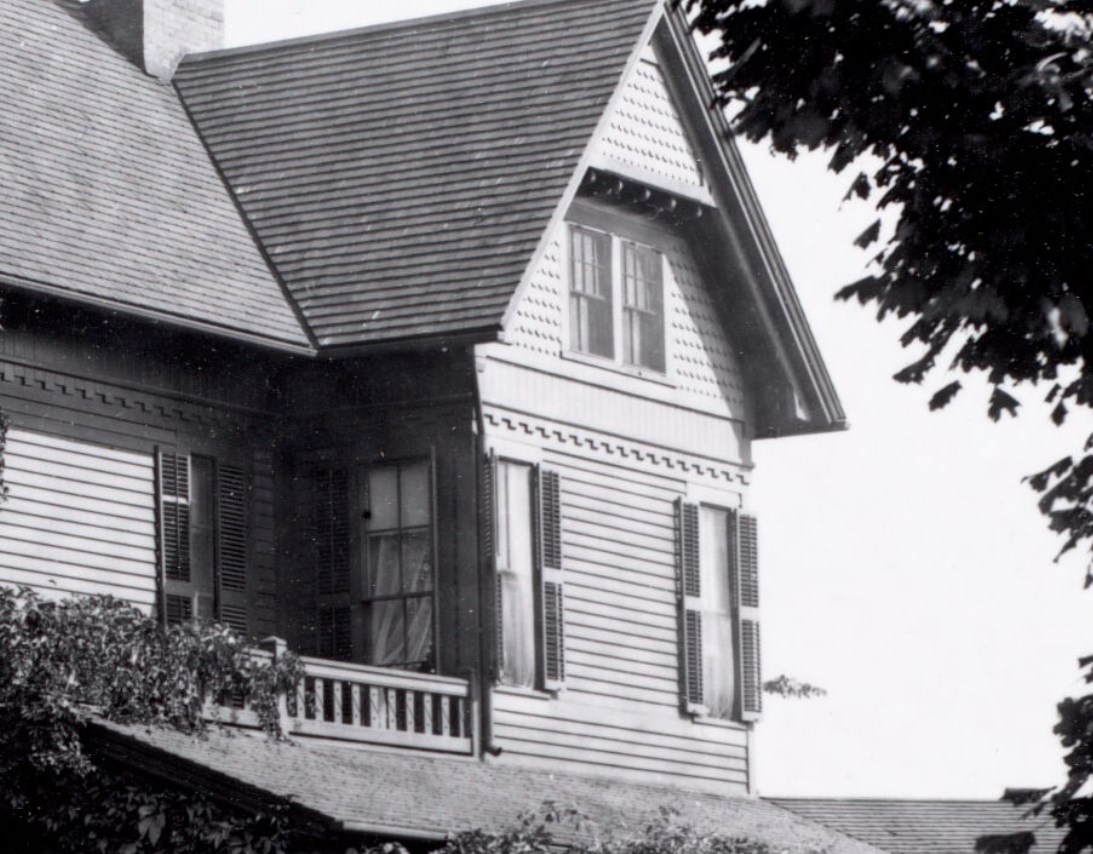
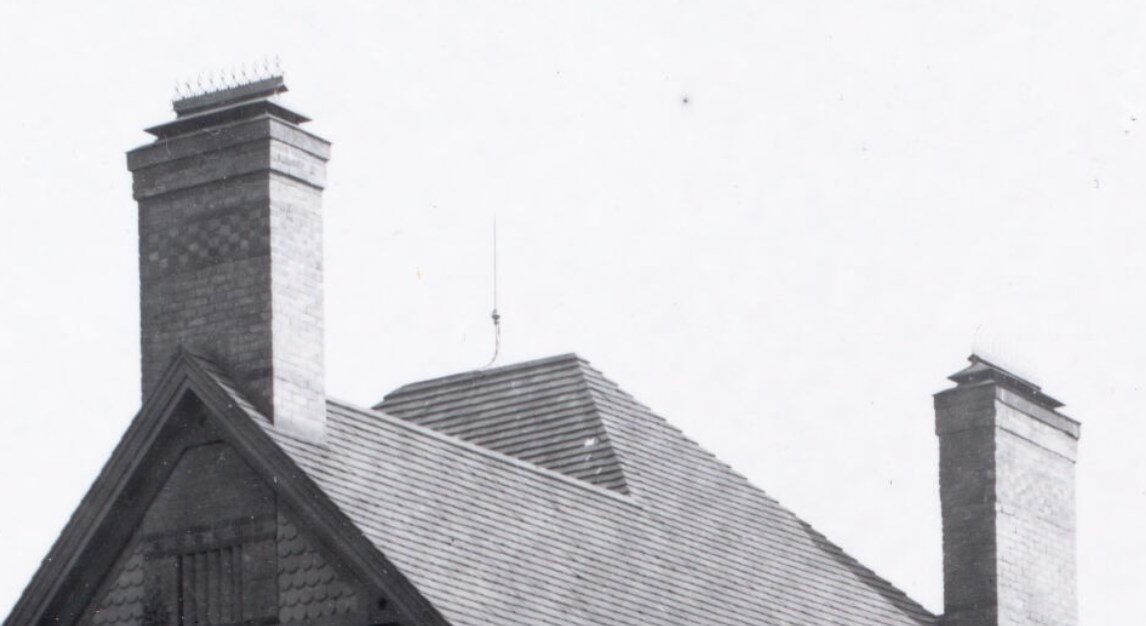
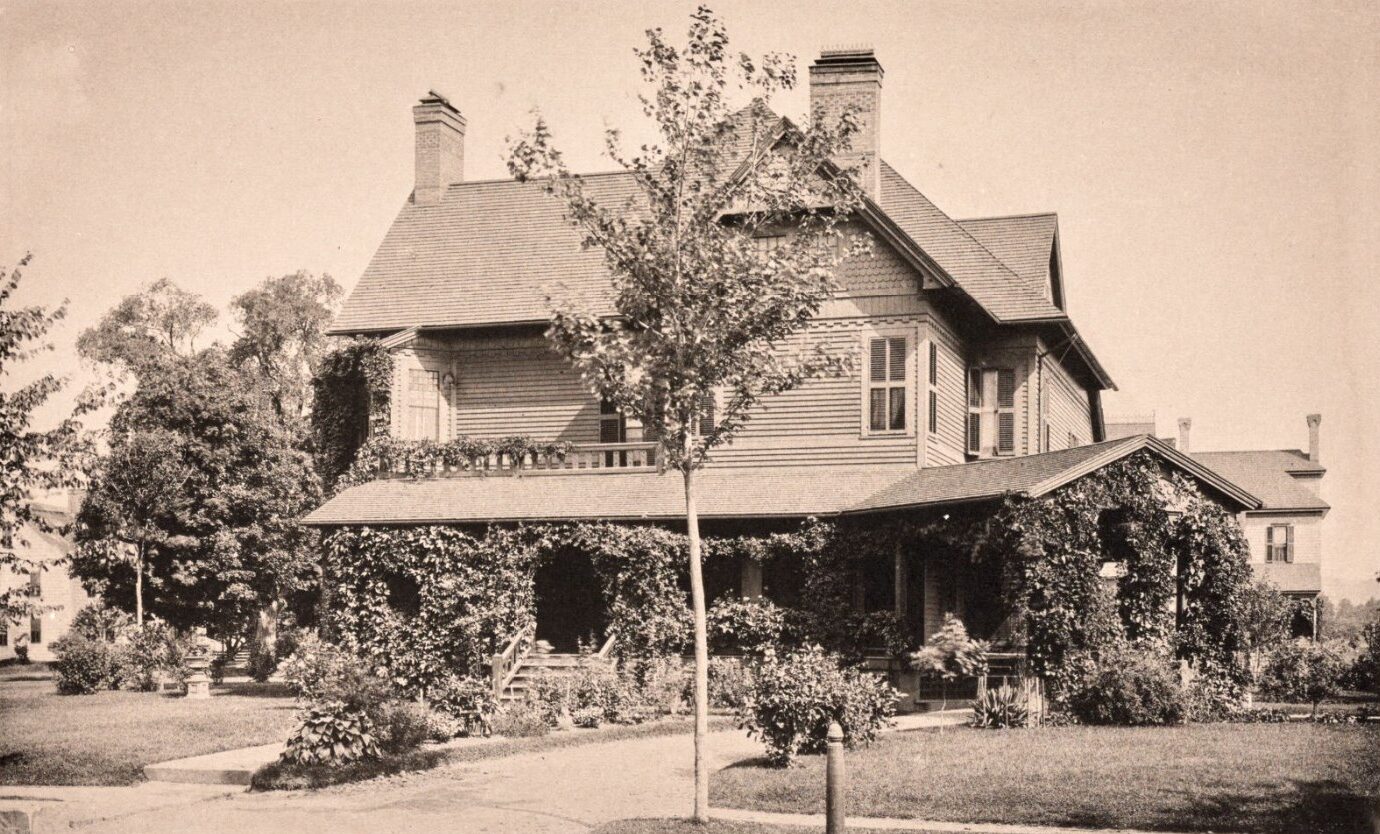
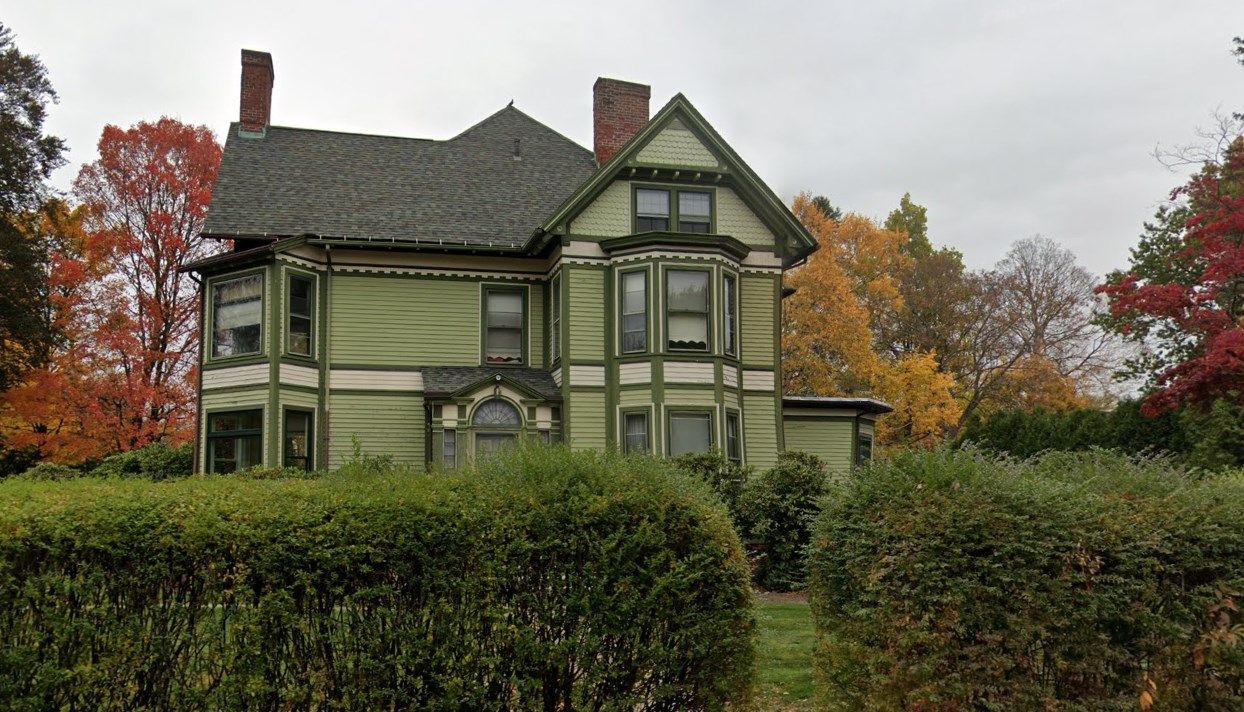
The house still stands today, painted in historic colors and retaining much of its original exterior woodwork. Unfortunately, it has lost its large porch or porte-cochère, but the rest of the home still stands proud.
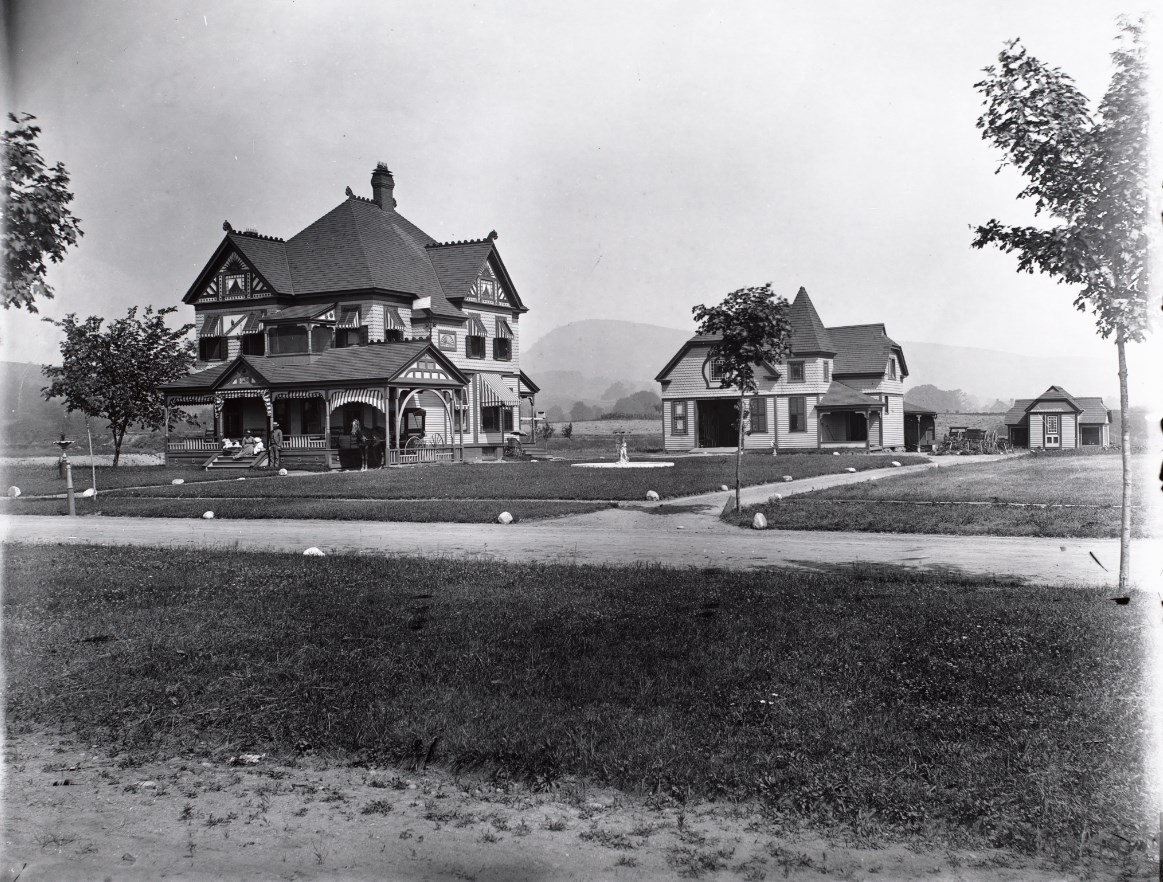
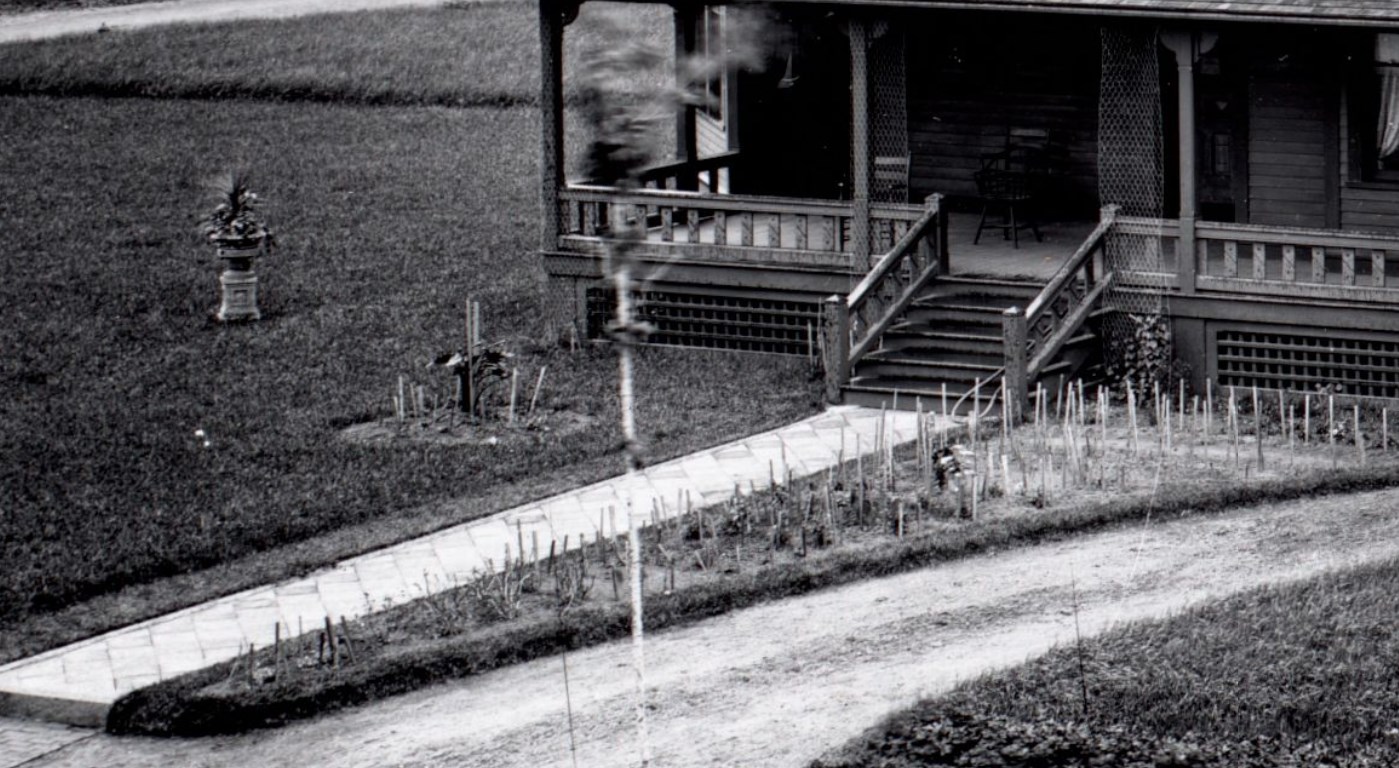
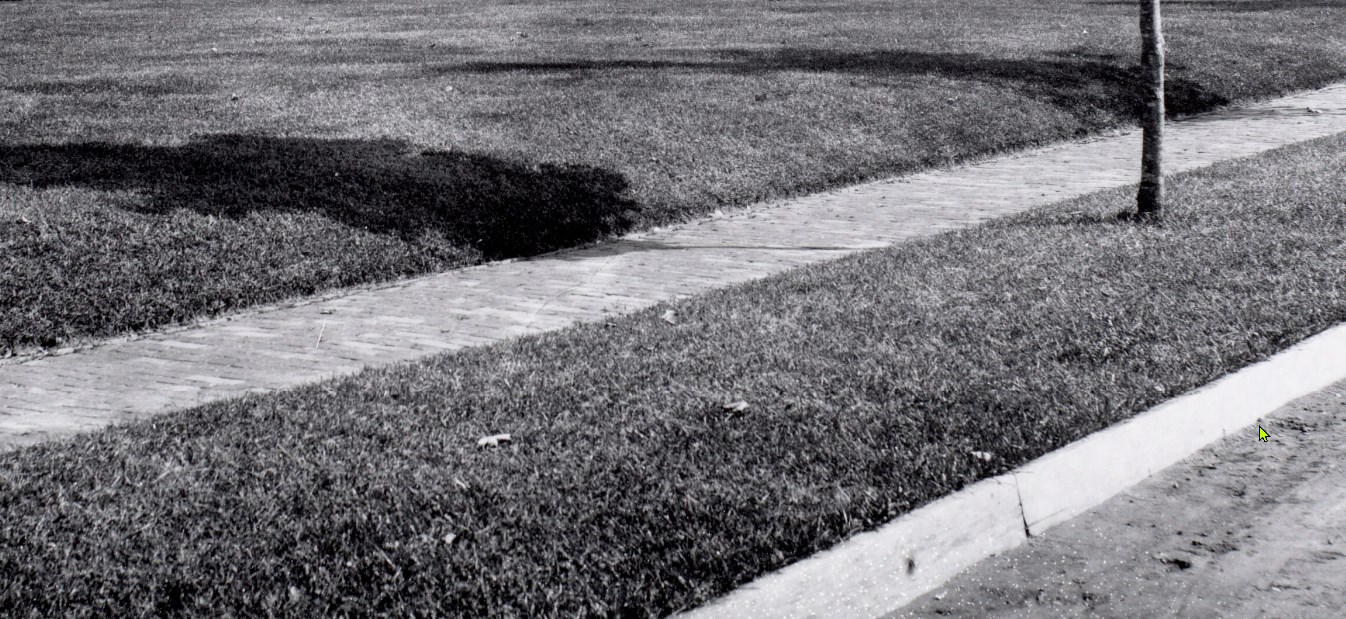
Leslie B. White, a local contractor and carriage dealer, was the original owner and lived there from its completion until at least 1895, before relocating to 31 Fairfield Avenue by 1896. In the foreground, we see the median of Fairfield Avenue. White was heavily involved in the development of this street. In 1886, in an article titled A New Boulevard, he is said to be the contractor and builder who owns nearly all the land on this avenue, and he will make the most of his opportunity, turning it into an attractive spot.
This photo may have been taken before the house was fully completed and is the earliest known photograph of the home.
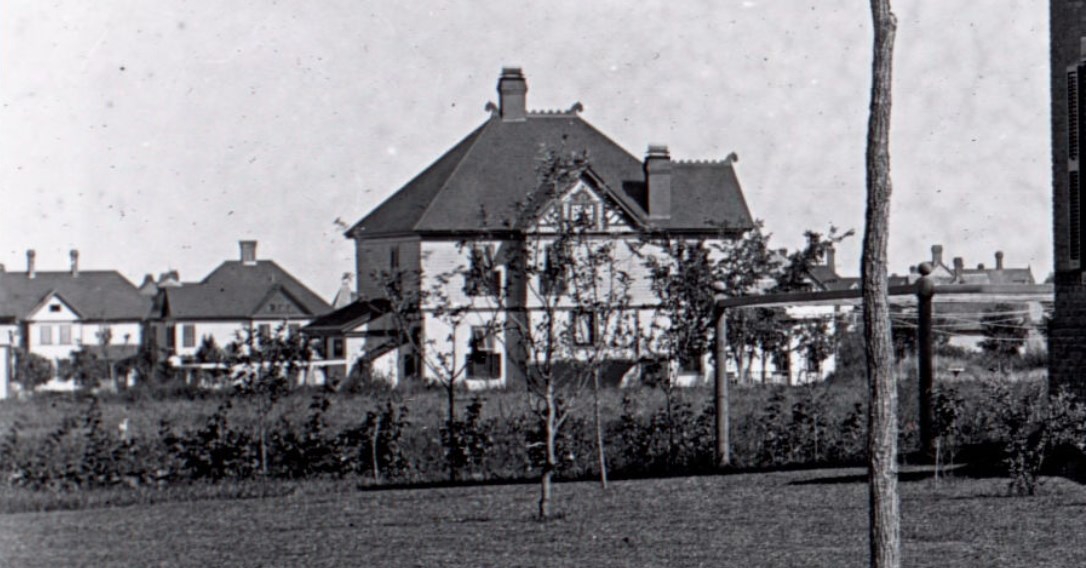
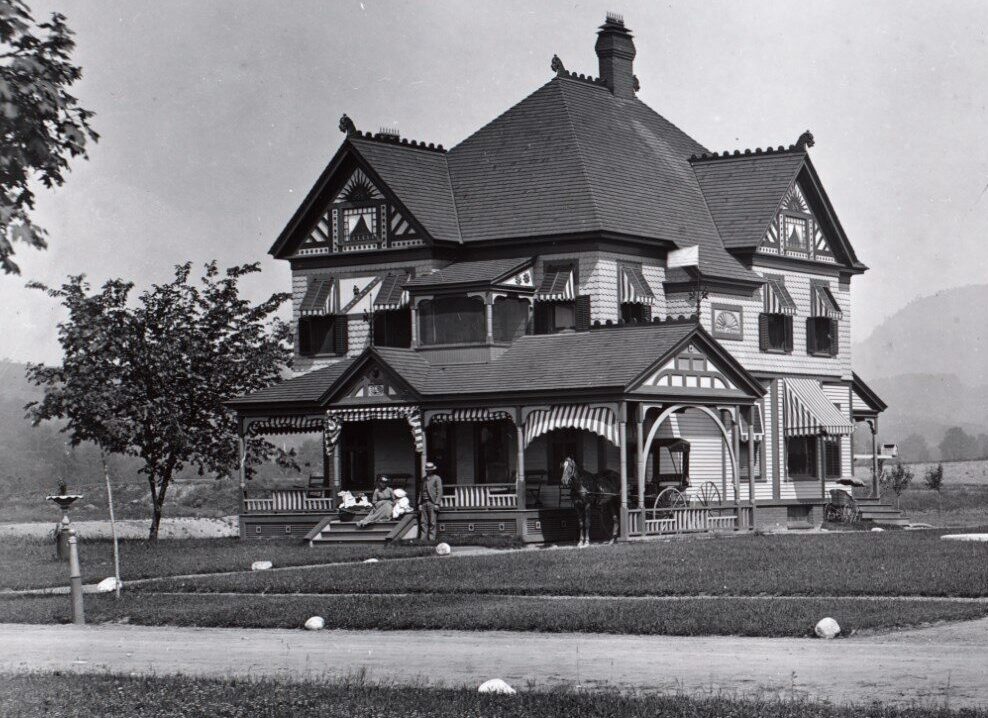
The grounds of the property appear to be lined with large, light-colored stones.


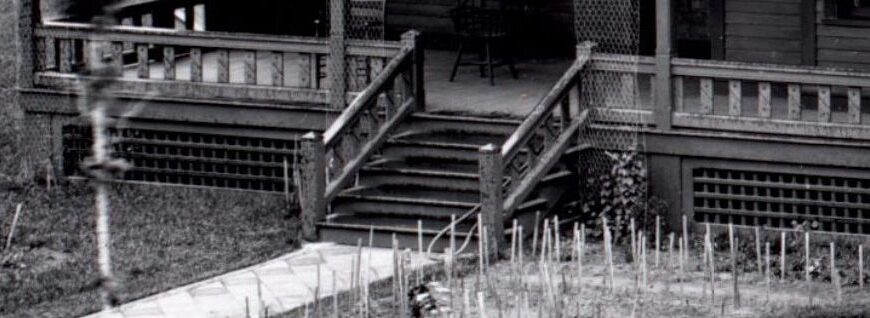
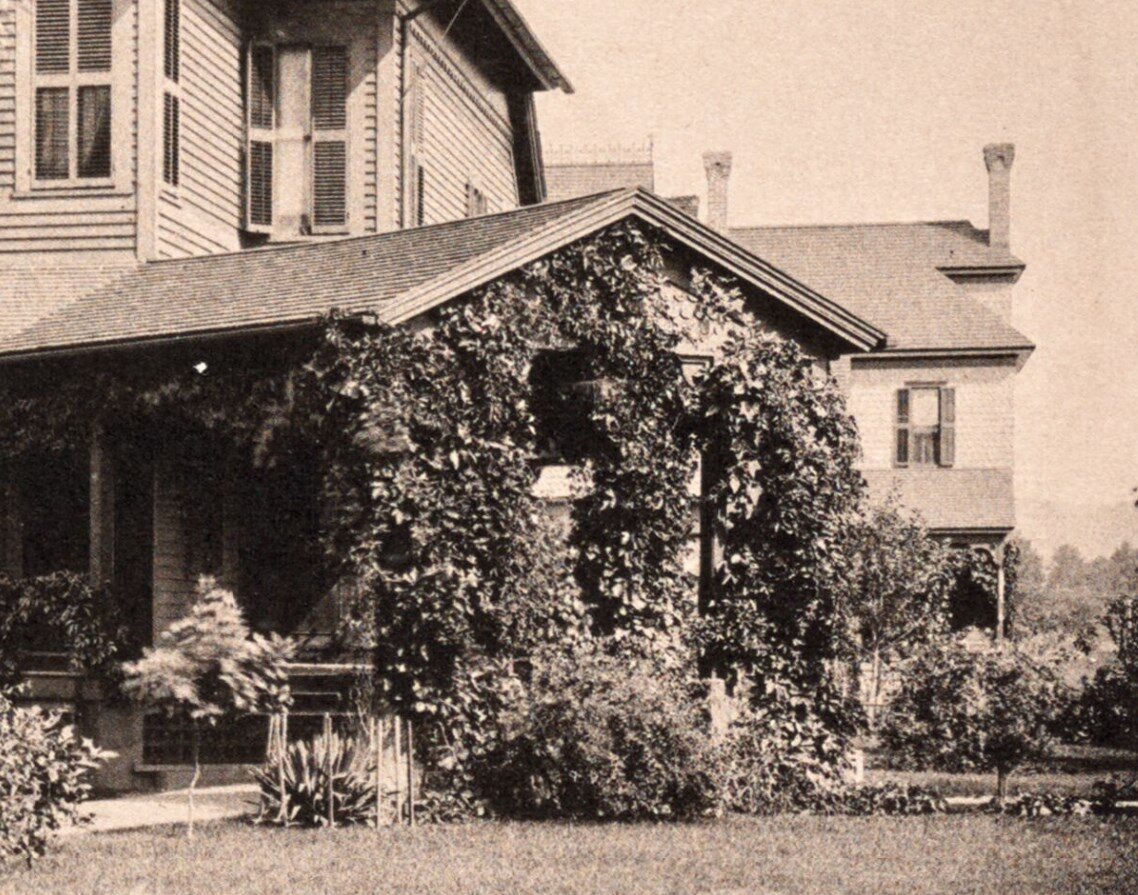
Can you identify what is on the back porch?
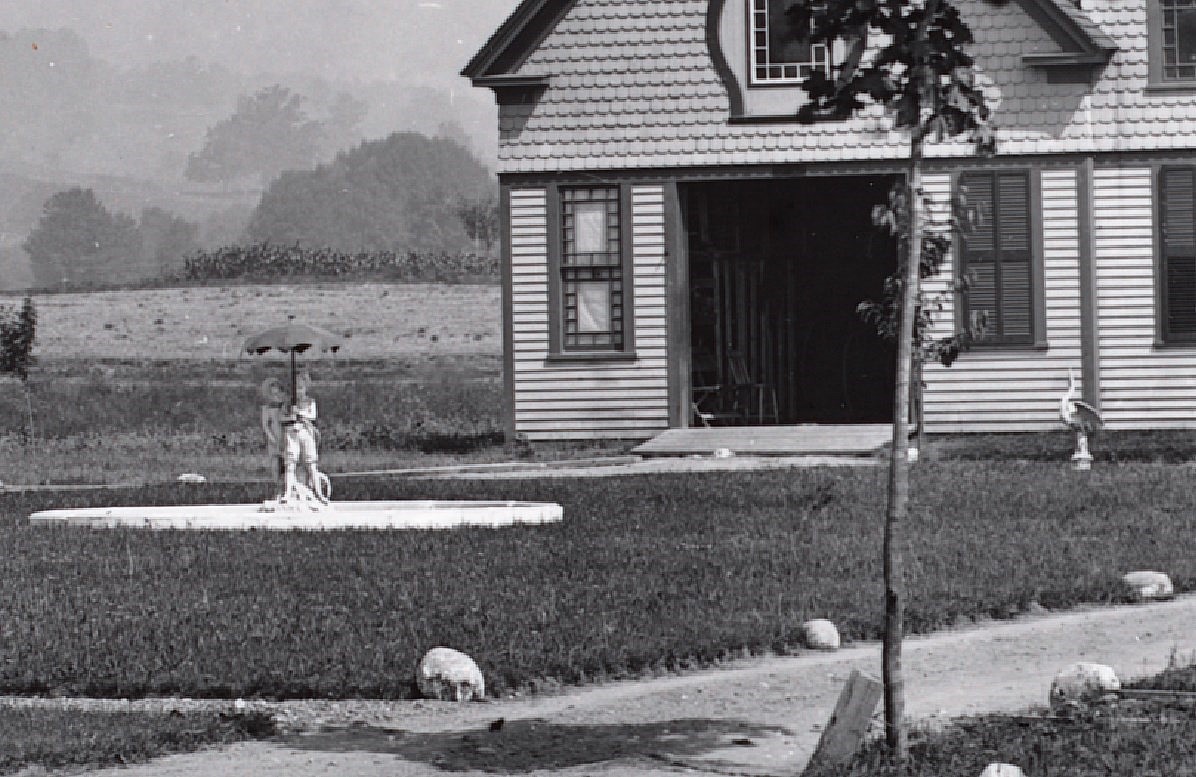
The side yard, enclosed by the circular driveway, features a large statue of two children holding an umbrella.
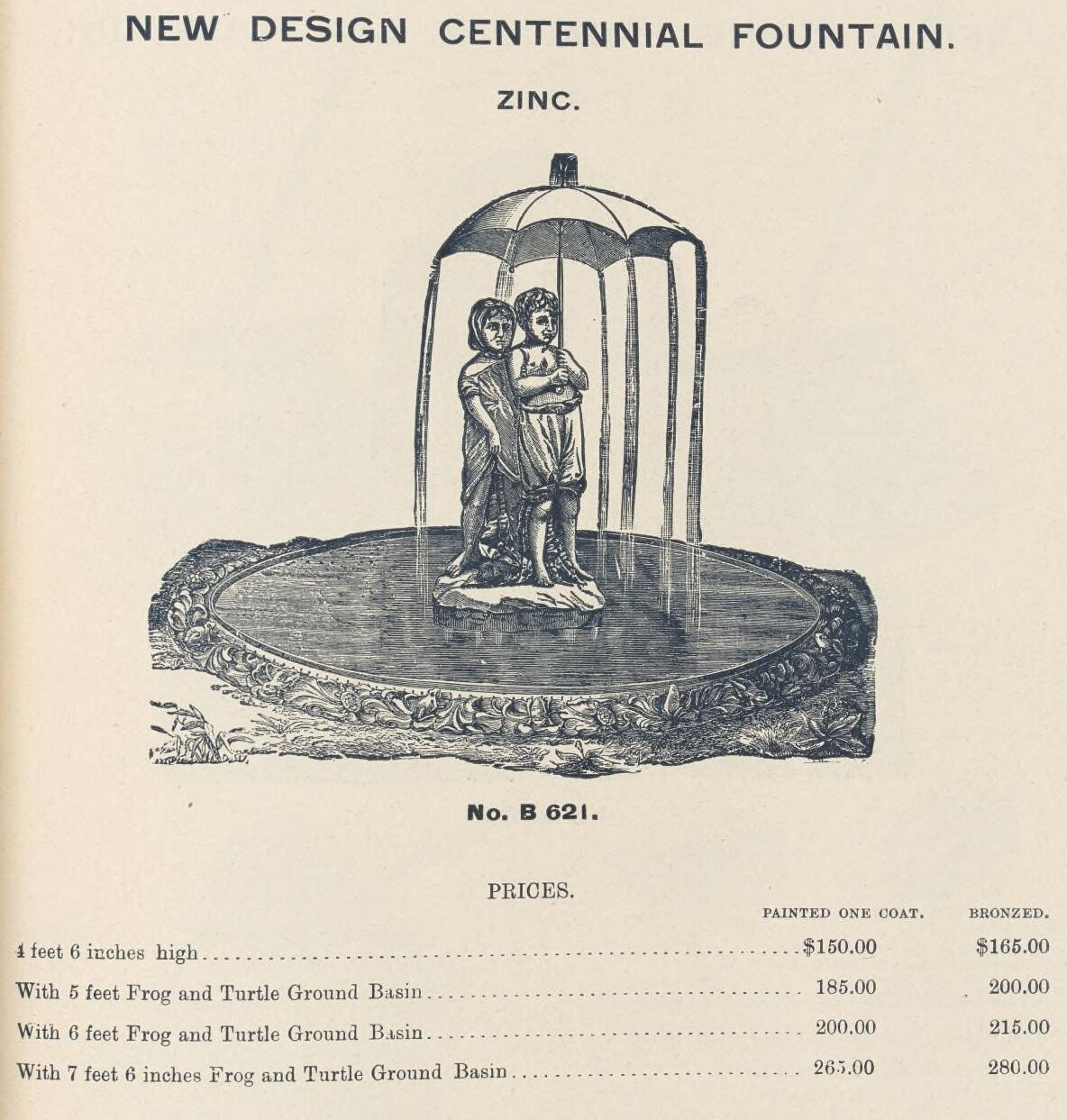
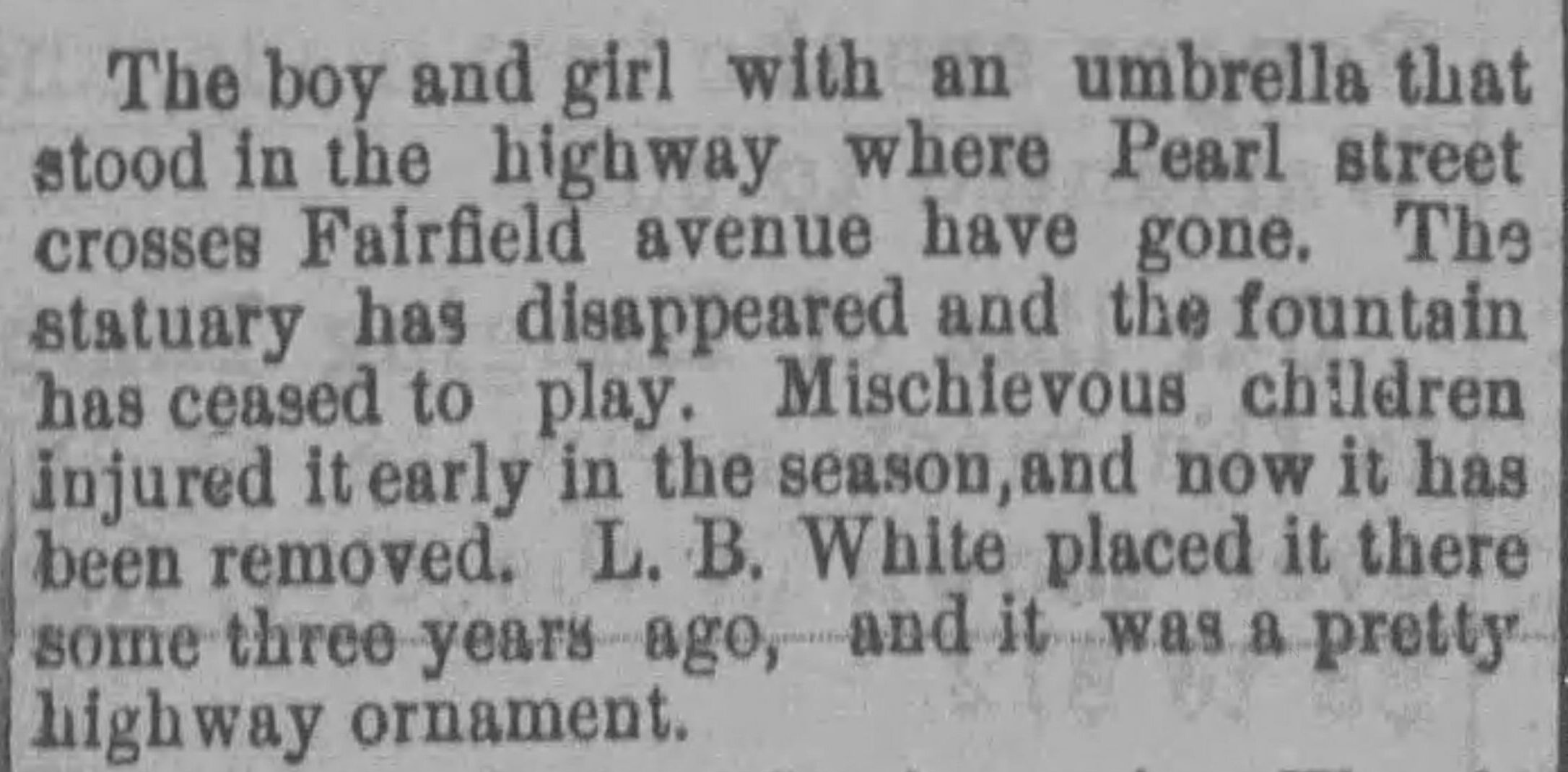
In 1886, the Transcript Telegram published an article stating that some children had damaged a fountain Mr. White had installed, featuring two children holding an umbrella. A few months earlier, another 1886 article noted that the pretty fountain with which L. B. White ornamented the junction of Pearl St. and Fairfield Avenue has not been properly cared for. Children have rights, but the liberty to destroy fountains is not a right for anyone. The house was said to be constructed in 1888. Is this the same fountain that now sits on his lawn a few years later?


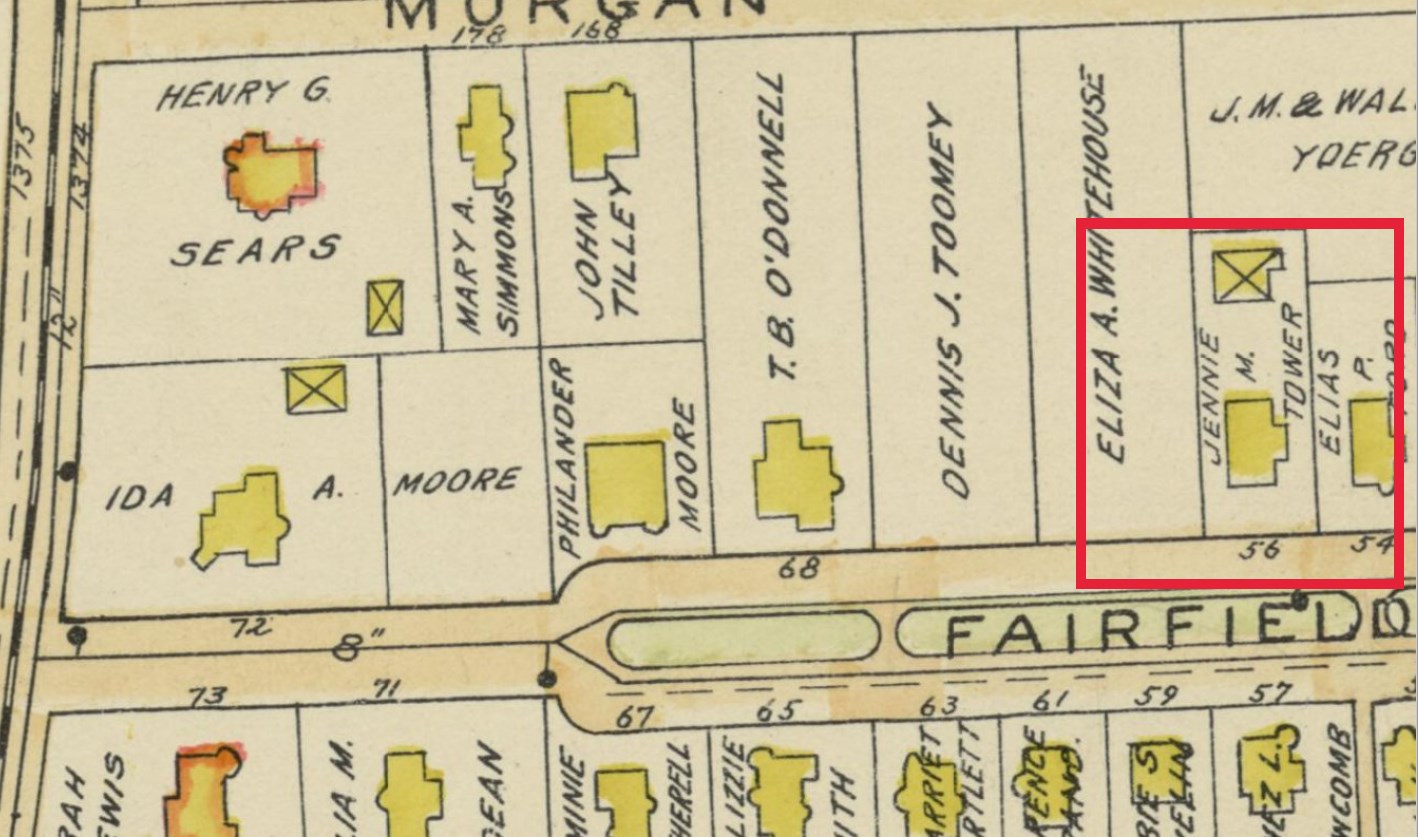
Sometime in the early 20th century or late 19th century, the property was subdivided and sold off for the construction of other homes. At this point, the carriage house was moved behind the main house. John F. Knightly, a slate roofer, is documented in the 1900 census at this address. He lived there with his wife Maria and their young children. After that, the Towers family.
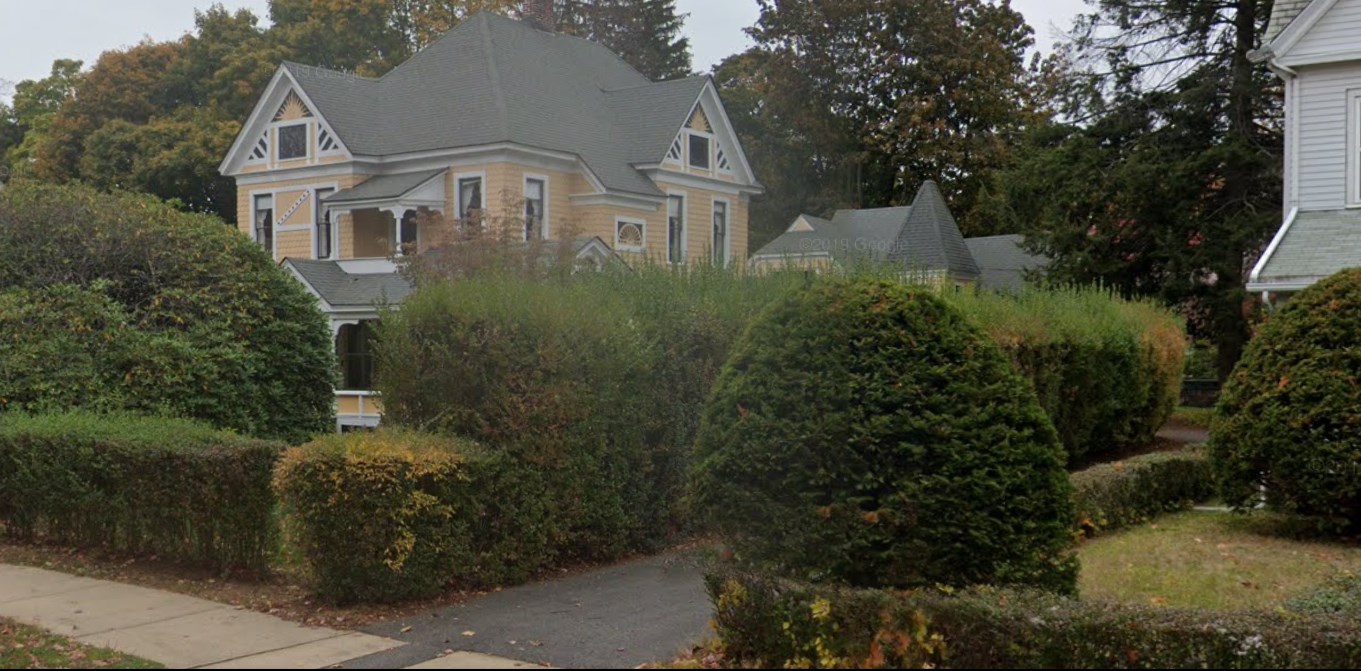
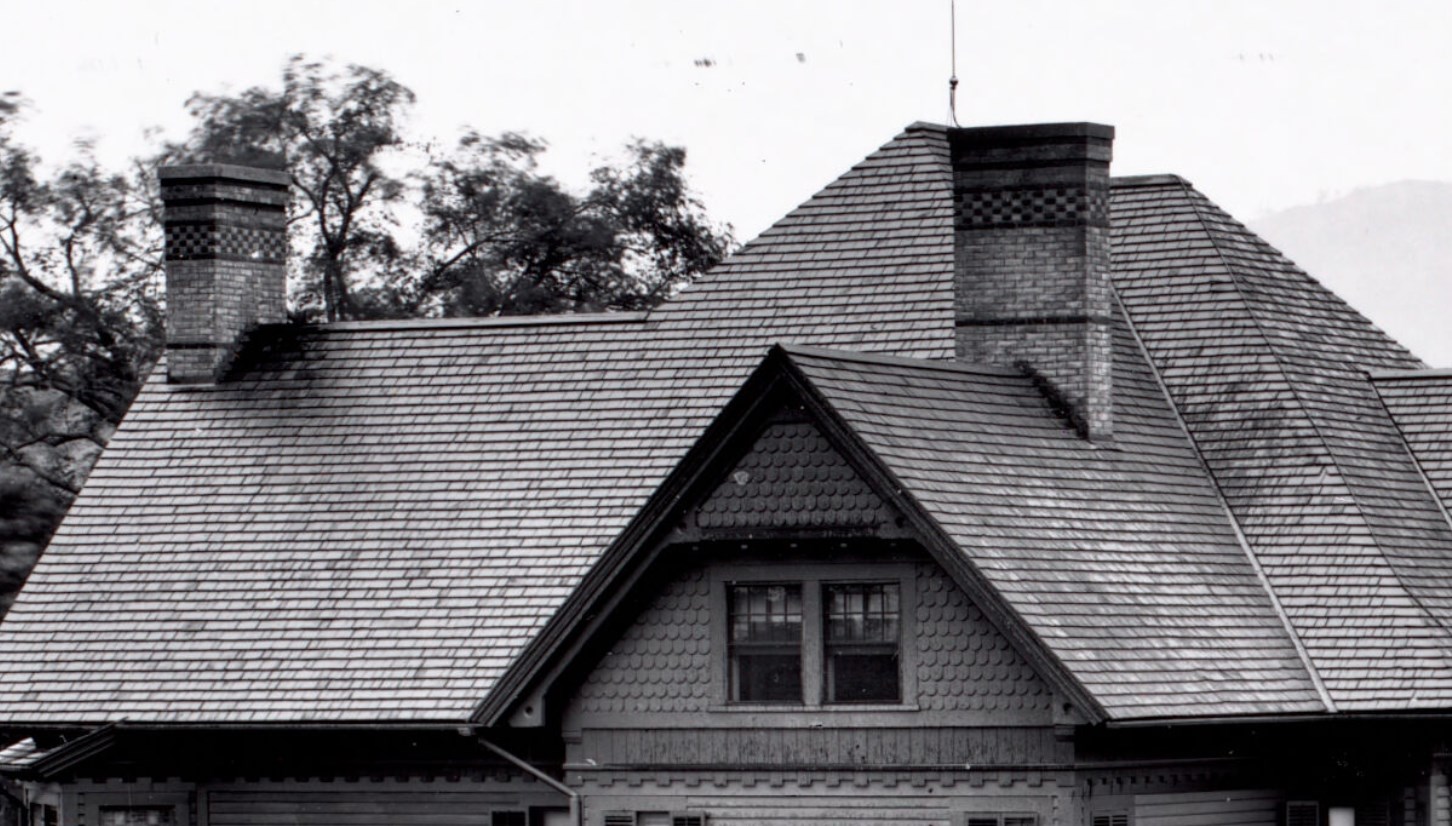
By 1911, the home was owned by Charles H. Tower, a traveling salesman and later manager of an asbestos mill. He lived there with his wife Jennie and remained in the house until his death in 1941. Remarkably, this is another home that still stands and appears to be largely intact. Sadly—but not surprisingly—the roof ridging with its animal heads has been lost to time. Here, you can also see that the original carriage house still exists.