Cabinet Card Mystery Furniture!
While some people quickly look at the usually serious faced people of these old 19th century cabinet cards, there is a lot more you can learn from these photos. For example, for all of the collectors or lovers of furniture from this era, we often use cabinet cards not only look to at the people and their close from the past, but the furniture around them. Often times you see people standing next to, or sitting on chairs or sofas. By the 1880s, photography was widespread and very affordable for all classes of people. But looking closer, have you ever wondered why however you've not been able to find some of the furniture you see in these photos, in any museums, flea markets, antique stores, or even tag sales or if you're a researcher like myself, some of the ones we see so often in cabinet cards don't exist in any furniture catalogs or photos of warerooms in cities? There is one simple reason why. They were actually manufactured for photographers' studios only. Yes, you read that correctly.
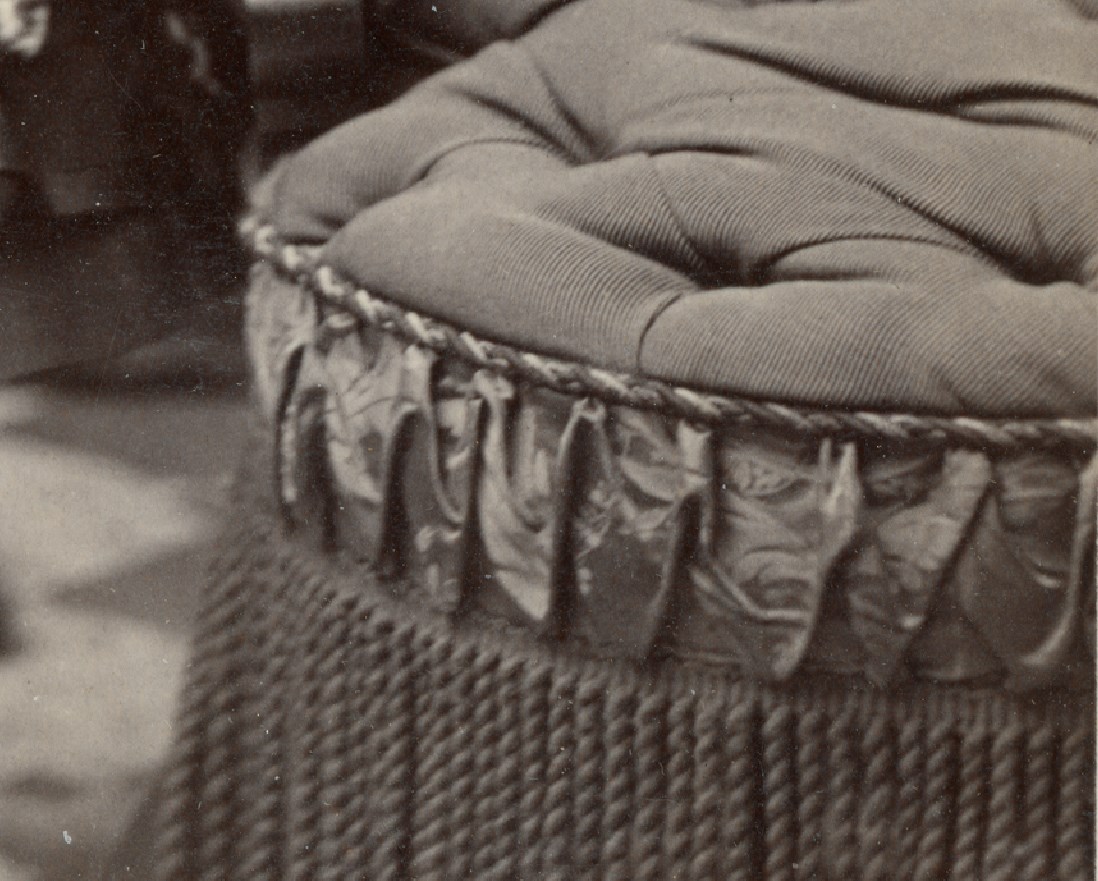
We shouldn't forget about the more common furniture from the period we see in the photos either however as they are a wonderful resource about how furniture was covered and upholstered. This is a wonderful guide if you're looking for ideas on how to reupholster an historic chair properly.
Quick History and key developments that contributed to affordability:
-
- Daguerreotype Studios (1840s): Studios opened in major cities, offering quick and relatively inexpensive portrait sessions compared to painted portraits. By the 1850s, a daguerreotype portrait could cost as little as a few dollars, equivalent to about $50–$100 today.
- Ambrotypes and Tintypes (1850s-1860s): These processes were cheaper and faster than daguerreotypes, further reducing the cost of portrait photography. $0.25 to $1 (equivalent to about $8–$30 today).
- Carte de Visite (1850s): Small, wallet-sized photographic prints became highly popular and affordable, allowing people to share portraits with family and friends. $1 to $3 per dozen (equivalent to about $30–$100 today).
- Cabinet Cards (1870s): Larger and more detailed than carte de visite, cabinet cards were also reasonably priced and widely available. During this time the cost was around $2 to $5 per dozen (equivalent to about $60–$150 today).*
*We will be studying the cabinet cards today.
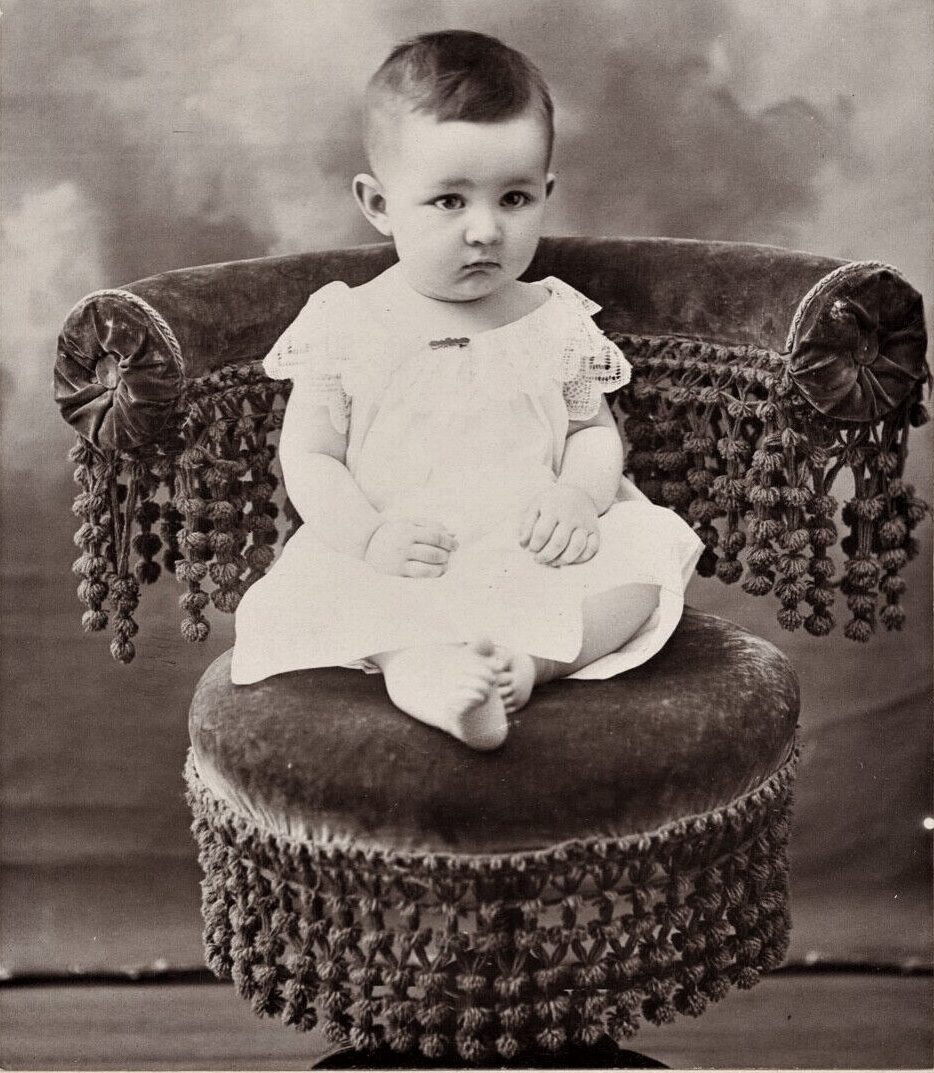
This is a very common chair seen in photographs of the late 19th century. This isn’t a chair you’d typically find in people’s homes. It is officially a photographer’s chair with an adjustable back, detachable arms, and other features designed for studio use.

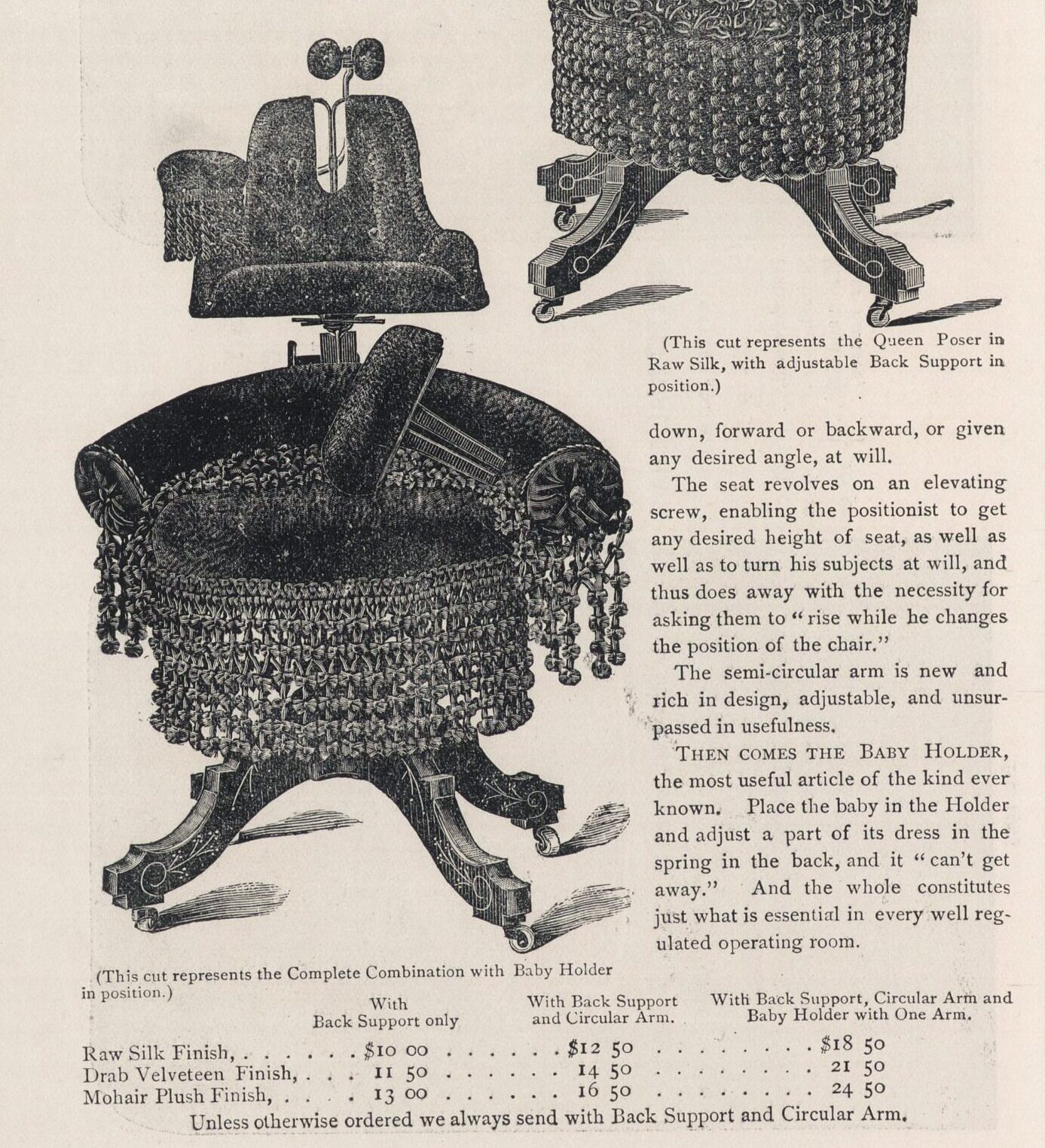


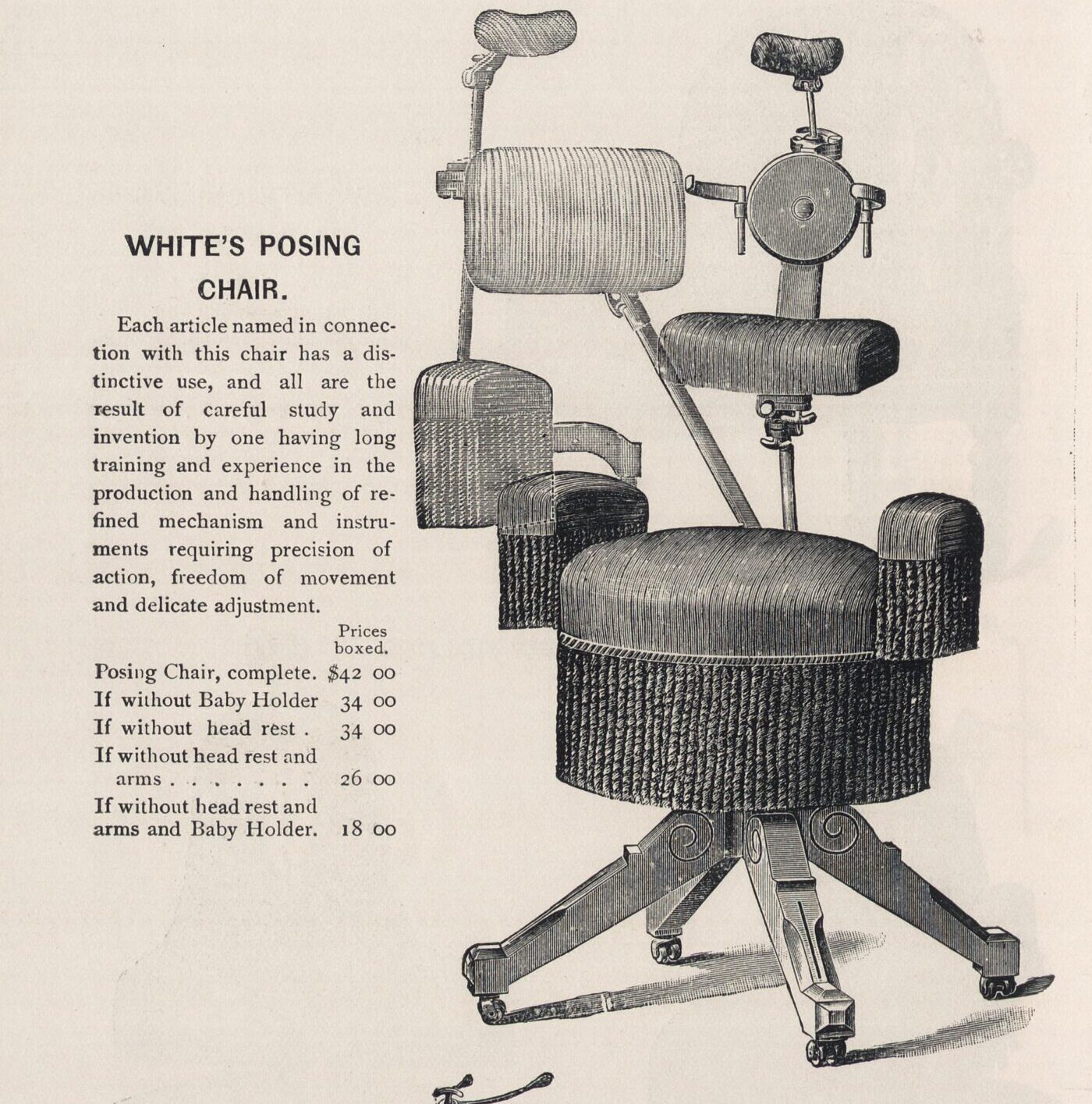

This chair features a back that can be removed and replaced with other types of backrests or repositioned, as well as arms that could be detached. Here is an advertisement for the Bowdish Chair. You can see that it offered a curved, fully tufted solid back option or a single adjustable fringed backrest as a replacement.


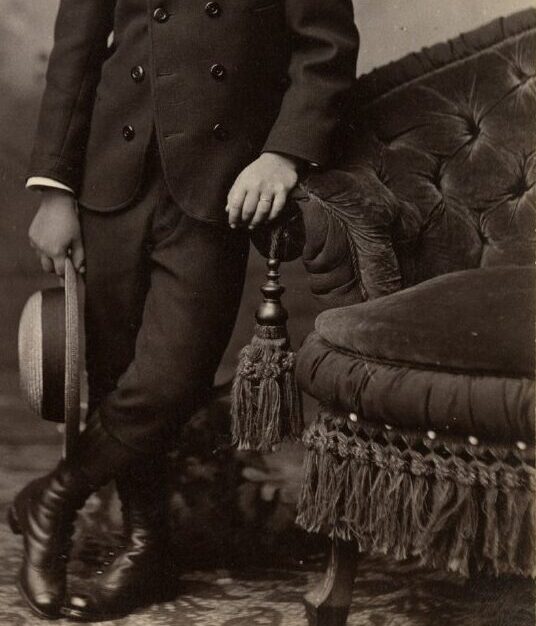
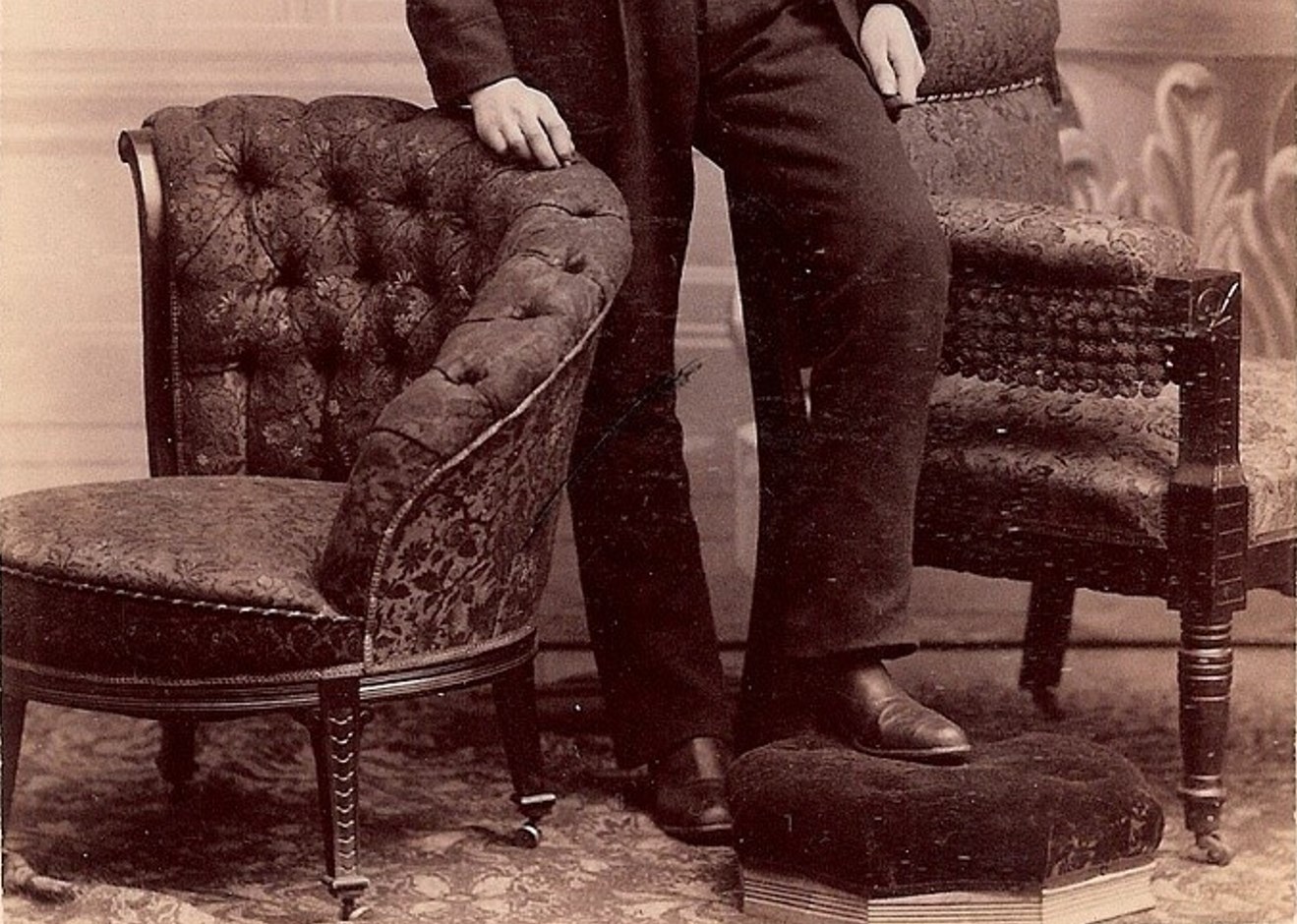
This chair is frequently seen in cabinet card photos from across the United States and Canada. It is an artistic and expressive small tufted chair that came in a variety of patterns, though it was not commonly found in many homes at the time.


Myth or Fact?
People didn’t smile in photographs due to the long exposure time. Myth. By the late 19th century most exposure times were only from 3-5 seconds, and if lighting in the studio was good, even less. Also think of how illogical the thought process is behind that statement. You’re more apt to move your eyes than a smile. It is fairly easy to hold a smile, even for 30 seconds. In the 1893 book; The Lighting in Photographic Studios, answers this long incorrect myth by stating… as a rule the attitude must be in repose. Any gesture, smile or contradiction of the face, when not the result of a real action, of a true emotion, appears exaggerated, often looks ridiculous” . Different era, and different perceptions of what looked good.
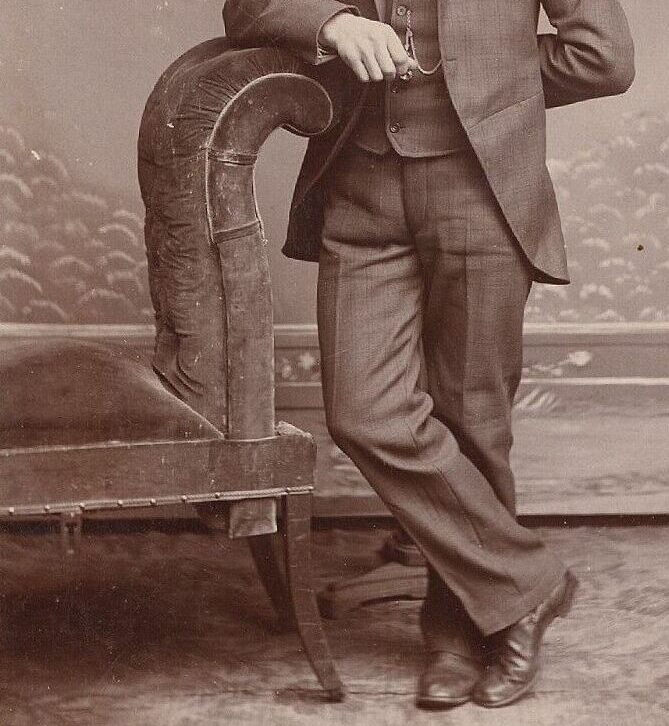
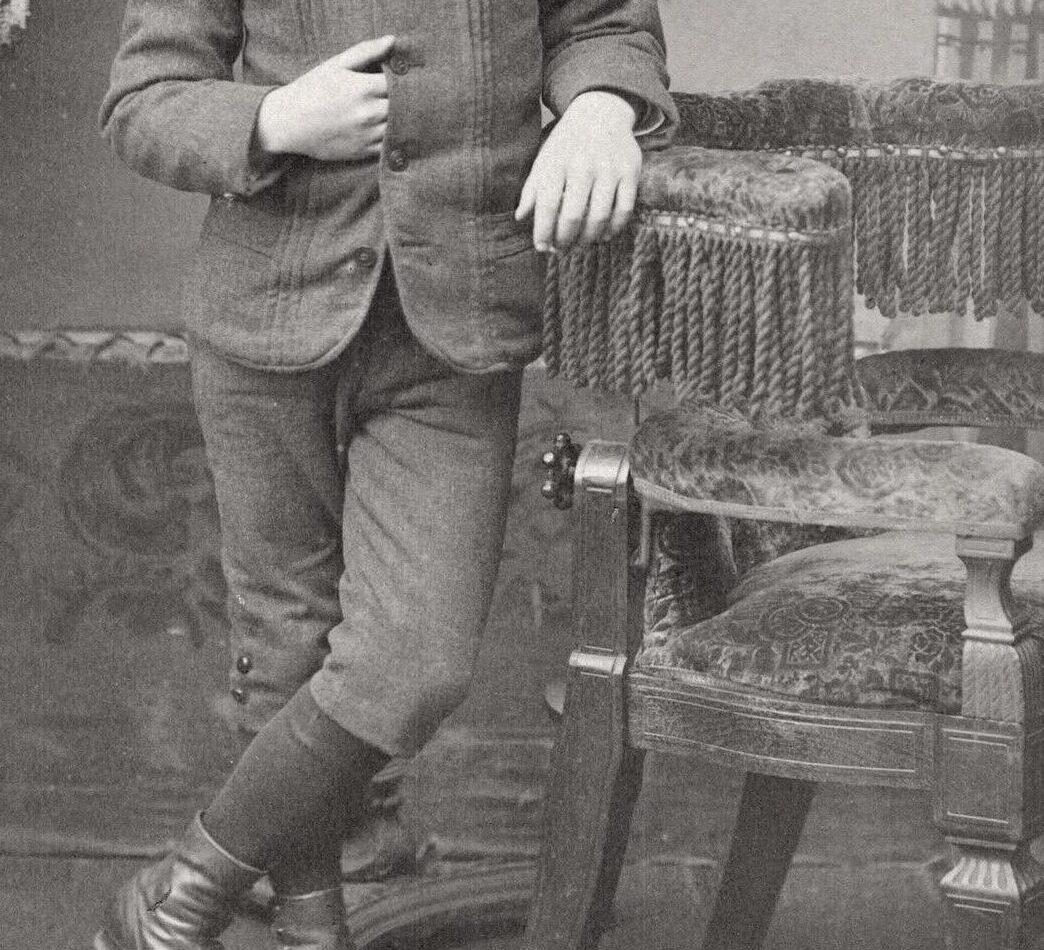
This style chair is seen in many of the cabinet cards. Like some of the other chairs they can come in a variety of fabrics, attachable arms etc. The back boldly slides up and down. This is a very common chair seen in these photographs, and its somewhat crude design makes it very obvious that this was not a chair intended to be in someone’s home.


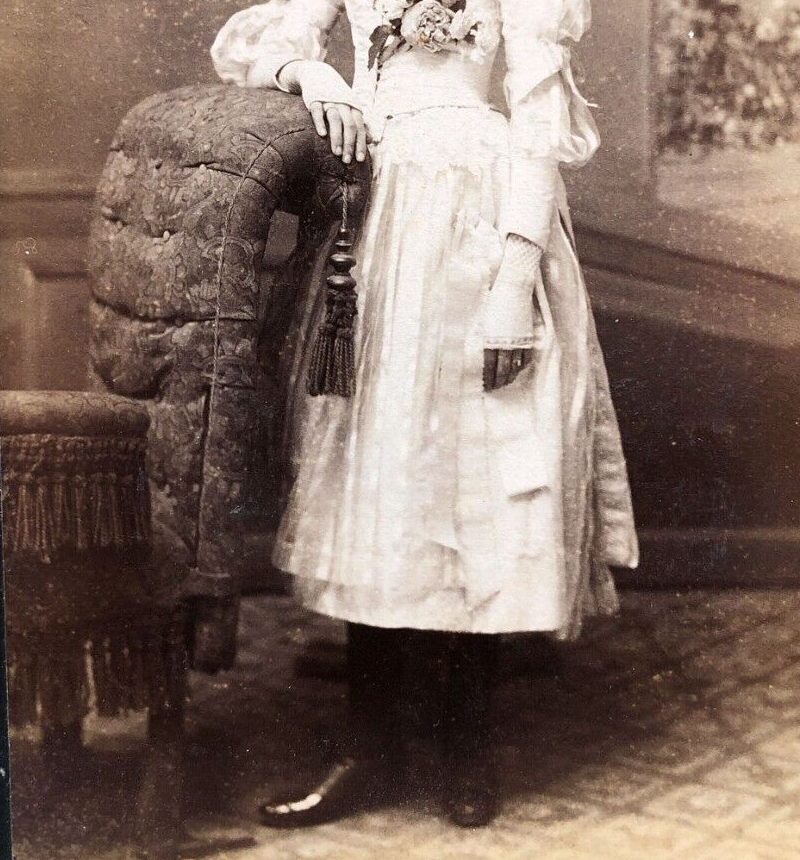
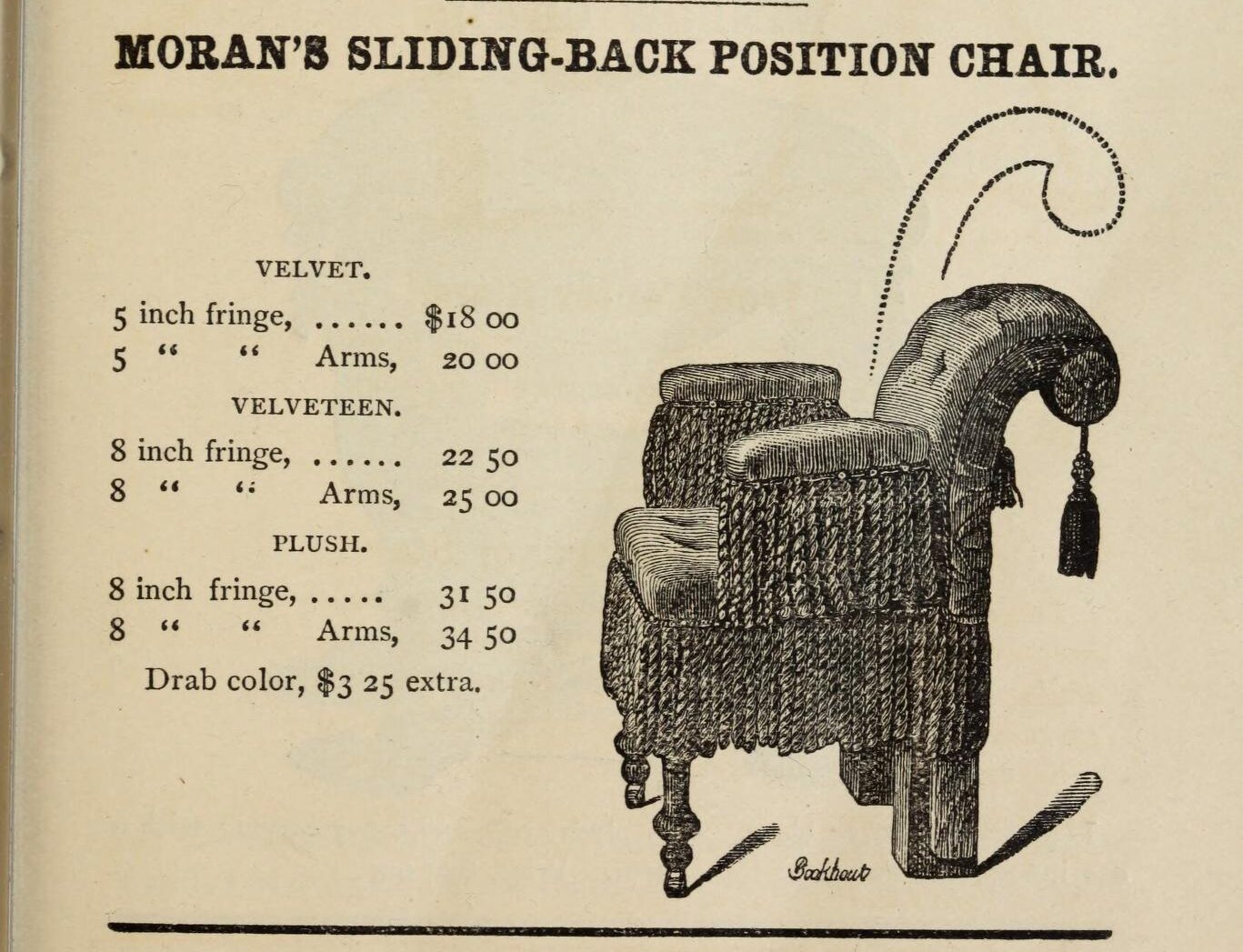

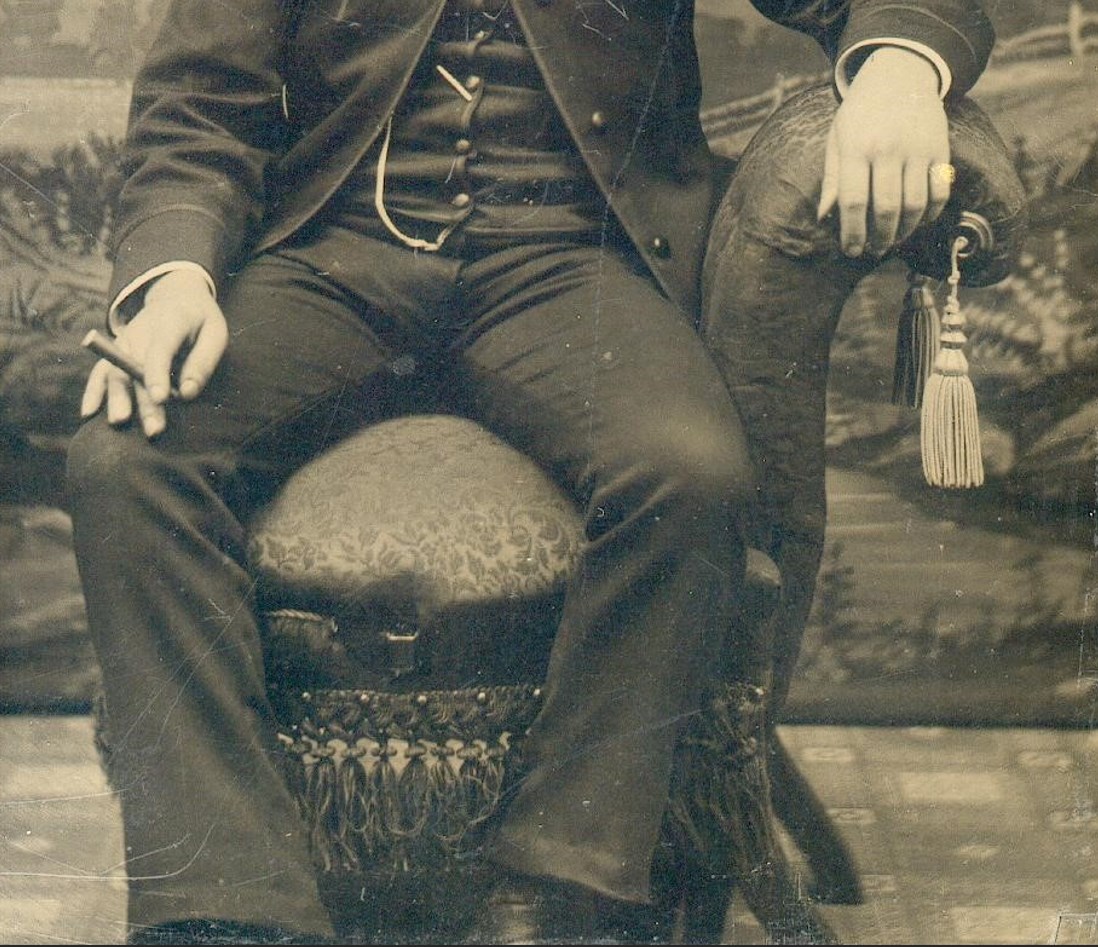
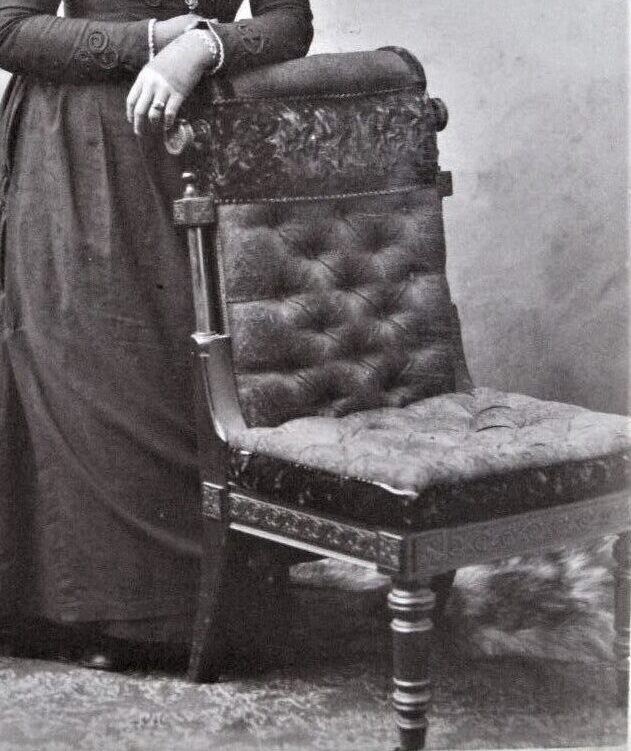
The mystery chair. This complex sliding back chair is a more elaborate counterpart to the sliding back chair we saw earlier and was very common in cabinet card photos. These chairs are almost always upholstered in two or three types of fabric: a crushed velvet strip at the top and along the lower cushion, and a patterned tufted seat. You can see along the top of the chair another type of fabric with trim on the left and right. On either side are two knobs used to raise and lower the chair.


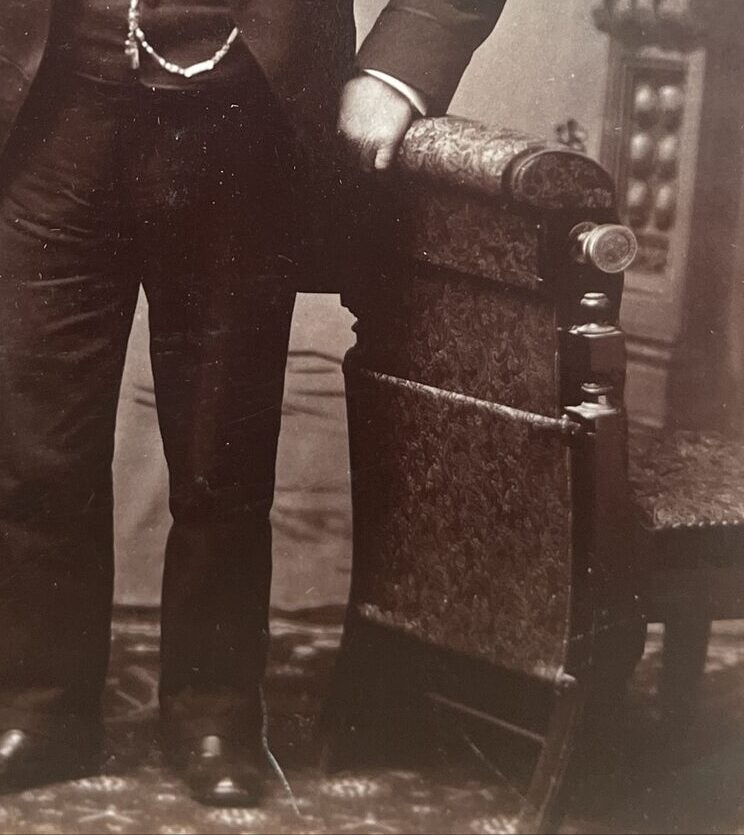
I had an advertisement for this chair many years ago, but I’ve been unable to find it anywhere. Recent searches in online archives have also proven unsuccessful. If anyone can find this, please share it in the comments below.

This is a similar style chair that can be found in homes and came in a variety of designs, not restricted to just photographers’ studios.


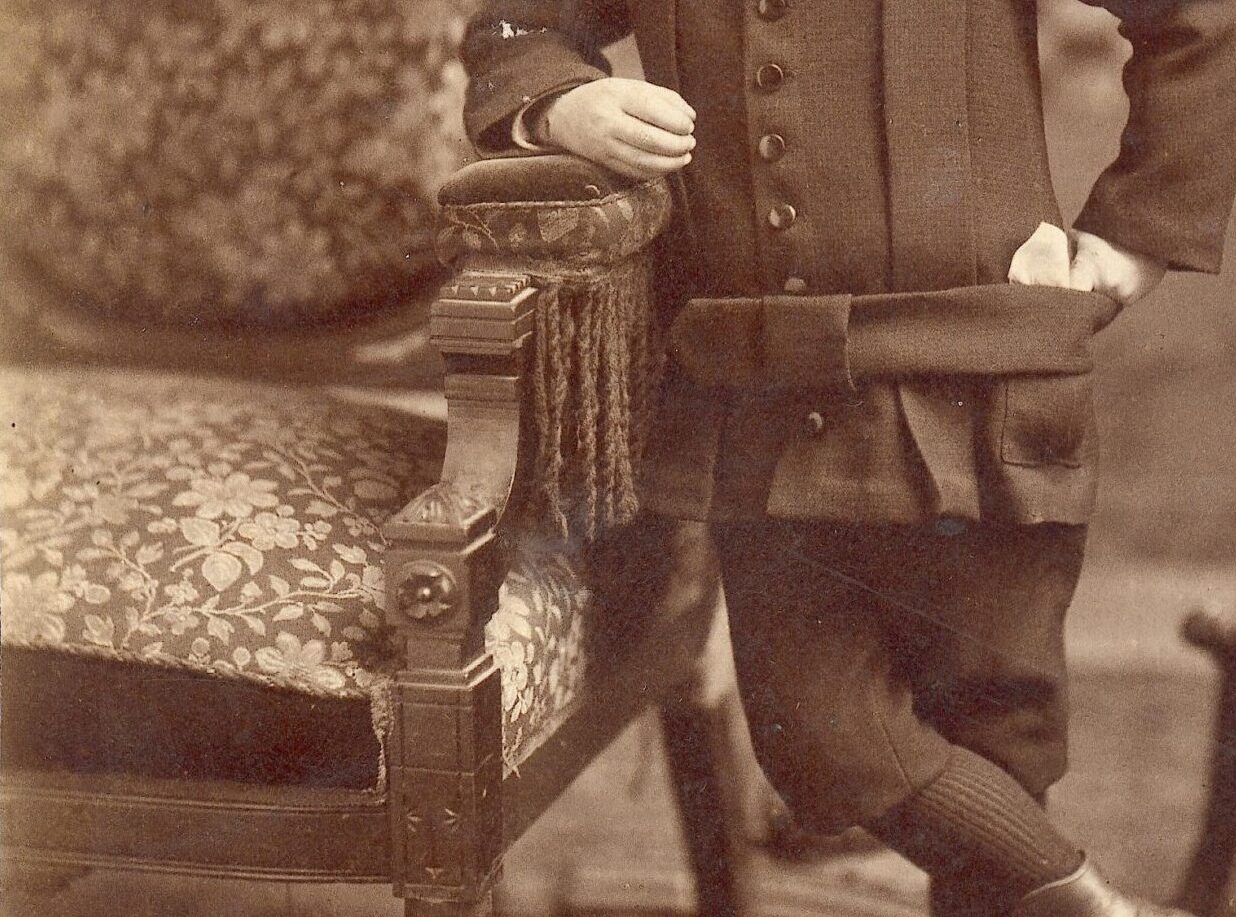
This boy sits on an Eastlake piece. While these were likely manufactured for use in photographic studios, you can also find these types of chairs sold in furniture catalogs for the home. These photos serve as a great resource for understanding how furniture was upholstered. This chair features two different types of patterned material and heavy fringe off the arm.


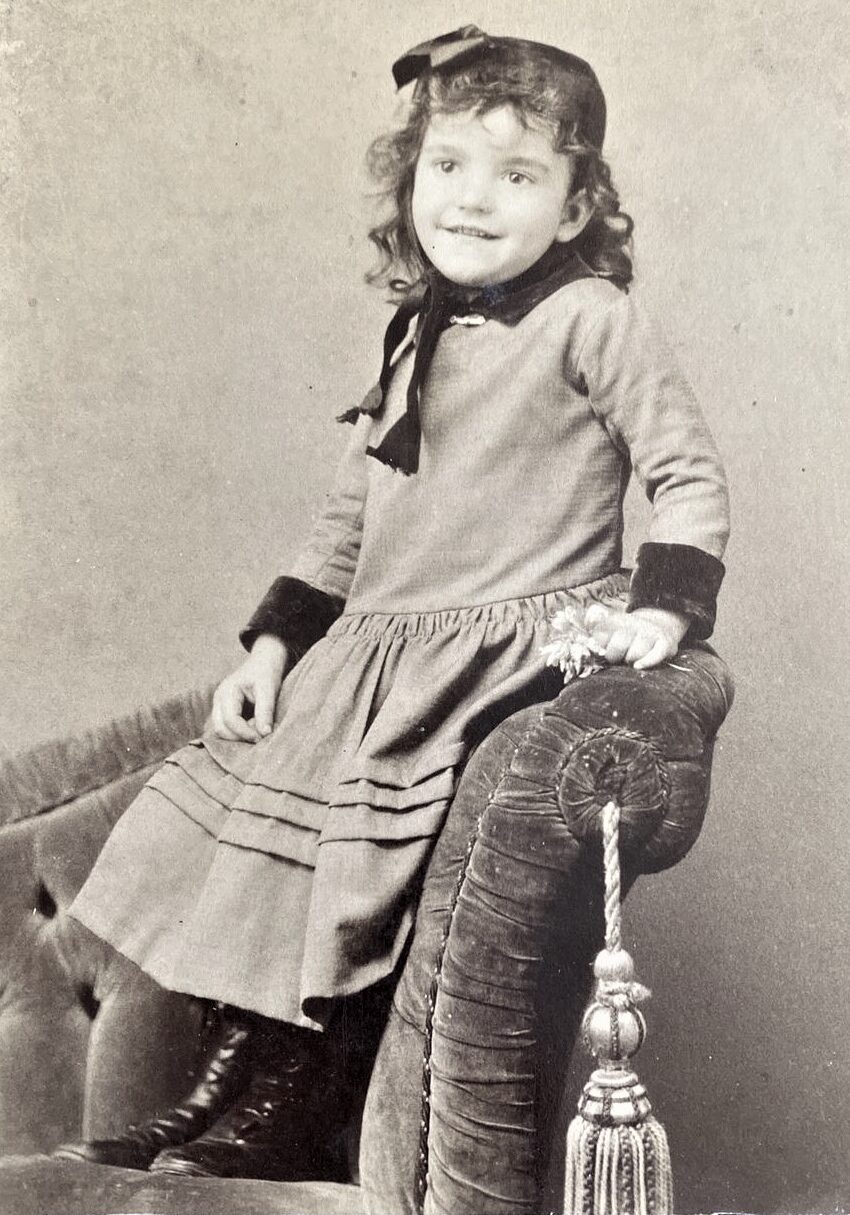
While some of the styles of these pieces are more exaggerated than what you would see in people’s homes, the upholstery is not. The use of mixing patterns and colors on a single piece of furniture may seem foreign to modern eyes, but it was very much in vogue during the late 19th century, giving the pieces depth. In an era where layering and mixing patterns on walls, ceilings, and building exteriors was popular, it is no surprise that the same approach applied to how chairs were upholstered.





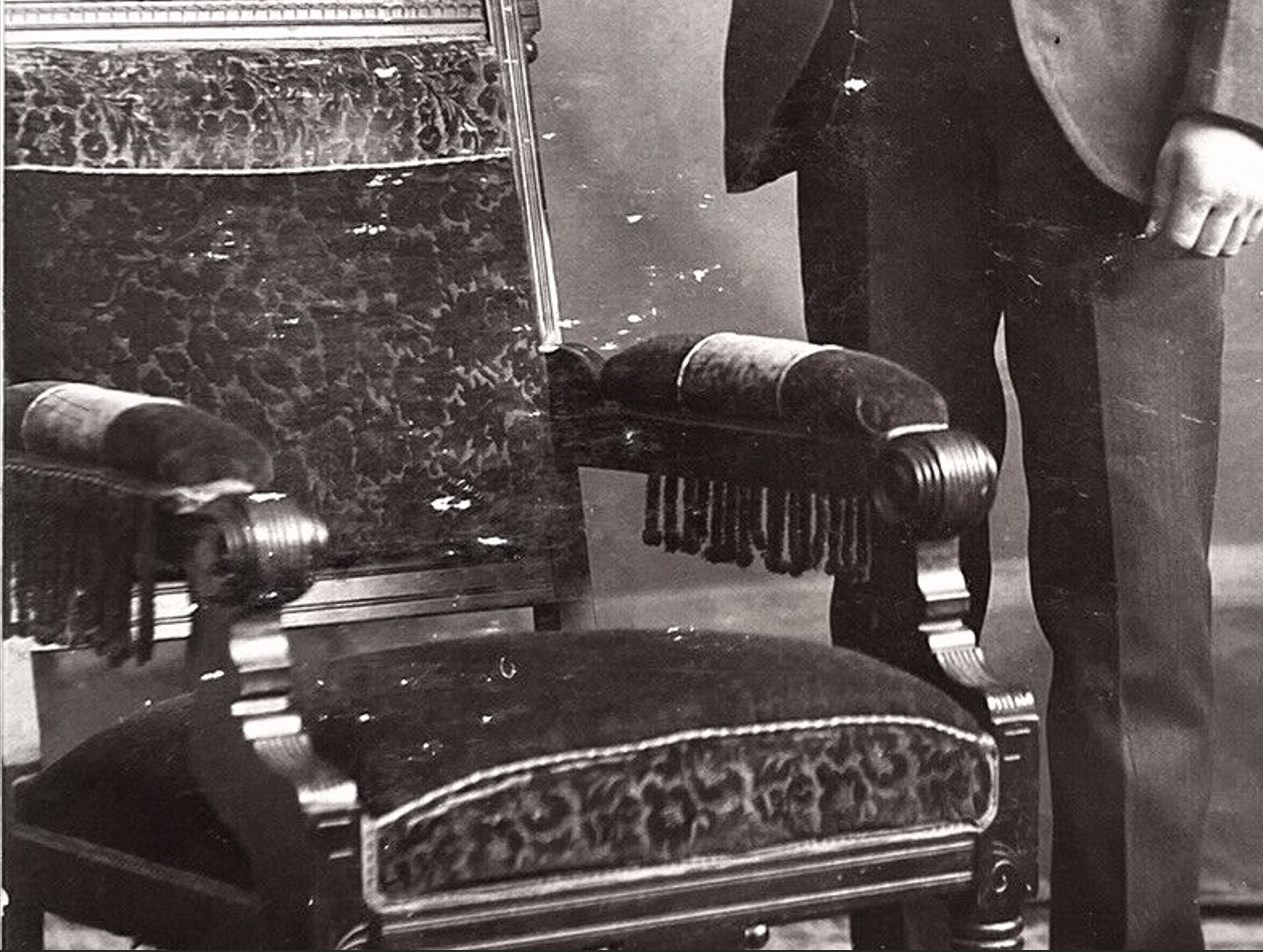


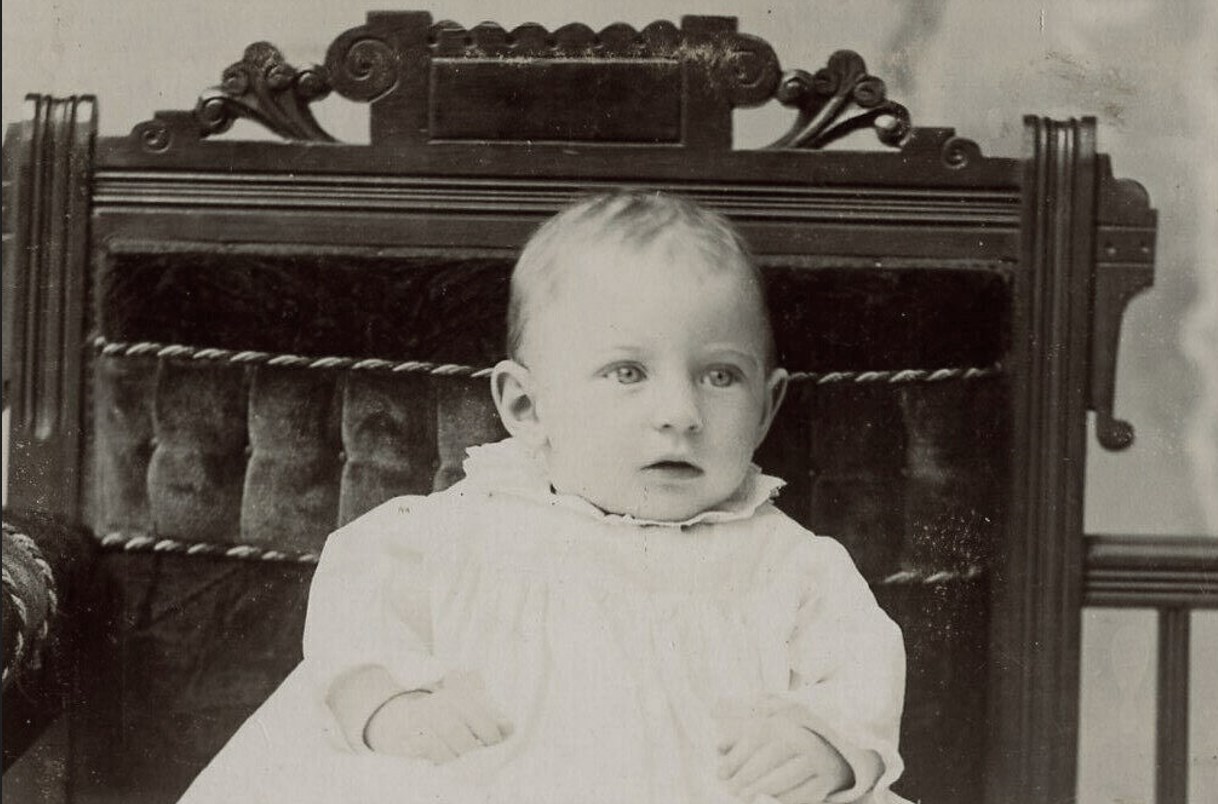
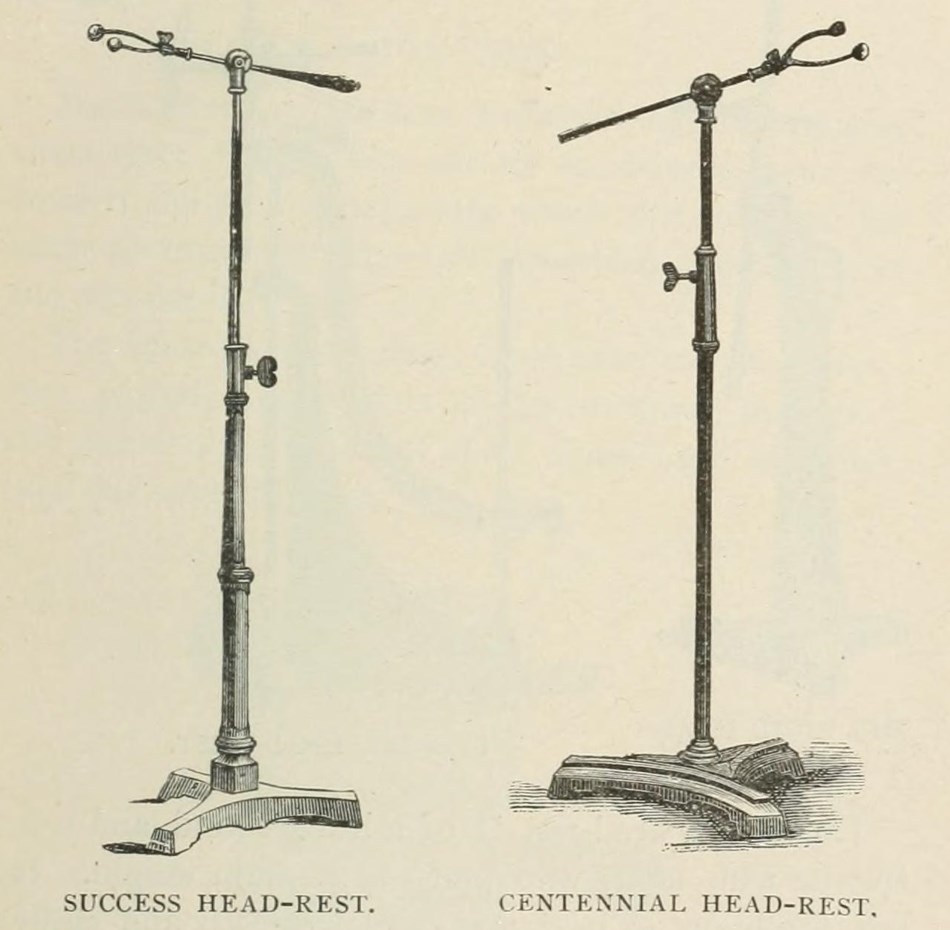
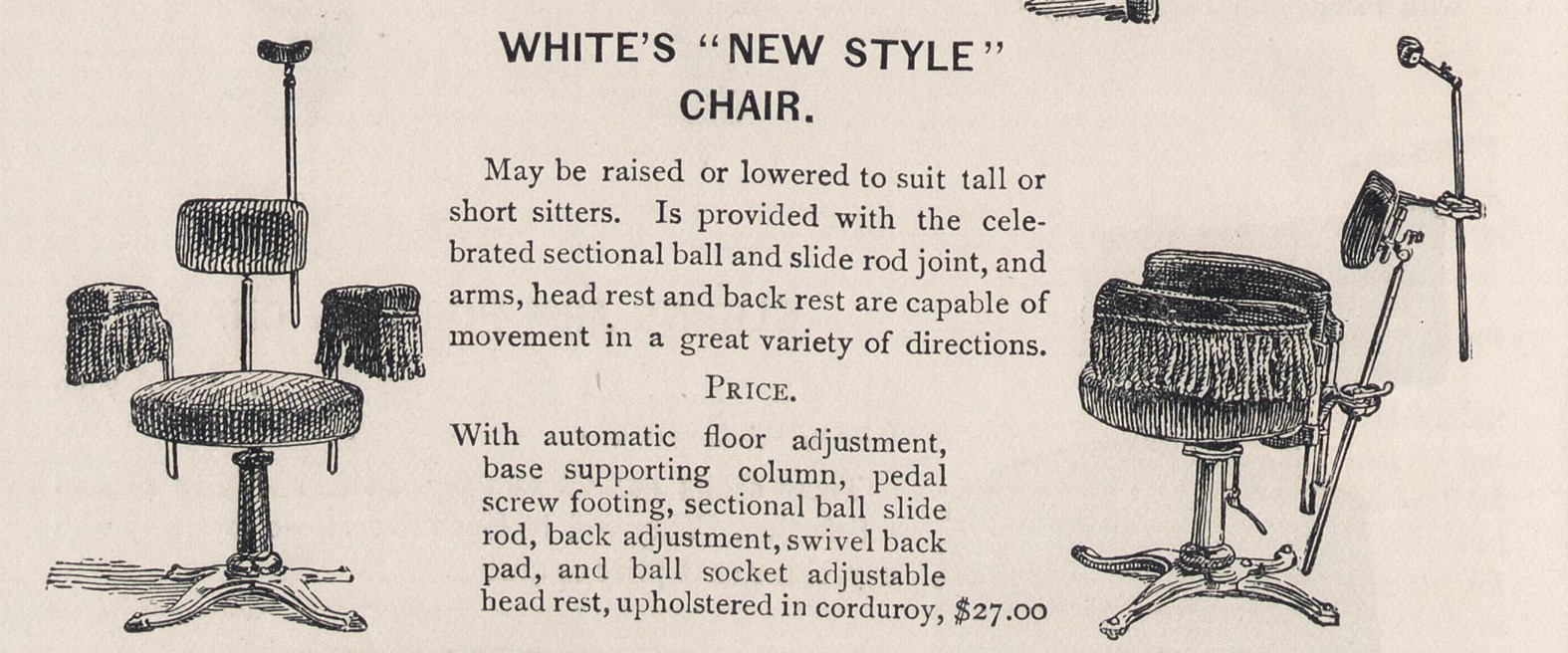
As an end to this photo study, this topic almost always comes up in discussions about cabinet cards, so let’s quickly touch on these objects. “That person is dead, and they’re being propped up!! Look behind them, there is a stand!” cries a commenter. All too often, when people see contraptions behind a person that appear to be propping them up, they immediately deduce that this is a photo of the dead. You see this all over the web, but they are usually false. These contraptions were used to keep people from moving from the position that the photographer placed them in. Like all new technology, people got a little overzealous. While it is true that some people took photos of their deceased child, relative, or friend, not everyone did. Speaking of photos of the dead, while it is difficult for some people to understand this practice, instead of viewing the morbidity of it, we should look at it from a different angle. It was a desperate attempt in an era when photos were not as easily accessible as they are today. It was a last effort to memorialize their loved ones in a photo before they were buried—possibly the only visual they would ever have of the person.
Which chair or pattern is your favorite from this very era of artistic complexity?
Put it in the comments below.