Somerset Villa: The Upper Floors
12/13/24
13 Comments
We continue with the tour of the second floor today of the Carr's Somerset Villa.
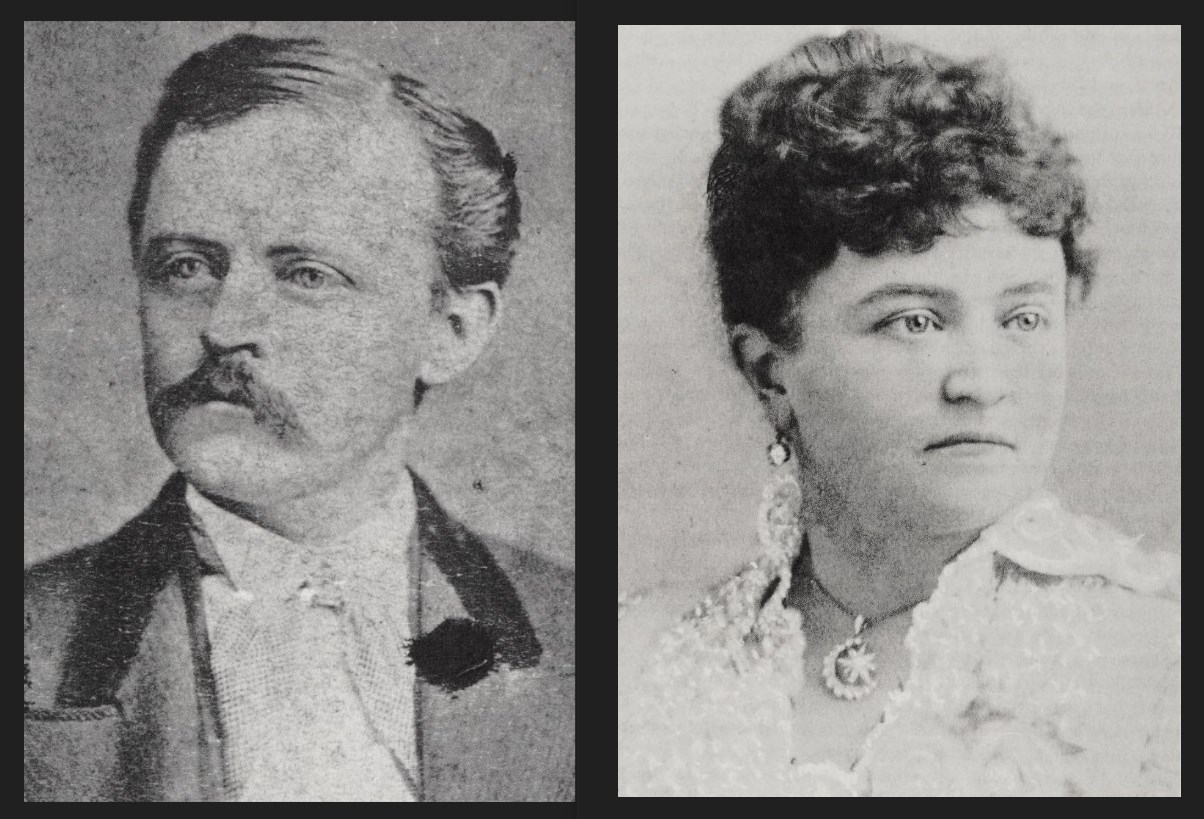
Before we ascend to the second floor, let’s take a moment to reflect on the family behind the photos we’re studying. Julian Shakespeare Carr (1845–1924) and his family. Born on October 12, 1845, Carr married Nancy Graham “Nannie” Parrish Carr (1853–1915). Together, they lived a prosperous life built on Julian’s vision and tireless work in various business ventures.
Carr was a pivotal figure in Durham’s transformation into an economic hub. He organized the city’s first textile mill, the Durham Cotton Manufacturing Company, and founded the Golden Belt Manufactory, which supplied tobacco pouches for much of America. Beyond textiles, he launched the Durham Hosiery Mills, established Durham’s First National Bank, co-founded the Durham Electric Lighting Company in 1887 (the same year he built this house), and built the Durham-Roxboro Railroad.
In addition, Carr made significant investments in community development. He founded the Jule Carr Home Loan Fund, constructed the Carolina and Claiborne Hotels, and was instrumental in relocating Trinity College to Durham—now renowned as Duke University. His vision and leadership not only defined his own legacy but also shaped the city of Durham into a thriving center of industry and education.
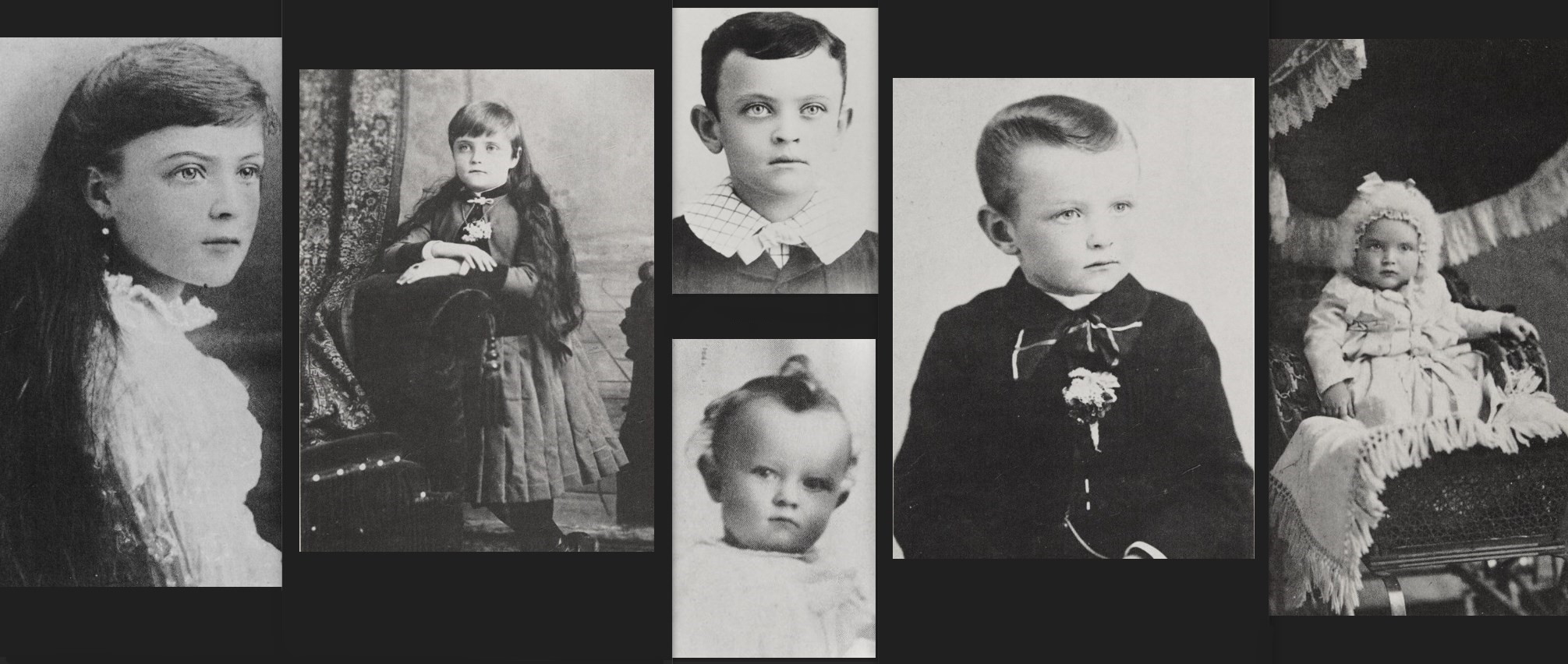
The couple had six children. Five were born prior to moving into this home, and the youngest was born after they settled here.
left to right: Lyda Elizabeth Morehead Carr; 1874-1950, lived to age 76
Lalla Ruth Carr Patton; 1876-1921, lived to age 41
top image: Julian Shakespeare Carr Jr; 1878-1922, lived to age 43
right: Albert Marvin; 1880
far right: Claiborn McDowell Carr Sr; 1884-1956, lived to age 71
bottom center: Austin Heaton Carr Sr; 1894-1942, lived to age 47


According to the census records, by 1900 the family lived here with four sons. The daughter was married and had moved out, and they had two live-in servants as well as one coachman.
Thanks to JimH for providing this research.
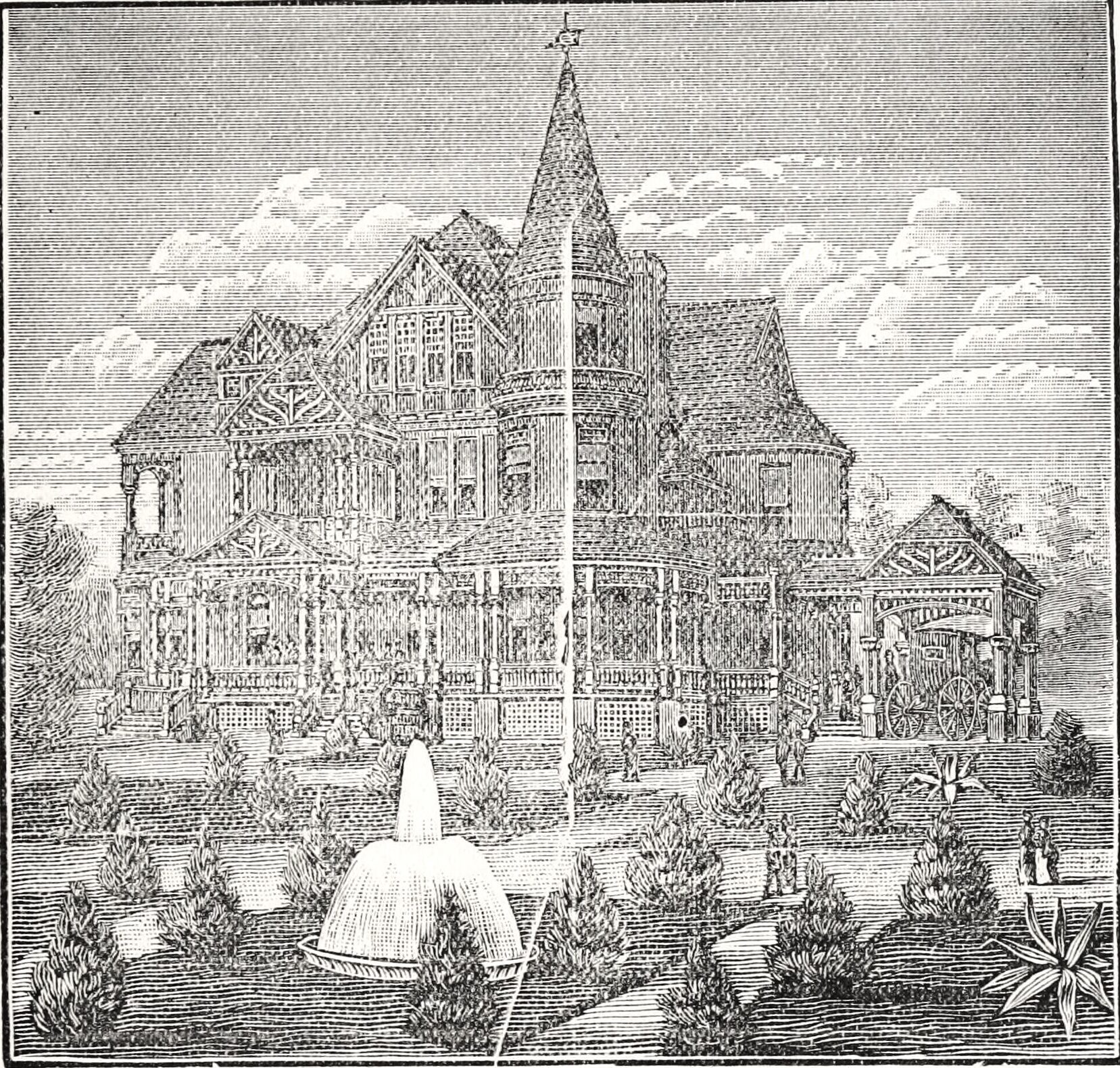

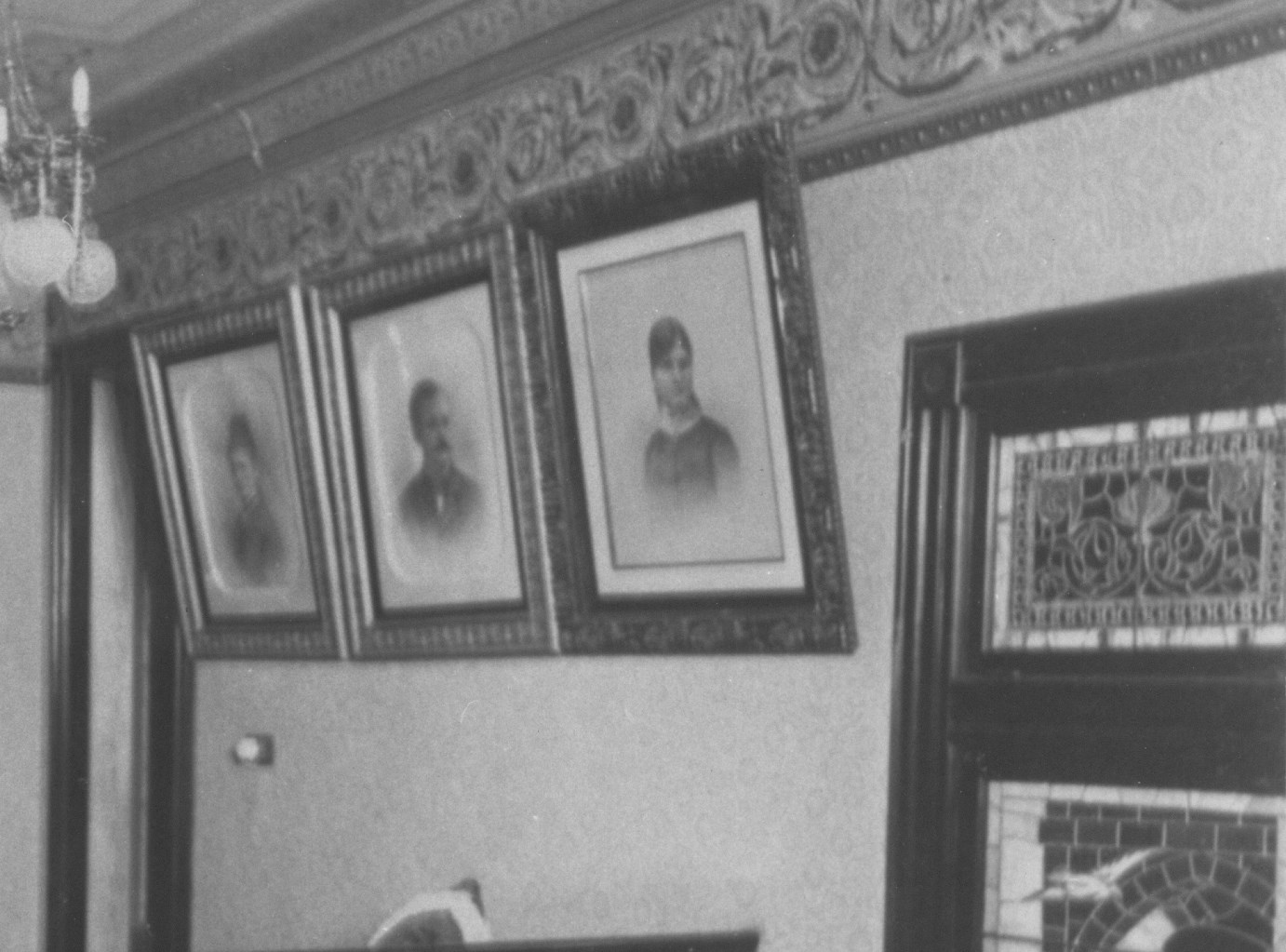
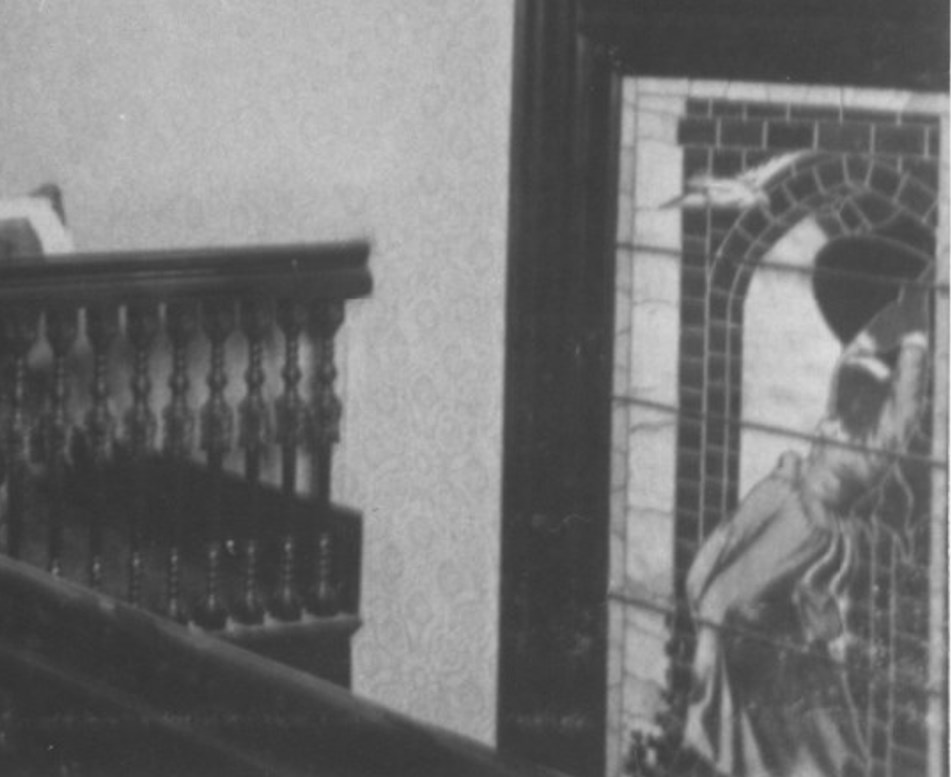
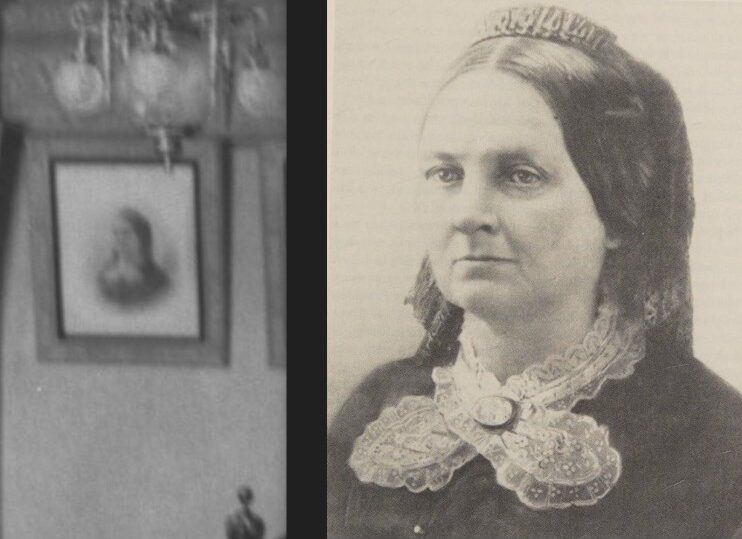
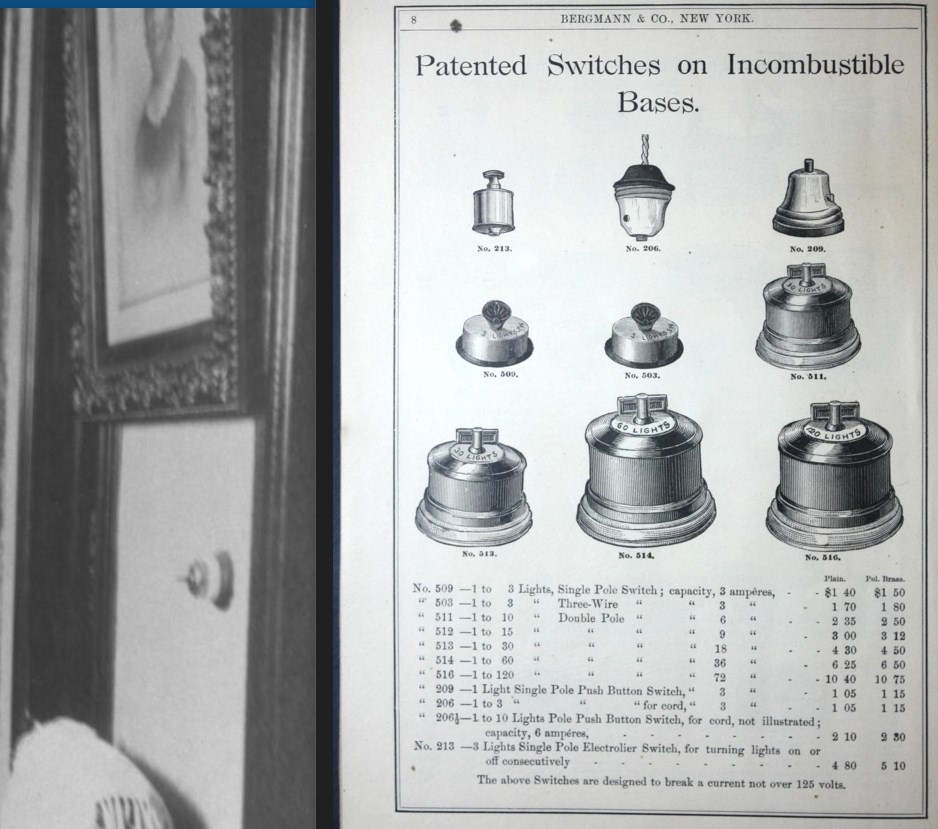
As you ascend the grand staircase, you pass a large stained glass window and family portraits. Upon reaching the top of the landing, this is the view you would see. The hallway is adorned with family portraits.


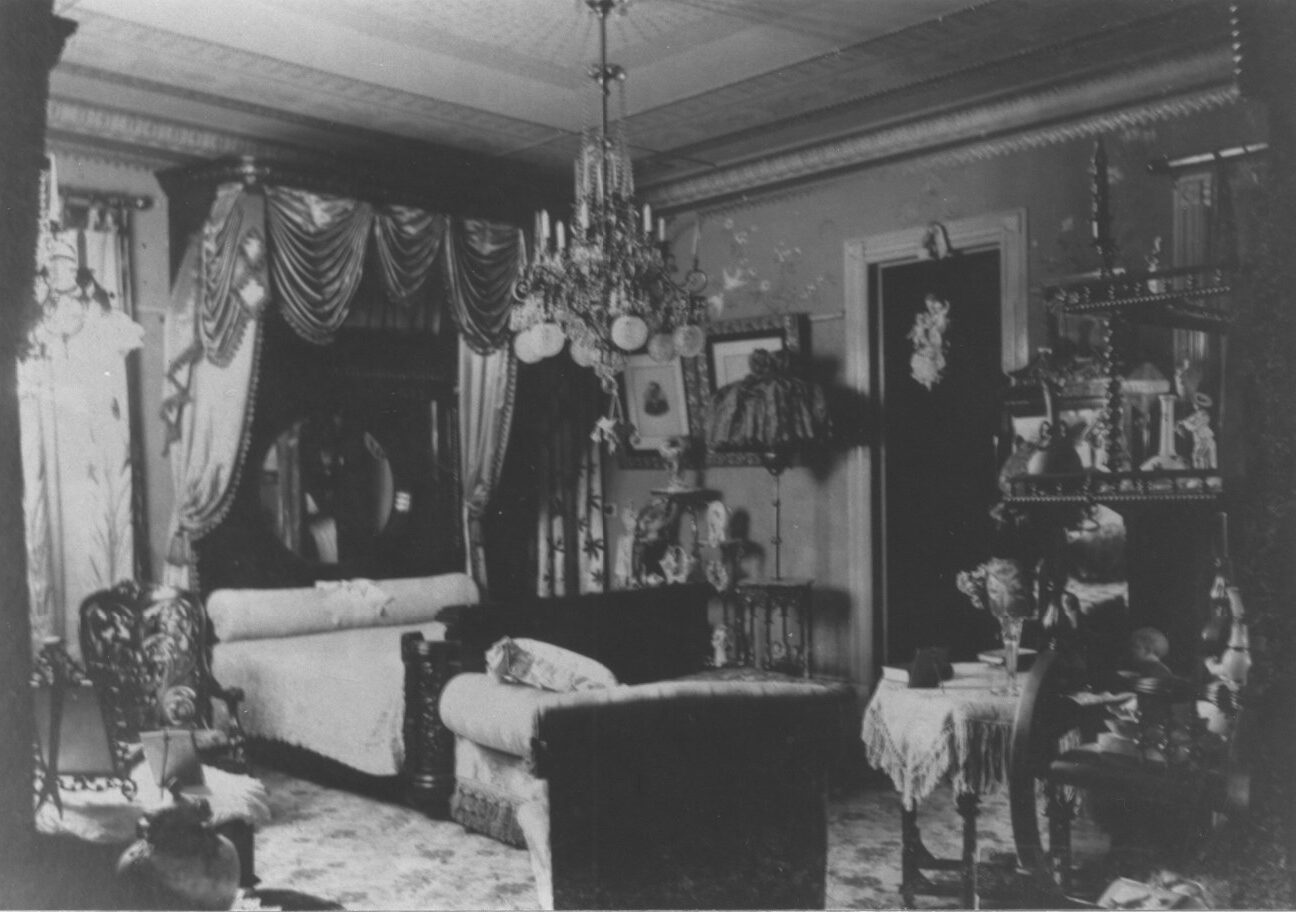
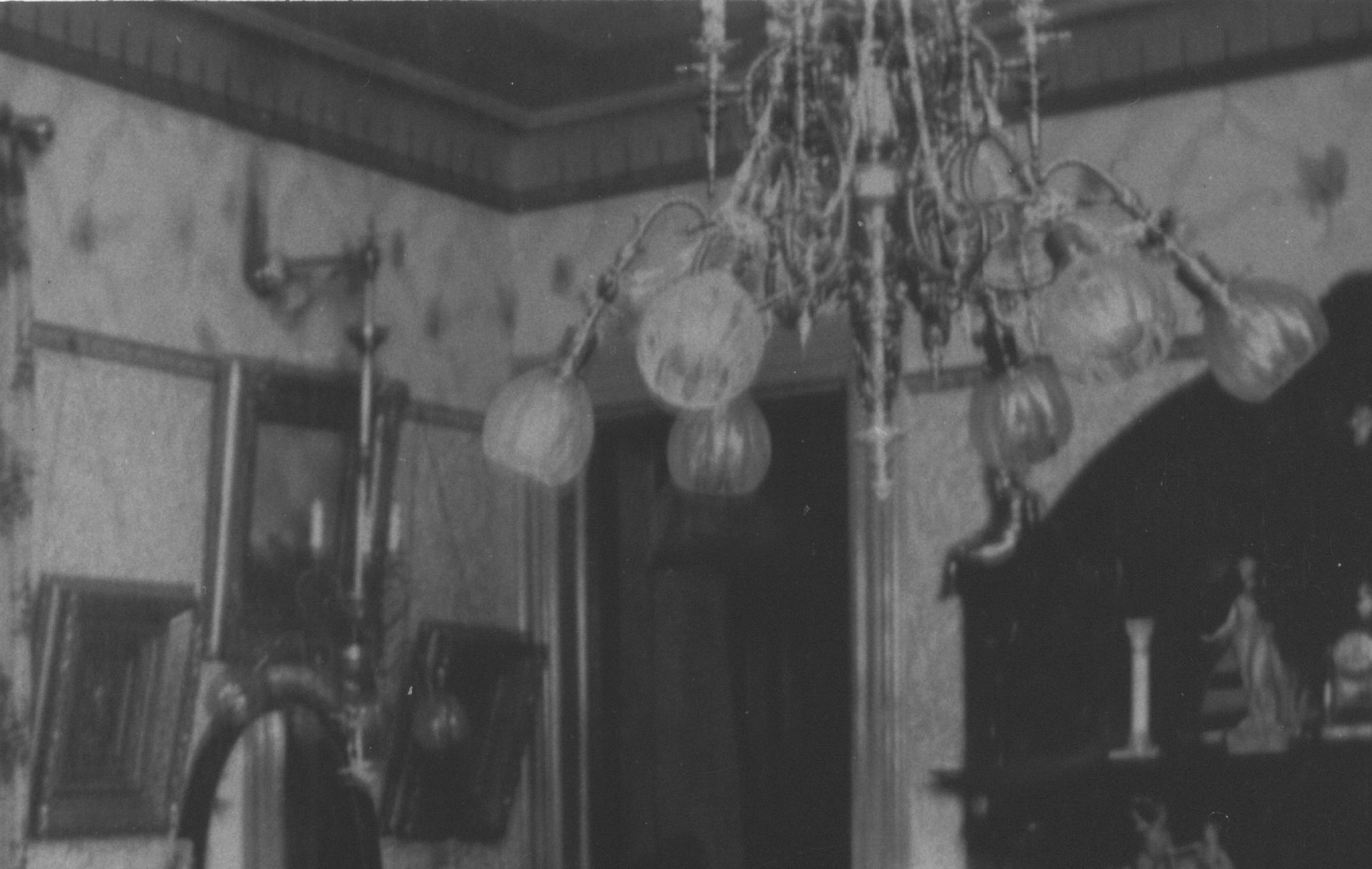
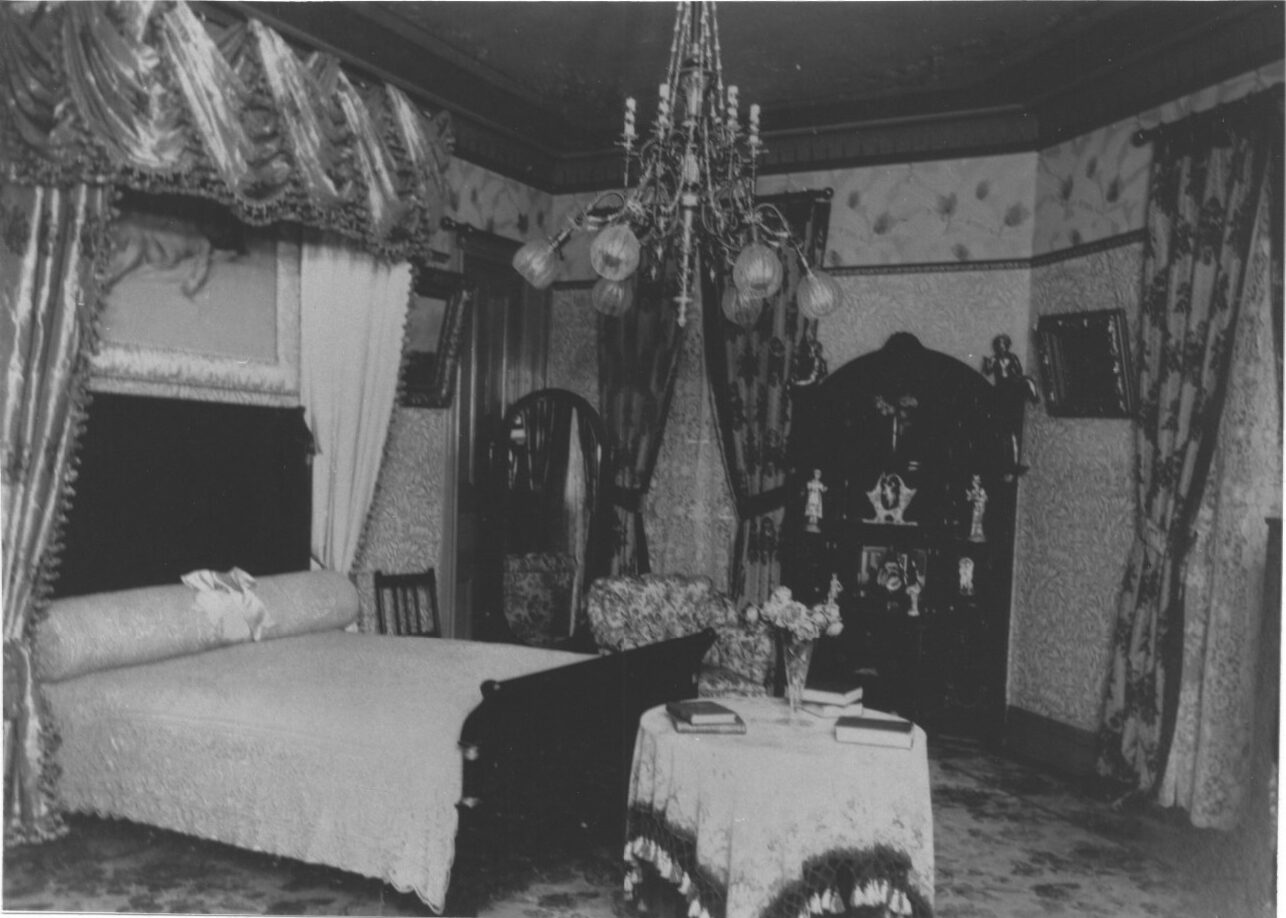
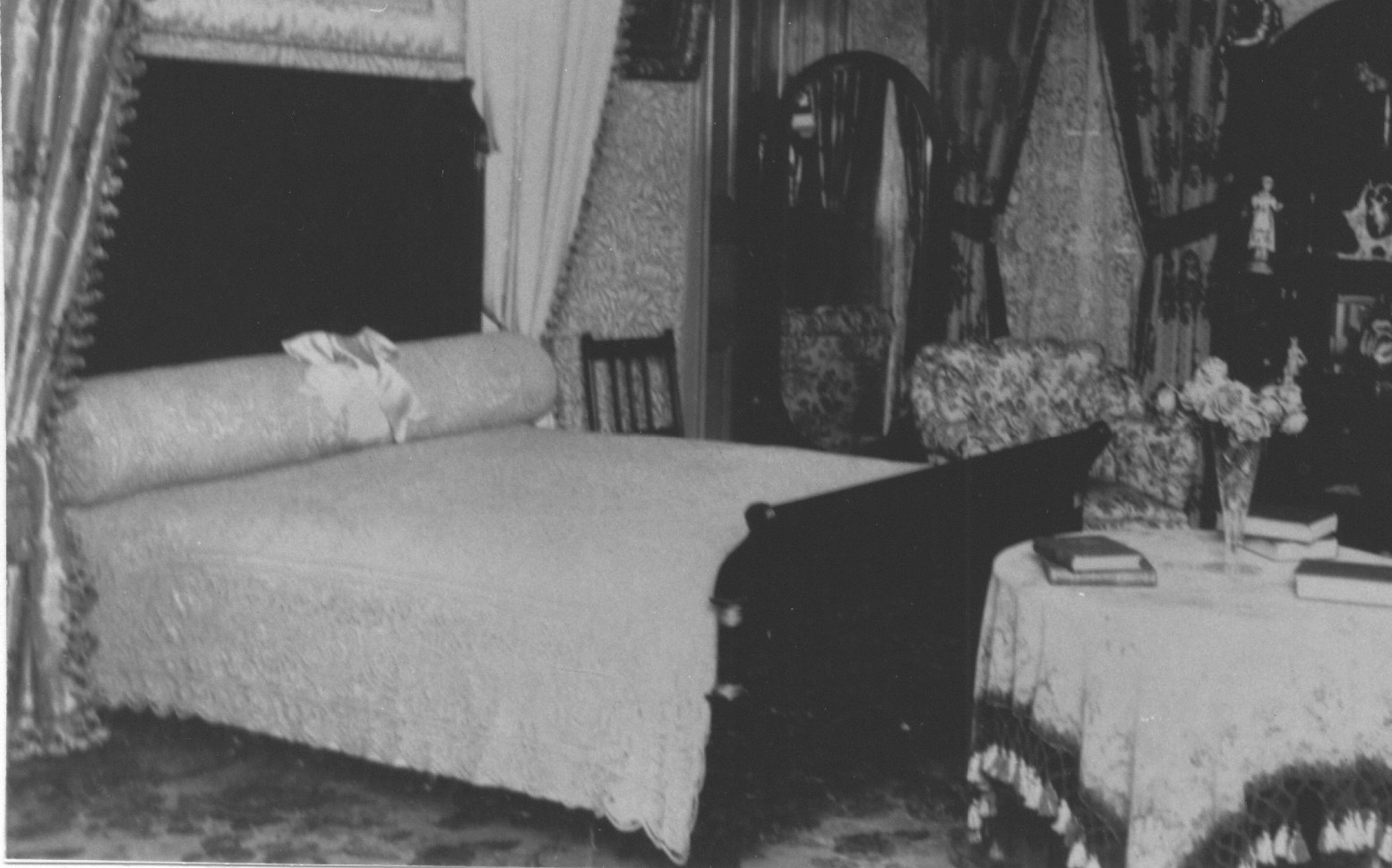
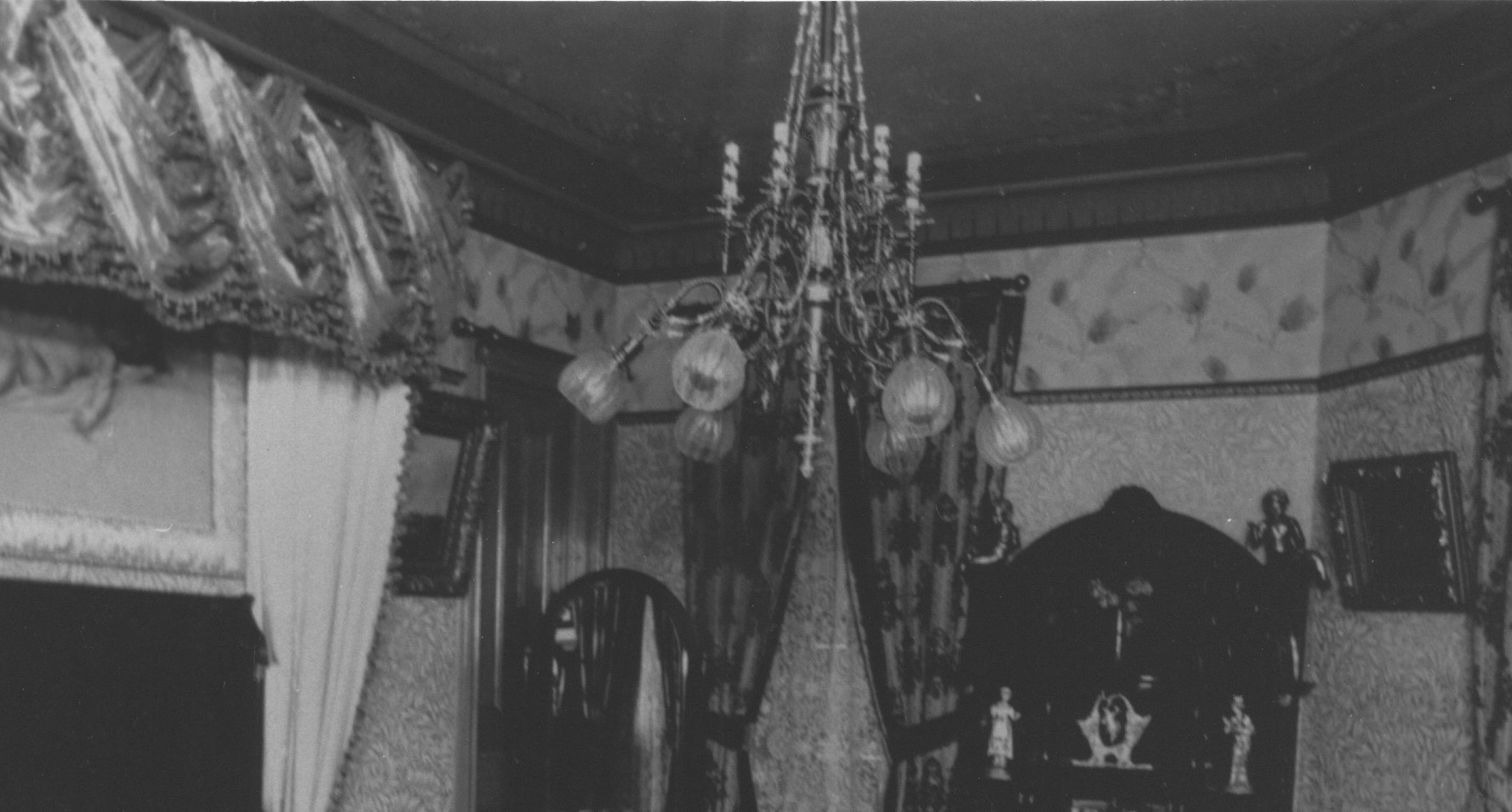
It is unknown whose bedrooms are whose in this study. The large bed appears larger than a double size and could possibly have been a custom bed. Most beds were typically ordered in two sizes: Single and Double, or by today’s standards, Twin and Full. The room is beautifully detailed on the walls and ceilings. The bed’s headboard is fascinating and almost looks as if the center panel is a large round mirror beneath the half-tester. A typical bedroom of the time.


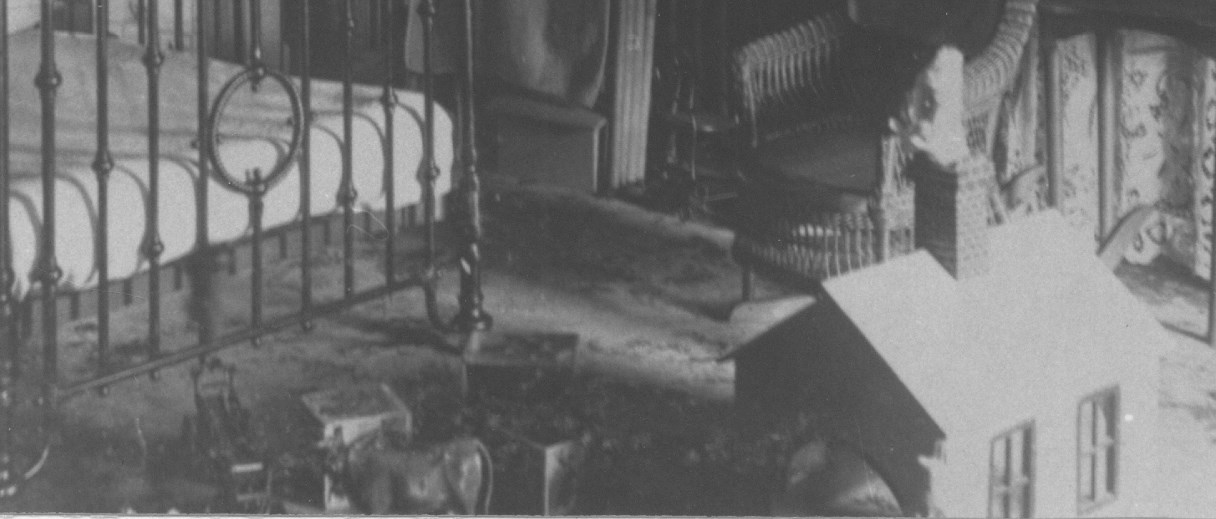
This room clearly belongs to one of the younger children, with a mix of children’s toys and formal wall treatments.


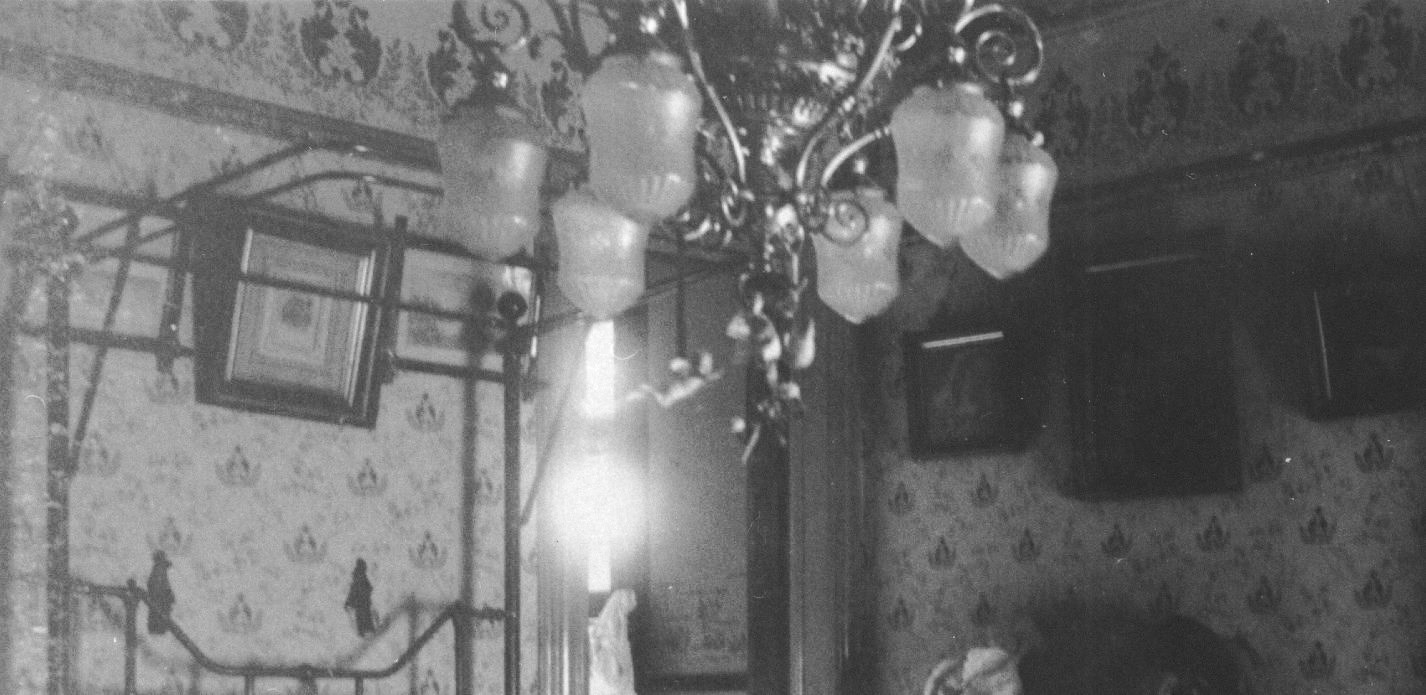

An interestingly decorated room with a lounge in front of the windows for relaxing during the day. The walls and ceilings have an intriguing pattern, though it is difficult to make out clearly. It appears there is a mantel straight ahead, covered in statues and vases. The firebox is also noteworthy—could that be a cover over the opening? Is it false?
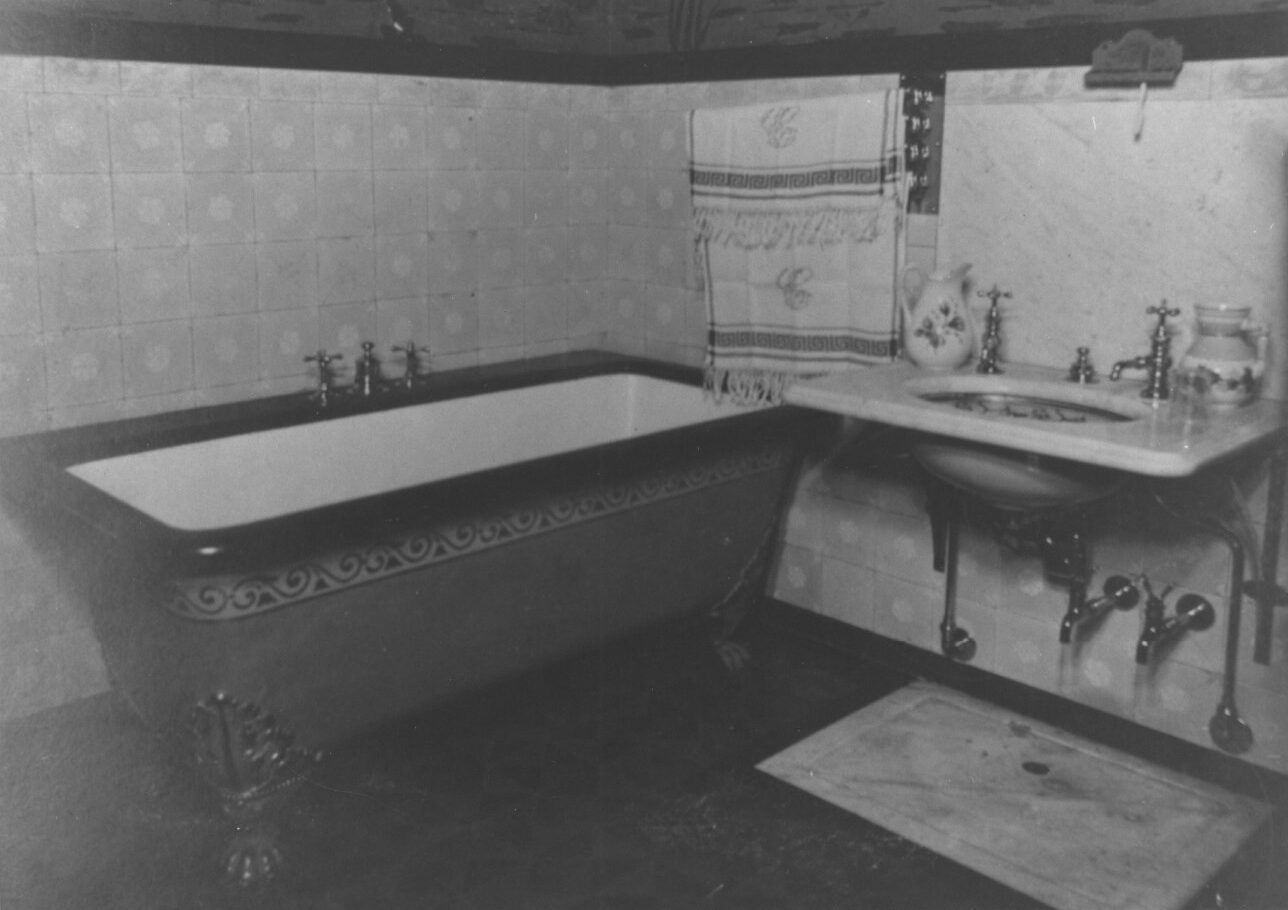
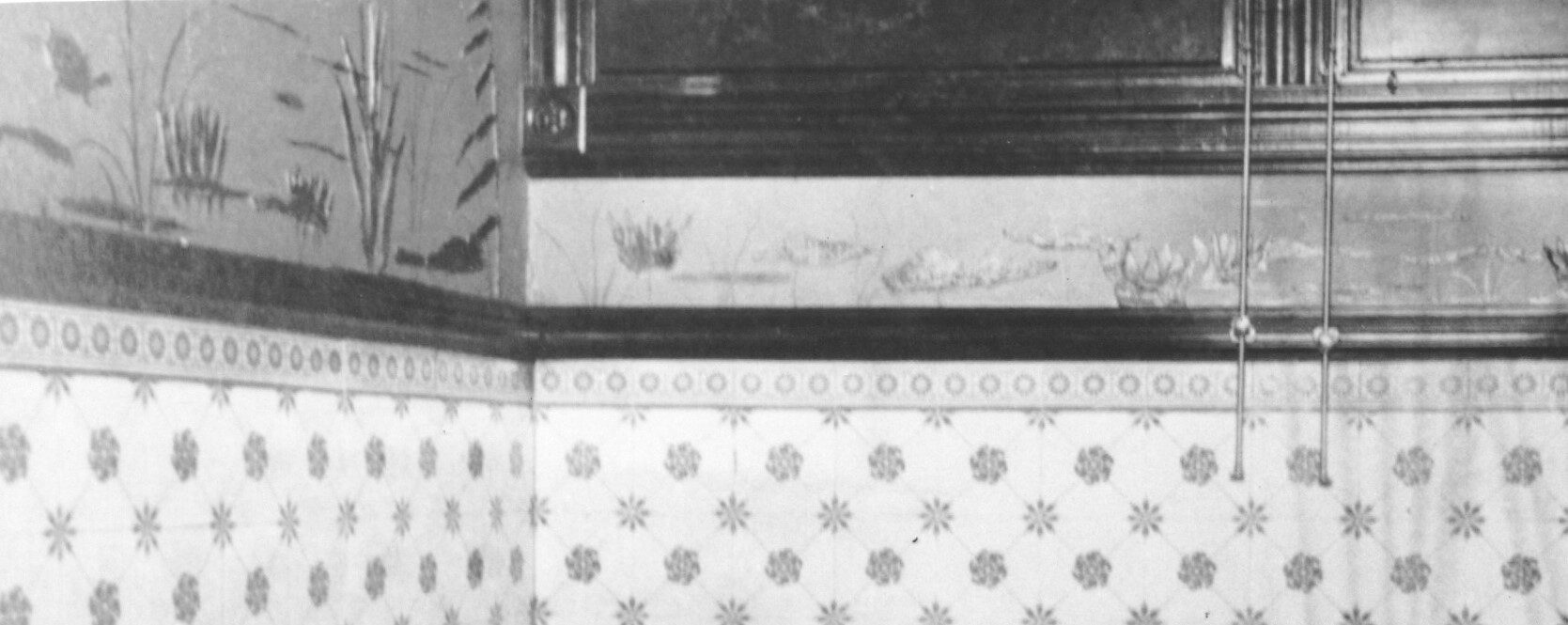
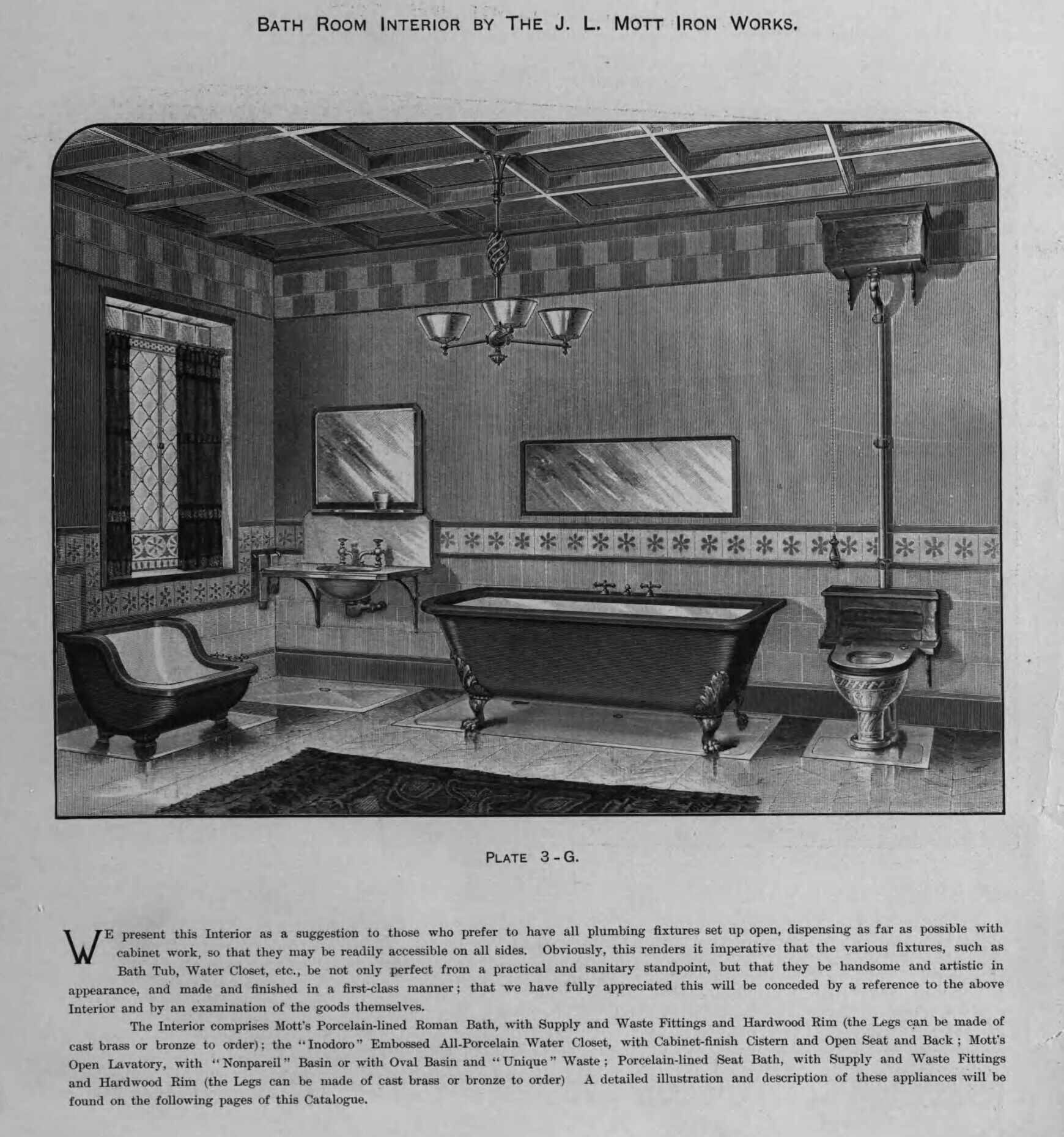
By the late 19th century, bathrooms were appearing even in middle-class homes where the conditions were right for them. However, having multiple bathrooms during this time required significant wealth. This bathroom, as seen in the photo, is fascinating. The room features tile halfway up the wall and decorated walls. In addition to the standard sink and tub, which were mass-produced, there are two faucets under the sink and a marble platform with a drain. This may have been a place to wash feet, though I haven’t encountered this feature in my studies before. Any additional information in the comments would be greatly appreciated.
Contrary to popular belief, the term “bathroom” was used during the late 19th century, as well as “W.C.” or “Water Closet.” These terms were used interchangeably in catalogs, descriptions of these rooms, and architectural plans.
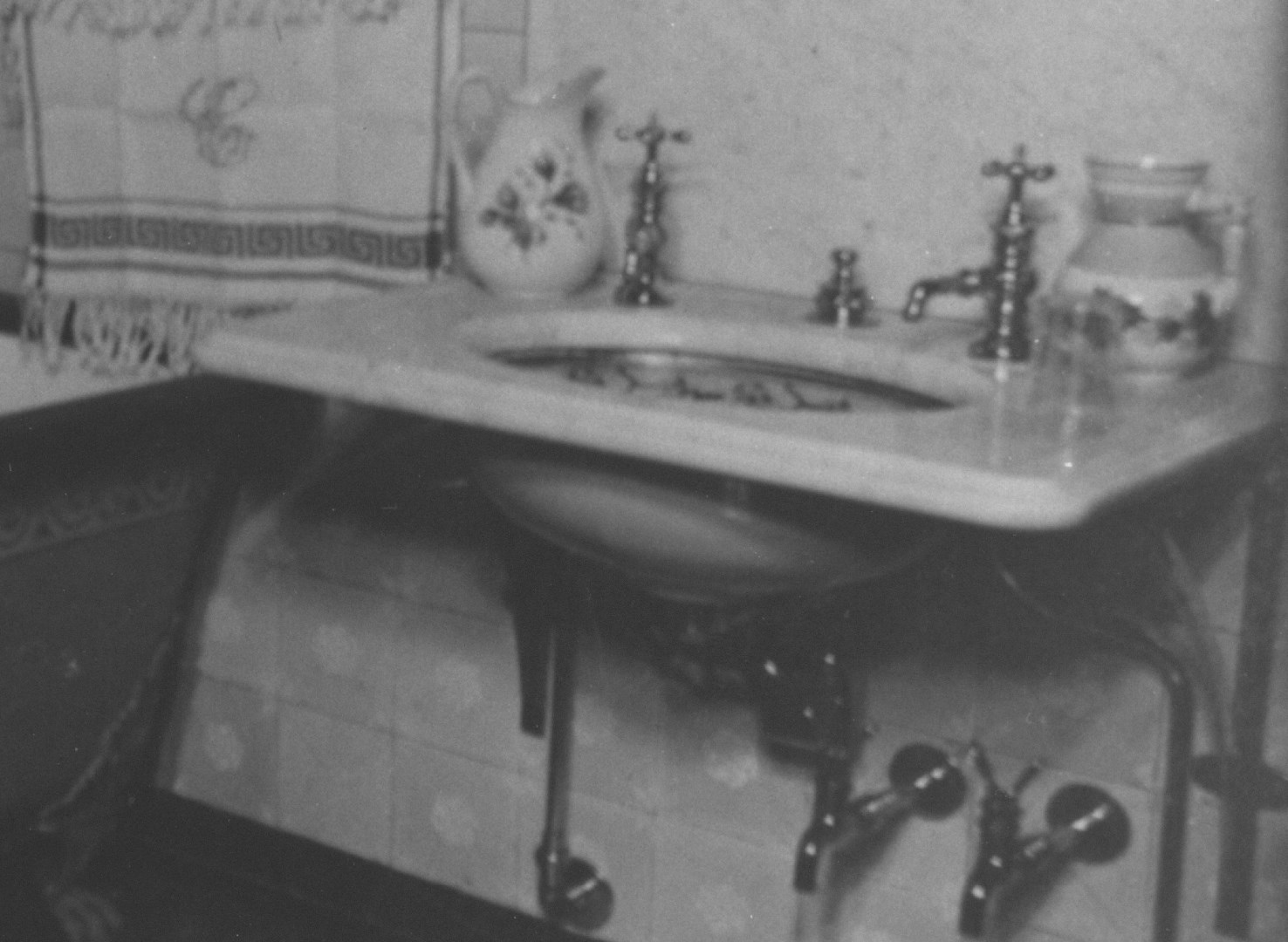
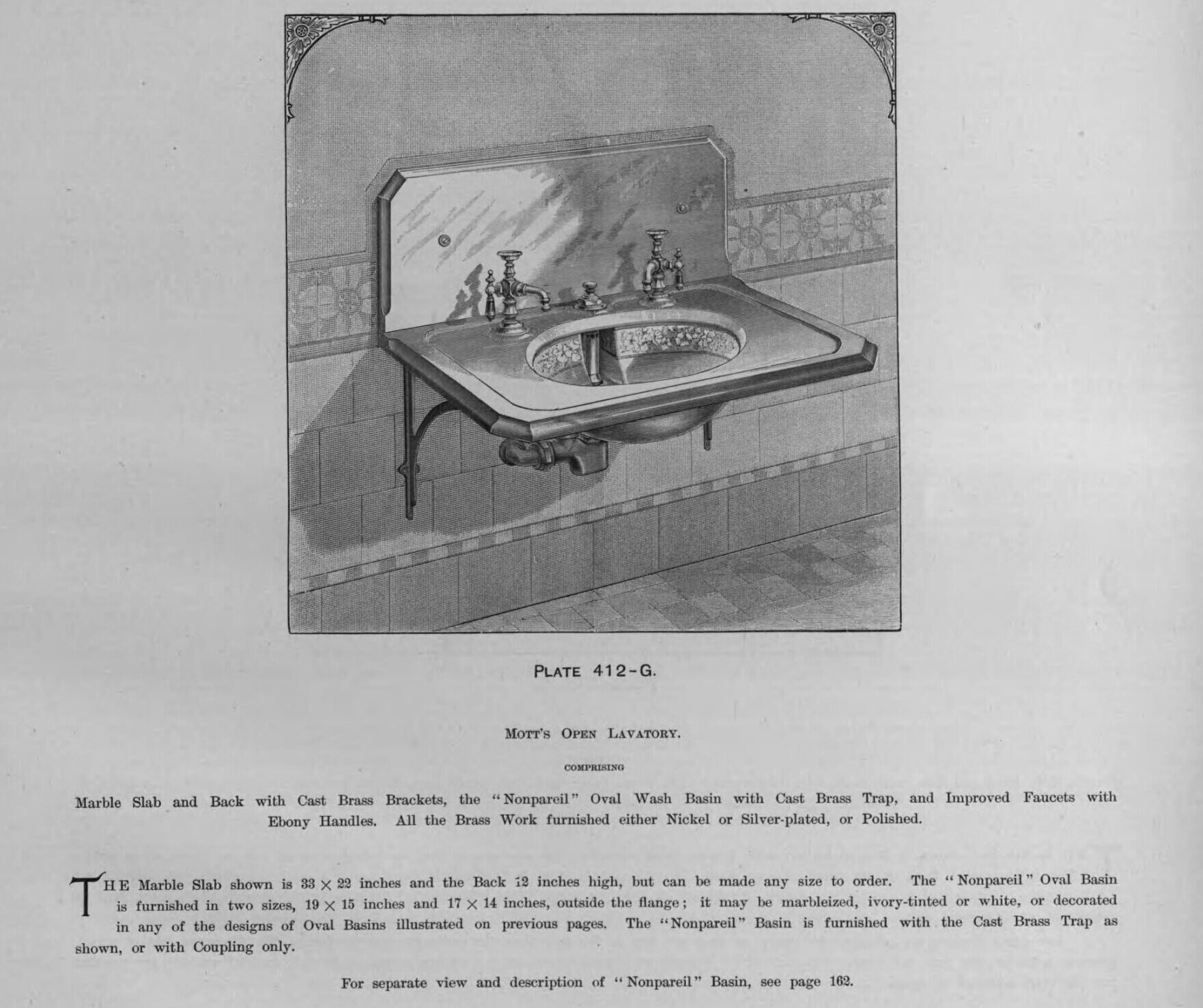
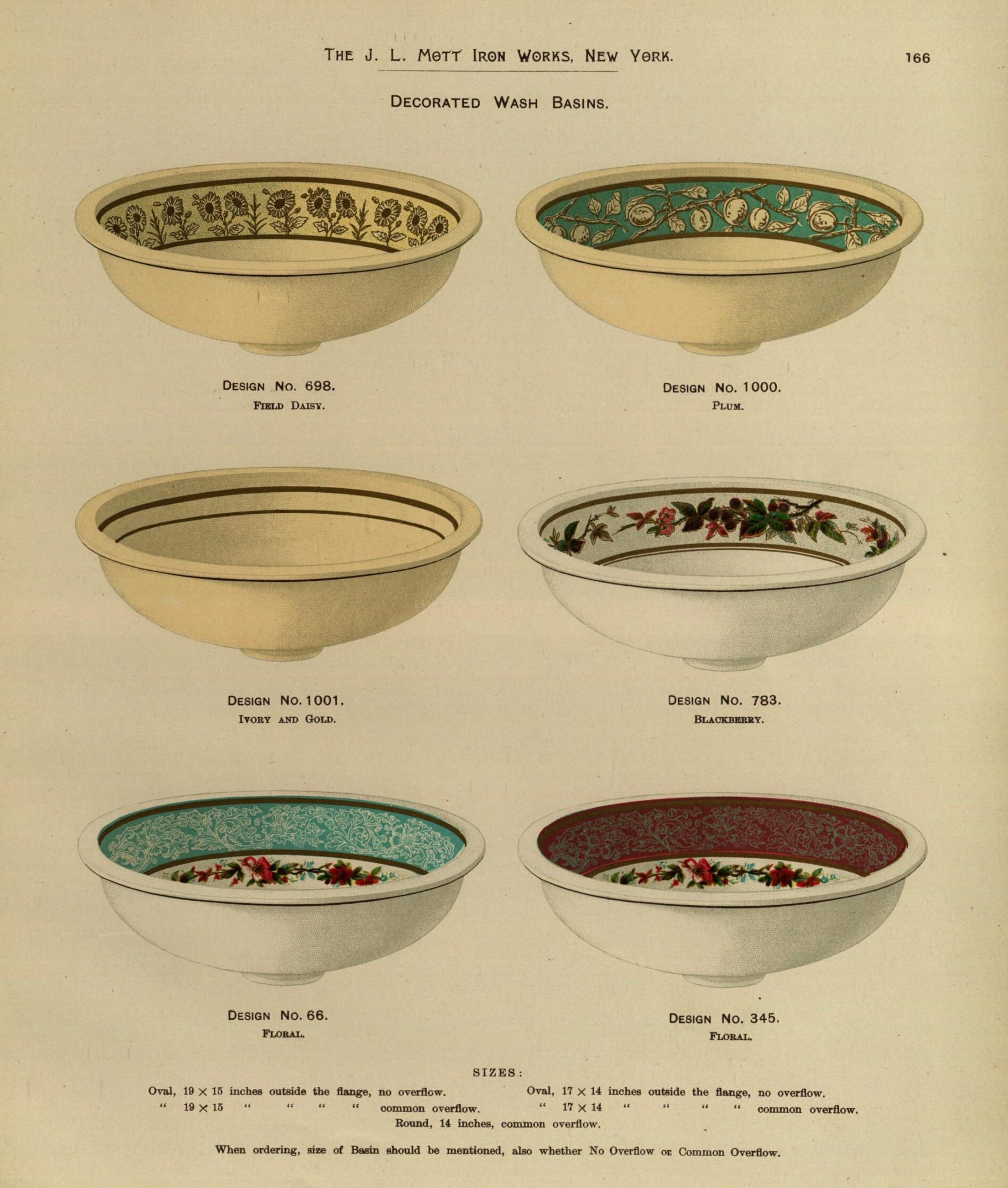
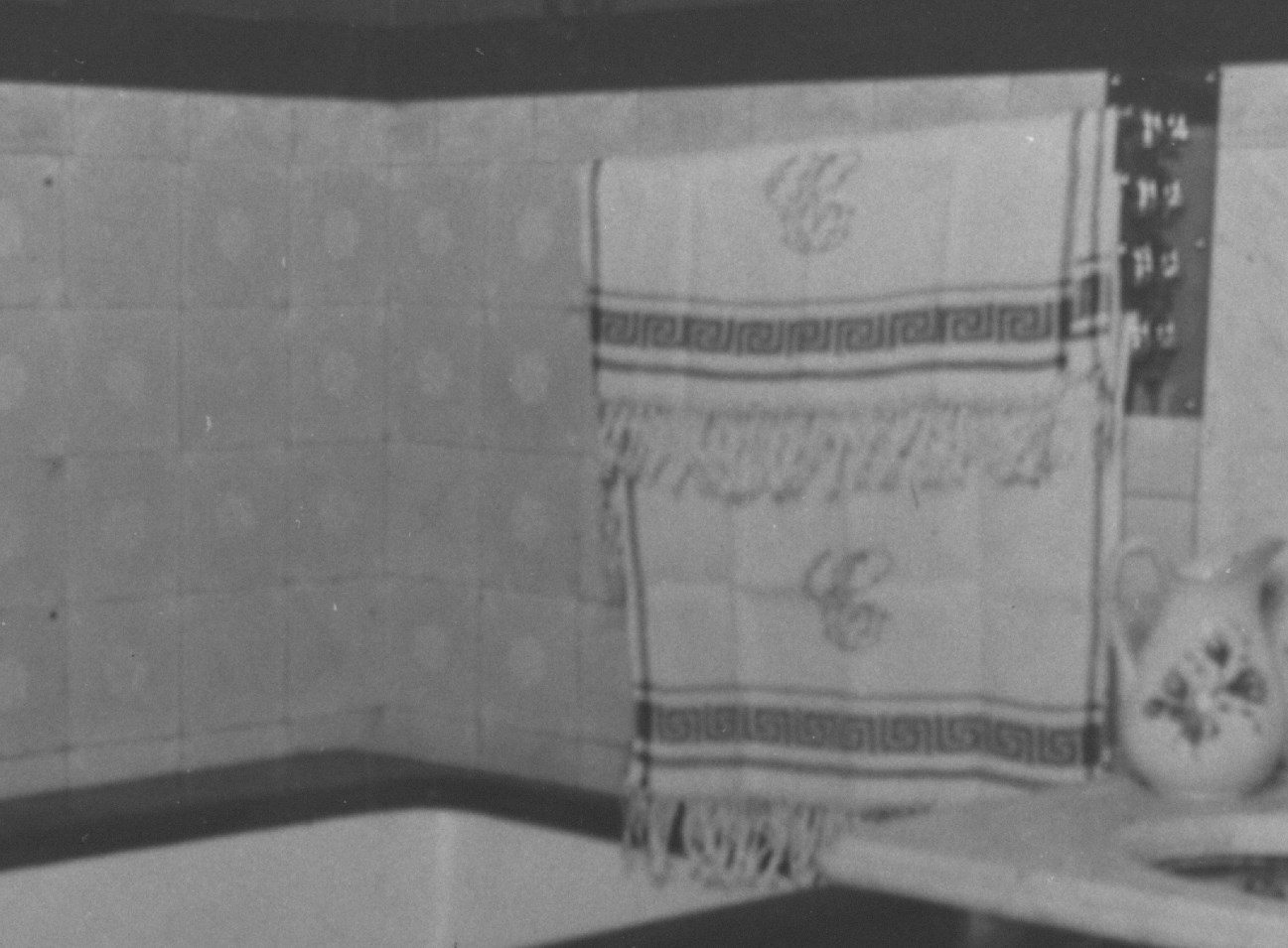


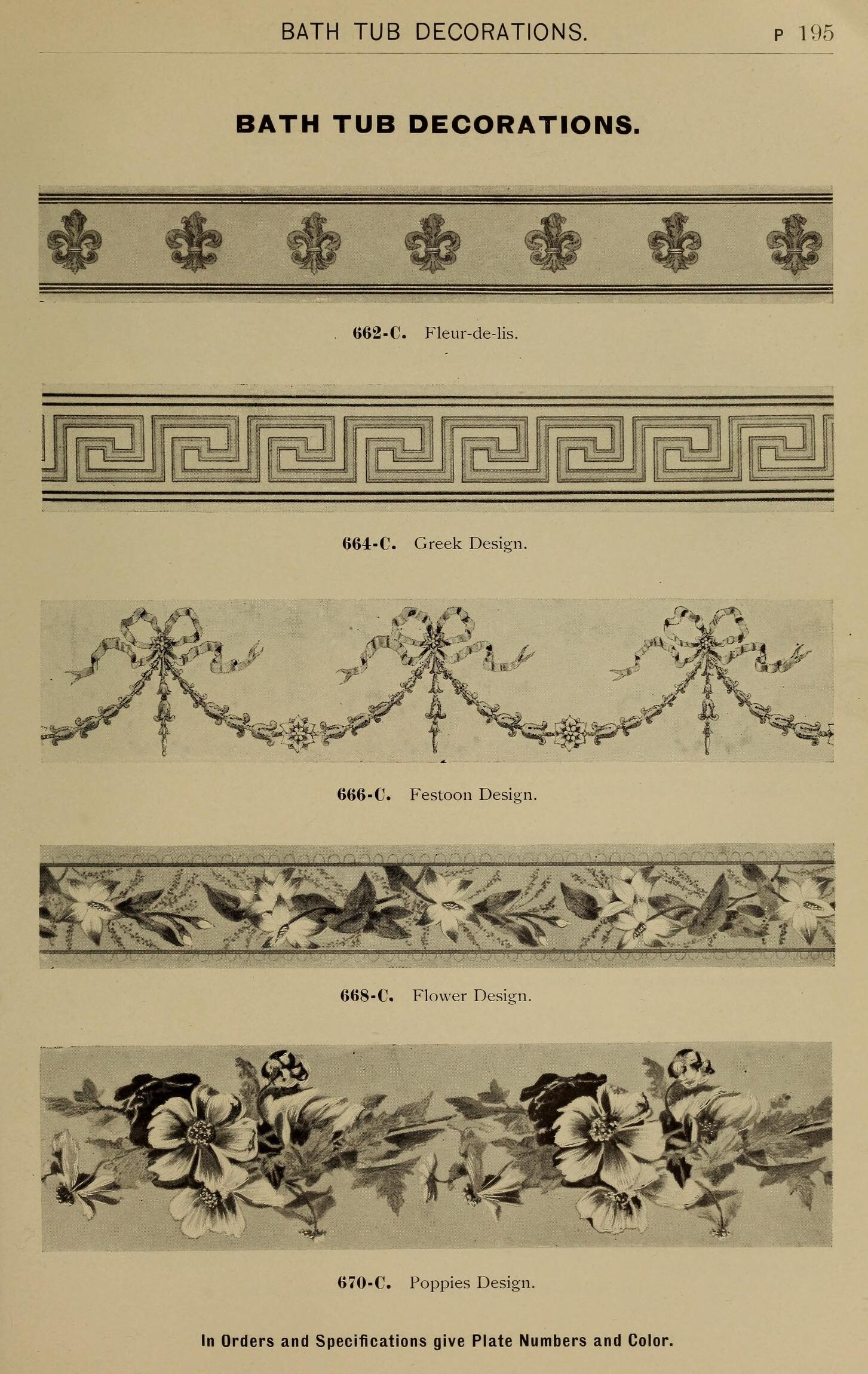
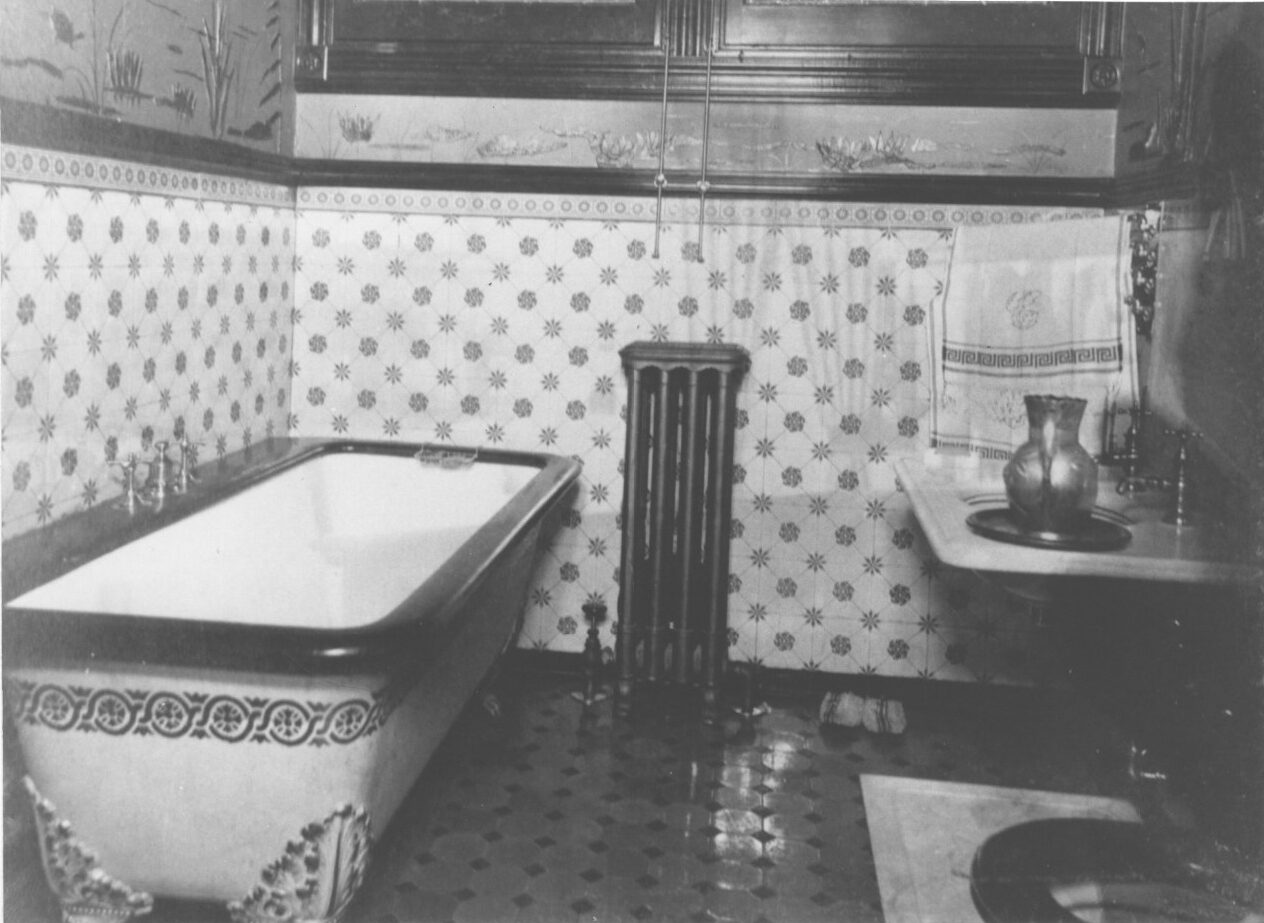
Here is a second bathroom in the home, featuring the same bathtub and sink as the other room. The bathtub in this space is decorated with a different pattern and color scheme. To the extreme lower right, we can possibly see the toilet, and under the sink, there is a marble platform, similar to what we saw in the other room, further suggesting its use for foot washing or another purpose.
Now to the end of the story…

After Carr’s death, the family decided to put the house up for sale. The property was divided into 55 lots, and approval was granted to extend Perry Street through the middle of the property, cutting right through the center of the home. Several discussions took place, and many parcels were purchased. The Herald Sun in 1925 reported that C. McD. Carr (one of Carr’s sons) bought 14 adjoining lots, purchasing the largest number of lots as well as the residence, which was to be moved. You can read the full article here.

The auction was said to have brought in a total of $187,624.
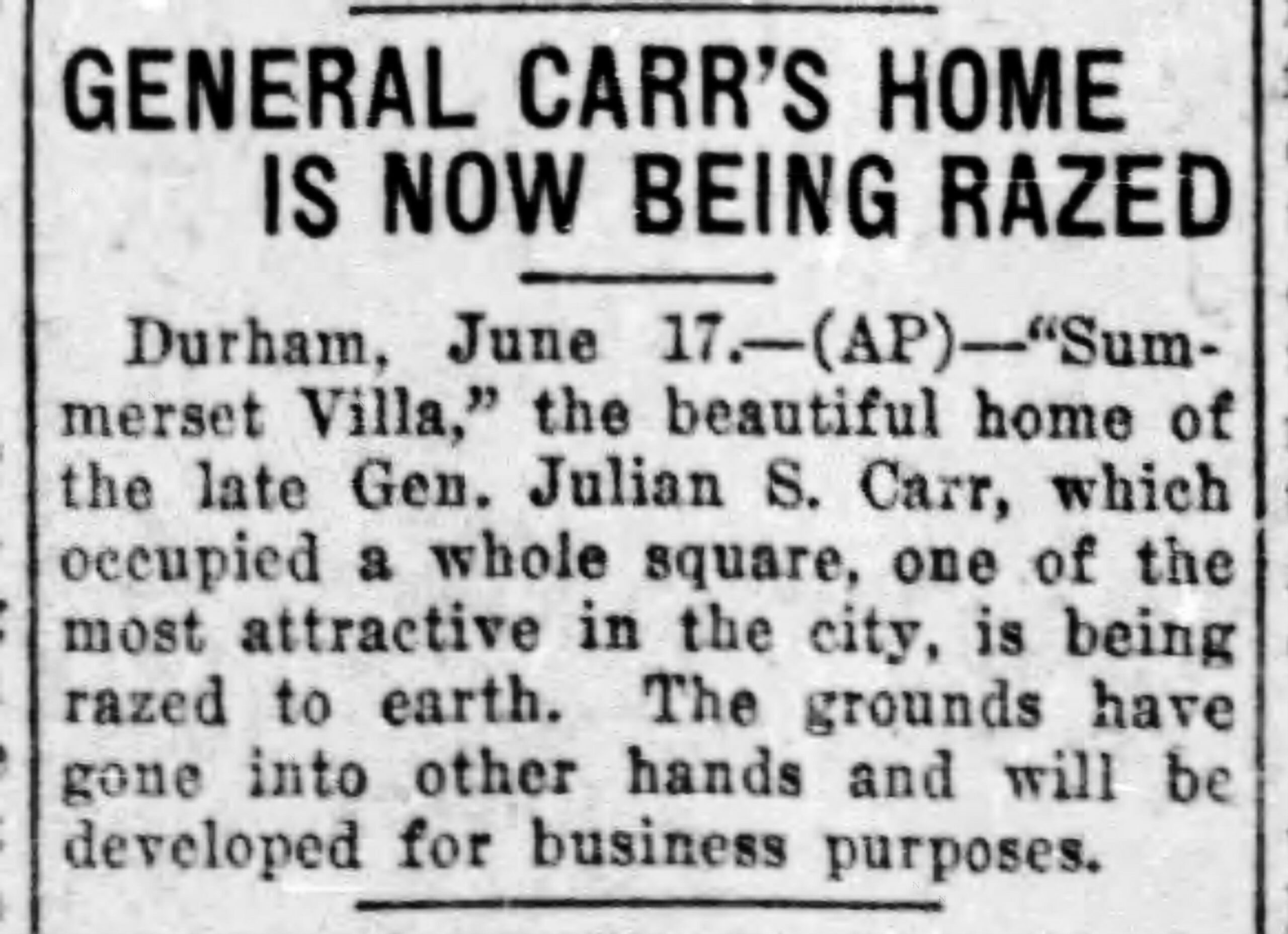
Sadly, the idea of moving the home never crystalized. The News and Observer stated in an article on 06-18-1926 that General Carr’s home is now being razed, as well as another article by The Albemarle Press from the same month, which incorrectly spelled “Summerset Villa” and mentioned that it was being torn down to make way for an increased number of residences. The building, erected 40 years ago and covering an entire block, was considered one of the most beautiful and hospitable homes in the state for many years. Some people have claimed that parts of the home were reused in other residences around the city, with specific addresses named. However, visually, those homes either don’t exist today or this claim is not factual.

A view of the property during the 1910s shows the expansion of the property lines, the rebuilding of greenhouses in new locations, and other changes. East Main, on the right side, also appears to have been widened to include a greenbelt.

View of the property after demolition, with the new street cutting through the location where the house once stood. New buildings were being erected on the land. Reams Ave at the bottom of the map was renamed S Elizabeth.
Previous Post:
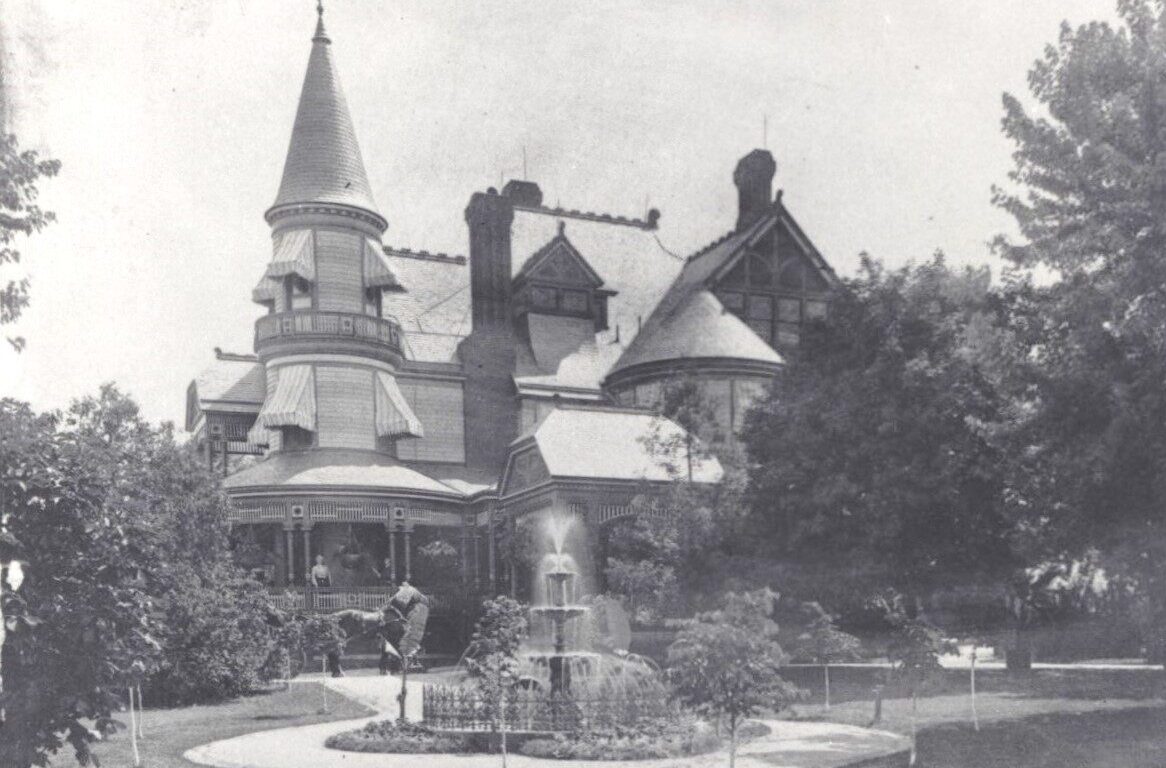
The Somerset Villa: Outside & First Floor