The Somerset Villa: Outside & First Floor
Julian Shakespeare Carr lived in Durham, North Carolina, where his mansion, Somerset Villa, stood as a notable landmark near downtown. This grand Queen Anne-style home, built for approximately $125,000 and equipped with all the modern conveniences of the time, exemplified the luxury of the 1880s. Although the home was eventually demolished, this collection of images will explore its interior design and architectural features, highlighting the elegance and trends of the period. Carr played a pivotal role in Durham’s development, contributing to its prominence in the tobacco industry and its philanthropic efforts. Now let's get started. Don't forget to click the images to make them bigger.
Note: I have long been fascinated by this home. After years of searching for higher-resolution photos to replace the small, low-quality images I originally had, I discovered these. While they may not be as sharp as the usual photos I share, they are still intriguing and offer plenty of detail to explore. Remember. We all learn together. Any new information, errors, or discoveries post in the comments section below.

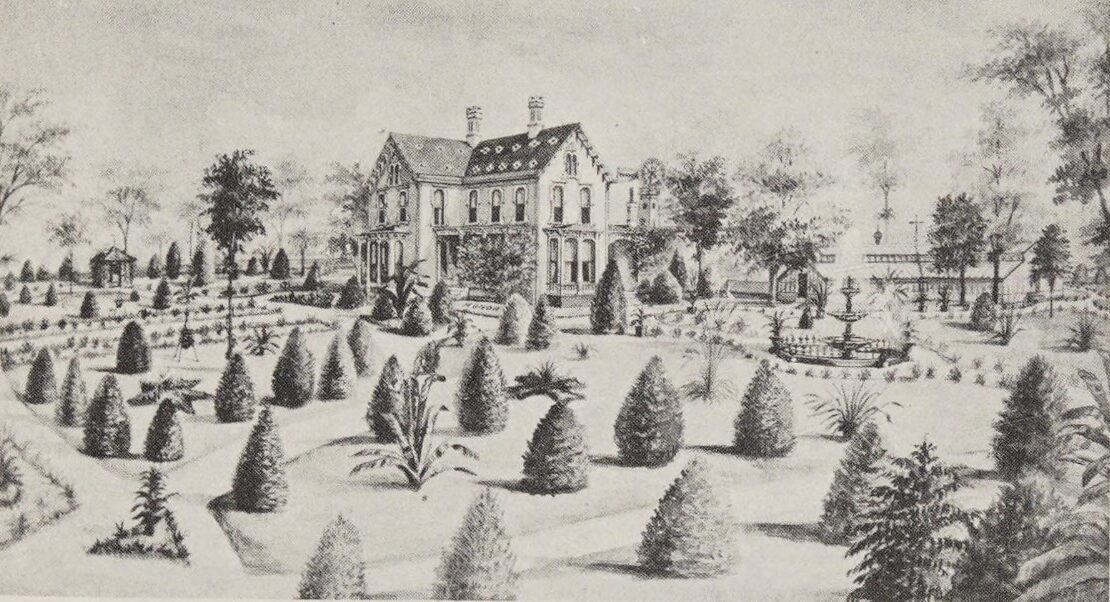
The Carr family’s original home and grounds, known as Waverly Honor, were located here. As Julian Carr’s success grew and his love for entertaining expanded, the need for a larger home became clear. To meet this demand, he hired John B. Halcott of Albany, New York, to design and build a new, modern mansion. When his younger brother, Albert, moved to Durham to practice medicine, Julian, sentimental about the original home, had it dismantled and relocated across the street, where it was rebuilt for Albert. This cleared the land for the new construction to begin.

This atlas provides a glimpse of the property before the construction of the large house. It highlights the winding paths that existed on the property, many of which were either preserved or influenced the design of the paths after the new house was built. Also note J.S. Carr owned a few of the parcels around his home. A parcel for Alber Carr is across the street with a building on it. Perhaps he lived there first before the house was moved over there.
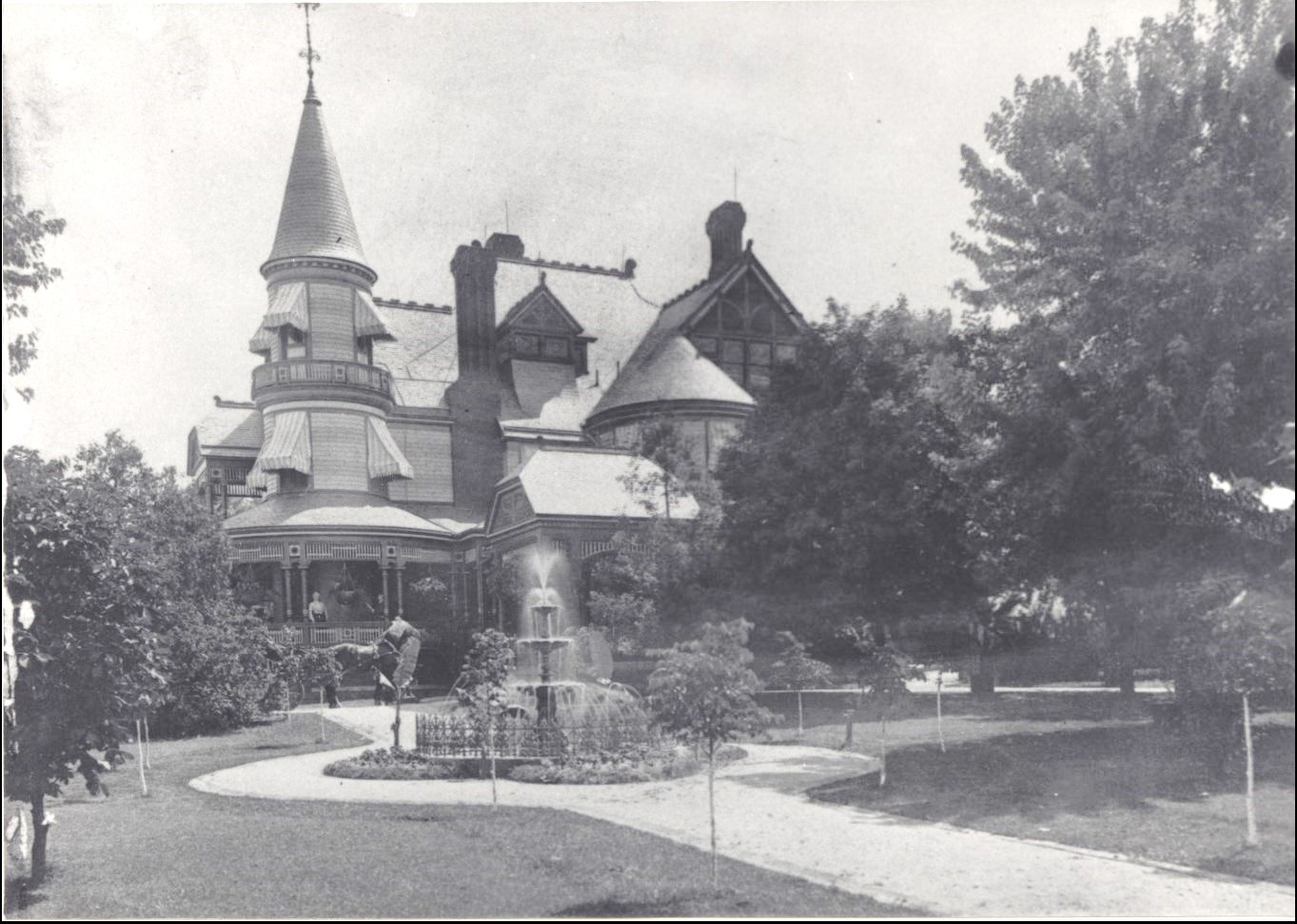
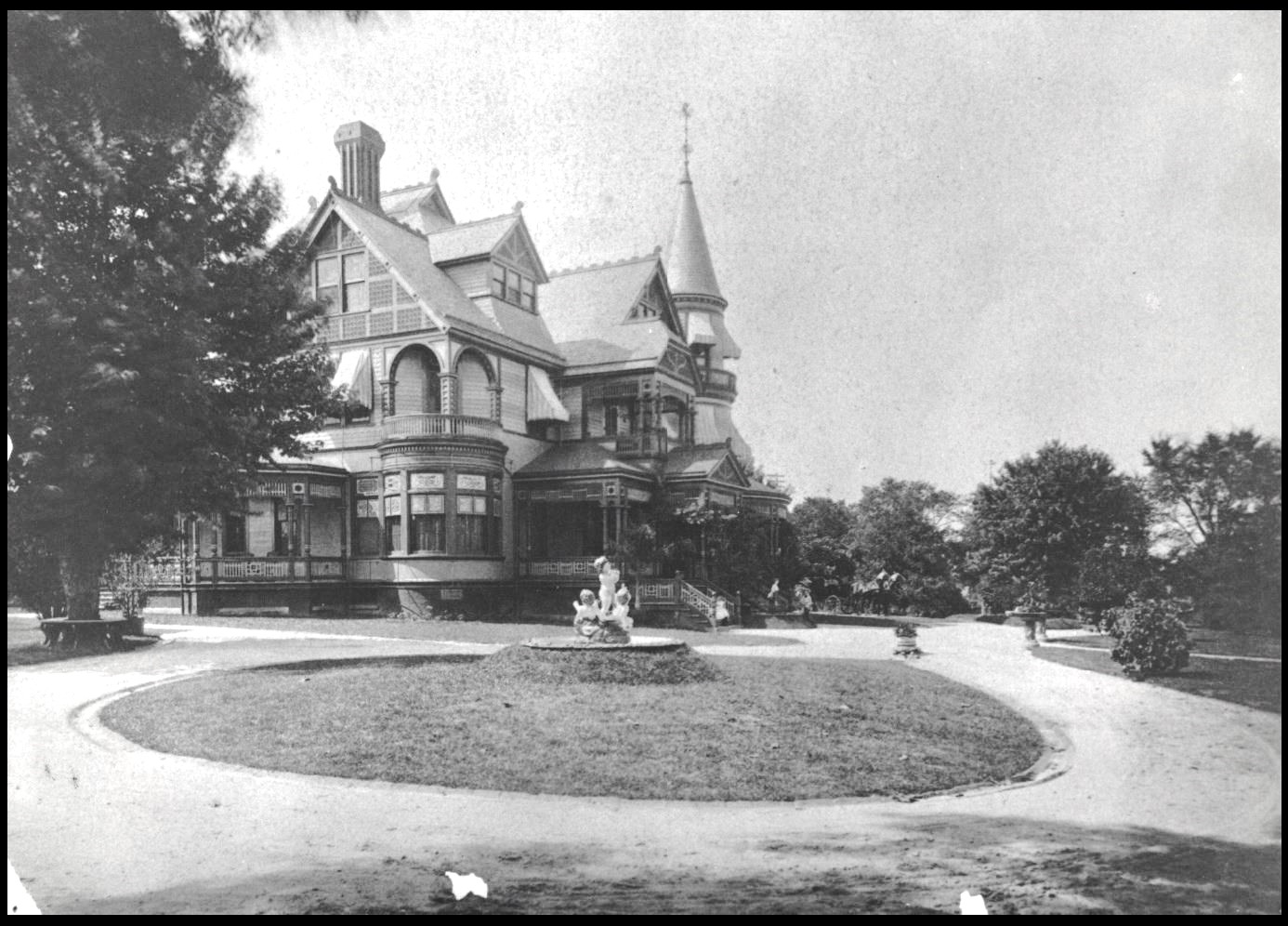
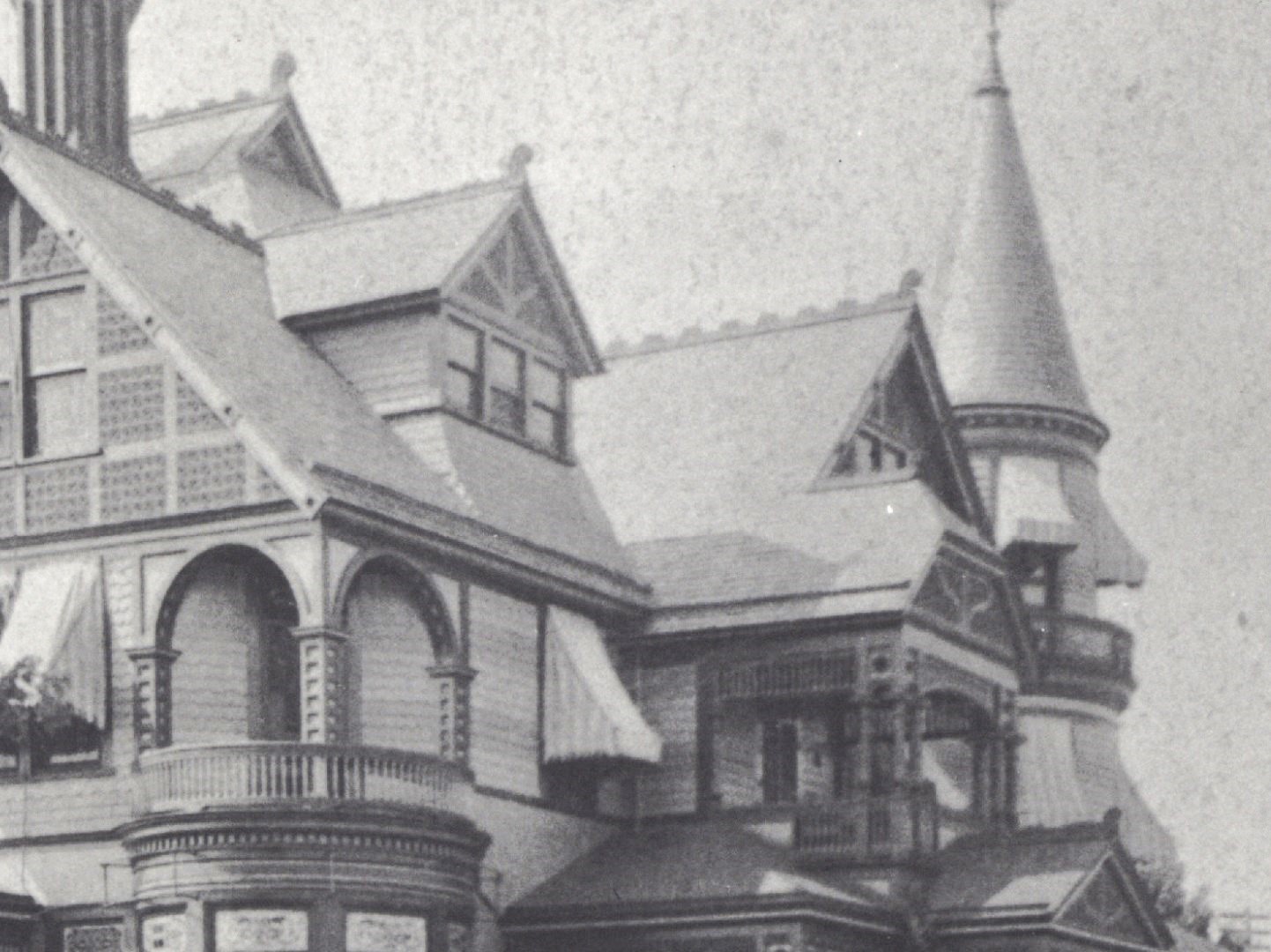
Excavation for this grand Queen Anne home began in the summer of 1887, with construction commencing in July. Records indicate that the old home was completely dismantled during that month, paving the way for construction to start by the end of July. This perspective offers a similar angle to the last photo of the old house. The fountain and path may still be original features of the site. This side of the house highlights the port cochere, multiple large chimneys, and an impressive three-story turret crowned with a conical roof and a massive finial. The port cochere has a jerkin-head or clipped gable roofline, enhancing the intricate angles of the house and reflecting the roofline over the second-floor balcony.


Awnings were a thriving industry throughout much of the 19th century. Many catalogs featured a variety of options, including awnings, tents, umbrellas, and other canvas products, all within the same advertisements.
You can explore this catalog here.

This 1891 atlas provides an excellent aerial view of the home and its outbuildings. The locations of the greenhouse and fountain are clearly visible. On the north end of the block, there are several other buildings that would eventually be incorporated into the property. Over time, the estate appears to have expanded significantly.

This detailed illustration of the property from the late 1890s highlights the close proximity of the greenhouse to the home. In the early 20th century, the original greenhouse was demolished and replaced with a new one on the opposite side of the house. Not shown in the map is the kitchen wing. In the lower right-hand corner of the illustration, you can see the detached kitchen, which was described as a separate two-story structure with a walk-in ice room. Based on this drawing, it appears the kitchen was likely connected to the main house by a veranda of some kind.

In this map, you can see that the property owners have absorbed most of the city block, demolishing and rebuilding new greenhouses, as well as other homes that were once on the block.




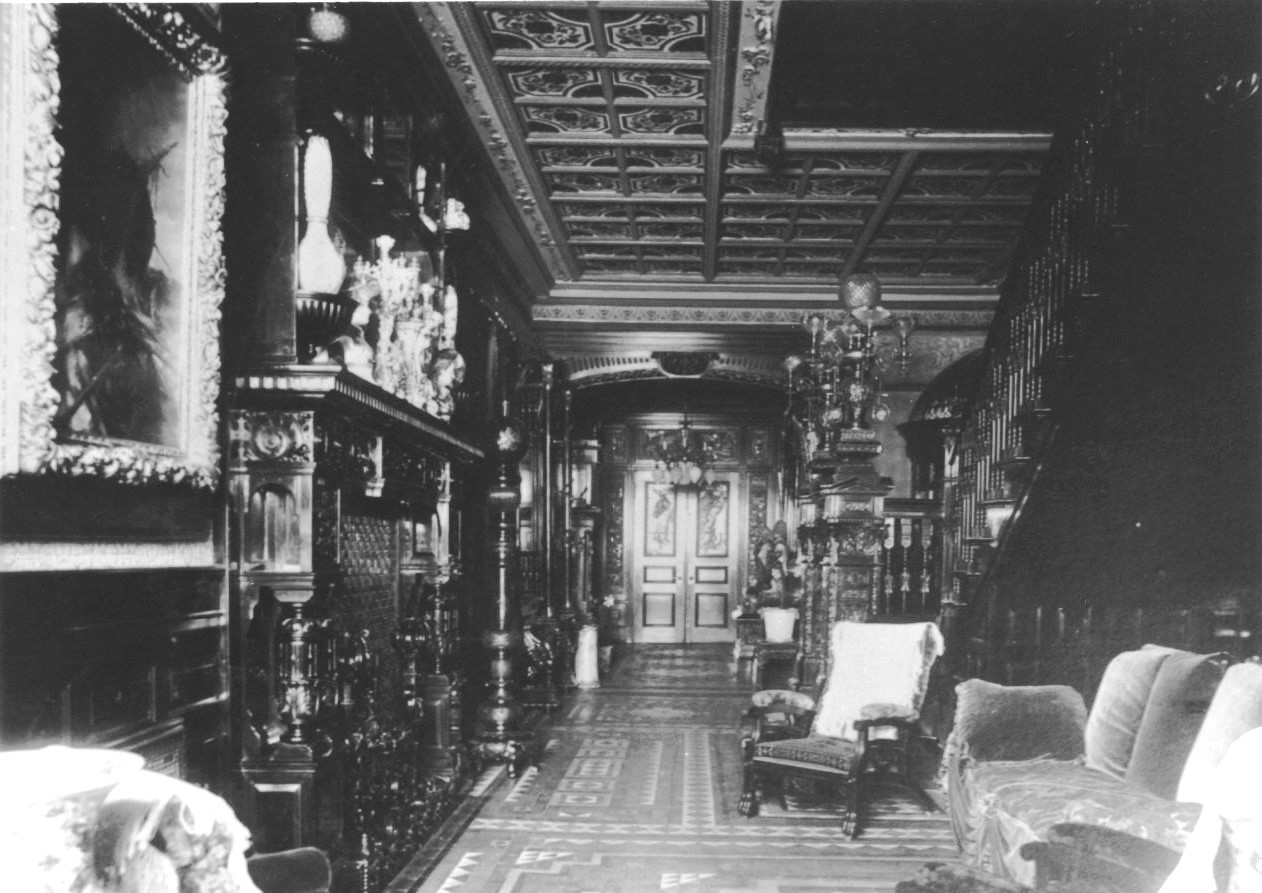
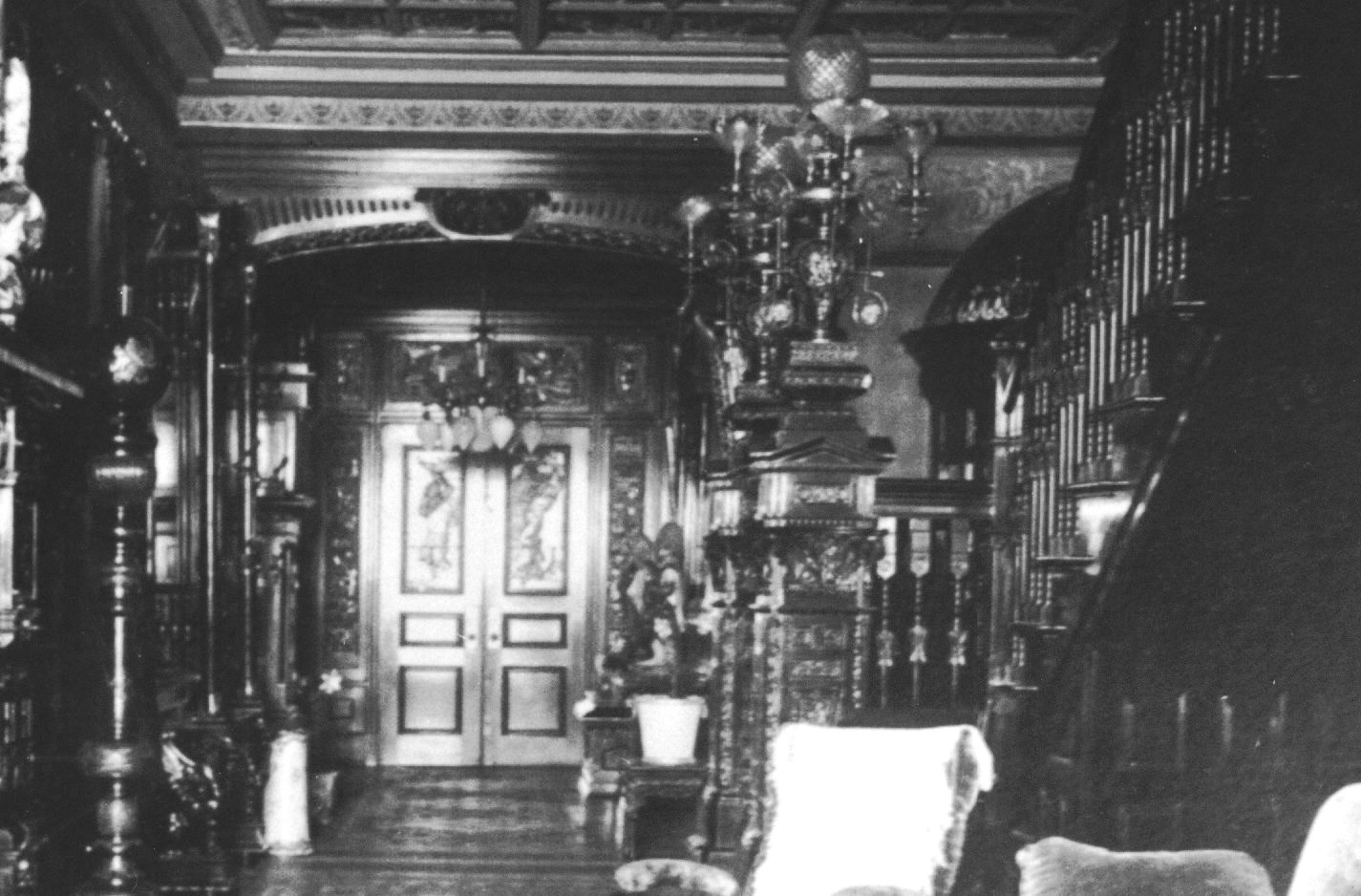
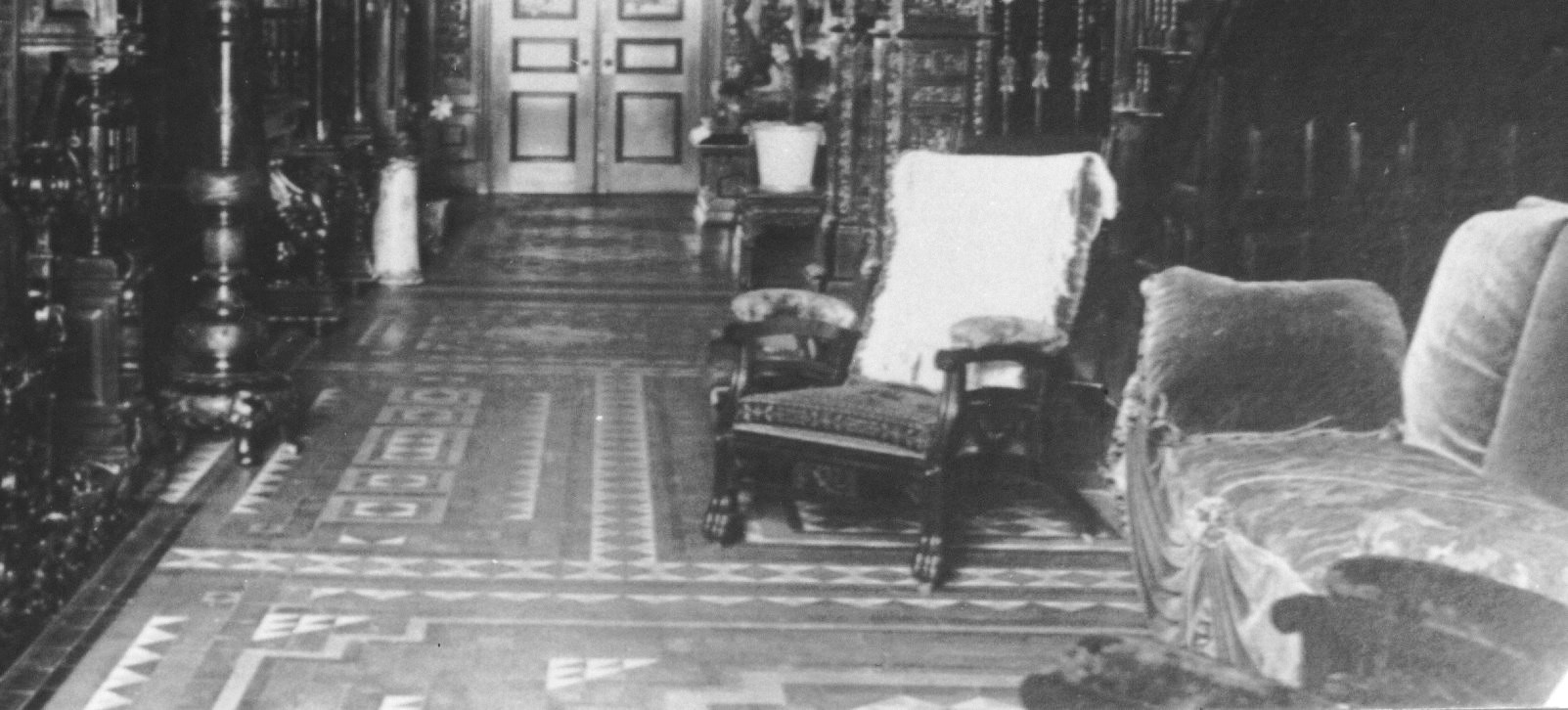
Entering through the front doors, you’re greeted by a massive, long hallway with a large, dramatic staircase. It was said that a richly carved mantel, reaching all the way to the ceiling, cost $1,800. For the interior, J. Gilmer Korner, Carr’s favorite painter, was responsible for embellishing the walls and ceilings, ensuring every surface requiring polish was buffed to a high gloss.


Turning left off the front hall, you enter this parlor or drawing room. This is the room we saw from the outside, with several stained glass windows in the round portion. Unfortunately, these windows are obscured by draperies and other window treatments. The room is heavily furnished with some truly fascinating items. It was said that over half of the $125,000 spent on the construction went toward the interior.

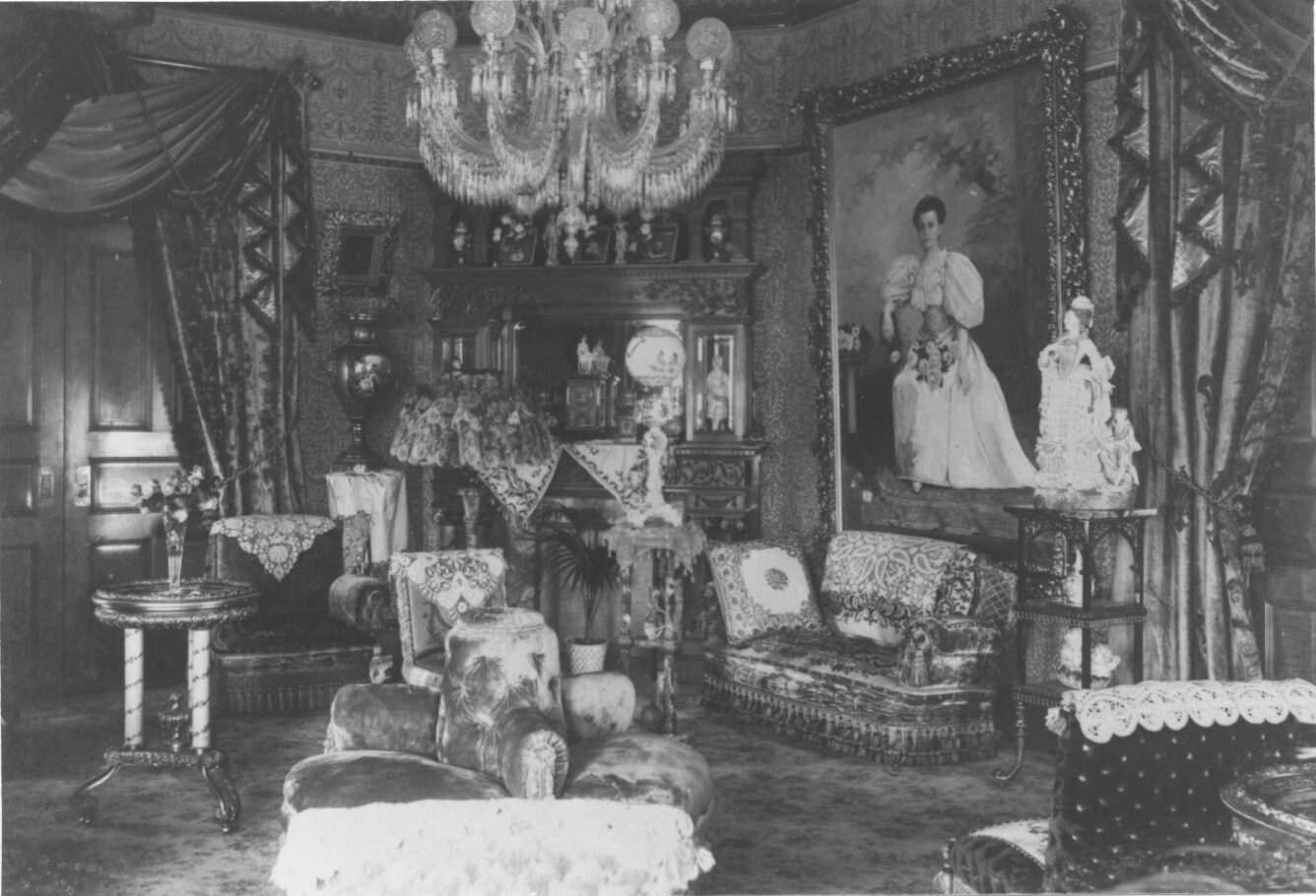


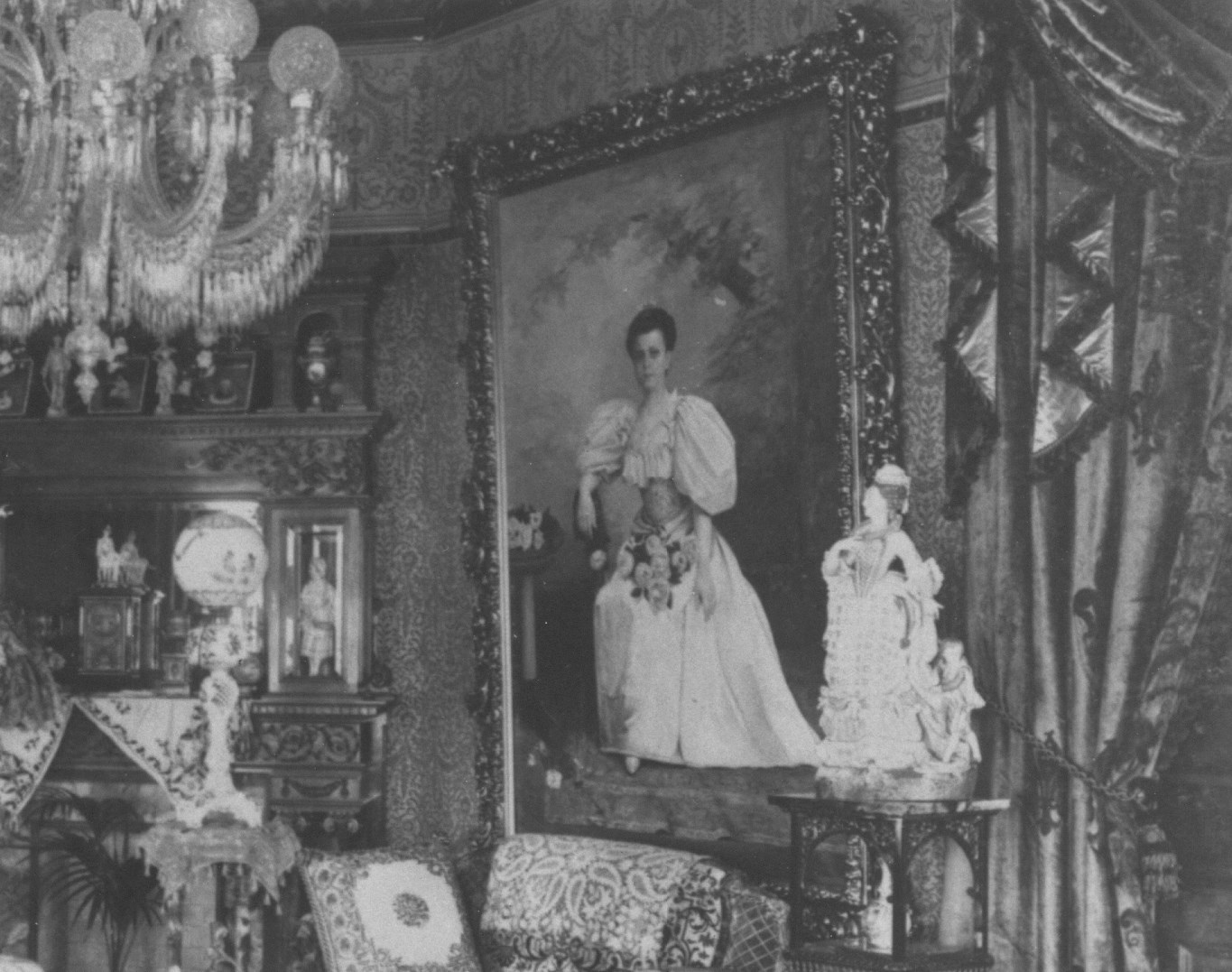
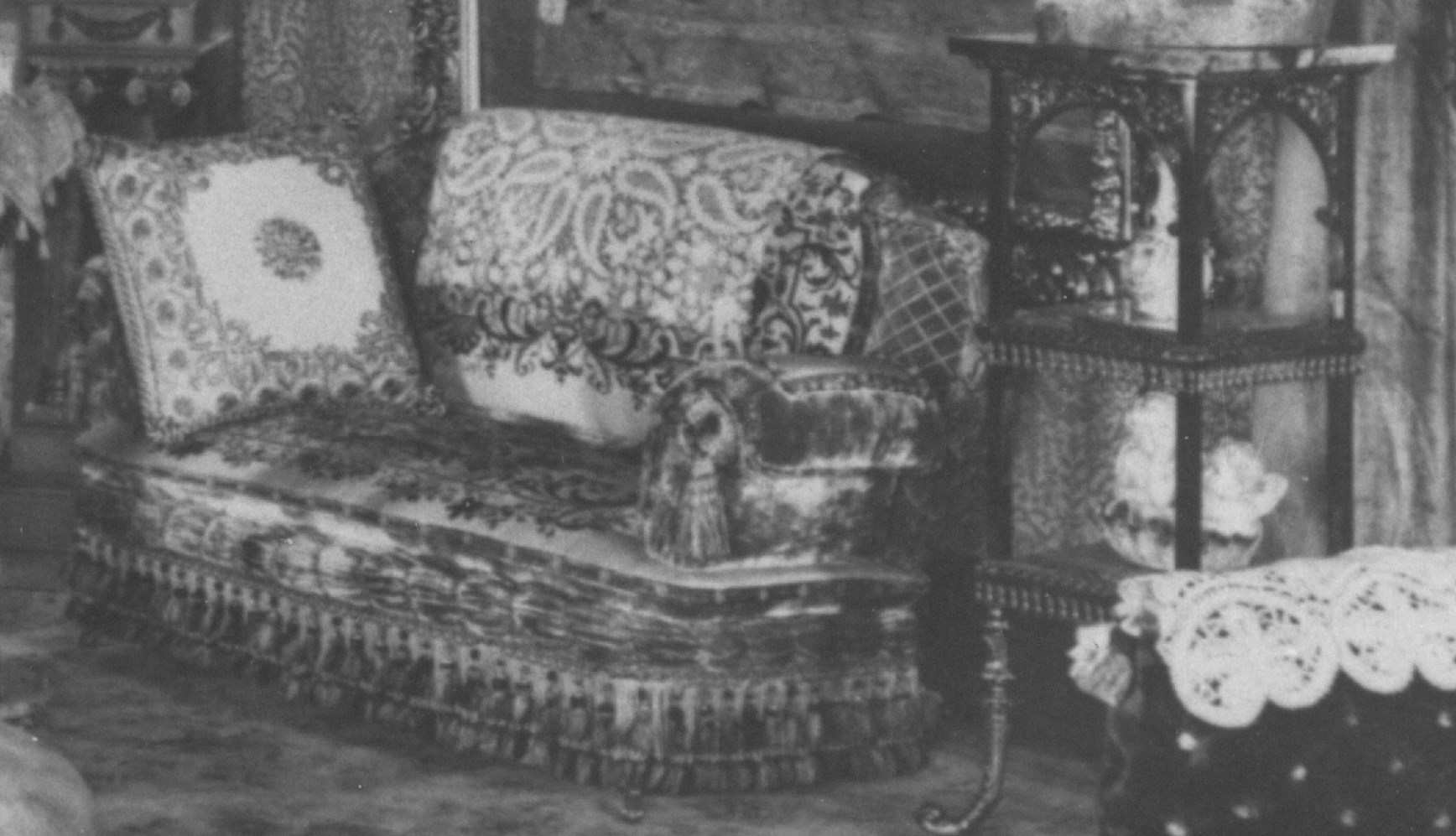


We entered this room through the door on the right. The doorway on the left leads to the hallway. Though this photo is of poor quality, it offers a blurry glimpse into the smoking room. If you look closely, you can still make out some intricate frieze and ceiling painting. Also, notice how the portieres are hung, with an additional bar higher on the wall where more drapery is draped. In the center stands the table and vase we saw in the last photo.


Leaving that room and entering the spacious dining room, which was said to be large enough to accommodate a banquet table. Although this photo is not of the highest quality, it provides a glimpse into the room’s layout. On the left is a sideboard, straight ahead we have a bay or a bow window alcove, and to the right is a fireplace mantel.

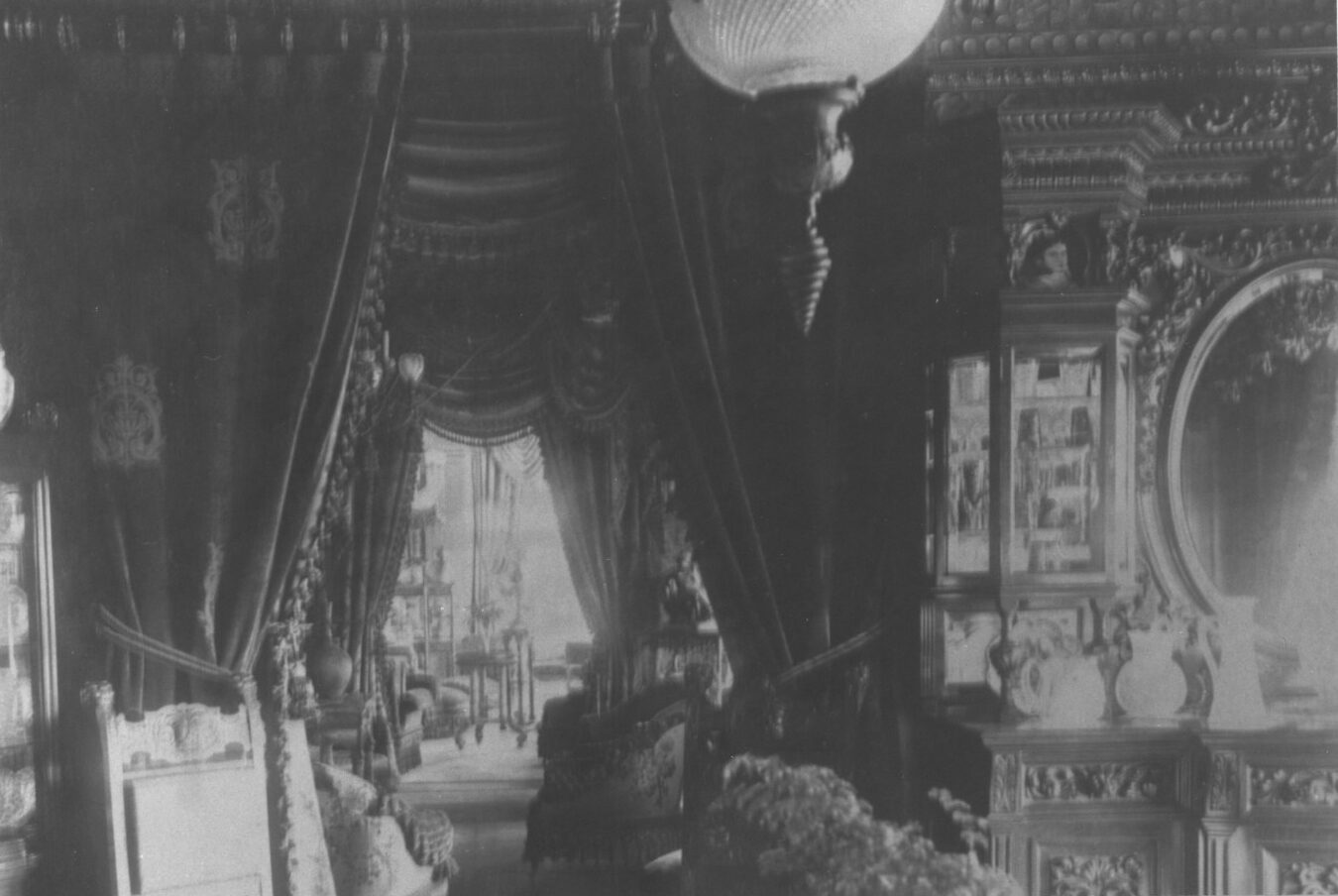


Next, we enter the music room, which we reached by crossing the back of the hall. This fascinating room features some very interesting decorations on the walls and a beautifully detailed frieze.
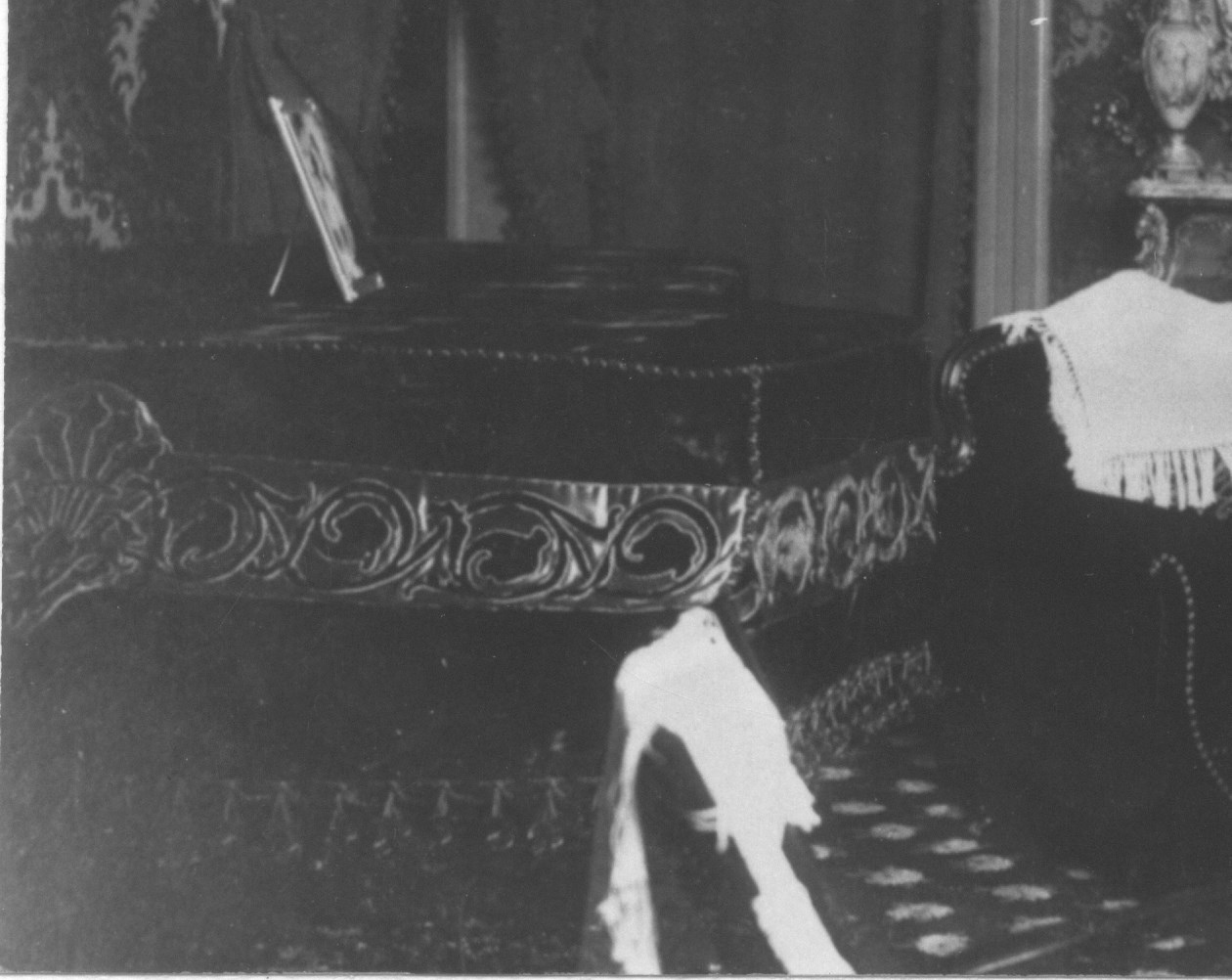


Walking back down the hall toward the other side of the house, we arrive at the library. We’re now facing the corner turret or when facing the house front, the right-hand side. The rounded portion of the room features a hanging light, and it appears to have a table with a large bronze statue on it.

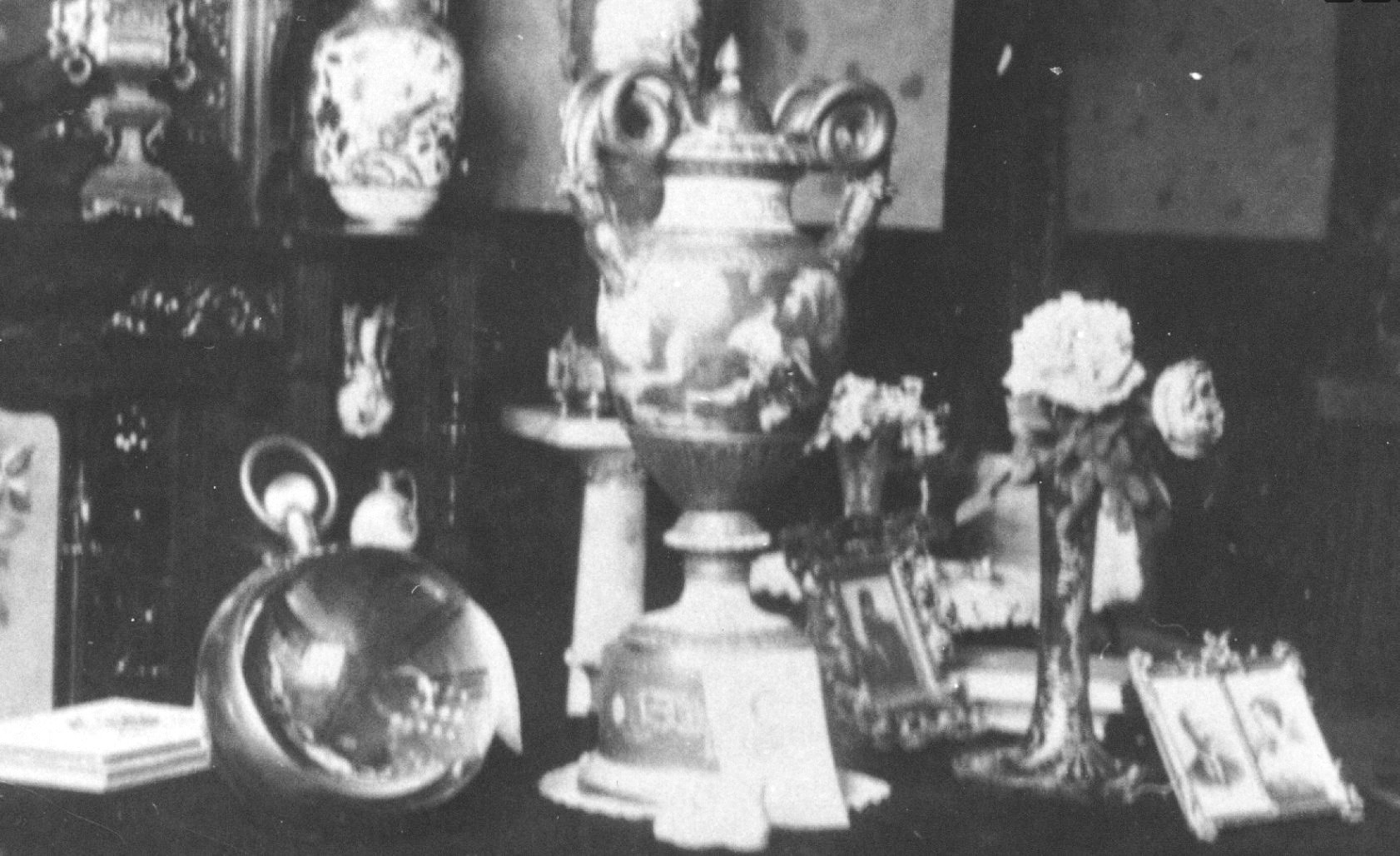


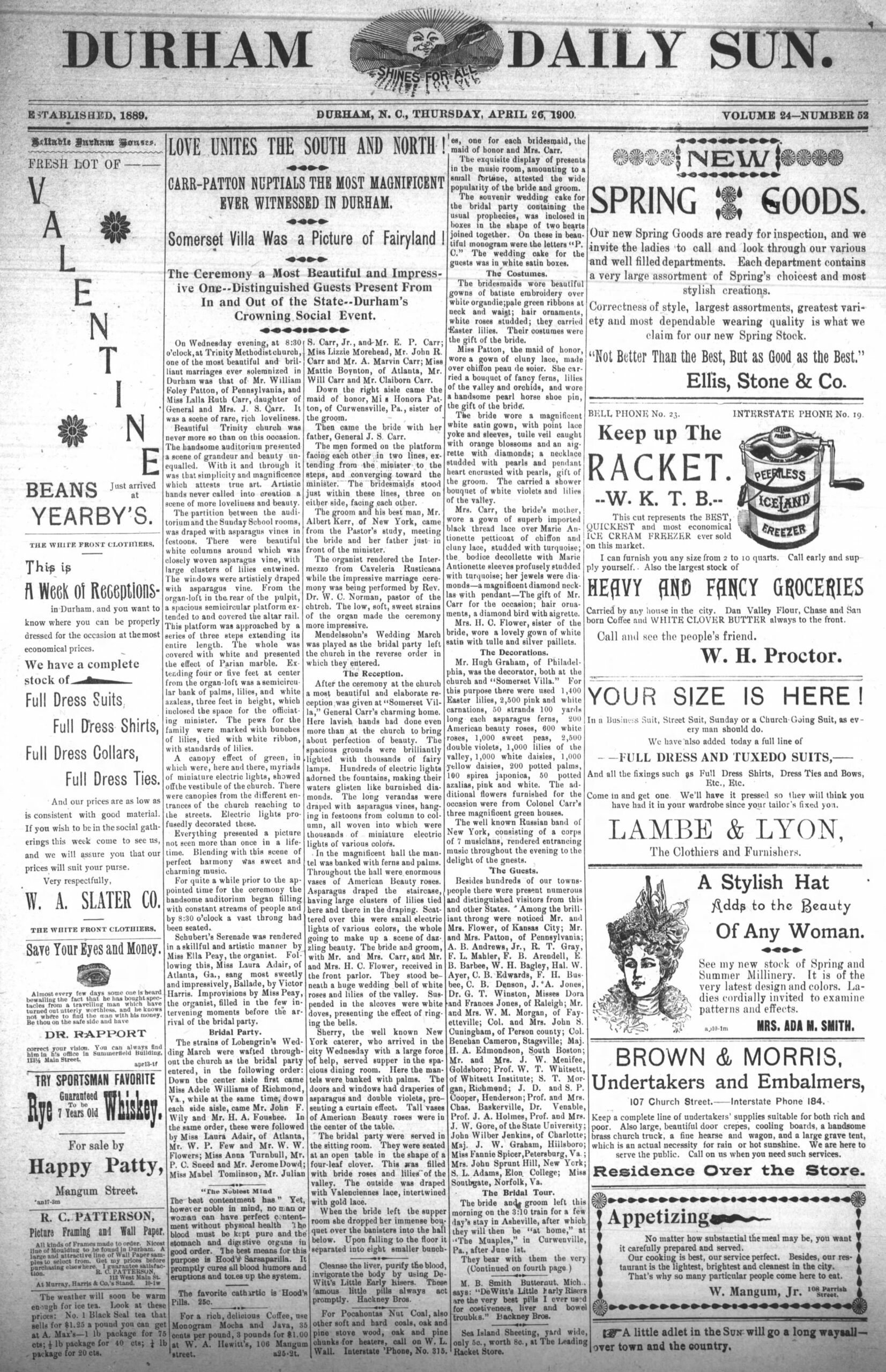
On Thursday, April 26th, 1900, Miss Lalla Ruth Carr married her fiancé William Patton of Pennsylvania. The wedding reception was described in great detail at the home in this article from the Durham Daily Sun. Click the image to enlarge and read. The description of hundreds of electric lights adorning the fountains making the water glistening like diamonds just makes me want to know more. What did they look like? How were they arranged? Where did he get them from?

These iron gates were relocated to 147 Pinecrest Road in Duke Forest after the mansion was demolished between 1924 and 1926. They appear to be in rough shape today, standing as the only remnants of a once stunning house filled with creativity.
Next time, we'll go to the second floor!